
Synopsis
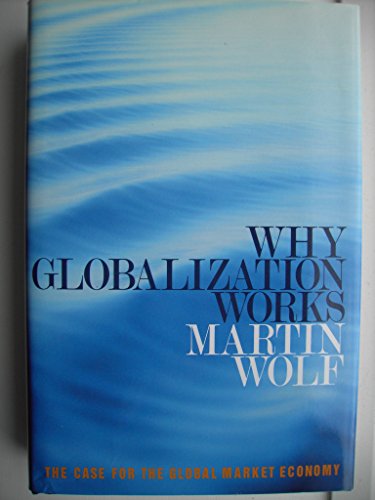
The debate on globalization has reached a level of intensity that inhibits comprehension and obscures the issues. In this book a highly distinguished international economist scrupulously explains how globalization works as a concept and how it operates in reality. Martin Wolf confronts the charges against globalization, delivers a devastating critique of each, and offers a realistic scenario for economic internationalism in the future.
Wolf begins by outlining the history of the global economy in the twentieth century and explaining the mechanics of world trade. He dissects the agenda of globalization’s critics, and rebuts the arguments that it undermines sovereignty, weakens democracy, intensifies inequality, privileges the multinational corporation, and devastates the environment. The author persuasively defends the principles of international economic integration, arguing that the biggest obstacle to global economic progress has been the failure not of the market but of politics and government, in rich countries as well as poor. He examines the threat that terrorism poses and maps the way to a global market economy that can work for everyone.
Martin Wolf is associate editor and chief economics commentator at the Financial Times in London. Formerly senior economist at the World Bank’s division for international trade, he has worked in Kenya, Zambia, and India. He has been visiting professor at Oxford, Nottingham, and Rotterdam Universities and fellow of the World Economic Forum in Davos, Switzerland.
Wolf begins by outlining the history of the global economy in the twentieth century and explaining the mechanics of world trade. He dissects the agenda of globalization’s critics, and rebuts the arguments that it undermines sovereignty, weakens democracy, intensifies inequality, privileges the multinational corporation, and devastates the environment. The author persuasively defends the principles of international economic integration, arguing that the biggest obstacle to global economic progress has been the failure not of the market but of politics and government, in rich countries as well as poor. He examines the threat that terrorism poses and maps the way to a global market economy that can work for everyone.
Martin Wolf is associate editor and chief economics commentator at the Financial Times in London. Formerly senior economist at the World Bank’s division for international trade, he has worked in Kenya, Zambia, and India. He has been visiting professor at Oxford, Nottingham, and Rotterdam Universities and fellow of the World Economic Forum in Davos, Switzerland.
"synopsis" may belong to another edition of this title.
Reviews
The author, a Financial Times editor, makes a conventional economist's argument for globalization that is not likely to convince many skeptics. His faith is that growth and everything else good comes from "the market," while any problems with globalization must be the fault of governments. Wolf doesn't consider that economic processes redistribute power and therefore transform politics and the possibilities of government action. Like so many economists, he analyzes primarily aggregate statistics: gray averages. For example, using aggregate figures he argues that workers in rich countries are paid more because they are much more productive than workers in poor countries are. Thus high-paid workers need not fear that competition from low-paid workers will undermine their economic security. The reason, he explains, is that workers in developed countries work, on average, with far less capital per worker. While this is true in aggregate, for a particular transnational firm deciding whether to locate a new factory in Shanghai or Chicago, the difference in productivity will rarely be as great as the wage differential. Therefore, as long as other costs and risks do not overwhelm the benefit of cheaper labor, there is a long-term tendency for investment and jobs to flow toward low-wage countries. Wolf neglects the profound consequences of relative labor immobility (because of immigration restrictions and cultural barriers) compared with the mobility of products, many services and capital, one of the characteristic features of contemporary globalization.
Copyright © Reed Business Information, a division of Reed Elsevier Inc. All rights reserved.
"About this title" may belong to another edition of this title.
Search results for Why Globalization Works

Stock Image
Why Globalization Works
Seller: Gulf Coast Books, Cypress, TX, U.S.A.
Seller rating 5 out of 5 stars

hardcover. Condition: Good. Seller Inventory # 0300102526-3-36665077
Stock Image
Why Globalization Works
Seller: Your Online Bookstore, Houston, TX, U.S.A.
Seller rating 5 out of 5 stars
Hardcover. Condition: Good. Seller Inventory # 0300102526-3-24653556
Stock Image
Why Globalization Works
Seller: World of Books (was SecondSale), Montgomery, IL, U.S.A.
Seller rating 5 out of 5 stars
Condition: Very Good. Item in very good condition! Textbooks may not include supplemental items i.e. CDs, access codes etc. Seller Inventory # 00100601304
Stock Image
Why Globalization Works
Seller: BookHolders, Towson, MD, U.S.A.
Seller rating 5 out of 5 stars
Condition: Good. [ No Hassle 30 Day Returns ][ Ships Daily ] [ Underlining/Highlighting: NONE ] [ Writing: NONE ] [ Edition: First ] Publisher: Yale University Press Pub Date: 7/11/2004 Binding: Hardcover Pages: 416 First edition. Seller Inventory # 6093409
Stock Image
Why Globalization Works
Seller: Better World Books, Mishawaka, IN, U.S.A.
Seller rating 5 out of 5 stars
Condition: Good. Pages intact with minimal writing/highlighting. The binding may be loose and creased. Dust jackets/supplements are not included. Stock photo provided. Product includes identifying sticker. Better World Books: Buy Books. Do Good. Seller Inventory # GRP12796142
Stock Image
Why Globalization Works
Seller: Better World Books, Mishawaka, IN, U.S.A.
Seller rating 5 out of 5 stars
Condition: Fine. Used book that is in almost brand-new condition. May contain a remainder mark. Better World Books: Buy Books. Do Good. Seller Inventory # GRP68291197
Stock Image
Why Globalization Works
Seller: ThriftBooks-Dallas, Dallas, TX, U.S.A.
Seller rating 5 out of 5 stars
Hardcover. Condition: As New. No Jacket. Pages are clean and are not marred by notes or folds of any kind. ~ ThriftBooks: Read More, Spend Less. Seller Inventory # G0300102526I2N00
Stock Image
Why Globalization Works
Seller: ThriftBooks-Atlanta, AUSTELL, GA, U.S.A.
Seller rating 5 out of 5 stars
Hardcover. Condition: As New. No Jacket. Pages are clean and are not marred by notes or folds of any kind. ~ ThriftBooks: Read More, Spend Less. Seller Inventory # G0300102526I2N00
Stock Image
Why Globalization Works
Seller: Half Price Books Inc., Dallas, TX, U.S.A.
Seller rating 5 out of 5 stars
hardcover. Condition: Very Good. Connecting readers with great books since 1972! Used books may not include companion materials, and may have some shelf wear or limited writing. We ship orders daily and Customer Service is our top priority! Seller Inventory # S_429032522
Stock Image
Why Globalization Works
Seller: Wonder Book, Frederick, MD, U.S.A.
Seller rating 5 out of 5 stars
Condition: Very Good. Very Good condition. Very Good dust jacket. A copy that may have a few cosmetic defects. May also contain light spine creasing or a few markings such as an owner's name, short gifter's inscription or light stamp. Seller Inventory # S07E-02483