
Items related to Little Boy: The Arts of Japan s Exploding Subculture
Synopsis
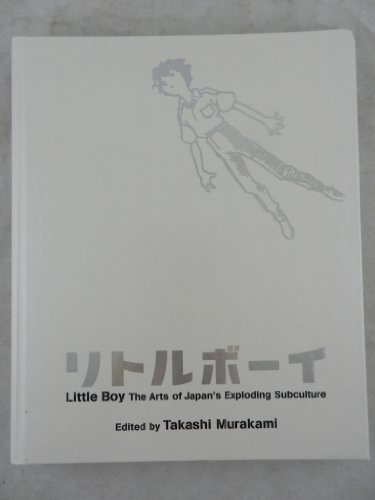
Little Boy examines the culture of postwar Japan through its arts and popular visual media. Focusing on the youth-driven phenomenon of otaku (roughly translated as “geek culture” or “pop cult fanaticism”), Takashi Murakami and a notable group of contributors explore the complex historical influences that shape Japanese contemporary art and its distinct graphic languages. The book’s title, Little Boy, is a reference to the atomic bomb dropped on Hiroshima in 1945, thus clearly locating the birth of these new cultural forms in the trauma and generational aftershock of the atomic bomb.
This generously illustrated book showcases the work of key otaku artists and designers, many of whom are cult celebrities in Japan, and discusses their feature film and video animations, video games and internet sites, music, toys, fashion, and more. In the process, the following questions are posed: What is otaku, and what does it tell us about contemporary social, economic, and cultural life in Japan and throughout the world? How is it related to the pervasive and curious fixation on “cuteness” evident in Japanese popular culture? What impact did the atomic devastation of World War II have on the development of Japanese art and culture?
This brilliantly designed, bilingual (English and Japanese) publication examines these themes to explore how contemporary Japanese art has become inseparable from the subcultural realms of manga and animé (Japanese animation)—a world where meticulous technique, apocalyptic imagery, and high and low cultures meet.
Little Boy concludes Murakami’s “Superflat” trilogy, a project conceived in 2000 to introduce a new wave of Japanese artists and to place their work in the historical context of traditional styles and concepts.
This generously illustrated book showcases the work of key otaku artists and designers, many of whom are cult celebrities in Japan, and discusses their feature film and video animations, video games and internet sites, music, toys, fashion, and more. In the process, the following questions are posed: What is otaku, and what does it tell us about contemporary social, economic, and cultural life in Japan and throughout the world? How is it related to the pervasive and curious fixation on “cuteness” evident in Japanese popular culture? What impact did the atomic devastation of World War II have on the development of Japanese art and culture?
This brilliantly designed, bilingual (English and Japanese) publication examines these themes to explore how contemporary Japanese art has become inseparable from the subcultural realms of manga and animé (Japanese animation)—a world where meticulous technique, apocalyptic imagery, and high and low cultures meet.
Little Boy concludes Murakami’s “Superflat” trilogy, a project conceived in 2000 to introduce a new wave of Japanese artists and to place their work in the historical context of traditional styles and concepts.
"synopsis" may belong to another edition of this title.
About the Author
Takashi Murakami has exhibited works in major museums throughout the world. His high-profile public art commissions include large-scale installations at Grand Central and Rockefeller Center, and he is also well known for his design work for Louis Vuitton. Contributors include: Sawaragi Noi, Matsui Midori, Morikawa Kaichiro, Okada Toshio, Katy Siegel, and project directors Tom Eccles and Alexandra Munroe.
Reviews
Internationally renowned Japanese artist Murakami interprets the complexity of postwar Japanese art in a defining and spectacularly well-illustrated bilingual (English and Japanese) volume. Murakami coined the term superflat to describe the two-dimensional aspect of manga (comics) and anime (animated television and film), pop-culture media that have greatly influenced Japanese fine art. But superflat has societal implications as well, which are revealed when Murakami and his contributors trace the impact of the atomic bombing of Hiroshima and Nagasaki on Japanese art and culture (Little Boy is the code name of the atomic bomb that devastated Hiroshima); analyze kawaii, the culture of cuteness (think Hello Kitty); and dissect the pop-culture movement known as otaku. A dazzling array of works--ranging from the first Godzilla movie to the anime masterpiece Neon Genesis Evangelion to the provocative paintings of Chiho Aoshima--is accompanied by essays that delve deeply into their sources, themes, and resonance. The result is a superlative overview that will thrill manga and anime enthusiasts, and open up a new world of cutting-edge aesthetics and social critique to readers unversed in the fully loaded imagery and daring styles of Japan's globally embraced artistic innovations. Donna Seaman
Copyright © American Library Association. All rights reserved
"About this title" may belong to another edition of this title.
Search results for Little Boy: The Arts of Japan s Exploding Subculture

Stock Image
Little Boy: The Arts of Japan's Exploding Subculture
Published by
Japan Society; Yale University Press, 2005
ISBN 10: 0300102852
ISBN 13: 9780300102857
Used
Hardcover
Seller: Moe's Books, Berkeley, CA, U.S.A.
Seller rating 4 out of 5 stars

Hardcover. Condition: Very good. Very good condition. Binding is tight. Inside is clean and unmarked. Seller Inventory # 2054542
Stock Image
Little Boy : The Arts of Japan's Exploding Subculture
Seller: Better World Books, Mishawaka, IN, U.S.A.
Seller rating 5 out of 5 stars

Condition: Good. Former library copy. Pages intact with minimal writing/highlighting. The binding may be loose and creased. Dust jackets/supplements are not included. Includes library markings. Stock photo provided. Product includes identifying sticker. Better World Books: Buy Books. Do Good. Seller Inventory # GRP62388611
Stock Image
Little Boy : The Arts of Japan's Exploding Subculture
Seller: Better World Books, Mishawaka, IN, U.S.A.
Seller rating 5 out of 5 stars
Condition: Good. Pages intact with minimal writing/highlighting. The binding may be loose and creased. Dust jackets/supplements are not included. Stock photo provided. Product includes identifying sticker. Better World Books: Buy Books. Do Good. Seller Inventory # 10457523-6
Seller Image
Little Boy: The Arts of Japan s Exploding Subculture
Published by
Yale University Press, New Haven, 2005
ISBN 10: 0300102852
ISBN 13: 9780300102857
Used
Hardcover
Seller: DIAMOND HOLLOW BOOKS / MILES BELLAMY, ANDES, NY, U.S.A.
Seller rating 5 out of 5 stars
Hardcover. Condition: Near Fine. First. A Near Fine copy in glossy boards with metallic color type, just faint cover wear to rear board, 299 pages, text in English & Japanese. Heavily illustrated in color. Seller Inventory # 3486
Stock Image
Little Boy: The Arts of Japan's Exploding Subculture.
Published by
Yale Univeristy Press,, New Haven:, 2005
ISBN 10: 0300102852
ISBN 13: 9780300102857
Used
Hardcover
First Edition
Seller: Grendel Books, ABAA/ILAB, Springfield, MA, U.S.A.
Seller rating 5 out of 5 stars
Hardcover. Condition: Near Fine. Dust Jacket Condition: No Dust Jacket. Exhibition catalog. Color illustrations throughout. First edition. Near fine in white glossy illustrated boards. No dust jacket, as issued.; 298 pages. Seller Inventory # 109903
Stock Image
Little Boy: The Arts of Japan s Exploding Subculture
Seller: YESIBOOKSTORE, MIAMI, FL, U.S.A.
Seller rating 5 out of 5 stars
hardcover. Condition: As New. Seller Inventory # 0300102852-VB
Seller Image
Little Boy: The Arts of Japan s Exploding Subculture
Published by
Yale University Press, 2005
ISBN 10: 0300102852
ISBN 13: 9780300102857
Used
Hardcover
First Edition
Seller: Southampton Books, Sag Harbor, NY, U.S.A.
Seller rating 5 out of 5 stars
Hardcover. Condition: Like New. First Edition. First Edition, First Printing. Published by Yale University Press, 2005. Quarto. Hardcover. Book is like new. No dust jacket. Seller Inventory # 538998
Stock Image
LITTLE BOY The Arts of Japan's Exploding Subculture
Published by
Yale University Press / Japan Society, 2005
ISBN 10: 0300102852
ISBN 13: 9780300102857
Used
Hardcover
Seller: AVON HILL BOOKS, Cambridge, MA, U.S.A.
Seller rating 5 out of 5 stars
Hardcover. Condition: Near Fine. Small tear to coveing of rear cover, at base of spine. ; Color illustrations. Laminated boards. Text in English and Japanese. Exhibition catalogue. Due to size, ships within US only and only by media rate mail. ; Small 4to 9" - 11" tall; 298 pp. Seller Inventory # 52568
Stock Image
Little Boy: The Arts of Japan s Exploding Subculture
Seller: GoldBooks, Denver, CO, U.S.A.
Seller rating 5 out of 5 stars
Hardcover. Condition: new. New Copy. Customer Service Guaranteed. Seller Inventory # 57Q31_99_0300102852
Seller Image
Little Boy: The Arts of Japan s Exploding Subculture
Published by
Yale University Press, 2005
ISBN 10: 0300102852
ISBN 13: 9780300102857
New
Hardcover
First Edition
Seller: Leahi Books, Olalla, WA, U.S.A.
Seller rating 5 out of 5 stars
Hardcover. Condition: New. 1st Edition. Little Boy: The Arts of Japan's Exploding Subculture Takashi Murakami, editor Japan Society Yale University Press HB First Edition 2005 ISBN 0300102852 pictorial boards, no dust jacket as published. 299 pp. NEW, MINT, unread, unopened. Seller Inventory # JPN-ART-M40