
Items related to Between Virtue and Power: The Persistent Moral Dilemma...
Synopsis
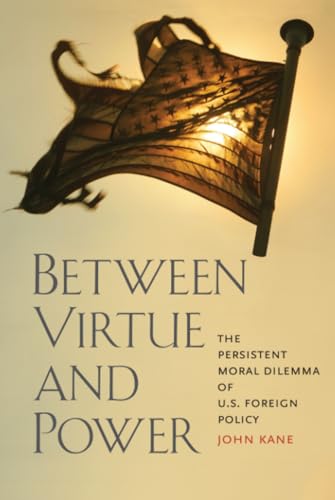
In this survey of U.S. history, John Kane looks at the tensions between American virtue and power and how those tensions have influenced foreign policy. Americans have long been suspicious of power as a threat to individual liberty, Kane argues, and yet the growth of national power has been perceived as a natural byproduct of American virtue. This contradiction has posed a persistent crisis that has influenced the trajectory of American diplomacy and foreign relations for more than two hundred years.
Kane examines the various challenges, including emerging Nationalism, isolationism, and burgeoning American power, which have at times challenged not only foreign policy but American national identity. The events of September 11, 2001, rekindled Americans' sense of righteousness, the author observes, but the subsequent use of power in Iraq has raised questions about the nation’s virtue and, as in earlier days, cast a deep shadow over its purpose and direction.
"synopsis" may belong to another edition of this title.
About the Author
John Kane is professor, Department of Politics and Public Policy, Griffith University, Brisbane, and author of The Politics of Moral Capital. He lives in Queensland, Australia.
Reviews
Kane presents an impressively nuanced vision of the difficult choices faced by American leaders over generations of international conflict. This book offers a narrative in which the philosophical ideals of the nation's founders and successive presidents are compromised and mutated by the necessity of protecting American interests around the world. The presentation is dense, but the prose and arguments remain clear and fluid, even when Kane delves into something as unwieldy as the complex repercussions of Jay's Treaty of 1795. Kane finds a perfect case study for his chosen dichotomy in the presidency of Woodrow Wilson, who struggled to reconcile his vision of world peace with the horrors and consequences of WWI, and whose attempts to balance diplomacy and military force are echoed in ensuing presidencies: Roosevelt overcoming "the inertial force of nonentanglement" in order to preserve democracy, Carter attempting to work the levers of soft power in the name of human rights. Kane is admirably resistant to paint heroes and villains-even the polarizing presidency of George W. Bush is given the rigorous, cold-eyed assessment of the scholar rather than the partisan.
Copyright © Reed Business Information, a division of Reed Elsevier Inc. All rights reserved.
"About this title" may belong to another edition of this title.
Search results for Between Virtue and Power: The Persistent Moral Dilemma...

Stock Image
Between Virtue and Power: The Persistent Moral Dilemma of U.S. Foreign Policy
Seller: Midtown Scholar Bookstore, Harrisburg, PA, U.S.A.
Seller rating 5 out of 5 stars

Hardcover. Condition: Very Good. Very Good - Crisp, clean, unread book with some shelfwear/edgewear, may have a remainder mark - NICE Standard-sized. Seller Inventory # M0300137125Z2
Seller Image
Between Virtue And Power: The Persistent Moral Dilemma Of Foreign Policy
Published by
Yale University Press, New Haven, 2008
ISBN 10: 0300137125
ISBN 13: 9780300137125
Used
Hardcover
First Edition
Seller: Marlowes Books and Music, Ferny Grove, QLD, Australia
Seller rating 5 out of 5 stars
Hard Cover. Condition: Fine. Dust Jacket Condition: Fine. First Edition. 403 pages. Book and Jacket appear to have hardly been read and are both in Fine condition throughout. Seller Inventory # 213815
Buy Used
US$ 19.49
US$ 19.90 shipping
Ships from Australia to U.S.A.
Ships from Australia to U.S.A.
Quantity: 1 available
Seller Image
Between Virtue And Power: The Persistent Moral Dilemma Of Foreign Policy
Published by
Yale University Press, New Haven, 2008
ISBN 10: 0300137125
ISBN 13: 9780300137125
Used
Hardcover
First Edition
Seller: Marlowes Books and Music, Ferny Grove, QLD, Australia
Seller rating 5 out of 5 stars
Hard Cover. Condition: As New. Dust Jacket Condition: As New. First Edition. 403 pages. Book and Jacket appear to have hardly been read and are both in As new condition throughout. Seller Inventory # 165639
Buy Used
US$ 19.49
US$ 19.90 shipping
Ships from Australia to U.S.A.
Ships from Australia to U.S.A.
Quantity: 1 available
Seller Image
Between Virtue and Power : The Persistent Moral Dilemma of U.S. Foreign Policy
Seller: GreatBookPrices, Columbia, MD, U.S.A.
Seller rating 5 out of 5 stars
Condition: New. Seller Inventory # 5618371-n
Stock Image
Between Virtue and Power: The Persistent Moral Dilemma of U.S. Foreign Policy
Seller: BennettBooksLtd, Los Angeles, CA, U.S.A.
Seller rating 5 out of 5 stars
hardcover. Condition: New. In shrink wrap. Looks like an interesting title! Seller Inventory # Q-0300137125
Stock Image
Between Virtue and Power
Print on DemandSeller: PBShop.store US, Wood Dale, IL, U.S.A.
Seller rating 5 out of 5 stars
HRD. Condition: New. New Book. Shipped from UK. THIS BOOK IS PRINTED ON DEMAND. Established seller since 2000. Seller Inventory # L1-9780300137125
Seller Image
Between Virtue and Power : The Persistent Moral Dilemma of U.S. Foreign Policy
Seller: GreatBookPrices, Columbia, MD, U.S.A.
Seller rating 5 out of 5 stars
Condition: As New. Unread book in perfect condition. Seller Inventory # 5618371
Stock Image
Between Virtue and Power
Print on DemandSeller: PBShop.store UK, Fairford, GLOS, United Kingdom
Seller rating 5 out of 5 stars
HRD. Condition: New. New Book. Delivered from our UK warehouse in 4 to 14 business days. THIS BOOK IS PRINTED ON DEMAND. Established seller since 2000. Seller Inventory # L1-9780300137125
Buy New
US$ 91.91
US$ 7.86 shipping
Ships from United Kingdom to U.S.A.
Ships from United Kingdom to U.S.A.
Quantity: Over 20 available
Stock Image
Between Virtue and Power: The Persistent Moral Dilemma of U.S. Foreign Policy
Seller: Ria Christie Collections, Uxbridge, United Kingdom
Seller rating 5 out of 5 stars
Condition: New. In English. Seller Inventory # ria9780300137125_new
Buy New
US$ 90.68
US$ 15.11 shipping
Ships from United Kingdom to U.S.A.
Ships from United Kingdom to U.S.A.
Quantity: Over 20 available
Stock Image
Between Virtue and Power : The Persistent Moral Dilemma of U.S. Foreign Policy
Seller: GreatBookPricesUK, Woodford Green, United Kingdom
Seller rating 5 out of 5 stars
Condition: New. Seller Inventory # 5618371-n
Buy New
US$ 90.66
US$ 20.07 shipping
Ships from United Kingdom to U.S.A.
Ships from United Kingdom to U.S.A.
Quantity: Over 20 available