
Items related to The Essential Engineer: Why Science Alone Will Not...
Synopsis
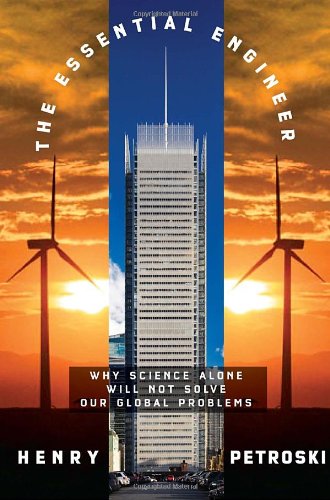
From the acclaimed author of The Pencil and To Engineer Is Human, The Essential Engineer is an eye-opening exploration of the ways in which science and engineering must work together to address our world’s most pressing issues, from dealing with climate change and the prevention of natural disasters to the development of efficient automobiles and the search for renewable energy sources. While the scientist may identify problems, it falls to the engineer to solve them. It is the inherent practicality of engineering, which takes into account structural, economic, environmental, and other factors that science often does not consider, that makes engineering vital to answering our most urgent concerns.
Henry Petroski takes us inside the research, development, and debates surrounding the most critical challenges of our time, exploring the feasibility of biofuels, the progress of battery-operated cars, and the question of nuclear power. He gives us an in-depth investigation of the various options for renewable energy—among them solar, wind, tidal, and ethanol—explaining the benefits and risks of each. Will windmills soon populate our landscape the way they did in previous centuries? Will synthetic trees, said to be more efficient at absorbing harmful carbon dioxide than real trees, soon dot our prairies? Will we construct a “sunshade” in outer space to protect ourselves from dangerous rays? In many cases, the technology already exists. What’s needed is not so much invention as engineering.
Just as the great achievements of centuries past—the steamship, the airplane, the moon landing—once seemed beyond reach, the solutions to the twenty-first century’s problems await only a similar coordination of science and engineering. Eloquently reasoned and written, The Essential Engineer identifies and illuminates these problems—and, above all, sets out a course for putting ideas into action.
"synopsis" may belong to another edition of this title.
About the Author
Henry Petroski is the Aleksandar S. Vesic Professor of Civil Engineering and a professor of history at Duke University. The author of more than a dozen previous books, he lives in Durham, North Carolina, and Arrowsic, Maine.
Reviews
For a quarter-century now, Duke University's Petroski has replaced Samuel Florman as the foremost American civil engineer explaining to lay audiences the nature of engineering and its crucial role in improving the world. Petroski has long been outraged by the persistent elevation of scientists over engineers in terms of intelligence and creativity. Yet none of Petroski's 14 books on technology has argued so aggressively as his newest that engineers do not merely apply what scientists discover. Instead, engineers seek the most appropriate solution out of several to any engineering problem—not the supposedly single solution requiring diligence rather than depth. Analyzing both historical and contemporary examples, from climate change to public health, Petroski shows how science often overlooks structural, economic, environmental and aesthetic dimensions that routinely challenge engineers. Moreover, he says, sometimes science trails technology, as when engineers had to design the first moon landing vehicles before scientists learned its surface composition. Far from being hostile toward science, Petroski pleads for continued cooperation between science and engineering. When, as Petroski laments, even President Obama has sometimes omitted engineering in touting science, this book could hardly be more timely. Illus. (Jan.)
Copyright © Reed Business Information, a division of Reed Elsevier Inc. All rights reserved.
In his latest book, the prolific Petroski is animated by an identity problem engineers have vis-à-vis scientists. The media and public tend to conflate roles that merge in some respects but starkly diverge in others. Rocket science exemplifies the confusion: the physics of spaceflight were solved in principle centuries before chemical and mechanical engineers achieved it in practice. Petroski’s basic idea is this: “Engineers do not need to imagine the unimaginable; they need to imagine the manageable.” In some of these 14 reflective essays, he elaborates in the context of particular building projects, recounts inventions by scientists who lapsed into engineering, and cautions green-energy enthusiasts on the economic trade-offs and design compromises inherent in any technology. In other chapters, he questions research-and-development linearity in technological progress, arguing by examples that engineers often create something that works (the airplane) before scientists figure out how it works. With customary acuity and variety, Petroski is sure to please his established readership with these interesting disquisitions on technology. --Gilbert Taylor
Excerpt. © Reprinted by permission. All rights reserved.
1
Ubiquitous Risk
Our lives and those of our children and grandchildren are constantly at risk. Hardly a day passes, it seems, when there is not a story on television or in the newspaper about some new threat to our health and safety. If it is not toys decorated with lead- based paint, then it is drugs—not just pharmaceuticals but something as commonplace as toothpaste—containing adulterated ingredients, or even milk contaminated with industrial chemicals that found its way into candy sold around the globe.
Risk and reassurance are two key considerations of the activities of science, engineering, invention, and technology—collectively often referred to simply as “science” or “science and technology.” Whatever they are called, they play a critical role in modern civilization, being essential for the advancement of society and the protection of our quality of life. It is these human disciplines associated with discovery and design that help separate the good from the dangerous on the farm and in the factory, at home and at the office, and on battlefields and frontiers. While science and technology can be misused and become the source of ruin, we would be at even greater risk from tainted products and contagious diseases were it not for the benevolent use of what are among the achievements that make us most distinctly human. If science and technology are two- edged swords, they are also the essential weapons in detecting and managing everyday risk.
The bad milk that caused so much consternation a couple of years ago originated in China, which is among the largest exporters of food and food ingredients in the world. In order to increase quantities and thus realize greater profit, unscrupulous participants in the food supply chain misused chemical engineering to water down and adulterate milk. However, diluted milk, being lower in protein, can easily be detected by standardized testing employing well- established technology. But by adding inexpensive melamine, a chemical rich in nitrogen that is used in producing fertilizer and plastics, the adulterated milk could be made to register a higher protein level. Some of the tainted milk found its way into baby formula, causing tens of thousands of children to become ill, with at least six infants dying. This happened because melamine does not dissolve easily in the body and in higher concentrations can produce kidney stones and lead to kidney failure. The widespread presence of melamine in Chinese food products, including cookies and yogurt, led to worldwide recalls. Melamine had also been used as a cheap filler in pet food, causing many cats and dogs to become seriously ill. The chemical was additionally suspected to have been used in other animal feed, which caused chickens to produce melamine- tainted eggs. China promised to crack down on such practices—going so far as to sentence to death some of those responsible for the criminal activity—but the incident prompted a nagging skepticism that soon there could be some other tainted import that we would have to worry about.
The Chinese milk scandal is a striking example of the use and misuse of science and technology and of the tragic consequences that can result. In themselves, science and technology are neutral tools that help us understand the world and allow us to work with its resources. People, however, are not necessarily neutral participants, and they can use their scientific understanding and technical prowess for good or ill. It may be that those who added melamine to diluted milk thought they were only being clever exploiters of chemistry. The unfortunate consequences of their actions were, of course, beyond mere venality, and ironically, the very same science and technology that served as tools of deception were also used to uncover the plot. Like risk itself, science and technology and their effects are ubiquitous.
It is not just potentially harmful products from abroad that can give us pause. Not long ago E. coli–contaminated spinach from California proved to be the culprit in the deaths of three people and the illnesses of hundreds of Americans who trusted domestically grown and harvested produce. A few years later, salmonella- tainted tomatoes were believed initially to be responsible for causing hundreds of people in dozens of states to become ill. For a while, the root of the problem, which spread through forty- one states and affected more than a thousand people, was believed to be in Florida, or maybe Mexico. When no source was found in either of those agricultural locations, however, the public was told that perhaps tomatoes were not the source after all. Maybe it was fresh jalapeños—or something else. Six weeks after advising people not to eat tomatoes, the U.S. Food and Drug Administration lifted the advisory without reaching any definite conclusion about the origin of the salmonella. It was not that science and technology were inadequate to the task. It was that there were no reliable data trails pointing to the various hands through which the bad food had passed on its way to the supermarket. When the guilty bacterium was finally found in a Texas distribution plant, its ultimate origin could not be traced. Unfortunately, such elastic and inconclusive warnings inure us to risk.
Not long after the tomato/jalapeño incident, peanut products containing salmonella were traced to a processing plant in Georgia. In the years preceding the discovery, the plant had been cited repeatedly by the state department of agriculture for health violations, ranging from unclean food preparation surfaces to dirty and mildewed walls and ceilings. On numerous occasions, when the company’s own testing detected salmonella in its products, they were retested with negative results and the products were shipped. It was only after a salmonella outbreak was traced to peanut butter from the plant that it was shut down by the Food and Drug Administration and two years’ worth of peanut butter products were recalled—after the company was given an opportunity to approve the wording of the recall statement. A selective interpretation of scientific test results and a casual enforcement of technical regulations can imperil millions of people. Such incidents threaten the reputation that science and technology once held for objectivity and are likely to bring increased calls for tightened regulation.
In the wake of the salmonella scares, the Food and Drug Administration approved the use of radiation on fresh vegetables like lettuce and spinach to rid them of bacteria. An editorial in The New York Times praised the move, noting that astronauts have long eaten irradiated meat, and that other treated foods, like poultry and shellfish, had produced no detectable adverse effects on those consumers who had tried them. Of course, there remain a great number of people who cringe at the idea of eating anything that has been exposed to radiation, and it is likely going to be a long time before the practice can be expected to become the norm. Nevertheless, it is such technological advances, which ultimately owe their existence to science and engineering research and development, that can bring an overall reduction in risks of all kinds, including those involved in activities as common and essential as eating.
In modern times, systems of commercial competitiveness and government regulation have provided a good measure of checks and balances against undue risk, but the failings of human nature can interfere with the proper functioning of those protective social structures. Science and engineering can be called upon to develop new means of defining safe limits of contaminants and toxins and can devise new instruments and methods for detecting unsafe products, but the ultimate reduction in risk from everyday things is more a matter of vigilance and enforcement than of technology. It is imperative that positive results for salmonella and other contaminants be taken seriously and treated responsibly by the private food industry. If there continues to be life- threatening disregard for consumer health and safety, it is likely that increased government oversight will be imposed.
Sometimes new technology—even that encouraged by law— brings with it new risks, and we are forced to confront the unthought of consequences of a seemingly good idea. In recent years, the increased use of crops like corn in the manufacture of biofuels intended to ease our dependence on foreign oil pinched the food supply and caused prices to rise. To avoid this problem, nonfood crops have increasingly been proposed for making second- generation green fuels. But biologists have warned that certain reeds and wild grasses known to botanists as “invasive species” and to gardeners as “weeds” would have a high likelihood of overtaking nearby fields, presenting serious threats to the ecology and economy of a region. Investors in the fast- growing worldwide biofuels industry naturally reject such doomsday scenarios, but the risk is a real one. The European Union has been especially bullish on biofuels, with plans to use them for 10 percent of the fuel needed for transportation by 2020. However, it has become increasingly clear that agricultural efforts undertaken to help meet that goal were leading to deforestation in remote regions, thereby cont...
"About this title" may belong to another edition of this title.
Search results for The Essential Engineer: Why Science Alone Will Not...

Stock Image
The Essential Engineer: Why Science Alone Will Not Solve Our Global Problems
Seller: Gulf Coast Books, Cypress, TX, U.S.A.
Seller rating 5 out of 5 stars

hardcover. Condition: Very Good. Seller Inventory # 0307272451-2-36679890
Stock Image
The Essential Engineer: Why Science Alone Will Not Solve Our Global Problems
Seller: Your Online Bookstore, Houston, TX, U.S.A.
Seller rating 5 out of 5 stars
hardcover. Condition: Good. Seller Inventory # 0307272451-3-35058223
Stock Image
The Essential Engineer: Why Science Alone Will Not Solve Our Global Problems
Seller: World of Books (was SecondSale), Montgomery, IL, U.S.A.
Seller rating 5 out of 5 stars
Hardback. Condition: Good. From the acclaimed author of The Pencil and To Engineer Is Human, The Essential Engineer is an eye-opening exploration of the ways in which science and engineering must work together to address our world's most pressing issues, from dealing with climate change and the prevention of natural disasters to the development of efficient automobiles and the search for renewable energy sources. While the scientist may identify problems, it falls to the engineer to solve them. It is the inherent practicality of engineering, which takes into account structural, economic, environmental, and other factors that science often does not consider, that makes engineering vital to answering our most urgent concerns. Henry Petroski takes us inside the research, development, and debates surrounding the most critical challenges of our time, exploring the feasibility of biofuels, the progress of battery-operated cars, and the question of nuclear power. He gives us an in-depth investigation of the various options for renewable energy--among them solar, wind, tidal, and ethanol--explaining the benefits and risks of each. Will windmills soon populate our landscape the way they did in previous centuries? Will synthetic trees, said to be more efficient at absorbing harmful carbon dioxide than real trees, soon dot our prairies? Will we construct a sunshade in outer space to protect ourselves from dangerous rays? In many cases, the technology already exists. What's needed is not so much invention as engineering. Just as the great achievements of centuries past--the steamship, the airplane, the moon landing--once seemed beyond reach, the solutions to the twenty-first century's problems await only a similar coordination of science and engineering. Eloquently reasoned and written, The Essential Engineer identifies and illuminates these problems--and, above all, sets out a course for putting ideas into action. Seller Inventory # 00083299870
Stock Image
The Essential Engineer: Why Science Alone Will Not Solve Our Global Problems
Seller: World of Books (was SecondSale), Montgomery, IL, U.S.A.
Seller rating 5 out of 5 stars
Hardback. Condition: Fair. From the acclaimed author of The Pencil and To Engineer Is Human, The Essential Engineer is an eye-opening exploration of the ways in which science and engineering must work together to address our world's most pressing issues, from dealing with climate change and the prevention of natural disasters to the development of efficient automobiles and the search for renewable energy sources. While the scientist may identify problems, it falls to the engineer to solve them. It is the inherent practicality of engineering, which takes into account structural, economic, environmental, and other factors that science often does not consider, that makes engineering vital to answering our most urgent concerns. Henry Petroski takes us inside the research, development, and debates surrounding the most critical challenges of our time, exploring the feasibility of biofuels, the progress of battery-operated cars, and the question of nuclear power. He gives us an in-depth investigation of the various options for renewable energy--among them solar, wind, tidal, and ethanol--explaining the benefits and risks of each. Will windmills soon populate our landscape the way they did in previous centuries? Will synthetic trees, said to be more efficient at absorbing harmful carbon dioxide than real trees, soon dot our prairies? Will we construct a sunshade in outer space to protect ourselves from dangerous rays? In many cases, the technology already exists. What's needed is not so much invention as engineering. Just as the great achievements of centuries past--the steamship, the airplane, the moon landing--once seemed beyond reach, the solutions to the twenty-first century's problems await only a similar coordination of science and engineering. Eloquently reasoned and written, The Essential Engineer identifies and illuminates these problems--and, above all, sets out a course for putting ideas into action. Seller Inventory # 00107656985
Stock Image
The Essential Engineer: Why Science Alone Will Not Solve Our Global Problems
Seller: NW Book Rescue, Hubbard, OR, U.S.A.
Seller rating 1 out of 5 stars

hardcover. Condition: Good. Ex Libris copy. May have library stickers and plastic covering. Good Clean copy. Minimal signs of wear. Seller Inventory # TLF-20260311-0043-455.6K-Y0551
Stock Image
The Essential Engineer: Why Science Alone Will Not Solve Our Global Problems
Seller: SustainableBooks.com, Amherst, NY, U.S.A.
Seller rating 5 out of 5 stars
Condition: Good. Book is in Used-Good condition. Pages and cover are clean and intact. Used items may not include supplementary materials such as CDs or access codes. May show signs of minor shelf wear and contain limited notes and highlighting. Seller Inventory # 0307272451-2-4
Stock Image
The Essential Engineer: Why Science Alone Will Not Solve Our Global Problems
Seller: World of Books Inc, Montgomery, IL, U.S.A.
Seller rating 4 out of 5 stars

Hardback. Condition: Good. From the acclaimed author of The Pencil and To Engineer Is Human, The Essential Engineer is an eye-opening exploration of the ways in which science and engineering must work together to address our world's most pressing issues, from dealing with climate change and the prevention of natural disasters to the development of efficient automobiles and the search for renewable energy sources. While the scientist may identify problems, it falls to the engineer to solve them. It is the inherent practicality of engineering, which takes into account structural, economic, environmental, and other factors that science often does not consider, that makes engineering vital to answering our most urgent concerns. Henry Petroski takes us inside the research, development, and debates surrounding the most critical challenges of our time, exploring the feasibility of biofuels, the progress of battery-operated cars, and the question of nuclear power. He gives us an in-depth investigation of the various options for renewable energy--among them solar, wind, tidal, and ethanol--explaining the benefits and risks of each. Will windmills soon populate our landscape the way they did in previous centuries? Will synthetic trees, said to be more efficient at absorbing harmful carbon dioxide than real trees, soon dot our prairies? Will we construct a sunshade in outer space to protect ourselves from dangerous rays? In many cases, the technology already exists. What's needed is not so much invention as engineering. Just as the great achievements of centuries past--the steamship, the airplane, the moon landing--once seemed beyond reach, the solutions to the twenty-first century's problems await only a similar coordination of science and engineering. Eloquently reasoned and written, The Essential Engineer identifies and illuminates these problems--and, above all, sets out a course for putting ideas into action. Seller Inventory # CIN0307272451G
Stock Image
The Essential Engineer: Why Science Alone Will Not Solve Our Global Problems
Seller: World of Books Inc, Montgomery, IL, U.S.A.
Seller rating 4 out of 5 stars
Hardback. Condition: Fair. From the acclaimed author of The Pencil and To Engineer Is Human, The Essential Engineer is an eye-opening exploration of the ways in which science and engineering must work together to address our world's most pressing issues, from dealing with climate change and the prevention of natural disasters to the development of efficient automobiles and the search for renewable energy sources. While the scientist may identify problems, it falls to the engineer to solve them. It is the inherent practicality of engineering, which takes into account structural, economic, environmental, and other factors that science often does not consider, that makes engineering vital to answering our most urgent concerns. Henry Petroski takes us inside the research, development, and debates surrounding the most critical challenges of our time, exploring the feasibility of biofuels, the progress of battery-operated cars, and the question of nuclear power. He gives us an in-depth investigation of the various options for renewable energy--among them solar, wind, tidal, and ethanol--explaining the benefits and risks of each. Will windmills soon populate our landscape the way they did in previous centuries? Will synthetic trees, said to be more efficient at absorbing harmful carbon dioxide than real trees, soon dot our prairies? Will we construct a sunshade in outer space to protect ourselves from dangerous rays? In many cases, the technology already exists. What's needed is not so much invention as engineering. Just as the great achievements of centuries past--the steamship, the airplane, the moon landing--once seemed beyond reach, the solutions to the twenty-first century's problems await only a similar coordination of science and engineering. Eloquently reasoned and written, The Essential Engineer identifies and illuminates these problems--and, above all, sets out a course for putting ideas into action. Seller Inventory # CIN0307272451A
Stock Image
The Essential Engineer: Why Science Alone Will Not Solve Our Global Problems
Seller: HPB Inc., Dallas, TX, U.S.A.
Seller rating 5 out of 5 stars
hardcover. Condition: Very Good. Connecting readers with great books since 1972! Used books may not include companion materials, and may have some shelf wear or limited writing. We ship orders daily and Customer Service is our top priority! Seller Inventory # S_463286095
Stock Image
The Essential Engineer: Why Science Alone Will Not Solve Our Global Problems
Seller: Half Price Books Inc., Dallas, TX, U.S.A.
Seller rating 5 out of 5 stars
hardcover. Condition: Very Good. Connecting readers with great books since 1972! Used books may not include companion materials, and may have some shelf wear or limited writing. We ship orders daily and Customer Service is our top priority! Seller Inventory # S_475778640