
Items related to The Bird Sisters: A Novel
Synopsis
Love is timeless. So too is heartbreak.
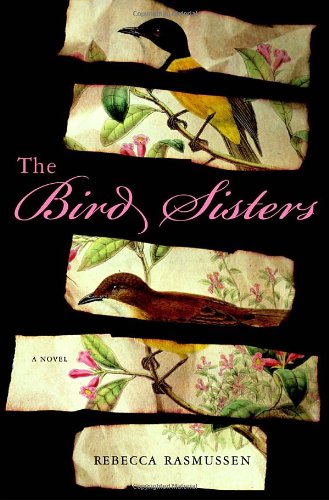
Whenever a bird flies into a window in Spring Green, Wisconsin, sisters Milly and Twiss get a visit. Twiss listens to the birds' heartbeats, assessing what she can fix and what she can't, while Milly listens to the heartaches of the people who've brought them. The two sisters have spent their lives nursing people and birds back to health.
.........................................................................................
But back in the summer of 1947, Milly was known as a great beauty with emerald eyes and Twiss was a brazen wild child who never wore a dress or did what she was told. That was the summer their golf pro father got into an accident that cost him both his swing and his charm, and their mother, the daughter of a wealthy jeweler, finally admitted their hardscrabble lives wouldn't change. It was the summer their priest, Father Rice, announced that God didn't exist and ran off to Mexico, and a boy named Asa finally caught Milly's eye. And most unforgettably, it was the summer their cousin Bett came down from a town called Deadwater and changed the course of their lives forever.
"synopsis" may belong to another edition of this title.
About the Author
REBECCA RASMUSSEN teaches creative writing and literature at Fontbonne University. Her stories have appeared in Triquarterly magazine and the Mid-American Review. She was a finalist in both Narrative magazine’s 30 Below Contest for writers under the age of thirty and in Glimmer Train’s Family Matters Contest. She lives with her husband and daughter in St. Louis. This is her first novel.
Visit her at TheBirdSisters.com.
Reviews
Rasmussen's debut novel begins like a typical coming-of-age story, but reveals itself to be a singular portrayal of familial sacrifice and loss. As elderly women, sisters Twiss and Milly live alone in the house where they grew up in Spring Green, Wis. They spend their days tending to injured birds and roaming their land, lost in memories. For Milly, there is the constant reminder of what could have been. Twiss spent her childhood happily trailing behind their golf-pro father, but Milly dreamed about a family and children that never happened. There was hope for a young Milly, until an accident strips their father of his golfing abilities and sets in motion a series of events that rips apart the already unstable family. Dad retreats to the barn, and mom bemoans her choice to marry for love, leaving behind her wealthy family; a cousin who was thought to be a friend becomes an unexpected rival; and the sisters are left with only each other. As young women, and as old ones, they learn that their relationship is rewarding, but not without consequence. Achingly authentic and almost completely character driven, the story of the sisters depicts the endlessly binding ties of family. (Apr.)
(c) Copyright PWxyz, LLC. All rights reserved.
Born to two star-crossed lovers turned emotionally estranged parents in rural Wisconsin, Twiss and Milly grow up in poverty, continually trying to forge a bridge between their mother and father. Things turn south the summer their father gets into a car accident that cripples his burgeoning professional golf career. Their cousin Bett comes to live with them for a few months and brings with her a storm of knowledge about love, truth or consequences, and something even more devious, which threatens to cripple the family. As Twiss and Milly reach late adolescence, they must decipher the world of relationships on their own, causing Twiss� wild-woman tendencies to grow stronger and pushing Milly toward Asa, the doctor�s son who mows their lawn and seems to share her affections. This novel is told from the perspective of the sisters as girls and old ladies still living in the same house, looking back on their young lives. A charming yet sober tale of two girls struggling to grow up amid family turmoil and poverty, this is a welcome debut from Rasmussen. --Julie Hunt
Excerpt. © Reprinted by permission. All rights reserved.
1
Used to be when a bird flew into a window, Milly and Twiss got a visit. Milly would put a kettle on and set out whatever culinary adventure she'd gone on that day. For morning arrivals, she offered her famous vanilla drop biscuits and raspberry jam. Twiss would get the medicine bag from the hall closet and sterilize the tools she needed, depending on the seriousness of the injury. A wounded limb was one thing. A wounded crop was another.
People used to come from as far away as Reedsburg and Wilton. Milly would sit with them while Twiss patched up the poor old robin or the sweet little meadowlark. Over the years, the number of visitors had dwindled. Now that the grocery store sold readybake biscuits and jelly in all the colors of the rainbow, people didn't bother as much about birds.
On a particularly low morning, while the two sisters were having tea and going over their chore lists, Milly pulled back the curtains when she heard an engine straining on one of the nearby hillsides. When all she saw was the empty gravel drive, the hawkweed poking up along the edges, she let go of them.
"We should be glad," she said. "Maybe the birds are getting smarter."
Twiss brought the breakfast dishes to the sink. They were down to toast and butter now, sometimes a hardboiled egg from the night before. "How can you stand to be so positive?"
"We're old," Milly said. "What else can we do?"
But even she missed the sound of strangers in the house, the way the pine floors creaked under new weight. Had it really been a month since a person other than Twiss had spoken to her? Time had a funny way of moving when you didn't want it to and standing still when you did. Milly didn't bother to wind the cuckoo clock above the sink anymore; there was something sadistic about the way it popped out of its miniature door so cheerfully every quarter hour. But the visitors! Though she and Twiss had devoted their lives to saving birds, not wishing for them to be injured, the last few years Milly had perked up whenever a car turned into their driveway instead of continuing up the road. Most of the time, the people would be looking for directions back to town. They'd spread out their laminated touring maps with expressions of shame because "just in case," the words they'd used to justify buying the maps in the first place, meant they were lost, and there were no noble ways to say that. The men would look up at the sky, trying one last time to discern east from west, and the women would look down at the ground because their husbands had failed to understand a simple map. Milly would put the couples at ease by admitting that she missed a turn every once in a while, even though there wasn't one to miss. She'd point to the blank space between the hills and the river.
This is where you are.
When the sound of the engine grew louder, unlike all of the others during the last month, Milly pulled back the curtains again. This time, a green minivan was barreling down the driveway, kicking up dust that did not quickly settle.
"I knew this one was for us," she said.
"Better get ready," Twiss said, leaving her cup of tea and going for the medicine bag in the hall closet. "People who drive minivans usually know where they are."
And the driver of the green minivan did, although the country wasn't where she was supposed to be at eight thirty in the morning. On her way to drop her children off at the elementary school in town, the woman had run over a goldfinch, and her daughter had cried enough to make her do something about it. The minivan's tires, rutted monstrosities that belonged on a tractor, had severed one of the goldfinch's wings and crushed the other one. The goldfinch was also missing his left eye, which the little girl said she'd looked for on the road but couldn't find among the crumble of loose blacktop.
"Poor thing," Twiss said, which meant the goldfinch wouldn't live. Twiss had spent her life saving birds; all she had to do was glance at one to know if it would recover or not. And all Milly had to do was glance at Twiss, who'd never been especially skilled at hiding what she saw.
Twiss kissed the goldfinch's tawny beak.
"Yes, you are a poor thing," Milly said, kissing it too.
Twiss took the goldfinch, the medicine bag, and the little girl to the bathroom off the kitchen. After she laid out her instruments on a towel, Twiss would pick up Dr. Greene's old stethoscope. If she heard even a faint heartbeat, she'd patch up what she could and splint whatever she couldn't with strips of balsa wood from the old model airplane in the attic. She'd offer the goldfinch a teaspoon of millet and peanut butter and hold him up to the window so he could see the sky. Once a bird had lost his ability to fly, not much else could be done in the way of mending him. Losing a wing was a little like losing a leg and the freedom of movement, of spirit, it granted you; most people could live without the former but not the latter.
Milly steered the mother, a woman with the frame of a thin person but the flesh of one who'd had too many children and worries to keep her figure, to the kitchen. Instead of taking the seat Milly offered her, the mother paced across the linoleum, pausing to examine the surroundings now and then. She paid particular attention to Milly's collection of ceramic saltandpepper shakers lined up like avian soldiers, orange beak to orange beak, hummingbirds to owls, on the shelf above the stove, and to the damask wallpaper Milly and Twiss had helped their mother put up when they were girls, which had bubbled at the outset because they'd applied the glue too liberally. Over the years, the wallpaper had peeled back little by little so that now it clung to the wall desperately when it clung at all.
The mother seemed the most interested in the milkglass lamp in the far corner of the kitchen and the WC stenciled in blue paint on the bathroom door. Like many other visitors before her, she seemed surprised to find the house equipped with indoor plumbing and modern electricity. Milly expected the mother to say what everyone from her generation said: We used to have that exact shade in our kitchen! What they didn't say but what Milly had gleaned from their collective tone, and the decorating magazines in the general store, was that they'd replaced the opaque milkglass fixtures with track lighting the moment they could afford it. And the moment they could afford track lighting, they could afford to be sentimental.
Oh? Milly would say, wondering why anyone would want the equivalent of a runway on his or her ceiling. But the mother didn't say anything about track lighting.
"I kept telling her a bird's nothing to cry about," she said about her daughter. "When you've had your heart broken, you'll run over a person and you won't even notice."
The mother finally took the seat Milly had offered her, which pleased Milly since she was used to people sitting down and telling her things, seeking from her a kind of emotional support only strangers could offer while Twiss patched up the birds in the bathroom; that kind of listening made Milly feel useful when most of the time now she felt useless.
The rest of the woman's children, three gangly boys, were standing on the front porch daring one another to jump off the steps into the mud puddle that had formed beside Milly's freshly watered flower beds.
"Would you like a biscuit and jam?" Milly said, mentally hauling out the mixing bowl and the sack of flour from the pantry. There had to be a jar of jam left in the cellar that mold didn't inhabit. Another stick of butter, too.
"I have to stay away from things I enjoy," the mother said, pulling her T-shirt over the part of her stomach that had become exposed in the process of sitting down. "This book I'm reading says if you want to be as thin as a stalk of celery, then that's what you should be eating. I'm not sure I want to look like celery, but I know I don't want to look like a biscuit."
Her wristwatch began to beep, softly at first, then louder and louder. She smacked it against her leg, which changed the cadence of the beeping but didn't stop it. Before she could turn it off, her middle boy came in and took a yellow pill out of her purse.
"Seizures," the mother said, after he swallowed the pill and went back to the porch. "He's had them since he was a baby. The other ones have food allergies. I can't make anything without one of them puffing up. Rice puffs make them puff up."
"That must be difficult," Milly said.
"It is when you have a husband like mine."
When Milly didn't say anything, the mother added, "He sells carpeting. The kind that's been doused with toxic chemicals."
Milly glanced at the green linoleum, the slick of wax beneath the table.
"Depending on what part of the country he's in, I wish for a disaster that corresponds to that region. If he's in California, I think about earthquakes. In Florida, it's hurricanes. In Colorado, it's avalanches. Great cascading, obliterating avalanches."
The mother put her hand on her hip. "You wouldn't know it to look at me, but I used to be a runner. I set a national record once."
"You don't run anymore?" Milly said.
"I don't do a lot of things anymore," the mother said.
Usually, visitors would eat a biscuit and talk about the price of gasoline or the corn coming up in the fields along the river. It isn't as sweet as it used to be, they'd say, when what they meant was I'm almost used to being unhappy.
"I know exactly what you mean," Milly said, looking out the window at the patch of earth where the garden used to be. "I used to grow everything--tomatoes, squash, zucchini, peppers, lovely little potatoes. Fingerlings, I think they were called."
Before the mother had a chance to say anything, the little girl ran into the room.
"WetriedtosavethebirdieMama!"
"Slow down," the mother said. "I can't understand you."
"We tried to save the birdie, Mama, but it died."
The mother sighed deeply, as if...
"About this title" may belong to another edition of this title.
Search results for The Bird Sisters: A Novel

Stock Image
The Bird Sisters
Seller: World of Books (was SecondSale), Montgomery, IL, U.S.A.
Seller rating 5 out of 5 stars

Hardback. Condition: Fair. When a bird flies into a window in Spring Green, Wisconsin, sisters Milly and Twiss get a visit. Twiss listens to the birds' heartbeats, assessing what she can fix and what she can't, while Milly listens to the heartaches of the people who've brought them. These spinster sisters have spent their lives nursing people and birds back to health. But back in the summer of 1947, Milly and Twiss knew nothing about trying to mend what had been accidentally broken. Milly was known as a great beauty with emerald eyes and Twiss was a brazen wild child who never wore a dress or did what she was told. That was the summer their golf pro father got into an accident that cost him both his swing and his charm, and their mother, the daughter of a wealthy jeweler, finally admitted their hardscrabble lives wouldn't change. It was the summer their priest, Father Rice, announced that God didn't exist and ran off to Mexico, and a boy named Asa finally caught Milly's eye. And, most unforgettably, it was the summer their cousin Bett came down from a town called Deadwater and changed the course of their lives forever. Rebecca Rasmussen's masterfully written debut novel is full of hope and beauty, heartbreak and sacrifice, love and the power of sisterhood, and offers wonderful surprises at every turn. Seller Inventory # 00106388635
Stock Image
The Bird Sisters
Seller: World of Books (was SecondSale), Montgomery, IL, U.S.A.
Seller rating 5 out of 5 stars
Hardback. Condition: Good. When a bird flies into a window in Spring Green, Wisconsin, sisters Milly and Twiss get a visit. Twiss listens to the birds' heartbeats, assessing what she can fix and what she can't, while Milly listens to the heartaches of the people who've brought them. These spinster sisters have spent their lives nursing people and birds back to health. But back in the summer of 1947, Milly and Twiss knew nothing about trying to mend what had been accidentally broken. Milly was known as a great beauty with emerald eyes and Twiss was a brazen wild child who never wore a dress or did what she was told. That was the summer their golf pro father got into an accident that cost him both his swing and his charm, and their mother, the daughter of a wealthy jeweler, finally admitted their hardscrabble lives wouldn't change. It was the summer their priest, Father Rice, announced that God didn't exist and ran off to Mexico, and a boy named Asa finally caught Milly's eye. And, most unforgettably, it was the summer their cousin Bett came down from a town called Deadwater and changed the course of their lives forever. Rebecca Rasmussen's masterfully written debut novel is full of hope and beauty, heartbreak and sacrifice, love and the power of sisterhood, and offers wonderful surprises at every turn. Seller Inventory # 00092478367
Stock Image
The Bird Sisters: A Novel
Published by
Crown (edition First Edition), 2011
ISBN 10: 0307717968
ISBN 13: 9780307717962
Used
Hardcover
First Edition
Seller: BooksRun, Philadelphia, PA, U.S.A.
Seller rating 5 out of 5 stars
Hardcover. Condition: Very Good. First Edition. It's a well-cared-for item that has seen limited use. The item may show minor signs of wear. All the text is legible, with all pages included. It may have slight markings and/or highlighting. Seller Inventory # 0307717968-11-1
Stock Image
The Bird Sisters: A Novel
Seller: Wonder Book, Frederick, MD, U.S.A.
Seller rating 5 out of 5 stars
Condition: As New. Like New condition. Like New dust jacket. A near perfect copy that may have very minor cosmetic defects. Seller Inventory # D15M-00863
Stock Image
The Bird Sisters: A Novel
Seller: ThriftBooks-Dallas, Dallas, TX, U.S.A.
Seller rating 5 out of 5 stars
Hardcover. Condition: Very Good. No Jacket. Former library book; May have limited writing in cover pages. Pages are unmarked. ~ ThriftBooks: Read More, Spend Less. Seller Inventory # G0307717968I4N10
Stock Image
The Bird Sisters: A Novel
Seller: ThriftBooks-Dallas, Dallas, TX, U.S.A.
Seller rating 5 out of 5 stars
Hardcover. Condition: Very Good. No Jacket. May have limited writing in cover pages. Pages are unmarked. ~ ThriftBooks: Read More, Spend Less. Seller Inventory # G0307717968I4N00
Stock Image
The Bird Sisters: A Novel
Seller: ThriftBooks-Atlanta, AUSTELL, GA, U.S.A.
Seller rating 5 out of 5 stars
Hardcover. Condition: Very Good. No Jacket. May have limited writing in cover pages. Pages are unmarked. ~ ThriftBooks: Read More, Spend Less. Seller Inventory # G0307717968I4N00
Stock Image
The Bird Sisters : A Novel
Published by
Crown Publishing Group, The, 2011
ISBN 10: 0307717968
ISBN 13: 9780307717962
Used
Hardcover
First Edition
Seller: Better World Books, Mishawaka, IN, U.S.A.
Seller rating 5 out of 5 stars
Condition: Good. 1St Edition. Former library copy. Pages intact with minimal writing/highlighting. The binding may be loose and creased. Dust jackets/supplements are not included. Includes library markings. Stock photo provided. Product includes identifying sticker. Better World Books: Buy Books. Do Good. Seller Inventory # 390300-20
Stock Image
The Bird Sisters : A Novel
Published by
Crown Publishing Group, The, 2011
ISBN 10: 0307717968
ISBN 13: 9780307717962
Used
Hardcover
First Edition
Seller: Better World Books, Mishawaka, IN, U.S.A.
Seller rating 5 out of 5 stars
Condition: Good. 1St Edition. Pages intact with minimal writing/highlighting. The binding may be loose and creased. Dust jackets/supplements are not included. Stock photo provided. Product includes identifying sticker. Better World Books: Buy Books. Do Good. Seller Inventory # 7592601-6
Stock Image
The Bird Sisters: A Novel
Seller: HPB-Emerald, Dallas, TX, U.S.A.
Seller rating 5 out of 5 stars
hardcover. Condition: Very Good. Connecting readers with great books since 1972! Used books may not include companion materials, and may have some shelf wear or limited writing. We ship orders daily and Customer Service is our top priority! Seller Inventory # S_469511781