
Items related to Virgin Lies: A Novel
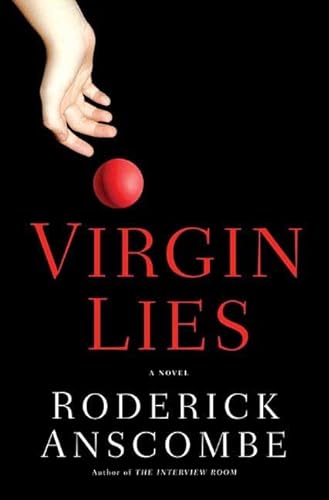
Synopsis
On a blistering Boston summer day, a nine-year-old girl disappears while crossing a public park. The only witness is a homeless schizophrenic woman who believes she is under surveillance and whose memory may not be reliable. Dr. Paul Lucas, an expert at interrogating violent criminals and the insane, is called in to help evaluate the woman's testimony.
Lucas elicits small details that lead police to three people with no apparent connection: a retired engineer, his disabled wife, and a young man who works at a doughnut shop. But interviews with each suspect go nowhere, frustrating detectives and calling into doubt Lucas's role in the case. Believing the girl is alive but without water and soon to die, he is pushed to the brink of a professional abyss--under intense focus from local media, distrusted by police, and pressured by his wife, Abby, whose stake in the search is deeply personal.
With time running out, Lucas has to make a choice: to honor and uphold the sworn central oath of his profession, or to cross the line and do whatever it takes to find the girl, even if he must crack the mind of a vulnerable patient.
Suspenseful, intriguing, and informed by years of real-life experience with violent criminals, Virgin Lies is a first-class thriller.
Paul soon is trapped in an ever-tightening web of circumstance and scrutiny that implicates him in the eyes of his wife, his colleagues, and eventually the police. As the battle of wits turns deadly, with his career on the line and his life over the edge, Paul must learn to play the game by Craig's rules-for he who tells the best lie wins.
Smart and wickedly suspenseful, Virgin Lies winds through twists and turns to a place where nothing is as it seems.
"synopsis" may belong to another edition of this title.
About the Author
Roderick Anscombe, M.D., is a forensic psychiatrist who has interviewed more than two hundred murderers. He is an expert in the detection of deception and teaches interview technique at Harvard Medical School. He is the author of The Interview Room, The Secret Life of Laszlo, Count Dracula, and Shank, and lives in Gloucester, Massachusetts.
Visit his Web site at www.roderickanscombe.com.
Reviews
In Anscombe's taut thriller, his second to feature Boston forensic psychiatrist Paul Lucas (after 2005's The Interview Room), Lucas looks into the abduction of nine-year-old Danielle McNeely, who vanishes while buying coffee for Paul's wife, Abby, at her social services agency. The police, who still believe Paul killed a cop despite his being cleared in The Interview Room, are reluctant to work with him, but assistant DA Brenda Gorn insists. Paul's careful interviews with the one witness, Martha Kinnard, a homeless schizophrenic, lead to Arthur and Molly Hodges, an elderly couple whose van Martha may have seen. Abby, still traumatized by the loss of their only child in an auto accident, goads Paul to save Danielle by crossing ethical boundaries. In a psychologically brutal climax, Paul risks his personal and professional future. Anscombe, himself a forensic psychiatrist, adds depth and realism with his analyses of psychotic behavior, but some readers may find the ending jarringly truncated. (Mar.)
Copyright © Reed Business Information, a division of Reed Elsevier Inc. All rights reserved.
Psychiatrist Paul Lucas is desperate to restore his faltering marriage to social worker Abby. The death of their young son in an auto accident has driven a wedge between them. So when Abby calls to say that an eight-year-old girl has been abducted from her agency, Paul rushes to help. At the scene of the abduction, Paul becomes a largely unwelcome part of the police effort to recover the girl, but his professional skills elicit crucial information from a psychotic bag lady who witnessed the kidnapping. The tensions between police who need to find the abductors, a DA who needs to secure a conviction, and a psychiatrist whom police see as a hindrance are vividly drawn. But the heart of the novel is Paul's shock at his wife's demand that he abandon his medical ethics in order to help. At times, the plight of the anguished DA, Danielle, seems set aside for Paul's emotional-intellectual struggle, but that aside, Anscombe, a psychiatrist himself, delivers a thriller that is both suspenseful and insightful. Thomas Gaughan
Copyright © American Library Association. All rights reserved
Excerpt. © Reprinted by permission. All rights reserved.
Chapter One
10:45 a.m.
The tiger cages were hard to take, even for those of us used to maximum security. It was Kovacs who came up with their name--not that any of the clinical staff wanted one, far less a reference to the human rights violations of a repressive regime. Kovacs had seen the originals, he said, on one of his tours of duty in Vietnam, and once the name stuck we couldn't get rid of it.
Each of the four cages sat at the periphery of an imaginary five-spoked wheel, with a gap where I sat. Around us, the cavernous space of a disused cell block had been soundproofed at great expense, so that however loudly the participants in the group yelled--as Sammy Fields, brain-damaged child killer, was doing now, in full moralistic rant at the man in the cage beside him for a crime much like his own--the confidentiality of these outpourings would be maintained.
With each patient individually confined, nothing could get out of control. But this sound clinical rationale didn't make me feel any better about the cages. When you're surrounded by the routine exercise of raw power, you are never free of the nagging question of whether you are part of a repressive regime. In prison, so many of the ethical stop signs have been removed that you can't ever be entirely sure you have the right of way.
It was hard enough to keep my concentration without interruptions.
"Phone call, Dr. Lucas."
"Okay," I said without turning. "I'll call them back."
But Lieutenant Kovacs remained standing behind me. "You're going to want to take this call," he said.
"How so?"
"It's from your wife."
A call from the doctor's wife was a signal event. The Sanders Institute wasn't the kind of place where family of staff called for a chat. For one thing, Security would likely be monitoring the call. More than that, you did everything you could to insulate your family life from Sanders.
I walked quickly along the short corridor that joined the tiger cages to the control center, where two officers lounged in chairs, occasionally checking the bank of monitors. A telephone receiver lay on the console.
"Is this you?" Abby asked. "Thank God! It's been so awful!" There was a catch in her voice that alarmed me. Abby at the brink of tears at work wasn't something I'd encountered before. I had the sinking feeling that one of her clients had suicided. "They wouldn't put me through at first. They didn't believe who I was."
"That's normal operating procedure."
"Danielle's missing, Paul."
I was supposed to know who Danielle was, and I racked my brains to remember when, during one of our all-too-sparse dinner conversations, Abby had mentioned her. Was she a social worker at the agency? No one came to mind. I was grateful she'd called me at this time of crisis; I didn't want to fail the test, even if it was only putting a name to a face.
"When did you last see her?" I asked, playing for time.
"We sent her on her regular coffee run around nine o'clock. She does this every day for us. She's only a young girl, but it's less than three hundred yards."
Fragments coalesced in memory. Danielle's mother was a graduate of New Beginnings, the agency that Abby directed for pregnant teenagers and young mothers. The kid was going to spend the summer hanging around on the street and sooner or later getting into trouble, and Abby had arranged for her to work as a volunteer at the agency. She'd taken Danielle under her wing. That Danielle.
Abby dropped her voice almost to a whisper. "Please come, Paul."
No command could have been more compelling.
Abby's agency was housed in a large Victorian on a street undergoing sporadic gentrification. A three-decker two houses farther down Eastern Boulevard had gone condo and sported a crimson paint job with sparkling white trim; but plastic siding on the houses between hung loose at the corners, fast-food wrappers clung to front-yard chain-link fences, and the neighborhood still had a down-at-heel air.
It was eleven-thirty, and the heat of the summer morning hit me as I stepped out of the air-conditioning of my car. By the time I'd climbed to the top of the granite steps and reached for the door, I was already sweating.
Inside, the reception area of the agency was unusually crowded. The young women kept their children close at hand, and the kids themselves seemed subdued and watchful. Several uniformed cops were taking down details in notebooks, and a couple of male detectives were questioning a woman holding a baby on her hip.
Off to the side, in a space made by people keeping a respectful distance, a large women in shorts and a tank top was slumped in a chair, weeping uncontrollably as a member of Abby's staff tried to comfort her.
When I came through the door, people turned as if I might be the bearer of news, and even the woman I took to be Danielle's mother stopped sobbing to look up.
The truth was, I expected the girl to turn up at a friend's house or a movie theater, surprised at the fuss. I'd come for Abby, not because I'd be much use to the missing girl. I was here to rescue my marriage.
But the presence of the detectives was an ominous sign. I recognized Detective Wolpert and inadvertently caught his eye. I looked away and saw other faces that were less familiar, recalling them vaguely from holiday parties or tedious hours in courthouse lobbies. Finally, I saw Abby just as she spied me and started through the crowd.
She hugged me fiercely; her fingernails dug through the light cotton shirt I was wearing.
"I'm so glad you're here!" she sighed, her lips pressed close to my ear. And then, to my disappointment, she added a formal, "Thank you."
"I know," I murmured, already dropping into the cadence of someone comforting the bereaved. "I know." I rocked her for a long moment, wondering if this child would bring us together, thinking of our own child, Adrian, who had died.
Abby pulled away. "She's still alive," she said defiantly.
"Of course she is!"
"She's hardly been gone any time at all."
"Which makes it all the more likely that she's hiding out somewhere with a friend."
"That's not Danielle. She wouldn't pull a stunt like that."
"But she's a kid. Maybe one of her buddies came along with some pocket money. Maybe they took off for the mall."
"We know she picked up the coffee from the coffee shop. She was on her way back. She had change she had to return. She wouldn't have taken off."
I turned to look at the cops in the hallway. Someone had pulled a lot of manpower off the streets.
"She's been abducted, Paul."
"Someone witnessed this?" I asked with a sinking heart.
Abby shook her head. "No. She just disappeared."
"Okay. It doesn't do any harm to get an early start."
"We have to accept, one, that Danielle's been abducted. And two, that she's not dead." She angled her head back to scrutinize my face, and her blue eyes nailed me as if their intensity could make me a believer.
"No, she's not dead." I wouldn't tell her now what I knew from my clinical practice about people who snatched children. "You're right. We don't know."
But when you're a forensic psychiatrist and you hear that a child's been abducted, you automatically check off a chilling list of likely outcomes. This was different, though; this was close to home. Danielle was one of Abby's girls.
"She was only out of sight a few minutes," Abby said. "It was a regular coffee run that she did for the day care staff."
Regular, I thought, and therefore predictable. Regular, so that the perpetrator could plan and lie in wait. This wasn't an impulsive grab. He would have prepared the abduction. Therefore, he would have prepared the keeping place. The place where Danielle was now, confused, alone, scared out of her wits.
Abby said, "She's eight years old."
I nodded. An eight-year-old girl wouldn't have been able to put up much of a struggle, even if she'd wanted to. More likely, though, he lured her.
"But she has street smarts," Abby said. "She lives a couple of blocks from here. This is her neighborhood. She isn't some kid from the burbs."
Then the lure must have been more difficult. The lure was stronger, or Danielle's fear had been less. "Maybe she knew him," I suggested hopefully.
"That would be something. That might lead somewhere. The police are all over it. They've been great. They came down here like a SWAT team. But now they don't have any leads to follow up."
"This was when?"
"Just after nine."
"Nine o'clock on a Thursday morning--someone has to have seen something."
As Abby and I were talking, Brenda Gorn, the assistant DA, had approached us and was impatiently trying to make eye contact. Brenda and I had been colleagues for a decade, and friends within the boundaries of our professional loy...
"About this title" may belong to another edition of this title.
Search results for Virgin Lies: A Novel

Stock Image
Virgin Lies
Seller: World of Books (was SecondSale), Montgomery, IL, U.S.A.
Seller rating 5 out of 5 stars

Hardback. Condition: Good. Title: Young Knot Master: Unleash Your Creative Potential with the Art of KnottingDescription: Welcome to the world of Young Knot Master, where creativity knows no bounds, and the art of knotting takes center stage. This innovative and inspiring platform is designed for young and aspiring artisans, eager to explore the fascinating realm of knot crafting. Discover the beauty, versatility, and endless possibilities of knotting as you embark on a creative journey that encourages self-expression, skill development, and the joy of crafting with your own hands.Key Features: Creative Exploration: Young Knot Master provides a safe and welcoming space for young individuals to explore their artistic inclinations. Unleash your imagination as you dive into the world of knotting and create unique, handcrafted pieces that reflect your personality and style.Step-by-Step Tutorials: Access easy-to-follow tutorials and instructions that break down complex knotting techniques into manageable steps. From basic knots to intricate macram designs, Young Knot Master offers guidance for every skill level.Interactive Learning: Engage in interactive learning experiences that encourage hands-on practice. Build your knotting skills progressively, from crafting simple keychains and friendship bracelets to tackling more advanced projects like wall hangings and plant hangers.Community and Inspiration: Connect with like-minded young artists who share your passion for knotting. Share your creations, seek advice, and draw inspiration from a supportive community of fellow Young Knot Masters.DIY Projects: Explore a variety of DIY projects that encompass fashion, home d cor, and gifting ideas. Make your mark by customizing accessories, embellishing your space, and creating heartfelt gifts for loved ones.Creativity Unleashed: Young Knot Master encourages you to push the boundaries of traditional knotting. Experiment with colors, textures, and materials to craft pieces that are uniquely yours.Life Skills: Beyond the art of knotting, Young Knot Master fosters patience, problem-solving, and fine motor skills. These valuable life skills are honed as you tackle intricate knot patterns and navigate the world of craftsmanship.Future Artisans: For those with dreams of becoming professional artisans, Young Knot Master provides a stepping stone toward a future in creative entrepreneurship. Learn the ropes of marketing, branding, and selling your handcrafted creations.Join the Young Knot Master community today and embark on a creative journey that not only hones your crafting skills but also nurtures your artistic spirit. Whether you're a budding artist or simply looking for a unique and enjoyable hobby, Young Knot Master is your gateway to the world of creative knotting and self-expression. Seller Inventory # 00108835853
Stock Image
Virgin Lies: A Novel
Published by
St. Martin's Press (edition First Edition), 2007
ISBN 10: 0312365675
ISBN 13: 9780312365677
Used
Hardcover
First Edition
Seller: BooksRun, Philadelphia, PA, U.S.A.
Seller rating 5 out of 5 stars
Hardcover. Condition: Good. First Edition. With dust jacket. It's a preowned item in good condition and includes all the pages. It may have some general signs of wear and tear, such as markings, highlighting, slight damage to the cover, minimal wear to the binding, etc., but they will not affect the overall reading experience. Ex-Library. Seller Inventory # 0312365675-11-1-12_29
Seller Image
Virgin Lies: A Novel
Seller: Greenworld Books, Arlington, TX, U.S.A.
Seller rating 5 out of 5 stars
Condition: very_good. Fast Free Shipping â" Very Good condition book with a firm cover and clean pages. Shows normal use and some light wear or limited notes markings. A solid, nice copy to enjoy. Seller Inventory # GWV.0312365675.VG
Stock Image
Virgin Lies: A Novel
Seller: ThriftBooks-Atlanta, AUSTELL, GA, U.S.A.
Seller rating 5 out of 5 stars
Hardcover. Condition: Very Good. No Jacket. Former library book; May have limited writing in cover pages. Pages are unmarked. ~ ThriftBooks: Read More, Spend Less. Seller Inventory # G0312365675I4N10
Stock Image
Virgin Lies
Published by
St. Martin's Press, 2007
ISBN 10: 0312365675
ISBN 13: 9780312365677
Used
Hardcover
First Edition
Seller: Better World Books, Mishawaka, IN, U.S.A.
Seller rating 5 out of 5 stars
Condition: Good. First Edition. Pages intact with minimal writing/highlighting. The binding may be loose and creased. Dust jackets/supplements are not included. Stock photo provided. Product includes identifying sticker. Better World Books: Buy Books. Do Good. Seller Inventory # 57876490-6
Stock Image
Virgin Lies
Published by
St. Martin's Press, 2007
ISBN 10: 0312365675
ISBN 13: 9780312365677
Used
Hardcover
First Edition
Seller: Better World Books, Mishawaka, IN, U.S.A.
Seller rating 5 out of 5 stars
Condition: Good. First Edition. Former library copy. Pages intact with minimal writing/highlighting. The binding may be loose and creased. Dust jackets/supplements are not included. Includes library markings. Stock photo provided. Product includes identifying sticker. Better World Books: Buy Books. Do Good. Seller Inventory # 17285663-75
Stock Image
Virgin Lies: A Novel
Published by
St. Martin's Press, 2007
ISBN 10: 0312365675
ISBN 13: 9780312365677
Used
Hardcover
First Edition
Seller: Cheryl's Books, Vinemont, AL, U.S.A.
Seller rating 5 out of 5 stars
Hardcover. Condition: Very Good. First Edition. Book in good condition. 1st ed full numberline. Seller Inventory # Nrbox130054100
Seller Image
Virgin Lies: A Novel
Published by
St. Martin's Press, New York, New York, 2007
ISBN 10: 0312365675
ISBN 13: 9780312365677
Used
Hardcover
Seller: Kenneth A. Himber, Lebanon, NJ, U.S.A.
Seller rating 5 out of 5 stars
Hardcover. Condition: As New. Dust Jacket Condition: As New. First Edition, First Printing. (First Edition, First Printing) Book is a clean tight unmarked copy. A few middle pages show edge smug marks. Seller Inventory # 032633
Stock Image
Virgin Lies: A Novel
Published by
St. Martin's Press, Griffin, NYC, 2007
ISBN 10: 0312365675
ISBN 13: 9780312365677
New
Soft cover
First Edition
Seller: Flash Books, Cherry Hill Township, NJ, U.S.A.
Seller rating 4 out of 5 stars

Soft cover. Condition: New. Dust Jacket Condition: New. 1st Edition. RARE Advance Reading Copy-Uncorrected Proof-Not For Sale. 1st Edition-Stated. 1st Printing-Full # Line. New Unread copy. Trade paperback format. BEAUTIFUL copy of Book & Cover. COLLECTOR'S COPY. Seller Inventory # 003102