
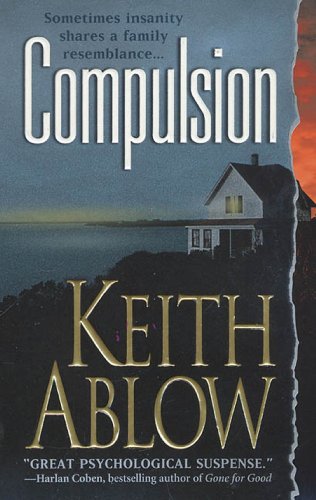
Items related to Compulsion: A Novel
Synopsis
Burdened by his own psychological scars, brilliant forensic psychiatrist, Dr. Frank Clevenger, has weathered the most extreme twists of the human mind. Then he receives a disturbing call from Nantucket's Chief of Police. The five-month-old daughter of prominent billionaire, Darwin Bishop, has been found murdered in her crib.
The obvious suspect is Darwin's adopted sociopathic son, Billy. Even Clevenger can't fathom the motive behind the troubled boy's murder of an infant. But what is Billy really running from? Does Darwin's stunning wife Julia know? If she does, she isn't talking. Neither is the Bishop's other son who's harboring terrible secrets of his own.
Falling for Julia is Clevenger's first mistake. Investigating the Bishops' twisted emotional landscape is his second. It's done more than just draw him into the maze of a psychosexual family history. It's trapped him. As his own demons rise to the surface, he must play the ultimate mind game to catch a killer-and make it out alive...
The obvious suspect is Darwin's adopted sociopathic son, Billy. Even Clevenger can't fathom the motive behind the troubled boy's murder of an infant. But what is Billy really running from? Does Darwin's stunning wife Julia know? If she does, she isn't talking. Neither is the Bishop's other son who's harboring terrible secrets of his own.
Falling for Julia is Clevenger's first mistake. Investigating the Bishops' twisted emotional landscape is his second. It's done more than just draw him into the maze of a psychosexual family history. It's trapped him. As his own demons rise to the surface, he must play the ultimate mind game to catch a killer-and make it out alive...
"synopsis" may belong to another edition of this title.
About the Author
Keith Ablow, M.D., like his protagonist, is a forensic psychiatrist who has testified in some of the nation's most highly publicized trials. He has written two other Frank Clevenger novels, Denial, Projection, and most recently Psychopath. He lives in Massachusetts.
From the Back Cover
"Keith Ablow is king of the psychological thriller." -Dennis Lehane, author of Mystic River
Burdened by his own psychological scars, brilliant forensic psychiatrist, Dr. Frank Clevenger, has weathered the most extreme twists of the human mind. Then he receives a disturbing call from Nantucket's Chief of Police. The five-month-old daughter of prominent billionaire, Darwin Bishop, has been found murdered in her crib.
"Utterly compelling...a roller coaster of a mystery with hairpin twists and turns that shock and astonish ." -Tess Gerritsen, bestselling author of The Surgeon
The obvious suspect is Darwin's adopted sociopathic son, Billy. Even Clevenger can't fathom the motive behind the troubled boy's murder of an infant. But what is Billy really running from? Does Darwin's stunning wife Julia know? If she does, she isn't talking. Neither is the Bishop's other son who's harboring terrible secrets of his own.
"The suspense is riveting and the outcome surprising." --Washington Post Book World
Falling for Julia is Clevenger's first mistake. Investigating the Bishops' twisted emotional landscape is his second. It's done more than just draw him into the maze of a psychosexual family history. It's trapped him. As his own demons rise to the surface, he must play the ultimate mind game to catch a killer-and make it out alive...
"Keith Ablow's setting is the darkest of all-the twists and turns of the human mind. Compulsion is compulsive reading." -Harlan Coben, author of Gone for Good
Burdened by his own psychological scars, brilliant forensic psychiatrist, Dr. Frank Clevenger, has weathered the most extreme twists of the human mind. Then he receives a disturbing call from Nantucket's Chief of Police. The five-month-old daughter of prominent billionaire, Darwin Bishop, has been found murdered in her crib.
"Utterly compelling...a roller coaster of a mystery with hairpin twists and turns that shock and astonish ." -Tess Gerritsen, bestselling author of The Surgeon
The obvious suspect is Darwin's adopted sociopathic son, Billy. Even Clevenger can't fathom the motive behind the troubled boy's murder of an infant. But what is Billy really running from? Does Darwin's stunning wife Julia know? If she does, she isn't talking. Neither is the Bishop's other son who's harboring terrible secrets of his own.
"The suspense is riveting and the outcome surprising." --Washington Post Book World
Falling for Julia is Clevenger's first mistake. Investigating the Bishops' twisted emotional landscape is his second. It's done more than just draw him into the maze of a psychosexual family history. It's trapped him. As his own demons rise to the surface, he must play the ultimate mind game to catch a killer-and make it out alive...
"Keith Ablow's setting is the darkest of all-the twists and turns of the human mind. Compulsion is compulsive reading." -Harlan Coben, author of Gone for Good
From the Inside Flap
Praise for the novels of Keith Ablow
Compulsion
"Compelling, graceful, and nearly impossible to put down."-Robert Parker, author of Widow's Walk
"No one burrows into the darkest recesses of the human mind as deeply as Keith Ablow."
-Tess Gerritsen, author of The Surgeon
"Keith Ablow is a master of psychological suspense. This is a dark, taut, terrifying novel, driven by a talented psychiatrist's insights into the human condition. Stoke up the fire, curl up with Compulsion, and be prepared for a sleepless night."-Michael Palmer, author of Fatal
"Frank Clevenger is a wonderfully flawed hero, as haunted by his own demons as the sociopaths he faces, and Ablow writes like a man possessed-with a pace so blistering the pages will all but singe your hands."-Dennis Lehane, author ofMystic River
"Fast-paced and frightening, Compulsion is a novel that explores the very nature of evil itself. Psychiatrist Frank Clevenger is a hero with heart, soul-and brains."-Janet Evanovich, author ofHard Eight
"From the first sentence to the last, Compulsion is mesmerizing. A tense and sexy thriller stocked to the brim with juicy characters...featuring an utterly shocking, yet thoroughly convincing family of fiends...with deft intelligence, Ablow maps the torturous terrain of the darkest regions of the human heart."-James W. Hall, bestselling author ofBlackwater Sound
"This series just keeps getting better. Frank Clevenger is a real original: a jeans-clad, black-turtleneck-wearing head shaven loner whose compassion for victims of violent crimes-and the perpetrators of those crimes-threatens to destroy him. Whether Clevenger is entirely fictional, or a reflection of his creator's dark side (Ablow is a practicing forensic psychiatrist), the upshot is the same: He's a brilliant creation and this is a brilliant novel."--Booklist(starred reviews)
"The present is wounded by the past in an expertly judged psychological thriller...a solid, satisfying case."--Kirkus Reviews
"The author, a practicing forensic psychiatrist, uses his extensive knowledge of mental illness and violence to lend authenticity to Compulsion, weaving a suspenseful mystery around riveting insights into the criminal mind. An engrossing thriller that belongs on your summer reading list"-Bookpage
"Action nimbly shifts from gritty urban Boston to window-dressed Nantucket, and the people and politics are realistically portrayed, including the ballsy but deeply flawed protagonist...this one scores as a great psychological mind-bender."--Publishers Weekly
Projection
"Projection is a crime novel like no other. It's a week in the loony bin; it's a psycho tour de force. Keith Ablow has the expertise and an overachiever's grasp. Ablow has...the instincts of a Zen Thomas Harris."-James Ellroy, bestselling author ofL.A. Confidential
"This realistic and suspenseful story should please laymen and experts alike."-Booklist
"Projection...isn't for the squeamish...Readers of Thomas Harris's gruesome Hannibal Lector tales...would do well to look here."-Boulder Camera
"Projection is first-rate fiction: smart, tough, and moving."-Robert B. Parker, author ofWidow's Walk
"A trip into the catacombs of the mind...Ablow, a forensic psychiatrist, understands the darkest recesses of the human mind."-Cleveland Plain Dealer
"A tale lavishly laced with sex and violence." -Publishers Weekly
Denial
"A stark and terrifying journey into the mind of the criminally insane. An absolutely spellbinding and shocking tale."--Nelson DeMille
"Gripping...The forensic details are convincing, and the writing is sharp, making Clevenger's return trip from hell an undeniably uplifting story."--Peoplemagazine
"Deftly, with driving prose, Ablow portrays the horror and bleakness of damaged lives." --Jonathan Kellerman, bestselling author ofFlesh and Blood
"Sex, murder, madness, and medicine. What more could any thriller reader want? A disturbing, riveting read,Denialis written with insights only a forensic psychiatrist could have, with characters vividly human because they're humanly flawed. Keith Ablow has written the prescription for terror. Readers should fill it only if they are caught up on their sleep."
--Michael Palmer, bestselling author of Fatal
"Denial placed the reader on the cutting edge of psychiatric thrillers, and in the hands of an author whose expertise as a psychiatrist make this story as authentic as it is compelling."
-Bestselling true crime writer Jack Olsen
"Wonderful inside detail...the psychological thriller has gotten some professional help, and it works."-Newsday
"Denial, which is a perfect title, is not easy to read, but it is harder to put down. The characters are compelling for all their flaws, the story is tightly told, and the outcome is anything but predictable."-The Cleveland Plain Dealer
"A first-rate debut thriller involving forensic psychology...A distinctly unusual hero...A novel for the self-destructive in all of us."--Kirkus Reviews (starred)
"A convincing, seductively fascinating portrait of a man and a milieu obsessed with sensation and trapped in denial of that obsession."--Publishers Weekly
"Every once in a while, a mystery comes along that, while compelling, exciting and satisfying, is more like great literature, than junk food to be gobbled down and immediately forgotten.Denialis such a read, a superb, even sublime, novel."-John L. Schwartz, M.D.,Psychiatric Times
"A powerful first novel by a forensic psychiatrist who plumbs the depths of misery and degradation even better than Patricia Cornwell and as good as Jonathan Kellerman."-The Register Herald (Beckley, WV)
"Ablow weaves an intriguing story...Only someone with this background could create such real characters in a compelling debut."-Southbridge(MA) Evening News
Compulsion
"Compelling, graceful, and nearly impossible to put down."-Robert Parker, author of Widow's Walk
"No one burrows into the darkest recesses of the human mind as deeply as Keith Ablow."
-Tess Gerritsen, author of The Surgeon
"Keith Ablow is a master of psychological suspense. This is a dark, taut, terrifying novel, driven by a talented psychiatrist's insights into the human condition. Stoke up the fire, curl up with Compulsion, and be prepared for a sleepless night."-Michael Palmer, author of Fatal
"Frank Clevenger is a wonderfully flawed hero, as haunted by his own demons as the sociopaths he faces, and Ablow writes like a man possessed-with a pace so blistering the pages will all but singe your hands."-Dennis Lehane, author ofMystic River
"Fast-paced and frightening, Compulsion is a novel that explores the very nature of evil itself. Psychiatrist Frank Clevenger is a hero with heart, soul-and brains."-Janet Evanovich, author ofHard Eight
"From the first sentence to the last, Compulsion is mesmerizing. A tense and sexy thriller stocked to the brim with juicy characters...featuring an utterly shocking, yet thoroughly convincing family of fiends...with deft intelligence, Ablow maps the torturous terrain of the darkest regions of the human heart."-James W. Hall, bestselling author ofBlackwater Sound
"This series just keeps getting better. Frank Clevenger is a real original: a jeans-clad, black-turtleneck-wearing head shaven loner whose compassion for victims of violent crimes-and the perpetrators of those crimes-threatens to destroy him. Whether Clevenger is entirely fictional, or a reflection of his creator's dark side (Ablow is a practicing forensic psychiatrist), the upshot is the same: He's a brilliant creation and this is a brilliant novel."--Booklist(starred reviews)
"The present is wounded by the past in an expertly judged psychological thriller...a solid, satisfying case."--Kirkus Reviews
"The author, a practicing forensic psychiatrist, uses his extensive knowledge of mental illness and violence to lend authenticity to Compulsion, weaving a suspenseful mystery around riveting insights into the criminal mind. An engrossing thriller that belongs on your summer reading list"-Bookpage
"Action nimbly shifts from gritty urban Boston to window-dressed Nantucket, and the people and politics are realistically portrayed, including the ballsy but deeply flawed protagonist...this one scores as a great psychological mind-bender."--Publishers Weekly
Projection
"Projection is a crime novel like no other. It's a week in the loony bin; it's a psycho tour de force. Keith Ablow has the expertise and an overachiever's grasp. Ablow has...the instincts of a Zen Thomas Harris."-James Ellroy, bestselling author ofL.A. Confidential
"This realistic and suspenseful story should please laymen and experts alike."-Booklist
"Projection...isn't for the squeamish...Readers of Thomas Harris's gruesome Hannibal Lector tales...would do well to look here."-Boulder Camera
"Projection is first-rate fiction: smart, tough, and moving."-Robert B. Parker, author ofWidow's Walk
"A trip into the catacombs of the mind...Ablow, a forensic psychiatrist, understands the darkest recesses of the human mind."-Cleveland Plain Dealer
"A tale lavishly laced with sex and violence." -Publishers Weekly
Denial
"A stark and terrifying journey into the mind of the criminally insane. An absolutely spellbinding and shocking tale."--Nelson DeMille
"Gripping...The forensic details are convincing, and the writing is sharp, making Clevenger's return trip from hell an undeniably uplifting story."--Peoplemagazine
"Deftly, with driving prose, Ablow portrays the horror and bleakness of damaged lives." --Jonathan Kellerman, bestselling author ofFlesh and Blood
"Sex, murder, madness, and medicine. What more could any thriller reader want? A disturbing, riveting read,Denialis written with insights only a forensic psychiatrist could have, with characters vividly human because they're humanly flawed. Keith Ablow has written the prescription for terror. Readers should fill it only if they are caught up on their sleep."
--Michael Palmer, bestselling author of Fatal
"Denial placed the reader on the cutting edge of psychiatric thrillers, and in the hands of an author whose expertise as a psychiatrist make this story as authentic as it is compelling."
-Bestselling true crime writer Jack Olsen
"Wonderful inside detail...the psychological thriller has gotten some professional help, and it works."-Newsday
"Denial, which is a perfect title, is not easy to read, but it is harder to put down. The characters are compelling for all their flaws, the story is tightly told, and the outcome is anything but predictable."-The Cleveland Plain Dealer
"A first-rate debut thriller involving forensic psychology...A distinctly unusual hero...A novel for the self-destructive in all of us."--Kirkus Reviews (starred)
"A convincing, seductively fascinating portrait of a man and a milieu obsessed with sensation and trapped in denial of that obsession."--Publishers Weekly
"Every once in a while, a mystery comes along that, while compelling, exciting and satisfying, is more like great literature, than junk food to be gobbled down and immediately forgotten.Denialis such a read, a superb, even sublime, novel."-John L. Schwartz, M.D.,Psychiatric Times
"A powerful first novel by a forensic psychiatrist who plumbs the depths of misery and degradation even better than Patricia Cornwell and as good as Jonathan Kellerman."-The Register Herald (Beckley, WV)
"Ablow weaves an intriguing story...Only someone with this background could create such real characters in a compelling debut."-Southbridge(MA) Evening News
Excerpt. © Reprinted by permission. All rights reserved.
Compulsion
1
Saturday, June 22, 2002
Lilly Cunningham looked up. I melted. She was twenty-nine years old, with pale blue eyes to get lost in. Her blond, curly hair would make any man want to touch it. Her strong forehead predicted intelligence and was perfectly balanced by the gentle slope of her nose. Then there were her full lips, dimples in her cheeks, her long, slender neck. A simple gold cross on a delicate chain pointed toward the curves of her chest and abdomen, rising and falling under a white sheet.
Part of me wanted to let my attention linger on Lilly's beauty, but the bigger part of me loves truth, which is almost always about something ugly. My eyes moved to her exposed thigh.
The flesh was inflamed from groin to knee. The skin had broken down in places, spreading like wet parchment, weeping pinkish fluid. Two serpentine black lines, in Magic Marker, each running twelve or fourteen inches through the muck, showed where her surgeon would make incisions to promote drainage.
A war was being fought. Battle lines had been drawn.
"I don't believe we've met," Lilly said, her voice straining.
"Dr. Clevenger," I said, still focused on her thigh. Istayed several feet from the bed, which is my habit when first seeing patients.
"Hmm. Shaved head, jeans, cowboy boots. You don't look like any doctor I've ever seen. Certainly not at Mass General."
I met her gaze. "What do I look like?"
She worked at a smile. "I don't know. An artist, maybe ... or a bartender." She laughed, but weakly. "You have a first name?"
"Frank."
"Okay, then, Dr. Frank Clevenger. What's your line? Surgery? Internal medicine? Infectious disease?"
"I'm a psychiatrist."
She shook her head and turned toward the wall. "This is un-fucking believable."
I stood there a few moments, staring through the tangle of IV tubing that dripped amphotericin and vancomycin into Lilly's subclavian vein. A window just beyond the hanging bottles looked onto Boston's Charles River at dusk, its waters blue-gray and utterly still. I tried again. "Do you mind if I ask a few questions?"
"You can do whatever you want. I don't care."
I heard a fusion of anger and surrender in her voice. And I sensed something more in the way she half-whispered, half-swallowed the word care. A hint of seductiveness. Her tone made me imagine that I could, quite literally, do whatever I wanted to her. I took a mental note of that feeling, wondering whether she provoked it in others--and why. I stepped closer to the bed. "Do you know why your doctors asked me to see you?"
"Probably because they keep screwing up," she complained, shaking her head and exhaling in exasperation. "They can't figure out what's wrong with me, so they're calling me crazy."
That was half right. Her doctors were calling her crazy, but they had figured out exactly what was wrong with her--at least, physically.
Drake Slattery, chief of the internal medicine department,had filled me in. He is a lumberjack of a man who wrestled for Duke, and the muscles of his crossed arms had begun to ripple as he spoke. "She presented about four months ago, fresh from her honeymoon on St. Bart's. Mild fever, red blotch on her thigh. I'm figuring some tropical insect took a bite out of her, left her with a little cellulitis. Nothing to write home about. Like an idiot, though, I trash my whole schedule to get her worked up and started on antibiotics right away."
"Is she that pretty?" I had asked.
He looked offended. "Professional courtesy; she's a nurse over at Brigham & Women's."
"Fair enough."
"And she happens to be gorgeous."
I smiled.
"So I dose her up on ampicillin, which seems to work," he said. "But then, two weeks later, she's back in the emergency room. The leg is puffed up twice normal size. She says she feels like someone's jamming a red-hot knife into her thigh. And she's running a fever of 103." His arms started rippling, again. "The ampicillin doesn't seem to cut it anymore, so I add a chaser of Rocephin. And the swelling goes down pretty quickly. All's well that ends well, right? Sometimes you have to go after the bugs with bigger guns."
Slattery was an avid hunter, which made it hard for me to like him, despite his rare combination of genius and dry wit. "You're the shooter," I said.
He winked. "Five days later, she's down in the ER again, bigger and redder than ever. Shaking like a leaf. Fever of 105. Now I'm worried. I don't know what to think. Lymphatic obstruction from a malignancy? Sarcoidosis? I even wondered about some weird presentation of AIDS. I never guessed what was really going on."
Over the next few months, Slattery admitted Lilly to Mass General four times, treating her with a dozen different antifungal and antibiotic agents. Some seemed successful, dropping her white blood cell count and stopping the chills and sweats that plagued her. But, inevitably, she would returnto the emergency room within days, infected and feverish again.
A CAT scan of her leg showed no tumor. A bone scan revealed no osteomyelitis. Repeated blood cultures failed to turn up any offending bacterium. So Slattery finally had a surgeon biopsy the semitendinous and biceps femoris muscles of Lilly's leg. He forwarded the tissue samples to the bacteriology laboratory of the National Institute of Infectious Disease in Bethesda, Maryland. The report came in a week later: Pseudomonas fluorescens, a pathogen generally found in soil.
"We gave her husband the news first," Slattery had told me. "He broke down and admitted he'd found a frigging syringe caked with mud at the back of one of her drawers. Wrapped in a pair of her panties."
That image turned my skin to gooseflesh.
"Here we are busting our asses trying to keep this mental case from losing her leg," Slattery went on, "and it turns out she's been injecting herself with dirt."
"That might say something about how she sees herself," I said.
"To you, maybe. To me, it says she has no business being in the hospital. She's stealing--my time, not to mention the hospital's resources."
"I'd bet this case is all about stealing. But the key is to figure out what was stolen from her."
"You're the poet," Slattery had said wryly. "That's why I called you in."
I looked at Lilly lying in bed, still facing the wall. The technical term for her condition was Munchausen syndrome, intentionally creating physical symptoms in order to get attention from doctors. The name derives from Baron Karl Friedrich von Münchausen, a Paul Bunyan-like storyteller. Research studies have shown that a high percentage of patients with the disorder have, like Lilly, worked in the health care field.
Many patients with Munchausen syndrome were also hospitalized when they were children. One theory is thatthey faced terrible abuse at home and were so relieved by the kindness shown them by doctors that they came to associate being sick with being safe. As adults they became dependent on using the sick role to numb their underlying emotional pain and keep distressing memories from surfacing--the same way drug addicts use heroin.
To treat Munchausen's, a psychiatrist must coax the patient to confront the original psychological trauma he or she has repressed. If that sounds simple, it isn't. People with Munchausen's will generally flee treatment to avoid any exploration of their underlying problems.
Trying to get Lilly to admit she had caused the infection would just make her shut down. The important thing was to let her know I understood that she was infected. Only one of the pathogens lived in dirt. The other--more toxic and invasive--lived in the remote recesses of her unconscious.
I pulled an armchair to the edge of the bed and sat down. "No one doubts that you're ill," I said. "Dr. Slattery least of all. He told me the infection is very severe."
Lilly didn't move.
I decided to tempt her by bending the professional boundary between us, offering her a little of the physicianly warmth she craved. I reached out and touched one of the black lines her surgeon had drawn on her thigh. "Stress affects the immune system. That's a fact."
Still no response.
I moved my hand to Lilly's hip and let it linger. "As a nurse, I would think you'd agree."
She rolled onto her back. If I hadn't moved my hand, it would have traveled to the lowest part of her abdomen. "Look, I'm sorry I jumped down your throat," she said, staring up at the ceiling. "I'm worn out. There's been one doctor in here after another. Medication after medication. I don't think I've been home five days in a row, between admissions." She let out a long breath. "Not exactly an extended honeymoon."
"You're newly married," I said. "I read that in your chart."
"I guess my life's just an open book," she said.
"I would guess you're as far from an open book as they come."
She looked at me.
"How long ago did you marry?" I asked.
"Four months."
"Is it everything you expected?"
She stiffened, maybe because I sounded too remote, too analytic, too much the psychiatrist come to diagnose her.
I offered up another bend in the doctor-patient boundary. "I've never tried the marriage thing myself."
"No?"
"Engaged once. It didn't work out."
"What happened?"
I pictured Kathy the last time I had seen her, in her room on a locked psychiatric unit at Austin Grate Hospital. "She wasn't well," I said. "I tried to be her husband and her doctor. I made a mess of both."
"I'm sorry," she said.
"Me, too."
Lilly relaxed visibly. "Paul's been a dream. He's been so understanding about this whole thing. About everything."
"Everything ..."
She blushed like a schoolgirl. "We didn't have much time to be, you know ..."
I shrugged and shook my head, even though I did know.
"Well, time to be"--she giggled--"newlyweds."
"Did you have any time at all?"
"The problem with my leg started right after we left for St. Barth. We ended up flying home early."
"But he understood."
"He's never pressured me," she said. "He's a very patient man. He reminds me of my grandfather that way. I think that's the reason I fell in love with him."
Sometimes a voice speaks at the back of my mind as Italk with patients. It is my voice, but it comes from a part of me over which I do not have complete control--a part that listens between the lines, even my own lines, then plays back what has gone unspoken. "Sex, pain, grandfather. When making love feels like being injected with dirt, you cut the honeymoon short and head for the hospital."
"Tell me about him," I said, wanting to let her decide which man to talk about.
"Grandpa?"
I just smiled.
"He's quiet and strong. Very religious." She paused. "My father died when I was six. My mother and I moved in with my grandparents."
"Are they still living?"
"Thankfully," she said.
"Do they know about the trouble you're having?"
She shook her head. "I haven't told anyone in my family."
"Not even your mother?"
"No."
I felt as though I had found a path into Lilly's psyche. I could speak of the infection in her leg as a metaphor for her childhood trauma. "Keeping a secret--especially a big one, like this--can add to your level of stress," I said.
"My grandparents are old now. And my mother's got her own problems to worry about. I don't want to burden them."
"But they care about you, and you're in pain."
"I can handle it," she said.
"After you've lost your father," the voice at the back of my mind said, "you don't risk losing your grandfather, no matter what it costs to keep him close. Even if it costs you your innocence. Or your leg."
I kept speaking in metaphor. "It could be a long haul, getting to the bottom of this infection. You might want someone you can open up to. Someone outside your family." I glanced at the skin of her thigh where it stretched,tight and shiny, over the inflamed tissues below. "To release some of the pressure."
"They do the incision and drainage tomorrow afternoon," she said.
"Otherwise the infection has nowhere to go but deeper."
She gazed down at her leg. "I guess it's going to look pretty ugly once they open it up."
"I've seen ... and heard ... just about everything," I said.
She studied the leg a few seconds longer, then looked at me.
"If it's okay with you, I'll stop by after the procedure." She nodded.
"Good." I squeezed her hand, stood up, then headed for the door.
That's what a little victory in psychiatry looks like. You slip into the shadows, dodging the mind's defense mechanisms, glad enough to take a half-step toward the truth. Behind the next word or the next glance may lurk the demon you seek, all in flames, desperate to be held, but set to flee.
As I left Lilly's room I caught the "-venger" part of my name being paged overhead. I stopped at the nurses' station, picked up the phone, and dialed the hospital operator. "Frank Clevenger," I said.
"Outside call, Doctor. Hold on."
There was dead air, then a deep voice said, "Hello?"
Even after two years I recognized North Anderson's baritone. He was a forty-two-year-old police officer from Baltimore, a black man as intimate with the dark city streets as with the veins coursing through his perfectly muscled, weight trainer's body. We had become fast friends working the forensic case I had sworn would be my last. Plumbing the minds of murderers had finally worn my own psyche paper-thin. "It's been too long," I said.
"I would have called sooner, but ..."
But we reminded each other of carnage. We reminded one another of Trevor Lucas, a plastic surgeon gone madwho had taken over a locked psychiatric unit, performing grisly surgeries, including amputations, on select patients and staff. Before we could convince him to surrender, which only happened after I went onto that locked unit with him, he harvested a grotesque sampling of body parts that still floated through my nightmares. Anderson couldn't be sleeping any better himself. "You don't need to explain," I said.
A few seconds passed. "You'll never guess where I'm working now."
Anderson was as tough and streetwise a cop as I'd ever met. "Gang unit?"
"Not even close."
"Vice Squad," I said.
"Nantucket," he said.
"Nantucket?"
"You remember how I like the ocean," he said. "They advertised for a chief of police; I sent in a résumé. Been here sixteen months. I actually sailed North's Star up here myself."
North's Star was Anderson's thirty-two-foot Catalina sloop, one of the loves of his life. The only greater ones were his wife, Tina, and his daughter, Kristie.
"I figure I did my time on the front lines, you know?" he said.
I knew. All too well. Anderson had retreated to an island. I had retreated to the halls of Harvard medicine. "You did more than your share," I said.
He cleared his throat. "I could use your help."
His tone made me wonder whether he was battling a depression of his own. "I'll do anything I can. What's up?"
"The Bishop family," he said, as if that would explain everything.
"Who are they?"
"Darwin Bishop."
"Never heard of him," I said.
"The billionaire? Consolidated Minerals & Metals--CMM? It's publicly traded."
"Hey, you may live in that world now, but I don't hang in Nantucket," I said. "And I don't play the market. I always liked the track better."
"They made national news last night," he prompted.
"I try to stay away from the news, too."
Anderson got to the point. "One of his little twin girls was found dead in her crib. Five months old."
I closed my eyes and leaned against the wall. I had worked with other families stricken by SIDS, an unpredictable condition that cuts off breathing in infants, taking them in their sleep. "Sudden infant death syndrome," I said.
"Maybe ... We're not so sure. There are two older, adopted sons in the family--sixteen and seventeen years old. The younger one has a history of violence. Really ugly stuff, including strangling a few neighborhood cats."
I knew where the discussion was headed. And I knew that Trevor Lucas had left me without the heart to go there. "I don't do forensic work anymore," I said.
"So I hear. The chief back in Baltimore said he tried you once or twice," he said.
"Four times."
"Can't blame him. You have a gift."
"That's one way to look at it," I said.
"I'm not expecting an investigation," he said, "just an evaluation."
"The answer is still no."
"I'll sign a purchase order for whatever you think is fair."
"Christ, North, you know it's not about the money."
"Look," he said, "the D.A. here is leaning on me. He wants the younger brother arrested and charged with murder. He'll try him as an adult and aim for life in prison, no parole."
Few things outrage me more than a judicial system that bends chronology in service to vengeance, and Anderson knew it. I stayed silent.
"He's only sixteen," Anderson went on. "The Bishops adopted him from a Russian orphanage at six. Who knowswhat kind of hell he went through before that?"
"I've got my work cut out for me right here," I said, half to remind myself.
"I don't want to push you, but there's something that bothers me about this family--especially the way the father laid out a red carpet for me to question his son. You're the best I've ..."
"I'm trying to stay focused." I was also trying to stay sober, not to mention sane. "Why don't you call Ken Sklar or Bob Caggiano at North Shore Medical Center? They work with Judith David. You know the group. They're world class."
"One interview with the boy," he pressed. "That's all I'm asking."
I didn't want to let Anderson down. But I didn't know how far into darkness I could walk without losing my way forever. "If you want me to call Sklar myself and ask him the favor, I will."
"I want you."
"No," I said, "you want part of me I left behind two years ago, the part Trevor Lucas took." I didn't give him the chance to respond. "Listen, I got to finish up rounds."
"Frank ..."
"I'll give you a call some time." I laid the receiver back in its cradle.
Copyright © 1997 by Keith Ablow Excerpt from Psychopath copyright © 2003 by Keith Ablow
"About this title" may belong to another edition of this title.
Search results for Compulsion: A Novel

Stock Image
Compulsion
Seller: World of Books (was SecondSale), Montgomery, IL, U.S.A.
Seller rating 5 out of 5 stars

Paperback. Condition: Good. Dr Frank Clevenger, a brilliant forensic psychiatrist, is eager to leave the world of the criminally insane behind - until he receives a disturbing call from Nantucket's chief of police. The five-month-old daughter of a billionaire has been found murdered in her cot. Seller Inventory # 00088438157
Stock Image
Compulsion
Seller: World of Books (was SecondSale), Montgomery, IL, U.S.A.
Seller rating 5 out of 5 stars
Paperback. Condition: Very Good. Dr Frank Clevenger, a brilliant forensic psychiatrist, is eager to leave the world of the criminally insane behind - until he receives a disturbing call from Nantucket's chief of police. The five-month-old daughter of a billionaire has been found murdered in her cot. Seller Inventory # 00107376122
Stock Image
Compulsion: A Novel (Frank Clevenger)
Published by
St. Martin's Paperbacks, 2003
ISBN 10: 0312988249
ISBN 13: 9780312988241
Used
Paperback
Seller: Gulf Coast Books, Cypress, TX, U.S.A.
Seller rating 5 out of 5 stars
Paperback. Condition: Very Good. Seller Inventory # 0312988249-2-21060778
Stock Image
Compulsion: A Novel
Published by
St. Martin's Paperbacks (edition Reprint), 2003
ISBN 10: 0312988249
ISBN 13: 9780312988241
Used
Paperback
Seller: BooksRun, Philadelphia, PA, U.S.A.
Seller rating 5 out of 5 stars
Paperback. Condition: Fair. Reprint. The item might be beaten up but readable. May contain markings or highlighting, as well as stains, bent corners, or any other major defect, but the text is not obscured in any way. Seller Inventory # 0312988249-7-1
Stock Image
Compulsion
Seller: World of Books Inc, Montgomery, IL, U.S.A.
Seller rating 4 out of 5 stars

Paperback. Condition: Very Good. Dr Frank Clevenger, a brilliant forensic psychiatrist, is eager to leave the world of the criminally insane behind - until he receives a disturbing call from Nantucket's chief of police. The five-month-old daughter of a billionaire has been found murdered in her cot. Seller Inventory # CIN0312988249VG
Stock Image
Compulsion
Seller: World of Books Inc, Montgomery, IL, U.S.A.
Seller rating 4 out of 5 stars
Paperback. Condition: Good. Dr Frank Clevenger, a brilliant forensic psychiatrist, is eager to leave the world of the criminally insane behind - until he receives a disturbing call from Nantucket's chief of police. The five-month-old daughter of a billionaire has been found murdered in her cot. Seller Inventory # CIN0312988249G
Stock Image
Compulsion: A Novel
Published by
St. Martin's Paperbacks, 2003
ISBN 10: 0312988249
ISBN 13: 9780312988241
Used
paperback
Seller: HPB-Ruby, Dallas, TX, U.S.A.
Seller rating 5 out of 5 stars
paperback. Condition: Very Good. Connecting readers with great books since 1972! Used books may not include companion materials, and may have some shelf wear or limited writing. We ship orders daily and Customer Service is our top priority! Seller Inventory # S_471066754
Stock Image
Compulsion: A Novel
Published by
St. Martin's Paperbacks, 2003
ISBN 10: 0312988249
ISBN 13: 9780312988241
Used
paperback
Seller: HPB-Movies, Dallas, TX, U.S.A.
Seller rating 4 out of 5 stars
paperback. Condition: Very Good. Connecting readers with great books since 1972! Used books may not include companion materials, and may have some shelf wear or limited writing. We ship orders daily and Customer Service is our top priority! Seller Inventory # S_462211567
Stock Image
Compulsion: A Novel
Published by
St. Martin's Paperbacks, 2003
ISBN 10: 0312988249
ISBN 13: 9780312988241
Used
paperback
Seller: Half Price Books Inc., Dallas, TX, U.S.A.
Seller rating 5 out of 5 stars
paperback. Condition: Very Good. Connecting readers with great books since 1972! Used books may not include companion materials, and may have some shelf wear or limited writing. We ship orders daily and Customer Service is our top priority! Seller Inventory # S_477215557
Stock Image
Compulsion: A Novel
Published by
St. Martin's Paperbacks, 2003
ISBN 10: 0312988249
ISBN 13: 9780312988241
Used
paperback
Seller: HPB-Diamond, Dallas, TX, U.S.A.
Seller rating 5 out of 5 stars
paperback. Condition: Very Good. Connecting readers with great books since 1972! Used books may not include companion materials, and may have some shelf wear or limited writing. We ship orders daily and Customer Service is our top priority! Seller Inventory # S_453211888