
Items related to Generation Ecstasy:Into the World of Techno and Rave...
Synopsis
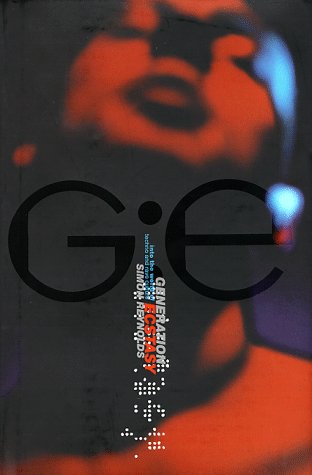
Explores the popularity of electronic dance music and the culture surrounding it, focusing on the fad of midnight-to-dawn revels, known as "raves," which offers a Dionysian world of dance, drugs, and debauchery
"synopsis" may belong to another edition of this title.
Reviews
While disappointed that Reynolds doesn't mention the unofficial raver credo of PLUR (peace, love, unity, respect), I appreciate that Generation Ecstasy is a labor of love.
"I finally grasped viscerally why the music was made the way it was; how certain tingly textures goosepimpled your skin and particular oscillator riffs triggered the E-rush.... Finally, I understood ecstasy as a sonic science. And it became even clearer that the audience was the star." British-born Spin magazine senior editor Reynolds (Blissed Out; coauthor, The Sex Revolts) offers a revved-up, detailed and passionate history and analysis of the throbbing transcontinental set of musics and cultures known as rave, covering its brightly morphing family tree from Detroit techno and Chicago house to Britain's 1988 "summer of love," on through London jungle and the German avant-garde to the current warehouse parties and turntables of Europe and America. One chapter explains, cogently, the pleasures and effects of the drug Ecstasy (MDMA, or "E"), without which rave would never have evolved; others describe the roles of the DJ, the remix and pirate radio, the "trance" and "ambient" trends of the early 1990s, the rise and fall of would-be stars, the impact of other drugs and the proliferation of current club "subsubgenres." Assuming no prior knowledge in his readers, Reynolds mixes social history, interviews with participants and scene-makers and his own analyses of the sounds, saturating his prose with the names of key places, tracks, groups, scenes and artists. Reynolds prefers and champions the less intellectual, more anonymous and dance-crazed parts of the rave galaxy, "from the most machinic forms of house... through... bleep-and-bass, breakbeat house, Belgian hardcore, jungle, gabba, street garage and big beat." If you don't know what those terms mean, here's how to find out. Two eight-page b&w photo inserts and a discography.
Copyright 1998 Reed Business Information, Inc.
Rock journalist Reynolds (The Sex Revolts, not reviewed) chronicles how MDMA (a psychedelic amphetamine, a.k.a. ``ecstasy'') and MIDI (computer sound technology) together spawned the unique dance culture of the ``chemical generation.'' While America has never quite caught on to electronic dance music, techno and acid house have been the last decade's dominant European pop music genres. Reynolds, a writer for Rolling Stone, Spin, and iD, has been watching the scene since the late 1980s, when England, Germany, and Holland began transforming imported Detroit techno and Chicago house. Once ecstasy was introduced into British clubs, its sense-heightening and empathy-elevating effects fused with the soundtrack, becoming for house what LSD was for psychedelic rock. Reynolds, declaring a ``rockist'' bias, mostly prefers discussing recording artists, DJs, and subgenres over describing rave culture's underground dance clubs, illegal mass parties in warehouses and country fields, pirate radio stations, or the musics sociological significance. For the uninitiated, his taxonomy of acid house's descendents (Manchester indie-dance, bleep and bass, Belgian hardcore, breakbeat 'ardcore, ambient techno, trance, darkcore, Dutch gabba, happy, jungle, to name a few) may seem obsessive. This encyclopedic overview, however, dispassionately charts the inevitable rise and fall of drug-based musical fashion. As dopamine and serotonin abuse left the formerly blissed-out ravers with a need for faster tracksup to 300 bpmand additional drugs such as heroin, ketamine, and speed, the original aficionados decried the bastardization of their sound and moved on to different electronic experiments. Reynolds does have some vivid passages of field research, such as his experience of one of Spiral Tribe's 20,000-strong raves in rural Castlemorton, but they can't compare to the E-fictions of Irvine Welsh (The Acid House) or Alan Warner (Morvern Callar). Although neither Reynolds nor anyone else can predict post-rave's future, his hard-core history of its first decade is a heady remix of the soundscape's greatest hits. (16 pages b&w photos, not seen) -- Copyright ©1998, Kirkus Associates, LP. All rights reserved.
The title refers to the drug of choice at the multimedia events typical of Reynolds' subject: the "rave" scene, in which impressionable youngsters congregate in such roomy venues as pastures and warehouses to be musically entertained while under the influence. Rave music includes techno and several other strains, all of them electronic. Reynolds traces it from the German group Kraftwerk's "Krautrock" to disco and funk to the many rave-friendly formats extant today. Besides this music history, Reynolds discusses the panoply of rave-worthy drugs and proper rave attitude and deportment. His occasionally hyperventilating prose may discourage nonfan readers, yet this is a neat history of a cultural anomaly--a strain of pop music with a large audience but nearly no presence in the regular pop music media. And as a special bonus, Reynolds reveals why nitrous oxide is called "hippy crack." A solid addition for pop music collections and perhaps a source of ideas for an in-library festival (well . . . maybe not). Mike Tribby
"About this title" may belong to another edition of this title.
Search results for Generation Ecstasy:Into the World of Techno and Rave...

Stock Image
Generation Ecstasy:Into the World of Techno and Rave Culture
Published by
Little Brown & Co (edition 1), 1998
ISBN 10: 0316741116
ISBN 13: 9780316741118
Used
Hardcover
Seller: BooksRun, Philadelphia, PA, U.S.A.
Seller rating 5 out of 5 stars

Hardcover. Condition: Very Good. 1. With dust jacket. It's a well-cared-for item that has seen limited use. The item may show minor signs of wear. All the text is legible, with all pages included. It may have slight markings and/or highlighting. Seller Inventory # 0316741116-11-1-29
Seller Image
Generation Ecstasy:Into the World of Techno and Rave Culture
Seller: Goodwill Books, Hillsboro, OR, U.S.A.
Seller rating 5 out of 5 stars
Condition: acceptable. Fairly worn, but readable and intact. If applicable: Dust jacket, disc or access code may not be included. Seller Inventory # 3IIT5H005U5Z_ns
Stock Image
Generation Ecstasy:Into the World of Techno and Rave Culture
Seller: Books From California, Simi Valley, CA, U.S.A.
Seller rating 4 out of 5 stars

Hardcover. Condition: Good. Dust Jacket Condition: Includes dust jacket. General shelf wear to cover/spine/binding. Pages are clean. Good reading copy. Dust jacket has minor shelf wear. Seller Inventory # mon0004038017
Stock Image
Generation Ecstasy:Into the World of Techno and Rave Culture
Seller: GoldBooks, Denver, CO, U.S.A.
Seller rating 5 out of 5 stars
Hardcover. Condition: new. New Copy. Customer Service Guaranteed. Seller Inventory # 53L98_85_0316741116