
Items related to CMMI Distilled: A Practical Introduction to Integrated...
Synopsis
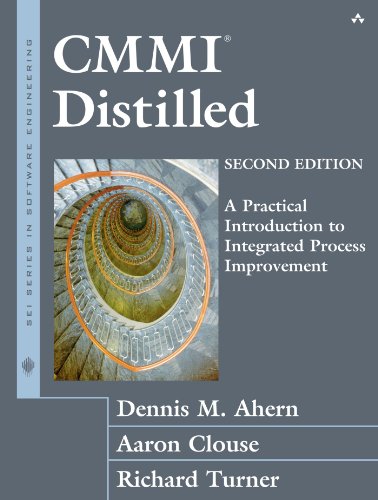
When the first edition of this book was published in 2001, CMMI (Capability Maturity Model Integration) was largely viewed as a standard that was "on the horizon." In the past two years, CMMI has -- pardon the pun -- matured greatly. CMMI is now a recognized and widely-adopted model. This new edition reflects CMMI version 1.1 (the first edition was based on version 1.0). The book contains expanded coverage on the realized return on investment that can be attained through process improvement with CMMI, and the pioneer case studies have been replaced with broader CMMI-specific experience that will enable the reader to more easily adopt this model. The authors also share their understanding of how the CMMI will continue to adapt and remain relevant for years to come. The result is a handy book that is informative, useful, and appropriate to the reader's needs.
"synopsis" may belong to another edition of this title.
About the Author
Dennis M. Ahern is an advisory engineer at Northrop Grumman Corporation. Previously, he taught at Yale University and the University of Maryland. He was the deputy project manager of the CMMI Product Development Team and a co-leader of the CMMI Editor Team. He is also an author of CMMI.
Aaron Clouse is an engineering fellow at Raytheon Company. He was a member of the CMMI Editor Team and is an author of CMMI.
Richard Turner, a research professor in engineering management and systems engineering at the George Washington University, approaches balanced software development and acquisition with broad industry and government experience and a skeptical attitude toward best practices. In support of the U.S. Department of Defense, he is responsible for identifying and transitioning new software technology into the development and acquisition of complex, software-intensive defense systems. Dr. Turner was on the original author team for Capability Maturity Model Integration (CMMI) and is coauthor off CMMI Distilled, Second Edition (Addison-Wesley, 2004).
From the Back Cover
Capability Maturity Model IntegrationSM (CMMI) has rapidly become a preferred means of improving organizational processes in industry and government. Building on a decade of work with process improvement models, including the Capability Maturity Model® (CMM®) for Software and the Systems Engineering Capability Model, a team of over two hundred engineering and process improvement experts worked for three years to create this broader, more agile instrument for guiding, integrating, and appraising improvement activities. CMMI provides a single, integrated framework for improving processes throughout an organization, enhancing the quality and efficiency of the organization as a whole.
The CMMI Product Suite is rich in detail and guidance, but correspondingly large and somewhat complex. The sheer volume of information it presents can seem overwhelming. CMMI Distilled reduced that complexity with a fresh and approachable introduction to the key elements of CMMI and integrated process improvement.
This new edition of CMMI Distilled, updated for CMMI version 1.1, includes more material in layman's language to meet a wider variety of reader's needs, but has not lost any of the technical content that made the first edition so successful. Written for those new to model-based process improvement, it also offers insights that can help even battle-scarred process improvement veterans and experienced systems, software and quality engineers perform better. CMMI® Distilled, Second Edition is especially appropriate for executives and managers who need to understand why process improvement is valuable, why CMMI is a tool of choice, and how to maximize the return on their efforts and investments.
The three authors have been involved with CMMI since its inception, and they bring a wealth of their own experience and knowledge to this book. They highlight the pitfalls and short cuts that are all too often learned by costly experience. Above all, they provide a context for understanding why CMMI is the fastest growing process improvement framework in the world.
0321186133B06272003
Excerpt. © Reprinted by permission. All rights reserved.
Since the first edition of CMMI® Distilled was published, there have been significant changes in the CMMI world. As promised, CMMI-SE/SW/IPPD/SS version 1.1 was released in 2002. Later that year, CMMI-SW was released. In just three years we have seen amazing worldwide adoption rates of the CMMI product suite, with implementation evenly divided between government suppliers and commercial sector organizations. The suite has become recognized as the cutting edge of process improvement technology.
There has been considerable activity in the availability of CMMI-based material, as well. In February 2003, the SEI published its hardbound reference version of the complete model with practitioner information and guidance. The number of technical notes and other guidance published continues to increase. CMMI Transition Partners (licensed by SEI, and currently numbering over 100) have developed their own supplementary materials.
Given this explosion of material, along with the continuing ability to download from the web the models and other components of the product suite, we felt a real need to bring out a second edition of CMMI Distilled. Here are some of the important reasons:
* CMMI version 1.1 contains improvements over version 1.0 (that formed the basis for our first edition).
* CMMI is now a recognized and widely adopted model, so that some of the material concerning the creation of CMMI and its relationship to the legacy models is less important to current readers.
* The pioneer case studies are somewhat out-of-date.
* Even with the publication of the CMMI reference book, the need continues for a broader, more succinct view of CMMI, one that is readily accessible to executives, managers, and practitioners, as well as the simply curious.
* The readers of the first edition of CMMI Distilled sent us thoughtful comments, suggestions and requests.
So what is different in the new edition? Along with the technical changes made to incorporate CMMI version 1.1, you will find more material about how process improvement can affect business goals, how management can support CMMI adoption, and how organizations can take advantage of a broad experience base to ease CMMI implementation. We've added material on the realized return on investment of process improvement initiatives. For those who would like a 30,000-foot view, there is a new overview of the model that links the components to business practices and outcomes. The appraisal chapter has been totally revised, presenting a more practical discussion based on experience with the latest version of SCAMPI. Of course our discussion of CMMI evolution has been updated to reflect our latest understanding of how the model will continue to adapt and remain relevant for a long time to come. Most importantly, the previous edition's well-deserved paean to the author team has been replaced by a new poem, celebrating the model and its potential to provide guidance for a new generation of improving organizations.
—Dennis, Aaron, and Rich
Baltimore, Dallas, and Washington, D.C.
July 2003
0321186133P06062003
"About this title" may belong to another edition of this title.
Search results for CMMI Distilled: A Practical Introduction to Integrated...

Stock Image
CMMI Distilled: A Practical Introduction to Integrated Process Improvement
Published by
Addison-Wesley Professional, 2003
ISBN 10: 0321186133
ISBN 13: 9780321186133
Used
Softcover
Seller: More Than Words, Waltham, MA, U.S.A.
Seller rating 5 out of 5 stars

Condition: Very Good. A bright, square, and overall a nice copy. Seller Inventory # BOS-M-14c-01332
Stock Image
CMMI Distilled: A Practical Introduction to Integrated Process Improvement
Published by
Addison-Wesley Professional, 2003
ISBN 10: 0321186133
ISBN 13: 9780321186133
Used
Paperback
Seller: Open Books, Chicago, IL, U.S.A.
Seller rating 5 out of 5 stars
Paperback. Condition: Very Good. Open Books is a nonprofit social venture that provides literacy experiences for thousands of readers each year through inspiring programs and creative capitalization of books. Seller Inventory # mon0000655044
Stock Image
CMMI Distilled: A Practical Introduction to Integrated Process Improvement
Published by
Addison-Wesley Professional, 2003
ISBN 10: 0321186133
ISBN 13: 9780321186133
Used
paperback
Seller: The Maryland Book Bank, Baltimore, MD, U.S.A.
Seller rating 5 out of 5 stars
paperback. Condition: Very Good. 2nd Edition. Used - Very Good. Seller Inventory # 10-H-5-0164
Stock Image
CMMI Distilled : A Practical Introduction to Integrated Process Improvement
Published by
Pearson Education, Limited, 2003
ISBN 10: 0321186133
ISBN 13: 9780321186133
Used
Softcover
Seller: Better World Books, Mishawaka, IN, U.S.A.
Seller rating 5 out of 5 stars
Condition: Very Good. Pages intact with possible writing/highlighting. Binding strong with minor wear. Dust jackets/supplements may not be included. Stock photo provided. Product includes identifying sticker. Better World Books: Buy Books. Do Good. Seller Inventory # 2274800-6
Stock Image
CMMI Distilled : A Practical Introduction to Integrated Process Improvement
Published by
Pearson Education, Limited, 2003
ISBN 10: 0321186133
ISBN 13: 9780321186133
Used
Softcover
Seller: Better World Books: West, Reno, NV, U.S.A.
Seller rating 5 out of 5 stars
Condition: Very Good. Former library copy. Pages intact with possible writing/highlighting. Binding strong with minor wear. Dust jackets/supplements may not be included. Includes library markings. Stock photo provided. Product includes identifying sticker. Better World Books: Buy Books. Do Good. Seller Inventory # GRP95646797
Stock Image
CMMI Distilled: A Practical Introduction to Integrated Process Improvement
Published by
Addison-Wesley Professional, 2003
ISBN 10: 0321186133
ISBN 13: 9780321186133
Used
Paperback
Seller: ThriftBooks-Atlanta, AUSTELL, GA, U.S.A.
Seller rating 5 out of 5 stars
Paperback. Condition: Very Good. No Jacket. May have limited writing in cover pages. Pages are unmarked. ~ ThriftBooks: Read More, Spend Less. Seller Inventory # G0321186133I4N00
Stock Image
CMMI Distilled: A Practical Introduction to Integrated Process Improvement
Published by
Addison-Wesley Professional, 2003
ISBN 10: 0321186133
ISBN 13: 9780321186133
Used
Paperback
Seller: ThriftBooks-Dallas, Dallas, TX, U.S.A.
Seller rating 5 out of 5 stars
Paperback. Condition: Good. No Jacket. Pages can have notes/highlighting. Spine may show signs of wear. ~ ThriftBooks: Read More, Spend Less. Seller Inventory # G0321186133I3N00
Stock Image
Cmmir Distilled: A Practical Introduction to Integrated Process Improvement (SEI Series in Software Engineering (Paperback))
Seller: AwesomeBooks, Wallingford, United Kingdom
Seller rating 5 out of 5 stars
Paperback. Condition: Very Good. Cmmir Distilled: A Practical Introduction to Integrated Process Improvement (SEI Series in Software Engineering (Paperback)) This book is in very good condition and will be shipped within 24 hours of ordering. The cover may have some limited signs of wear but the pages are clean, intact and the spine remains undamaged. This book has clearly been well maintained and looked after thus far. Money back guarantee if you are not satisfied. See all our books here, order more than 1 book and get discounted shipping. Seller Inventory # 7719-9780321186133
Buy Used
US$ 4.74
US$ 5.50 shipping
Ships from United Kingdom to U.S.A.
Ships from United Kingdom to U.S.A.
Quantity: 2 available
Seller Image
Cmmi® Distilled: A Practical Introduction to Integrated Process Improvement (SEI Series in Software Engineering)
Published by
Addison-Wesley Professional, 2011
ISBN 10: 0321186133
ISBN 13: 9780321186133
Used
paperback
Seller: WeBuyBooks, Rossendale, LANCS, United Kingdom
Seller rating 5 out of 5 stars
paperback. Condition: Very Good. Most items will be dispatched the same or the next working day. A copy that has been read, but is in excellent condition. Pages are intact and not marred by notes or highlighting. The spine remains undamaged. Seller Inventory # rev9315514157
Buy Used
US$ 2.34
US$ 10.13 shipping
Ships from United Kingdom to U.S.A.
Ships from United Kingdom to U.S.A.
Quantity: 1 available
Stock Image
CMMI Distilled : A Practical Introduction to Integrated Process Improvement
Published by
Pearson Education, Limited, 2003
ISBN 10: 0321186133
ISBN 13: 9780321186133
Used
Softcover
Seller: Better World Books Ltd, Dunfermline, United Kingdom
Seller rating 5 out of 5 stars
Condition: Very Good. Former library copy. Pages intact with possible writing/highlighting. Binding strong with minor wear. Dust jackets/supplements may not be included. Includes library markings. Stock photo provided. Product includes identifying sticker. Better World Books: Buy Books. Do Good. Seller Inventory # GRP95646797
Buy Used
US$ 6.26
US$ 6.67 shipping
Ships from United Kingdom to U.S.A.
Ships from United Kingdom to U.S.A.
Quantity: 2 available