
Items related to Photographically Speaking: A Deeper Look at Creating...
Photographically Speaking: A Deeper Look at Creating Stronger Images (Voices That Matter) - Softcover
Synopsis
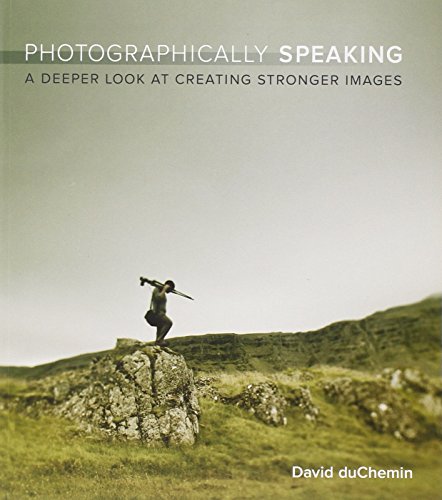
When looking at a photograph, too often a conversation starts–and, unfortunately, ends–with a statement such as, “I like it.” The logical next question, “Why?”, often goes unasked and unanswered. As photographers, we frequently have difficulty speaking about images because, frankly, we don’t know how to think about them. And if we don’t know how to think about a photograph and its “visual language”– how an image is constructed, how it works, and why it works–then, when we’re behind the camera, are we really making images that best communicate our vision, our original intent? Vision–crucial as it is–is not the ultimate goal of photography; expression is the goal. And to best express ourselves, it is necessary to learn and use the grammar and vocabulary of the visual language.
Photographically Speaking is about learning photography’s visual language to better speak to why and how a photograph succeeds, and in turn to consciously use that visual language in the creation of our own photographs, making us stronger photographers who are able to fully express and communicate our vision. By breaking up the visual language into two main components–“elements” make up its vocabulary, and “decisions” are its grammar–David duChemin transforms what has traditionally been esoteric and difficult subject matter into an accessible and practical discussion that photographers can immediately use to improve their craft. Elements are the “words” of the image, what we place within the frame–lines, curves, light, color, contrast. Decisions are the choices we make in assembling those elements to best express and communicate our vision–the use of framing, perspective, point of view, balance, focus, exposure.
All content within the frame has meaning, and duChemin establishes that photographers must consciously and deliberately choose the elements that go within their frame and make the decisions about how that frame is constructed and presented. In the second half of the book, duChemin applies this methodology to his own craft, as he explores the visual language in 20 of his own images, discussing how the intentional choices of elements and decisions that went into their creation contribute to their success.
"synopsis" may belong to another edition of this title.
About the Author
An assignment photographer specializing in humanitarian projects and world photography, David duChemin has been creating compelling stories with a camera in hand for over twenty years. A passionate contributor to the international photography community, duChemin's first book, Within the Frame: The Journey of Photographic Vision, received worldwide acclaim for its vision, passion, and depth. David has shot on five continents for assignments and projects covering places as diverse as Paris, Haiti, Dominican Republic, Ecuador, Peru, Ethiopia, Democratic Republic of Congo, Malawi, Rwanda, Uganda, India, Nepal, and Mongolia. Find David online at Pixelatedimage.com.
"About this title" may belong to another edition of this title.
Search results for Photographically Speaking: A Deeper Look at Creating...

Seller Image
Photographically Speaking: A Deeper Look at Creating Stronger Images (Voices That Matter)
Seller: 2nd Life Books, Burlington, NJ, U.S.A.
Seller rating 5 out of 5 stars

Condition: very_good. Fast Free Shipping â" Very Good condition book with a firm cover and clean pages. Shows normal use and some light wear or limited notes markings. A solid, nice copy to enjoy. Seller Inventory # BXM.DF3N
Stock Image
Photographically Speaking: A Deeper Look at Creating Stronger Images
Seller: World of Books (was SecondSale), Montgomery, IL, U.S.A.
Seller rating 5 out of 5 stars
Paperback. Condition: Good. When looking at a photograph, too often a conversation starts?and, unfortunately, ends?with a statement such as, ?I like it.? The logical next question, ?Why??, often goes unasked and unanswered. As photographers, we frequently have difficulty speaking about images because, frankly, we don?t know how to think about them. And if we don?t know how to think about a photograph and its ?visual language?? how an image is constructed, how it works, and why it works?then, when we?re behind the camera, are we really making images that best communicate our vision, our original intent? Vision?crucial as it is?is not the ultimate goal of photography; expression is the goal. And to best express ourselves, it is necessary to learn and use the grammar and vocabulary of the visual language.Photographically Speaking is about learning photography?s visual language to better speak to why and how a photograph succeeds, and in turn to consciously use that visual language in the creation of our own photographs, making us stronger photographers who are able to fully express and communicate our vision. By breaking up the visual language into two main components??elements? make up its vocabulary, and ?decisions? are its grammar?David duChemin transforms what has traditionally been esoteric and difficult subject matter into an accessible and practical discussion that photographers can immediately use to improve their craft. Elements are the ?words? of the image, what we place within the frame?lines, curves, light, color, contrast. Decisions are the choices we make in assembling those elements to best express and communicate our vision?the use of framing, perspective, point of view, balance, focus, exposure.All content within the frame has meaning, and duChemin establishes that photographers must consciously and deliberately choose the elements that go within their frame and make the decisions about how that frame is constructed and presented. In the second half of the book, duChemin applies this methodology to his own craft, as he explores the visual language in 20 of his own images, discussing how the intentional choices of elements and decisions that went into their creation contribute to their success. Seller Inventory # 00109634748
Stock Image
Photographically Speaking: A Deeper Look at Creating Stronger Images (Voices That Matter)
Seller: ThriftBooks-Atlanta, AUSTELL, GA, U.S.A.
Seller rating 5 out of 5 stars
Paperback. Condition: Good. No Jacket. Pages can have notes/highlighting. Spine may show signs of wear. ~ ThriftBooks: Read More, Spend Less. Seller Inventory # G0321750446I3N00
Seller Image
Photographically Speaking: A Deeper Look at Creating Stronger Images (Voices That Matter)
Seller: Goodwill, Brooklyn Park, MN, U.S.A.
Seller rating 4 out of 5 stars

Condition: good. All pages and cover are intact including the dust cover, if applicable . Spine may show signs of wear. Pages may include limited notes and highlighting. May include "From the library of" labels. Shrink wrap, dust covers, or boxed set case may be missing. Item may be missing bundled media. Seller Inventory # MINV.0321750446.G
Seller Image
Photographically Speaking: A Deeper Look at Creating Stronger Images (Voices That Matter)
Seller: Cycle Books LA, South el monte, CA, U.S.A.
Seller rating 5 out of 5 stars
Condition: very_good. Seller Inventory # AMTV.0321750446.VG
Stock Image
Photographically Speaking: A Deeper Look at Creating Stronger Images (Voices That Matter)
Published by
New Riders Pub (edition Voices That Matter), 2011
ISBN 10: 0321750446
ISBN 13: 9780321750440
Used
Paperback
Seller: BooksRun, Philadelphia, PA, U.S.A.
Seller rating 5 out of 5 stars
Paperback. Condition: Very Good. Voices That Matter. It's a well-cared-for item that has seen limited use. The item may show minor signs of wear. All the text is legible, with all pages included. It may have slight markings and/or highlighting. Seller Inventory # 0321750446-11-1
Stock Image
Photographically Speaking: A Deeper Look at Creating Stronger Images (Voices That Matter)
Seller: HPB-Red, Dallas, TX, U.S.A.
Seller rating 5 out of 5 stars
Paperback. Condition: Good. Connecting readers with great books since 1972! Used textbooks may not include companion materials such as access codes, etc. May have some wear or writing/highlighting. We ship orders daily and Customer Service is our top priority! Seller Inventory # S_433284846
Stock Image
Photographically Speaking: A Deeper Look at Creating Stronger Images
Seller: World of Books Inc, Montgomery, IL, U.S.A.
Seller rating 4 out of 5 stars
Paperback. Condition: Good. When looking at a photograph, too often a conversation starts?and, unfortunately, ends?with a statement such as, ?I like it.? The logical next question, ?Why??, often goes unasked and unanswered. As photographers, we frequently have difficulty speaking about images because, frankly, we don?t know how to think about them. And if we don?t know how to think about a photograph and its ?visual language?? how an image is constructed, how it works, and why it works?then, when we?re behind the camera, are we really making images that best communicate our vision, our original intent? Vision?crucial as it is?is not the ultimate goal of photography; expression is the goal. And to best express ourselves, it is necessary to learn and use the grammar and vocabulary of the visual language.Photographically Speaking is about learning photography?s visual language to better speak to why and how a photograph succeeds, and in turn to consciously use that visual language in the creation of our own photographs, making us stronger photographers who are able to fully express and communicate our vision. By breaking up the visual language into two main components??elements? make up its vocabulary, and ?decisions? are its grammar?David duChemin transforms what has traditionally been esoteric and difficult subject matter into an accessible and practical discussion that photographers can immediately use to improve their craft. Elements are the ?words? of the image, what we place within the frame?lines, curves, light, color, contrast. Decisions are the choices we make in assembling those elements to best express and communicate our vision?the use of framing, perspective, point of view, balance, focus, exposure.All content within the frame has meaning, and duChemin establishes that photographers must consciously and deliberately choose the elements that go within their frame and make the decisions about how that frame is constructed and presented. In the second half of the book, duChemin applies this methodology to his own craft, as he explores the visual language in 20 of his own images, discussing how the intentional choices of elements and decisions that went into their creation contribute to their success. Seller Inventory # CIN0321750446G
Seller Image
Photographically Speaking: A Deeper Look at Creating Stronger Images (Voices That Matter)
Seller: -OnTimeBooks-, Phoenix, AZ, U.S.A.
Seller rating 5 out of 5 stars
Condition: good. A copy that has been read, remains in good condition. All pages are intact, and the cover is intact. The spine and cover show signs of wear. Pages can include notes and highlighting and show signs of wear, and the copy can include "From the library of" labels or previous owner inscriptions. 100% GUARANTEE! Shipped with delivery confirmation, if you're not satisfied with purchase please return item! Ships via media mail. Seller Inventory # OTV.0321750446.G
Stock Image
Photographically Speaking : A Deeper Look at Creating Stronger Images
Published by
Pearson Education, Limited, 2011
ISBN 10: 0321750446
ISBN 13: 9780321750440
Used
Softcover
Seller: Better World Books, Mishawaka, IN, U.S.A.
Seller rating 5 out of 5 stars
Condition: Good. Pages intact with minimal writing/highlighting. The binding may be loose and creased. Dust jackets/supplements are not included. Stock photo provided. Product includes identifying sticker. Better World Books: Buy Books. Do Good. Seller Inventory # 5784496-6