Items related to The Tiny One: A Novel
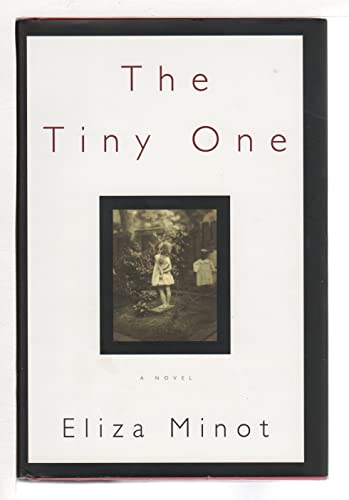

Via Revere is eight years old when her mother is killed in a car wreck on a winter road in Massachusetts. Cast into the anguish of grief, totally bewildered by her mother's disappearance, and mystified by the notion of death itself, Via tries to hold on to her mother in the only way she knows how: by telling what she knows, and by remembering, in excruciating detail, the day her mother died. The Tiny One captures a single day in the life of a young child grappling with immeasurable grief and loss: from the dreadful moment when she is taken out of math class and led to the principal's office to hear the news, to all the daydreams and recollections that swim through a child's mind -- of summers in Maine, mornings in bed with her sleeping parents, car trips, rivalries and affections among her many siblings, growing pains and the older boys at the pool who give Via such a ticklish feeling in her belly she wants to "climb up on them and, like, wriggle around." But mainly Via holds a microscope up to her day in the hope that if she musters all of her eight-year-old good sense, she can riddle out death's logic, and find the crack in the world through which her mother must have slipped.
With clarity, sensitivity, and precision, Eliza Minot captures the voice of a vibrant, intelligent child swept unexpectedly into a sea of sorrow and confusion. More than this, she gives us a young narrator whose innate wisdom has something to teach us all -- a child who extracts a remarkable lesson from her first brutal encounter with the arbitrary, inscrutable forces of chance and accident. This is the story of a little girl who has a reckoning with death and comes, instinctively, to what remains: to love, and through love, to life.
With clarity, sensitivity, and precision, Eliza Minot captures the voice of a vibrant, intelligent child swept unexpectedly into a sea of sorrow and confusion. More than this, she gives us a young narrator whose innate wisdom has something to teach us all -- a child who extracts a remarkable lesson from her first brutal encounter with the arbitrary, inscrutable forces of chance and accident. This is the story of a little girl who has a reckoning with death and comes, instinctively, to what remains: to love, and through love, to life.
"synopsis" may belong to another edition of this title.
Review:
In The Tiny One Eliza Minot takes over what used to be her sister Susan's territory--just the way a younger sibling should. Territory in this case means a large, happy, Catholic family--the Reveres--that lives in Massachusetts, spends summers in Maine, and is lucky enough to have love to spare. All of this normality and stability, however, is changed by the death of Mrs. Revere--"Mum" as she is called throughout. What makes Minot's more than just another novel about a death in the family is the fact that it's written entirely from the perspective of the youngest Revere, Via. "Mum's dead forever," she says in the sentiment-free tones of a child grappling with death. "Mum's dead forever and the world's all different, roomy and huge."
From the Back Cover:
"I can't stop thinking about the day that it happened," Via tells us. "The day before yesterday.... The day was like other days and then it happened. I want to think about it so much that I also don't want to think about it." What follows is her account of the day her mother was killed in a car accident, interpolated with memories from and impressions of her young life. Minot makes the trappings of early childhood come alive. Everything from wanting to fit in at school ("I like the fish sticks better but I pretend that I like the pizza as much as everyone else does." "I like social studies but I pretend I don't because everyone else doesn't") to a multitude of the kind of fanciful observations that form the backbone of childish delight in the world. Here, for example, she comments on waiting in line for lunch: "The cinder-block walls are painted yellow and when I run my finger along the track between each block it's smooth and fits perfectly like I've made the line with my finger on frosting."
We have to leave Via at the beginning of what we, as adults, know will be a long road, which might be heartbreaking if she weren't such a sensitive child. Early on she poses a series of questions: "But where do all the things she thinks go? And if I die when I'm eighty and I go to heaven, how old will I be when I see her? Older than her? Where do all of when she thinks of me go?" Obviously there are no answers, but it's somehow comforting to get to know Minot's little sage. It instills a kind of faith that seems to promise she'll make it through by asking the right questions, answers or no answers. --Melanie Rehak
"A remarkable work of recollection and imagination." --The Boston Globe
"A shining poetic evocation of a child's experience of the loss of her mother."
--The New York Times
"[Minot] has a wild, unstrung, lyrical gift." --The New York Times Book Review
"A sensitive, sensuous first novel . . . a bright-dark rendering of a young girl's great childhood loss, told with quiet power and deep feeling." --Elle
"A shining poetic evocation of a child's experience of the loss of her mother."
--The New York Times
"[Minot] has a wild, unstrung, lyrical gift." --The New York Times Book Review
"A sensitive, sensuous first novel . . . a bright-dark rendering of a young girl's great childhood loss, told with quiet power and deep feeling." --Elle
"About this title" may belong to another edition of this title.
- PublisherKnopf
- Publication date1999
- ISBN 10 037540645X
- ISBN 13 9780375406454
- BindingHardcover
- Edition number1
- Number of pages272
- Rating
Buy New
Learn more about this copy
US$ 18.00
Shipping:
US$ 4.00
Within U.S.A.
Top Search Results from the AbeBooks Marketplace
Stock Image
The Tiny One (Mint First Edition)
Published by
Knopf
(1999)
ISBN 10: 037540645X
ISBN 13: 9780375406454
New
Hardcover
First Edition
Quantity: 1
Seller:
Rating

Book Description Hardcover. Condition: New. Dust Jacket Condition: New. 1st Edition. Knopf (New York), 1999. First edition. First printing. Hardbound. New/New. A perfect unread copy. 0.0. Seller Inventory # 2857
Buy New
US$ 18.00
Convert currency
Stock Image
The Tiny One: A Novel
Seller:
Rating
Book Description Hardcover. Condition: new. New. Fast Shipping and good customer service. Seller Inventory # Holz_New_037540645X
Buy New
US$ 21.28
Convert currency
Stock Image
The Tiny One: A Novel
Seller:
Rating
Book Description Hardcover. Condition: new. New. Seller Inventory # Wizard037540645X
Buy New
US$ 26.04
Convert currency
Stock Image
The Tiny One: A Novel
Seller:
Rating
Book Description Hardcover. Condition: new. New Copy. Customer Service Guaranteed. Seller Inventory # think037540645X
Buy New
US$ 25.93
Convert currency
Stock Image
The Tiny One: A Novel
Seller:
Rating
Book Description Condition: new. Seller Inventory # FrontCover037540645X
Buy New
US$ 28.61
Convert currency
Stock Image
The Tiny One: A Novel
Seller:
Rating
Book Description Hardcover. Condition: new. Buy for Great customer experience. Seller Inventory # GoldenDragon037540645X
Buy New
US$ 55.35
Convert currency
Stock Image
The Tiny One: A Novel
Seller:
Rating
Book Description Hardcover. Condition: New. Seller Inventory # Abebooks585078
Buy New
US$ 59.00
Convert currency
Stock Image
THE TINY ONE: A NOVEL
Seller:
Rating

Book Description Condition: New. New. In shrink wrap. Looks like an interesting title! 1.05. Seller Inventory # Q-037540645X
Buy New
US$ 58.21
Convert currency