
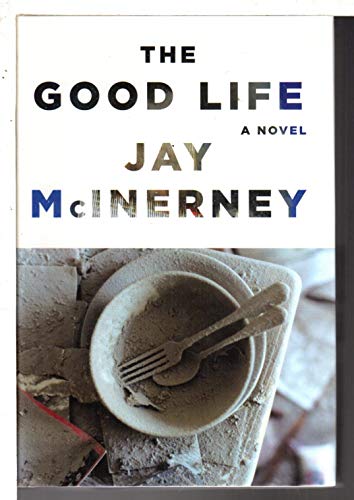
Synopsis
Hailed by Newsweek as “a superb and humane social critic” with, according to The Wall Street Journal, “all the true instincts of a major novelist,” Jay McInerney unveils a story of love, family, conflicting desires, and catastrophic loss in his most powerfully searing work thus far.
Clinging to a semiprecarious existence in TriBeCa, Corrine and Russell Calloway have survived a separation and are thoroughly wonderstruck by young twins whose provenance is nothing less than miraculous, even as they contend with the faded promise of a marriage tinged with suspicion and deceit. Meanwhile, several miles uptown and perched near the top of the Upper East Side’s social register, Luke McGavock has postponed his accumulation of wealth in an attempt to recover the sense of purpose now lacking in a life that often gives him pause—especially with regard to his teenage daughter, whose wanton extravagance bears a horrifying resemblance to her mother’s. But on a September morning, brightness falls horribly from the sky, and people worlds apart suddenly find themselves working side by side at the devastated site, feeling lost anywhere else, yet battered still by memory and regret, by fresh disappointment and unimaginable shock. What happens, or should happen, when life stops us in our tracks, or our own choices do? What if both secrets and secret needs, long guarded steadfastly, are finally revealed? What is the good life?
Posed with astonishing understanding and compassion, these questions power a novel rich with characters and events, both comic and harrowing, revelatory about not only New York after the attacks but also the toll taken on those lucky enough to have survived them. Wise, surprising, and, ultimately, heart-stoppingly redemptive, The Good Life captures lives that allow us to see–through personal, social, and moral complexity–more clearly into the heart of things.
"synopsis" may belong to another edition of this title.
About the Author
Jay McInerney lives in New York City.
Reviews
Last September, Jay McInerney wrote a wonderful, nuanced essay about the impact of 9/11 upon fiction for the British newspaper the Guardian. He was writing in reaction to V.S. Naipaul's claim that the novel is dead -- that it's inadequate to address the post-9/11 era. McInerney's response was thoughtful. "Most novelists I know went through a period of intense self-examination and self-loathing after the terrorist attacks.... For a while the idea of 'invented characters' and alternate realities seemed trivial and frivolous and suddenly, horribly outdated." McInerney elaborated an impassioned defense of the novel as a mode of communication. His essay made me excited about his new novel -- which indeed involves the impact of 9/11 upon the lives of a group of McInerney-esque Manhattanites. Unfortunately, the book is a disappointment. In the Guardian, McInerney describes his struggle to create a fictional work that encompassed the catastrophe. "At the very least," he writes, "certain forms of irony and social satire in which I'd trafficked no longer seemed useful." This lack of irony, however, is a big problem for The Good Life. McInerney has always been at his best in the comic mode. He has a great eye for satirical detail and social foibles. His novels are often slightly confectionary, a little trashy even, but with the saving grace of soft-heartedness and an elegant, plummy descriptive style, which can be seen in the early pages of this novel: "The elevator doors opened on Luke's floor, revealing a tuxedoed Tupper Carlson, ruler of a downtown brokerage house and the president of the co-op, descending from the penthouse with his great blue heron of a wife, notable for her stick legs and prominent beak." So the novel starts off promisingly. We meet Luke, a fortysomething banker who has taken a sabbatical from work in hopes of finding himself and connecting with his socialite wife and rapidly maturing 14-year-old daughter. We are also reintroduced to two characters previously seen in McInerney's Brightness Falls, literary editor Russell Calloway and his wife, Corrine, who live in TriBeCa and attend parties with Salman Rushdie and Nan Talese and struggle to make ends meet while Corrine stays at home with the children. "Russell had initially supported her maternal ideal, though, as the years went by and their peers bought vacation homes in the Hamptons, he couldn't consistently disguise his resentment over their straitened finances." It's all very fin de siècle, funny and rather spooky. At one charitable affair, Luke is reminded "of the figures he'd seen ... in Pompeii and Herculaneum, frozen in their postures of feasting and revelry" -- a remarkable foreshadowing image, particularly if you take it with a grain of irony. Once disaster strikes, however, irony and humor are not too much to be seen. (There is one amazing little sequence in which wealthy mothers discuss whether Marine Corps or Israeli gas masks are better, and the difficulty of acquiring Cipro, the antibiotic for anthrax: "I was at Minky Rijstaefal's for dinner -- you know Minky; her husband's Tom Harwell, the plastic surgeon -- and it was so sweet: Folded inside the name cards at the table, we all had prescriptions for Cipro.") For the most part, though, such wonderfully, darkly comic moments are banished, and an earnest solemnity takes hold. The novel narrows its focus, and the plot follows a budding romance between Luke and Corrine. They're working for a makeshift soup kitchen that has sprung up near Ground Zero. Both have unfaithful spouses, both are soul-searching, both think a lot about wanting to be good people. Sadly, both are also pretty dull. You keep hoping that Luke and Corrine will get more interesting or sympathetic, but they do not. After a while, a lot of their self-examination and guilt and so on starts to come across as self-pity. Neither has lost anyone who is particularly close, and the catastrophe begins to seem more and more tangential, a romantically tragic backdrop. And Tragedy and Romance bring out bad things in McInerney. He has always had a sentimental streak, and in certain ironic and satirical contexts that has worked to his advantage. Here, however, he has nothing to counterbalance it. Corrine gushes out things like, "How are you, my angel?" and "I just needed to hear your voice. To verify my existence." The author tells us that Luke "wanted to be a student of her goodness and decency, a slave to her whims," and that Corrine had "never felt such craving, such desire to be possessed and filled, never known she had so much desire inside of her, so urgent a need...." One doesn't really know what to say. Honestly, it seems McInerney doesn't know what to do with this material. He skirts the complex observations and deep feelings discussed in his moving essays on 9/11. Perhaps the tragedy feels so sacrosanct, so enormous, that he has chosen not to apply the skills that are closest to his true talent, and what's left is this odd, stilted, earnestly tremulous book. But it's kind of scary. If Jay McInerney can't bring himself to write a Jay McInerney novel about New York during 9/11, then maybe Naipaul was right. Dan Chaon is a novelist and short story writer living in Cleveland.
Reviewed by Dan Chaon
Copyright 2006, The Washington Post. All Rights Reserved.
Literary playboy Jay McInerney earns mixed reviews here. Most glaringly, his novel is not about the 9/11 tragedy, though much of the buzz around the book focuses on the setting. The adulterous affair sparked in the dust of the towers occupies center stage, but most critics disparage the romance as sappy, hackneyed, and embarrassing. Some reviewers praise McInerney's writerly maturity in developing these rich New Yorkers. But it's not a consistent portrayal. "The novel is a bizarre mix of the genuinely moving and the trashily facile, the psychologically astute and the ridiculously clichéd," writes Michiko Kakutani. If you can take the good with the bad, this Life may be for you.
Copyright © 2004 Phillips & Nelson Media, Inc.
[Signature]Reviewed by Alain de BottonJay McInerney's new novel seems from the outside to be composed of the most disheartening elements: The Good Life is about a group of privileged New Yorkers who are led to reassess their lives—and become in many ways better people—in the wake of the 9/11 attacks. The plot premise seems so pat and topical that the reader is likely to take fright. But there is mercifully no need. It is a tribute to McInerney's many talents that he can wrest from his schematic structure a novel that is both tender and entertaining.As often in McInerney's world, we find ourselves among a wealthy and ambitious elite, whom the novelist seems both intensely drawn to and repelled by. The focus is on two New York couples: Russell (publishing) and Corinne (screen writing), Luke (ex-banker) and Sasha (charity). McInerney brings an amusingly bitchy eye to bear on their lifestyles (for example, a character's double-height living room is described as appearing "to be holding its breath, as if awaiting a crew from Architectural Digest"). He keeps track of their snobbery and their social one-upmanship with all the attention to detail of a seasoned society columnist. New York resembles a latter-day version of imperial Rome in its last years, a once-noble civilization now shorn of its moral compass. In McInerney's New York, all citizens appear to take drugs, show off at charity balls, palm their children off on badly paid nannies and have sex with people other than their spouses. No one seems altruistic, high-minded, innocent—or plain nice.Then the planes strike the towers and two of the characters, Corinne and Luke, start to reappraise their faltering marriages. It becomes clear that the focus of McInerney's concern is not terrorism or politics but love: how relationships can disintegrate through children and routine, the tension between love and sex and what can keep a union alive. This is a novel about shallowness and what might replace it.For all of McInerney's surface cynicism, he's a writer—like Martin Amis perhaps—with whom, beneath the surface, there is a surprisingly simple, some might say naïve, ideal of goodness at work. Whenever this most cynical of writers has to reveal his allegiances, rather than his hatreds, they turn out to be remarkably homespun. The conclusion of the novel is undramatic. The characters may be searching for The Good Life, but their quest doesn't end up with the discovery of a holy grail. McInerney is describing a relentlessly secular world, where there are no easy sources of redemption. The characters end up finding meaning in those two stalwarts of the bourgeois worldview: romantic love and the love of children. This story is a simple one, but McInerney delivers it with grace and wit. He does what a good novelist should: he takes an abstract idea and gives it life. (Jan.)Alain de Botton is the author of On Love, Status Anxiety and How Proust Can Change Your Life, among other books.
Copyright © Reed Business Information, a division of Reed Elsevier Inc. All rights reserved.
*Starred Review* The reader might, upon beginning this novel, wonder why we care about 9/11's effects on four privileged Manhattanites: a retired corporate raider, a would-be screenwriter, a former model, and a book editor. But 9/11 was an unusual disaster in that a large proportion of its victims were well off (a possible explanation for why we aren't likely to see a flood of Hurricane Katrina novels)--and anyway, who has greater potential for character growth than self-absorbed rich people? This is really the story of two of the above, part of a cast meaningfully reassembled from Brightness Falls (1992), who meet as volunteers at a soup kitchen for rescue workers at Ground Zero. Both of them are in miserable marriages, and they're left shaken when the nation's worst day leads to the best days of their lives. McInerney probes the human response to tragedy, and the complexity of human desire, with both precision and empathy. He is a master at finding the truths we barely admit even to ourselves; without moralizing, he explores the ways we use disaster to our own emotional ends, and above all, whether we're really capable of change. A day that most people said would change us all forever seems now to have provided only a vacation from our bad habits. Like the marriages in this novel, the intensity of feeling just can't last. There have been a number of 9/11 novels lately, as writers grapple with what that terrible day means to us. This one is essential. Keir Graff
Copyright © American Library Association. All rights reserved
Excerpt. © Reprinted by permission. All rights reserved.
Summer used to be as endless as the ocean when she was a girl and her family rented the gray shingled cottage on Nantucket. Now, she found it hard to believe she was already back in Manhattan and the kids were in school and she was already racing home, late again, feeling guilty that she'd lingered over a drink with Casey Reynes. The kids had been home for hours after their first day in first grade, and she had yet to hear about it.
Women blamed themselves; men blamed anything but.
This was Corrine's interpretation of the guilt nipping at her high heels as she cantered up Hudson Street from the subway, passing the hand-lettered sign in the window of their Chinese takeout: FRESHLY GROUNDED COFFEE. Guilt about leaving the kids for so long, about not helping Russell with dinner, about attempting to restart her long-dormant professional life. Oh, to be grounded herself. Seven-fifteen by her watch. Still attuned to the languorous rhythm of the summer—they'd just closed up the house in Sagaponack four days ago—she'd barely had time to kiss the kids good-bye this morning and now the guests would be arriving at any minute, Russell frenzied with cooking and child care.
Bad mother, bad wife, bad hostess. Bad.
When she had yearned to be a mother, imagining what it would be like to be a parent, it had been easy to conjure the joy . . . the scenes of tenderness, the Pieta moments. What you don't picture are the guilt and the fear that take up residence at the front of your brain, like evil twins you didn't bargain for. Fear because you're always worried about what might go wrong, especially if your kids were born, as hers were, three months early. You can never forget the sight of them those first few days, intubated under glass, veined eggshell skulls and pink writhing limbs—the image stays with you even as they grow, reminding you of just how fragile these creatures are, how flimsy your own defenses. And guilt because you can never possibly do enough. There's never enough time. No matter how much love and attention you lavish on them, you're always afraid that it will never be enough.
Corrine had become a connoisseur of guilt; not for her the stabbing thrust of regret for an ill-conceived act—but, rather, the dull and steady throb of chronic guilt, even as she'd done her best to rearrange her life around her kids, quitting her job to take care of them and, over the past two years, working highly flexible hours on a screenplay and on a project that was the obverse of a busman's holiday—a start-up venture called Momtomtom.com, which had been on the verge of a big launch this past spring, when the Internet bubble started to deflate and the venture capital dried up. This afternoon, she'd spent four hours making a presentation to a possible backer, hustling for seed money for the Web site. As these prospects dimmed, she'd been trying to set up meetings on the screenplay, an adaptation of Graham Greene's The Heart of the Matter. And here were the theoretical bookends of her existence, the maternal and the romantic—the latter submerged and almost extinct. In fact, that had been her secret intention in writing this script: to try to rekindle the romance and fan it back to life.
Corrine hadn't wanted to be one of those mothers who paid someone else to raise her kids; for the first five years, to the astonishment of her friends and former colleagues, she'd stayed at home. Manhattan was an existential town, in which identity was a function of professional accomplishment; only the very young and the very rich were permitted to be idle. The latter, like her friend Casey Reynes, had their charities and their personal assistants and inevitably managed to convey the impression that all this constituted an exhausting grind. Russell had initially supported her maternal ideal, though, as the years went by and their peers bought vacation homes in the Hamptons, he couldn't consistently disguise his resentment over their straitened finances, or his sense that his stay-at-home wife had become translucent, if not invisible, within the walls of their loft—a nanny without salary.
Writing a screenplay was, in their circle, code for being unemployed; finishing the first draft failed to produce the sense of accomplishment she'd expected. A screenplay, after all, was a kind of theoretical object, a recipe rather than the meal itself. And thus far she hadn't had much luck in assembling the ingredients. So when the kids entered preschool last year, she had tried to turn her obsession with child rearing into a profession—formalizing the body of knowledge she'd acquired as a full-time city mother into a viable on-line resource. If that plan didn't work out, she would have to return to the job marketplace, as much for her own self-esteem as to defray the $34,000 tuition fees for the kids.
A homeless man was encamped in the shadow of construction scaffolding across the street from her building—a rarer sight than it would have been ten years ago. A young, dirt-caked slacker with a ragged goatee, a bull terrier on a leash, and a paper coffee cup at his feet. As Corrine hurried past, he said, "Hey, beautiful. I need a blow job. I need a place in the Hamptons. I need a movie role."
She paused, registering the humor—and her husband would have loved this, storing it away with all the other anecdotes he used to illustrate his wife's hilarious singularity—but instead of laughing, she was thinking about needs. What we need in order to make life bearable.
Suddenly coming to her senses, the panhandler gaping at her.
"I need romance," said Corrine, dropping a dollar in the wishing well of his cup. "Whatever happened to the romance?"
She burst into her apartment, aching for her children, who over the course of the interminable afternoon might have died, dashed their heads against the edge of the coffee table she kept vowing to replace, been kidnapped, or forgotten her entirely. Corrine would have been less surprised at any of these scenarios than she was to see Hilary on the sofa, playing with the kids.
"Mom, guess what. You won't believe! Aunt Hilary's here."
Her daughter, Storey, loved to deliver news and make announcements.
It's true—she wouldn't believe. Last Corrine knew, her little sister had been in L.A. She'd tried calling as recently as last week, only to be told the number had been disconnected. And now here she was in TriBeCa, reclining on Corrine's couch with Jeremy in her lap. No matter that Corrine had seen her dozens of times in the intervening years: Hilary was preserved, in Corrine's mind, semifrozen at the age of fifteen, the last year they'd shared a domicile, so that it was always a surprise to see her as a woman, and a pretty convincing one at that. Only a few evanescent lines at the corners of her eyes hinted that she'd passed thirty a few years before.
The first thing Corrine did, pure reflex, was to scoop Jeremy up into her arms and hug him, but instead of clutching her, he squirmed.
"Hey, sis." Hilary rose from the couch, stretching lithe and catlike in her leopard top. As if to preserve Corrine's illusion of her youthfulness, she still moved and dressed like a teenager, and had the body to carry it off. "Thought I'd surprise you."
"I'm . . . I am." Corrine belatedly hugged her sister with the arm not holding Jeremy—a sister sandwich, with her son—their son?—in the middle. Surprised, yes, Corrine thought . . . although at some point unpredictability becomes a pattern. "You look . . . great," Corrine said.
"Thanks."
"Aunt Hilary's been in Paris," Storey said.
"Paris?"
Jeremy squirmed out of Corrine's grasp and dropped onto the ottoman.
"Well, actually I came from London today, but I've been in Paris for the past two weeks."
"She met Madeleine," Storey said, holding up her favorite book. "Can you believe it, Mom? Aunt Hilary knows her. Why didn't you tell us she knows Madeline?"
"I had no idea," Corrine said, casting a reproving glance at her sister. "Although, actually, now that I think about it, I'm not surprised at all. Your aunt Hilary knows just about everybody in the whole world."
"The whole world?"
"Your mom's just making a little joke."
It was true—you couldn't watch a movie or open a magazine without Hilary dropping intimate remarks about the two-dimensional icons therein. Why shouldn't she know Madeline?
"Aunt Hilary saw her at the Eiffel Tower with Miss Clavel and the other little girls."
"What's so great about Madeline?" Jeremy asked. "She's just a little girl."
Just like Hilary to tell Storey she was acquainted with a fictional character, fiction being her great specialty. Corrine didn't want Storey getting mocked for relating this triumph at school. She was feeling ambivalent enough about the Fluffies—the fairylike creatures that she had conjured up for the kids when they were three, who had their own biographies and their own little house in the kids' bedroom. They'd been through this once before when Hilary claimed to be great friends with Barbie—to whom she bore more than a passing resemblance.
"Corrine," Hilary said, "why are you looking at me that way?"
"What way?" Storey demanded. "What way is she looking at you? Mom, what does she mean?"
Jeremy was bouncing up and down on the sofa.
"Have you got a place to stay?"
"Collin has this loft in SoHo? But I have t...
"About this title" may belong to another edition of this title.
Other Popular Editions of the Same Title

Search results for The Good Life

Stock Image
The Good Life
Seller: World of Books (was SecondSale), Montgomery, IL, U.S.A.
Seller rating 5 out of 5 stars

Condition: Very Good. Item in very good condition! Textbooks may not include supplemental items i.e. CDs, access codes etc. Seller Inventory # 00105511619
Stock Image
The Good Life
Seller: World of Books (was SecondSale), Montgomery, IL, U.S.A.
Seller rating 5 out of 5 stars
Condition: Good. Item in good condition. Textbooks may not include supplemental items i.e. CDs, access codes etc. Seller Inventory # 00104520062
Seller Image
The Good Life
Seller: Greenworld Books, Arlington, TX, U.S.A.
Seller rating 5 out of 5 stars
Condition: very_good. Fast Free Shipping â" Very Good condition book with a firm cover and clean pages. Shows normal use and some light wear or limited notes markings. A solid, nice copy to enjoy. Seller Inventory # GWV.0375411402.VG
Seller Image
The Good Life
Seller: Greenworld Books, Arlington, TX, U.S.A.
Seller rating 5 out of 5 stars
Condition: good. Fast Free Shipping â" Good condition. It may show normal signs of use, such as light writing, highlighting, or library markings, but all pages are intact and the book is fully readable. A solid, complete copy that's ready to enjoy. Seller Inventory # GWV.0375411402.G
Seller Image
The Good Life
Seller: Bay State Book Company, North Smithfield, RI, U.S.A.
Seller rating 5 out of 5 stars
Condition: good. The book is in good condition with all pages and cover intact, including the dust jacket if originally issued. The spine may show light wear. Pages may contain some notes or highlighting, and there might be a "From the library of" label. Boxed set packaging, shrink wrap, or included media like CDs may be missing. Seller Inventory # BSM.177NF
Seller Image
The Good Life
Seller: Bay State Book Company, North Smithfield, RI, U.S.A.
Seller rating 5 out of 5 stars
Condition: good. The book is in good condition with all pages and cover intact, including the dust jacket if originally issued. The spine may show light wear. Pages may contain some notes or highlighting, and there might be a "From the library of" label. Boxed set packaging, shrink wrap, or included media like CDs may be missing. Seller Inventory # BSM.15USL
Stock Image
The Good Life
Seller: ThriftBooks-Atlanta, AUSTELL, GA, U.S.A.
Seller rating 5 out of 5 stars
Hardcover. Condition: Very Good. No Jacket. Former library book; May have limited writing in cover pages. Pages are unmarked. ~ ThriftBooks: Read More, Spend Less. Seller Inventory # G0375411402I4N10
Stock Image
The Good Life
Seller: ThriftBooks-Atlanta, AUSTELL, GA, U.S.A.
Seller rating 5 out of 5 stars
Hardcover. Condition: Very Good. No Jacket. May have limited writing in cover pages. Pages are unmarked. ~ ThriftBooks: Read More, Spend Less. Seller Inventory # G0375411402I4N00
Stock Image
The Good Life
Seller: ThriftBooks-Dallas, Dallas, TX, U.S.A.
Seller rating 5 out of 5 stars
Hardcover. Condition: Very Good. No Jacket. May have limited writing in cover pages. Pages are unmarked. ~ ThriftBooks: Read More, Spend Less. Seller Inventory # G0375411402I4N00
Stock Image
The Good Life
Seller: ThriftBooks-Dallas, Dallas, TX, U.S.A.
Seller rating 5 out of 5 stars
Hardcover. Condition: Good. No Jacket. Missing dust jacket; Pages can have notes/highlighting. Spine may show signs of wear. ~ ThriftBooks: Read More, Spend Less. Seller Inventory # G0375411402I3N01