
Items related to Love by the Glass: Tasting Notes from a Marriage
Synopsis
“I am deeply inspired by this heartwarming story of how two people found love and—even better—a way to get paid for drinking wine.” —Dave Barry
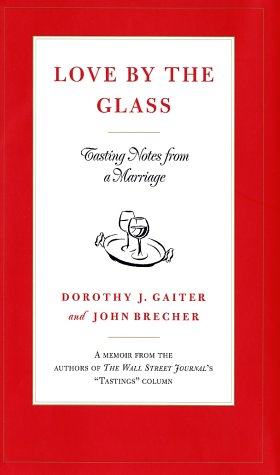
Internationally renowned journalists Dorothy J. Gaiter and John Brecher present a captivating memoir about falling in love with each other and with wine.
She grew up in the all-black environment of Florida A&M University in Tallahassee. He was raised in Jacksonville, Florida, where his was one of a handful of Jewish families. When they met on June 4, 1973, in the newsroom of The Miami Herald, she says, “I felt in my bones like I had known him forever.” And he says, “I felt the instant I saw her that we had always been together, and knew we always would be.”
That passion for each other and for wine has made their column a must-read for millions of neophyte and veteran wine lovers, who also follow their appearances on Martha Stewart’s TV show. The annual global celebration of wine that they created, “Open That Bottle Night,” encourages readers to finally drink that special wine they have been keeping. As Dottie and John write, “Wine can conjure up memories in a way that few other things can,” whether it’s a rare Burgundy or a bottle of cold duck.
Frank J. Prial of The New York Times said of their first book, The Wall Street Journal Guide to Wine, “Their enthusiasm for the grape . . . is exceeded only by their enthusiasm for each other. It spills over on every other page.” Indeed, John and Dottie say they don’t write a wine column; they write a column about more important things.
This book follows them from love at first sight, through a life of journalism, to a triumph on the basketball court at Madison Square Garden. You’ll discover the joys of wine along with them, but you’ll also discover that wine is really about good times, bad times, moments shared with loved ones, and new friends. It’s about memories. It’s about life.
"synopsis" may belong to another edition of this title.
About the Author
Dorothy J. Gaiter and John Brecher are the authors of Tastings, the weekly wine column of The Wall Street Journal. John was Page One editor of the paper from 1992 to 2000, and Dorothy was a national reporter and editor covering issues of race. John previously worked at The Miami Herald and Newsweek, and Dorothy at The Miami Herald and The New York Times. They are known to television viewers from their appearances on Martha Stewart Living and Today, and are the authors of The Wall Street Journal Guide to Wine.
From the Back Cover
Advance praise for Love by the Glass
“Even for those of us who don’t know Mondavi from Mateus, Love by the Glass is a treat. Wine columnists Dottie Gaiter and John Brecher have one of the best marriages you’ll ever see, and a delightful story to tell.” —Carl Hiaasen
“My weekly anticipation of the next John and Dottie column pales in comparison to my eagerness to pore over each page, each word of this brilliant autobiography of two phenomenal journalists. Love by the Glass exquisitely describes the lives and wines of this passionate duo who have so eloquently made wine accessible and compelled collectors of all varieties to ‘open that bottle’ and share the love that is wine.” —Charlie Trotter
“This book is a warm and personal gift to all of us, a needed reminder that while wine is indeed for special occasions, every day you get to spend with those you love is a special occasion worth celebrating with wine.” —Andrea Immer
“Love by the Glass is a moving love story, a fascinating wine guide, and a compelling social history. How far we’ve all come from the innocence of Mateus rosé, and we couldn’t hope for better guides to the ensuing decades than Dottie Gaiter and John Brecher. The story of their lives together has all the warmth and richness of the great wines they write about.” —James B. Stewart
From the Inside Flap
deeply inspired by this heartwarming story of how two people found love and―even better―a way to get paid for drinking wine.” ―Dave Barry <br><br>Internationally renowned journalists Dorothy J. Gaiter and John Brecher present a captivating memoir about falling in love with each other and with wine. <br><br>She grew up in the all-black environment of Florida A&M University in Tallahassee. He was raised in Jacksonville, Florida, where his was one of a handful of Jewish families. When they met on June 4, 1973, in the newsroom of The Miami Herald, she says, “I felt in my bones like I had known him forever.” And he says, “I felt the instant I saw her that we had always been together, and knew we always would be.”<br><br>That passion for each other and for wine has made their column a must-read for millions of neophyte and veteran wine lovers, who also follow their appearances on Martha Stewart’s TV show. The annual global celebrati
Reviews
Authors of the Wall Street Journal's "Tastings" column about wine, husband and wife John Brecher and Dorothy J. Gaiter have also teamed up to write their memoir, Love by the Glass: Tasting Notes from a Marriage. Gaiter, who's black, and Brecher who's white, grew up in segregated Florida towns and met at the Miami Herald. With warmth and humor, they recall their courtship and wedding, the arrival of children and their long careers as journalists. All the important life passages, from a new job at Newsweek to the birth of their daughter, are marked by memorable bottles, and the couple describes how they went from enthusiasts to collectors to critics.
Copyright 2002 Cahners Business Information, Inc.
The authors of the Wall Street Journal's popular "Tastings" column celebrate their love of wine and each other.
Copyright 2001 Reed Business Information, Inc.
Nothing more solidifies a marriage than mutually shared passion. In this case, the couple's shared passion is wine. The husband-and-wife team of Dorothy Gaiter and John Brecher has become famous in both food and business circles through their weekly wine column in the Wall Street Journal. There they offer readers sound advice on the best current wines in all price ranges. Now they depart from their customary exclusive focus on wine and instead talk about their marriage. As budding reporters, the professionally focused couple met at the Miami Herald early in their careers and fell in love virtually at first sight. Considering their different backgrounds, he an urban Jew, she an African American from Alabama, it's a wonder they ever found common ground. But both were determined journalists, and they both discovered in themselves uncommonly acute palates for wines of all varieties. In their funny, touching memoirs, they link specific wine memories to formative events in their lives: job changes, romance, and children. Mark Knoblauch
Copyright © American Library Association. All rights reserved
Excerpt. © Reprinted by permission. All rights reserved.
Chapter One
André Cold Duck
The first wine we shared was André Cold Duck. Hey, don’t laugh. Okay, go ahead and laugh. It was a big deal then, a bizarre concoction with a bizarre label. The name Cold Duck was derived somehow from the German practice of blending already opened bottles of red, white, and sparkling wines so they wouldn’t go to waste. The resulting cuvée was called kalte Ende or “cold end,” which sounds like kalte Ente, which means “cold duck.” In the early 1960s, David Gallo, who was co-president of the E. & J. Gallo Winery and the oldest son of Ernest Gallo, figured there was room in the market for a nationally marketed, inexpensive “domestic Champagne.” So in 1965, when he was working in marketing, he oversaw the development and introduction of André Champagne. Two years later, he developed André Cold Duck, which was a red, sweet sparkling wine made from Concord grapes. By 1971, the winery was selling two million cases of it a year.
John’s parents gave him a bottle as a housewarming present, and it sat in his refrigerator for months. John was posted to South Dade County, then the more rural part of the county. It turns out that being “South Dade bureau chief” meant he got a tiny little office in a town called Homestead and a massive area to cover by himself. Dottie was a general assignment reporter in the main office, a lumpen structure on Biscayne Bay, where we worked together every Sunday. As the weeks went on, we found it was fun to have lunch together along with a couple of other new reporters. Then we started to wait until the other reporters were out of the office and we would rush off to lunch alone. We could talk for hours, as though we were the only people in the world. We were so much alike in our outlooks and values that it was as though we’d been raised by the same parents. We even had a joint byline together, on a story about the annual New Year’s Eve riot on Miami Beach. While we were dodging tear gas, a sweet thing happened. A drunken reveler stumbled up to us and drawled, “You two are beautiful together, man.” Was it that obvious that there was something between us?
After months of rushing off together whenever we could, John mentioned to Dottie a story he was doing about U-Pick fields. Those were South Dade farms where you could pick your own food. It was fun, it was cheap, and it was a great story for the Herald’s weekend section. Maybe I could show you the U-Pick fields sometime, John suggested.
Without knowing it, John had touched Dottie’s most vulnerable area: fruits and vegetables. Dottie is passionate about them. She had inherited that from her mother, whose father had grown cherries, peaches, mint, and corn. The date was set. On a beautiful winter day, we picked squash and lima beans and snap peas and eggplant and the most beautiful strawberries Dottie had ever seen. She sat on the ground and ate them, still warm from the sun, right off the plant. John thought he’d never seen anyone so pure, happy, and beautiful. We took all of the bounty to John’s little one-bedroom apartment. Dottie simply sautéed the vegetables in butter and served them over rice that John had cooked.
Sweet, sparkling red wine is not a classic match with sautéed vegetables over rice, but that night, on our first date, no wine could have been better. We woke up the next morning as a couple.
It wasn’t long before we told our parents.
John: I had mentioned to my parents on the day I arrived at the Herald that I’d started work with two black women, and one was really cute. One night, when my father answered the phone, I said, “I’m actually dating someone.” This surely pleased my father, who was concerned that I had been lonely for all of those months down in Homestead. My parents had visited a couple of times, and they were pretty much appalled by my rental furniture and solitary life. “That’s great!” said my father. “Who is she?”
“She’s one of the reporters I started with,” I said. “The cute one.”
There was a momentary pause. “She’s black, isn’t she?” asked my father. “Yes,” I said. My parents didn’t raise the issue again.
Dottie: When I called home, I told my father I was dating a colleague named John. “We started on the same day, he went to Columbia, and he’s white and really nice,” I said, rushing through the salient part. There was a momentary pause. “Well,” my dad said, selecting his words carefully, “we always taught you to choose your friends by the content of their character.” He had paraphrased Martin Luther King Jr. And that was it.
In our first years together, we moved around a lot within South Florida. John became an editor and moved up the Herald’s career ladder, from South Dade to North Dade to Palm Beach County and back to Miami. Dottie moved up to bigger reporting jobs, from general assignment in Miami to school reporter in Fort Lauderdale to beat reporter back in Miami. We worked all the time—we were journalists, committed to changing the world, after all, and it was an exciting time for journalism. John’s first front-page byline was about a gas station owner during the Arab oil embargo who forced motorists to buy his daughter’s Girl Scout cookies if they wanted a fill-up. Our nascent interest in wine was our respite.
We started with Blue Nun. In Florida, supermarkets can sell wine, so when we shopped, we’d walk down a long aisle of so-so wines. In 1974, we certainly didn’t know much about wine, though The Signet Book of Wine had piqued John’s interest, and then Dottie’s. When we were in the grocery store one day, we picked up a wine we’d seen advertised and that we knew to be popular: Blue Nun.
Blue Nun was a German wine that few Germans drank. It was a Liebfraumilch, which means “Milk of Our Blessed Mother.” It is, in many ways, simply a low-end, generic German wine. As far back as 1910, an official body in Germany declared that Liebfraumilch was nothing but “a fancy name.” The Sichel family of Mainz, Germany, made Blue Nun, and some of it was sold in the United States, even during Prohibition. The label back then showed a nun in a brown habit on a blue background. Peter Sichel, who represents the fourth generation of the family, which later became importers, says that as the wine became popular, customers and distributors started referring to it as “that wine with the blue nun label.” After Prohibition was repealed, sales took off in the United States and the label was changed to read “Blue Nun Label.” But there was a hitch. Because of religious concerns, the federal government, which has to approve all wine labels, decided it couldn’t really allow a nun on the label, so post-Prohibition labels sported a picture of farm girls, Mr. Sichel says. After arguing that other countries with large populations of Catholics allowed the labels to have a nun on them, Mr. Sichel got his way. It wasn’t until 1963, though, that the word label was dropped from the label.
Blue Nun was low in alcohol, inexpensive, and slightly sweet. For a country that, on the whole, still didn’t know or much like the taste of real wine, it was perfect. Sales went crazy. In 1959, ten thousand cases of it were sold in the United States. By the late 1980s, two million cases of Blue Nun were bought worldwide, 1.2 million of those cases in the United States. In fact, Blue Nun was so popular that one day we even bought a knockoff called Blue Monk. Then White Zinfandel entered the market and started sinking Blue Nun, says Mr. Sichel, who sold the company in 1995. Sales in the United States are now around 250,000 cases, he estimates, adding that the wine still does well in England and Ireland.
We felt very grown-up with Blue Nun. With cookbooks in our laps, we looked for the right dish to complement the wine. Thick-cut pork chops with sauerkraut and sautéed apples was perfect. With our dinner and a bottle of Blue Nun, we felt very romantic.
Alone in his office in South Dade, John had the culinary choice each day of either Burger King or McDonald’s, which were across from each other on U.S. 1. One day, a new strip mall opened near the McDonald’s. In a town where very little ever happened, this was news, so John dropped by to check it out as a possible story. He went into one of the stores, which was called Crown Liquors. The store was overwhelming, but exciting. All those different wines. All those different labels. He had no idea what he was doing, but he knew there was no reason to buy Blue Nun, since we could buy it at the supermarket. So he picked up a bottle of wine that was featured next to the cash register. It was white, French, and cheap. That’s pretty much all we remember. It was some sort of generic French wine, three for $9.99. John took three. “If you take a case,” said the man behind the register, “I’ll give you fifteen percent off.” It seemed like a very good deal—that meant it was $2.83 per bottle—and John said sure. The man asked whether he wanted all generic white, or a mixed case with generic red. John took half and half. It was the first case of wine we ever bought.
When John brought it home, he took all the bottles out of the box and stood them up on his green shag carpet. He waited with even greater anticipation than usual for Dottie to drive up in her little white Toyota, which was less a car than a metal box on wheels. Seeing that clunky car putt-putt up the street always made John smile, and not only because Dottie was in it. Whenever John’s father tried to talk his customers out of buying a Toyota, he’d laugh and say, “Do you know why it’s called ‘Toyota’? That’s what...
"About this title" may belong to another edition of this title.
Search results for Love by the Glass: Tasting Notes from a Marriage

Stock Image
Love by the Glass: Tasting Notes from a Marriage
Seller: World of Books (was SecondSale), Montgomery, IL, U.S.A.
Seller rating 5 out of 5 stars

Condition: Good. Item in good condition. Textbooks may not include supplemental items i.e. CDs, access codes etc. Seller Inventory # 00082375692
Stock Image
Love by the Glass: Tasting Notes from a Marriage
Seller: World of Books (was SecondSale), Montgomery, IL, U.S.A.
Seller rating 5 out of 5 stars
Condition: Very Good. Item in very good condition! Textbooks may not include supplemental items i.e. CDs, access codes etc. Seller Inventory # 00085870217
Seller Image
Love by the Glass: Tasting Notes from a Marriage
Seller: Zoom Books East, Glendale Heights, IL, U.S.A.
Seller rating 5 out of 5 stars
Condition: very_good. Book is in very good condition and may include minimal underlining highlighting. The book can also include "From the library of" labels. May not contain miscellaneous items toys, dvds, etc. . We offer 100% money back guarantee and 24 7 customer service. Seller Inventory # ZEV.0375505601.VG
Seller Image
Love by the Glass: Tasting Notes from a Marriage
Seller: Greenworld Books, Arlington, TX, U.S.A.
Seller rating 5 out of 5 stars
Condition: very_good. Fast Free Shipping â" Very Good condition book with a firm cover and clean pages. Shows normal use and some light wear or limited notes markings. A solid, nice copy to enjoy. Seller Inventory # GWV.0375505601.VG
Seller Image
Love by the Glass: Tasting Notes from a Marriage
Seller: Greenworld Books, Arlington, TX, U.S.A.
Seller rating 5 out of 5 stars
Condition: good. Fast Free Shipping â" Good condition. It may show normal signs of use, such as light writing, highlighting, or library markings, but all pages are intact and the book is fully readable. A solid, complete copy that's ready to enjoy. Seller Inventory # GWV.0375505601.G
Stock Image
Love by the Glass: Tasting Notes from a Marriage
Published by
Villard (edition First Edition), 2002
ISBN 10: 0375505601
ISBN 13: 9780375505607
Used
Hardcover
First Edition
Seller: BooksRun, Philadelphia, PA, U.S.A.
Seller rating 5 out of 5 stars
Hardcover. Condition: Very Good. First Edition. With dust jacket. It's a well-cared-for item that has seen limited use. The item may show minor signs of wear. All the text is legible, with all pages included. It may have slight markings and/or highlighting. Seller Inventory # 0375505601-11-1-29
Stock Image
Love by the Glass: Tasting Notes from a Marriage
Seller: BookHolders, Towson, MD, U.S.A.
Seller rating 5 out of 5 stars
Condition: Good. [ No Hassle 30 Day Returns ][ Ships Daily ] [ Underlining/Highlighting: NONE ] [ Writing: NONE ] [ Edition: First ] Publisher: Villard Pub Date: 1/8/2002 Binding: Hardcover Pages: 352 First edition. Seller Inventory # 3485754
Stock Image
Love by the Glass: Tasting Notes from a Marriage
Seller: BookHolders, Towson, MD, U.S.A.
Seller rating 5 out of 5 stars
Condition: Good. [ No Hassle 30 Day Returns ][ Ships Daily ] [ Underlining/Highlighting: NONE ] [ Writing: NONE ] [ Edition: First ] Publisher: Villard Pub Date: 1/8/2002 Binding: Hardcover Pages: 352 First edition. Seller Inventory # 6530799
Stock Image
Love by the Glass
Seller: World of Books Inc, Montgomery, IL, U.S.A.
Seller rating 4 out of 5 stars

Hardback. Condition: Good. Love by the Glass is a captivating memoir by the authors of The Wall Street Journal's weekly Tastings column, Dorothy J. Gaiter and John Brecher, who have merged their journalism careers with their love of wine. She grew up in the all-black environment of Florida A&M University in Tallahassee, and he was raised in Jacksonville, where his was one of a handful of Jewish families. Follow Dottie and John from their June 4, 1973, meeting in the newsroom of The Miami Herald to their first Open That Bottle Night, which put them on the road to becoming full-time wine columnists. From the Andre Cold Duck that accompanied their first date to the bottle of Taittinger Champagne smuggled into the delivery room to wet the lips of their newborn second daughter, lovers of books as well as lovers of wine can now join the wine world's favorite couple as they embark on the ultimate quest for the perfect grape. Seller Inventory # CIN0375505601G
Stock Image
Love by the Glass
Seller: World of Books Inc, Montgomery, IL, U.S.A.
Seller rating 4 out of 5 stars
Hardback. Condition: Very Good. Love by the Glass is a captivating memoir by the authors of The Wall Street Journal's weekly Tastings column, Dorothy J. Gaiter and John Brecher, who have merged their journalism careers with their love of wine. She grew up in the all-black environment of Florida A&M University in Tallahassee, and he was raised in Jacksonville, where his was one of a handful of Jewish families. Follow Dottie and John from their June 4, 1973, meeting in the newsroom of The Miami Herald to their first Open That Bottle Night, which put them on the road to becoming full-time wine columnists. From the Andre Cold Duck that accompanied their first date to the bottle of Taittinger Champagne smuggled into the delivery room to wet the lips of their newborn second daughter, lovers of books as well as lovers of wine can now join the wine world's favorite couple as they embark on the ultimate quest for the perfect grape. Seller Inventory # CIN0375505601VG