
Items related to Angel of Harlem: A Novel (Strivers Row)
Synopsis
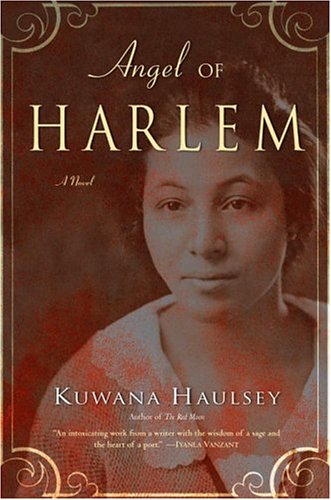
Inspired by the extraordinary events of Dr. May Chinn’s life, Angel of Harlem is a deeply affecting story of love and transcendence. Weaving seamlessly scenes from the battlefields of the Civil War, during which her father escaped from slavery, to the Harlem living rooms and kitchen tables where May is sometimes forced to operate on her patients, this fascinating novel lays bare the heart of a woman who changed the face of medicine.
A gifted, beautiful young woman in the 1920s, May Edward Chinn dreams only of music. For years she accompanies the famed singer Paul Robeson. However, a racist professor ends her hopes of becoming a concert pianist. But from one dashed dream blooms another: May would become a doctor instead–-the first black female physician in all of New York.
Giddy with the wonder of the Harlem Renaissance and fueled by firebrand friends like Langston Hughes and Zora Neale Hurston, May doggedly pursues her ambitions while striving to overcome the pains of her past: the death of a fiancé, a lost child, and a distant father ravished by the legacy of slavery. With every grief she encounters, a resilient piece of herself locks into place. At times risking her life–attending to men stabbed in their homes and women left to die in filthy alleys–May struggles to carve out a place for herself within a medical world that still teaches that a “Negro” brain is not anatomically wired for higher thinking. Yet against the odds, she achieves her goal, starts her own practice, and becomes one of the first cancer specialists in the city.
Alive with the pulse of black unrest in 1920s New York, this beautifully textured novel moves with fearlessness and grace through a history that is by turns ugly and sublime. With Angel of Harlem, critically acclaimed author Kuwana Haulsey gives poetic voice to the story of a remarkable woman who had the courage to dream and live beyond her era’s limitations.
"synopsis" may belong to another edition of this title.
About the Author
Kuwana Haulsey is the author of The Red Moon, which was a 2002 finalist for the Zora Neale Hurston/Richard Wright Legacy Award for Debut Fiction. Born and raised in New York City, she graduated with a bachelor’s degree in journalism from Rutgers University magna cum laude and Phi Beta Kappa. Kuwana has led seminars for the PEN/Faulkner Foundation in Washington, D.C., and at Rutgers University. She’s taught writing at UCLA and Agape International. She is an actress and currently lives in North Hollywood.
From the Back Cover
"With keen vision, careful research and nuanced sensibility, Kuwana Haulsey captures in this novel the triumphant spirit and amazing accomplishments of Dr. May Chinn, an early twentieth century heroine whose story has been too long forgotten. From the humble and hopeful strivers of the Harlem Renaissance to the glamorous glitterati, Haulsey's characters faithfully evoke the era's immense promise and stark contradictions." -- A'Lelia Bundles, author of On Her Own Ground: The Life and Times of Madam C. J. Walker
"Forget that its setting is early 20th century Harlem. The vivid sense of place, a cast of characters which includes many of the Harlem Renaissance's most luminous artists, and, most of all, its exquisite language make this powerful inspirational story -- based on the remarkable life of Dr. May Chinn, the first Black woman to graduate from New York University medical school -- as riveting as today's headlines.
At one point, Haulsey describes the heroine's remembrance of a tale that her father related to her mother as "a lively dancing thing, draped in green and gold, and scented with almonds." That is also an apt description of Angel of Harlem. This is a lyrical, intoxicating, and timeless novel." -- Mel Watkins, author of Dancing With Strangers: A Memoir and On the Real Side: A History of African American Humor
"Kuwana Haulsey is an awe-inspiring artist with a rare willingness to high-dive into the abyss, not troubled by such mere trifles as where she'll land. This beautiful, expressive novel displays her unique gift for delving straight to the heart of the human condition. With Angel of Harlem, Haulsey has once again managed to take my breath away." -- Nick Chiles, author of Love Don't Live Here Anymore
Praise for Kuwana Haulsey and The Red Moon
"Haulsey deftly plays tangled personal and cultural differences against one another [in her] smoothly written, engrossing novel."
- The Washington Post Book World
"The Red Moon is an impressive first novel [that is] moving, shocking, and unforgettable."
- Essence
"This is a novel that should be read by everyone who wants insight into modern Africa and the women who mother and daughter it."
- NIKKI GIOVANNI
"This unflinching tale marks Haulsey as a promising young writer."
- Publishers Weekly
From the Inside Flap
Inspired by the extraordinary events of Dr. May Chinn s life, Angel of Harlem is a deeply affecting story of love and transcendence. Weaving seamlessly scenes from the battlefields of the Civil War, during which her father escaped from slavery, to the Harlem living rooms and kitchen tables where May is sometimes forced to operate on her patients, this fascinating novel lays bare the heart of a woman who changed the face of medicine.
A gifted, beautiful young woman in the 1920s, May Edward Chinn dreams only of music. For years she accompanies the famed singer Paul Robeson. However, a racist professor ends her hopes of becoming a concert pianist. But from one dashed dream blooms another: May would become a doctor instead -the first black female physician in all of New York.
Giddy with the wonder of the Harlem Renaissance and fueled by firebrand friends like Langston Hughes and Zora Neale Hurston, May doggedly pursues her ambitions while striving to overcome the pains of her past: the death of a fiancé, a lost child, and a distant father ravished by the legacy of slavery. With every grief she encounters, a resilient piece of herself locks into place. At times risking her life attending to men stabbed in their homes and women left to die in filthy alleys May struggles to carve out a place for herself within a medical world that still teaches that a Negro brain is not anatomically wired for higher thinking. Yet against the odds, she achieves her goal, starts her own practice, and becomes one of the first cancer specialists in the city.
Alive with the pulse of black unrest in 1920s New York, this beautifully textured novel moves with fearlessness and grace through a history that is by turns ugly and sublime. With Angel of Harlem, critically acclaimed author Kuwana Haulsey gives poetic voice to the story of a remarkable woman who had the courage to dream and live beyond her era s limitations.
Reviews
May Edward Chinn (1896–1980), the first black female doctor in New York City, is the inspiration for Haulsey's (TheRed Moon) stirring second novel. May's mother, Lulu, makes tremendous sacrifices for her talented daughter, working to send May to the best schools and to secure a piano for May to explore her musical talent. A high school pregnancy is a hurdle, but Lulu arranges for the baby's informal adoption, and May aces the entrance examination for Columbia's Teacher's College. When a racist professor forces her away from music, she turns to science, doggedly continuing through medical school despite setbacks and discouragement, earning the grudging respect of her colleagues, the gratitude of her patients and the attention of a series of suitors. After she completes an internship at Harlem Hospital (the first black woman to do so), she works in a sanatorium before eventually opening her own practice. The novel is faithful to the known details of Chinn's life, and the vibrancy of 1920s Harlem shines through in Chinn's fictitious encounters with prominent historical figures of the time, from Zora Neale Hurston and Langston Hughes to Jean Toomer, Fats Waller and Wallace Thurman. Haulsey's respectful homage to Chinn and her accomplishments will bring overdue attention to this notable figure in African-American history.
Copyright © Reed Business Information, a division of Reed Elsevier Inc. All rights reserved.
This novelized account of the life of Dr. May Chinn, a woman who broke the barriers in the medical profession in the 1920s and became a leading specialist in cancer treatment, also features the dazzling cultural, social, and political life of the Harlem Renaissance. Haulsey traces Chinn's early life of abject poverty, a childhood illness that left her face scarred for much of her life, and the stultifying social conditions of the time, including the evaluation of a racist professor that forces her to give up a life in music and switch to medicine. Written in the first person, Chinn recounts rejection by her father and a lifelong effort at reconciliation, lost loves, and an unerring dedication to providing health care to the poor and dispossessed. Along the way, she develops friendships with Harlem's luminaries, including Paul Robeson, Langston Hughes, and Zora Neale Hurston. Haulsey manages to convey the human dimensions of a young woman struggling with self-doubt, family conflicts, and societal limitations. Vanessa Bush
Copyright © American Library Association. All rights reserved
Excerpt. © Reprinted by permission. All rights reserved.
Chapter 1
It took seventy-three years for my father to die. He held on, cloaked beneath a broad quilt of memories, peering out his window onto the wide basin of winter below. Memory had creased his face with fresh gullies and markers that ran east, toward the river. When memory escaped him, he searched it out, skating his eyes along the sagging white rooftops outside until he found what he was looking for. Papa refused to wade into the drifts of his understanding, though, to get thick into it like he could have, deep enough to allow for release.
So stubborn, that old man. Just tiring.
And I am nothing but his daughter.
My papa managed to make it all the way to the outskirts of spring in 1936. February and March had been humbling throughout the city, but especially in Harlem. Gutters hardened into icy spillboxes. Streets drained of color and smell, except the heavy, spoiled odor of snow.
Months before, when it still sparkled, I’d plunged into the snow stacks with the neighborhood children, flinging it at little pecan-colored boys with wild hair and hatless heads. They’d scatter and re-form, creeping up like bright-eyed kittens, wiggling and ready to pounce. The children all wore patched sackcloth coats; some had mufflers, some had gloves, but none had both. If I’d taken off their shoes, I’d have found soles tattooed with newspaper ink and tiny, ashy toes wrinkled from adventure.
I adored those children, had birthed two or three, the ones who called me Mama May instead of Dr. May or Ma’am.
On those late afternoons, when the sun deepened and lay like sheaves of wheat or, sometimes, like thick cream over the covered roads, those babies reminded me of truth. They taught me that play created gulfs of unintended joy, then unmasked circumstance—not as an adversary, but a coconspirator in the game. I needed with all my heart to remember the wisdom born inside innocence, to see myself in their eyes and maybe find worth in that unspoiled vision.
So I squealed like a young girl when they yelled, “Git her!” and stuffed snowballs down my cotton shirtwaist. I pretended to run so they could foil my escape, sneaking more snow into the pockets of my covert-cloth coat, the first good, new brown coat I’d had in three years. It didn’t matter. I giggled anyway, licking snow off my rose-colored palms before the flakes could melt, while they were still glassy and protruding and round.
But by March, things had changed.
The streets were blackened by spitting trucks and feet and mules and human waste in areas where sewer pipes routinely ballooned with cold and then burst. Weals of mud sprouted through the ice and concrete, snaking along the roads all the way out to the river, which itself was hoary and stiff, poised with frost.
By March, the children had long since trudged home. Now the streets stayed empty unless some kind of work refused to wait. So, things being the way they were, no one came to stand watch at my father’s feet. No old-time friend whispered cures or condolences into my mother’s ear. No nieces or cousins dropped by, donating heaping pans of simmered greens and crisp fried rabbit as a love offering.
Not even his lost daughters returned to see him off. I’d written Irene the month before and she’d written back, “Can’t quite make it. Much to do here. But I’ll pass the word. Tell the old man I said good luck.”
Such carelessness offended Papa in a way that death never could have.
His intention had been to make it back home to Chinn Ridge in Virginia, where all parts of his death would be warm and dusty with road songs, and sweet. He had memories secreted away there, stashed in the swollen, ocher hills like treasure. He had people in those hills too. Most of them were years dead, but some still lingered, telling stories only he could rightly remember and pass judgment on. True or false was his alone to say. My papa yearned to be with people who allowed him his place. In the end, though, he was too weak to make the trip.
Despite his sincere efforts to wait out the last whispers of winter and escape, my papa died cold. He died shivering like the wind in his bed, while my mother, who was the sun, stood by his pil- low playing “Pennies from Heaven” over and over again on the phonograph to warm him. She used burned rum and music on his fever chills because the Depression was so unyielding that year that we hadn’t any extra blankets. Without thinking, I’d given them all away to my patients, every last one. I hadn’t been a good enough daughter to save even one warm, gray blanket on which my father could die.
My selfishness and lack of forethought embarrassed me. To make up for it, I waited on him, trying to get him things he didn’t need—an out-of-season apricot, a bit of soft, sky-blue calico, pinecones to rub against his whiskers and his round, red cheeks and then toss onto the coal in the stove. Then the house would smell of woods, like when he was a boy. He smiled and let me do these things because he loved me more than I’d thought I loved him. All I knew for sure was that I let him down. I’d been distracted by my work, by my own thoughts, hunkered down and birthing other things. I hadn’t stayed aware.
Each time my mother passed his bed, Papa mouthed her name . . . Lulu. His gaze followed her, sucking up what he could—her black eyes, her butternut skin, her silence.
His spirit lingered around just to be near her, long past his physical endurance. Papa’s flesh was bloated by then, fat and ripe with decay. But still he stayed. After a while my mother began to fear, not for the comfort of his body, but for the direction of his soul. Finally, late one evening, she sat on the edge of his bed and took his hand. Leaning in to kiss his eyelids, she whispered, “It’s all right, William. Go ’head now. Go on.”
She released him.
Just like that, after all that waiting, he went.
No more words passed between them, just a look of simple wonder that crossed my father’s face as he let go, a look of gratitude that said he hadn’t known dying could be so easy.
My mother didn’t speak again until we’d laid Papa out in the church. Hair parted, tie straightened, she smoothed him over, readied him for all the hardness of the earth. Even then, the only thing she managed to say was “When shadows fly, they cover the stones below. Remember, May.”
Then the Negro seeped out of her face, and she became a Chickahominy again, so silent that I lost track of her breath, so ancient and wide that her presence suddenly felt as inescapable, as untouchable, as the dusky, violet sky. When she was a black woman, my mother railed and sang and cut her eyes. As a Chickahominy, she was free. Lulu became a Chickahominy every time she got mad at my father. So when she stood at the foot of his coffin with her arms akimbo and got free, that’s how I knew for sure that she missed him, too.
After a while I asked, “What did you mean by that, Mama?”
It’s not so much that I needed to know, but the incredible length of her solitude was too much for me. I wanted to put it away for her, to roll it up like a bolt of cloth over my arms. I wanted to hear its dusty “clap” as it turned and turned, hitting the floor at my feet. But I couldn’t. The space that she held was too vast, too dense, much more like the rolling of river water than some dry piece of cloth.
Standing next to my mother felt like wading through the sand at the bottom of a stream. Her solitude rose, filling the ripening red of the carpet, the velvety creases in the drapes, even the gray lapels of Papa’s suit. The undercurrent of her grief ruffled the waves in his hair. She sighed so soft and, for once, I knew that her memories of my father had nothing whatsoever to do with me.
“I s’ppose,” she replied slowly, “I just meant that you can’t untie the past from its present, that’s all.” She reached behind her, stretched vigorously, and sighed again. “Well, at least his love was good, and it lasted. You can’t ask for much more.”
I disagreed, but didn’t bother to say so. Didn’t have to—she already knew what I was thinking. She always knew. She’d spent the past forty years knowing.
Just to prove the point, Mama coughed politely into the back of her hand, raised the long, woolen hem of her mourning dress and limped toward the back door. As she swung the door open, I felt a breeze shift through the funeral parlor. It roused the heavy curtains and antique lace draped over the mahogany tables in the corner, twisting through the worn pews—a breeze with enough April floating through it to catch butterflies. Despite the cold, my father had managed to produce an unseasonably beautiful afternoon for his burial. I had to smile.
“I’ma check on that carriage right quick. Be back shortly, Ladybug.”
The carriage was already out back, waiting to take us out of Harlem and up to Woodlawn Cemetery in the Bronx. We both knew that. This was just her way of giving me some privacy to do my grieving.
I stared down at my father William and touched his smooth, firm, pale skin. My heart refused to see the blotted veins congealed in whirlpools around his nose and across his cheeks. In my mind, I stared into his shining hazel eyes, and I took some time to love the way they danced.
It was his eyes. That’s what did it. When I finally stopped pretending and looked down at his eyes. The sunken lids, rutted with veins, so fragile looking, like paper, like if I pressed even slightly, my finger would go straight through. It dawned on me then that my father would never get to see me again. It was over. He was gone.
For a moment, I thought I’d died. Blackness snatched ...
"About this title" may belong to another edition of this title.
Search results for Angel of Harlem: A Novel (Strivers Row)

Stock Image
Angel of Harlem : A Novel
Published by
Random House Publishing Group, 2004
ISBN 10: 0375508708
ISBN 13: 9780375508707
Used
Hardcover
Seller: Better World Books, Mishawaka, IN, U.S.A.
Seller rating 5 out of 5 stars

Condition: Very Good. Former library copy. Pages intact with possible writing/highlighting. Binding strong with minor wear. Dust jackets/supplements may not be included. Includes library markings. Stock photo provided. Product includes identifying sticker. Better World Books: Buy Books. Do Good. Seller Inventory # 2295126-6
Stock Image
Angel of Harlem : A Novel
Published by
Random House Publishing Group, 2004
ISBN 10: 0375508708
ISBN 13: 9780375508707
Used
Hardcover
Seller: Better World Books, Mishawaka, IN, U.S.A.
Seller rating 5 out of 5 stars
Condition: Good. Former library copy. Pages intact with minimal writing/highlighting. The binding may be loose and creased. Dust jackets/supplements are not included. Includes library markings. Stock photo provided. Product includes identifying sticker. Better World Books: Buy Books. Do Good. Seller Inventory # GRP46321538
Stock Image
Angel of Harlem: A Novel (Strivers Row)
Seller: HPB Inc., Dallas, TX, U.S.A.
Seller rating 5 out of 5 stars
hardcover. Condition: Very Good. Connecting readers with great books since 1972! Used books may not include companion materials, and may have some shelf wear or limited writing. We ship orders daily and Customer Service is our top priority! Seller Inventory # S_466842467
Stock Image
Angel of Harlem: A Novel (Strivers Row)
Seller: HPB-Ruby, Dallas, TX, U.S.A.
Seller rating 5 out of 5 stars
hardcover. Condition: Very Good. Connecting readers with great books since 1972! Used books may not include companion materials, and may have some shelf wear or limited writing. We ship orders daily and Customer Service is our top priority! Seller Inventory # S_458408022
Stock Image
Angel of Harlem: A Novel (Strivers Row)
Seller: Hawking Books, Edgewood, TX, U.S.A.
Seller rating 4 out of 5 stars

Condition: Very Good. Very Good Condition. Five star seller - Buy with confidence! Seller Inventory # X0375508708X2
Stock Image
Angel of Harlem: A Novel (Strivers Row)
Seller: ThriftBooks-Atlanta, AUSTELL, GA, U.S.A.
Seller rating 5 out of 5 stars
Hardcover. Condition: Good. No Jacket. Missing dust jacket; Pages can have notes/highlighting. Spine may show signs of wear. ~ ThriftBooks: Read More, Spend Less. Seller Inventory # G0375508708I3N01
Stock Image
Angel of Harlem: A Novel (Strivers Row)
Seller: ThriftBooks-Atlanta, AUSTELL, GA, U.S.A.
Seller rating 5 out of 5 stars
Hardcover. Condition: As New. No Jacket. Pages are clean and are not marred by notes or folds of any kind. ~ ThriftBooks: Read More, Spend Less. Seller Inventory # G0375508708I2N00
Stock Image
Angel of Harlem: A Novel (Strivers Row)
Seller: Books From California, Simi Valley, CA, U.S.A.
Seller rating 4 out of 5 stars
hardcover. Condition: Good. Seller Inventory # mon0003948838
Seller Image
Angel of Harlem
Published by
One World/Ballantine Books, New York, 2004
ISBN 10: 0375508708
ISBN 13: 9780375508707
Used
Hardcover
First Edition
Seller: Old Book Shop of Bordentown (ABAA, ILAB), Bordentown, NJ, U.S.A.
Seller rating 4 out of 5 stars
Hardcover. Condition: Fine. Dust Jacket Condition: fine. First edition. Fine in fine dust jacket. First edition. Hardcover. 340 pp. A novel of the Harlem Renaissance, where the daughter of a former slave gives up her musical dreams after being discouraged by a racist professor. May Chinn, inspired by Langston Hughes and Zora Neale Hurston, takes the risks necessary to become the first black physician in the city. Seller Inventory # E28084
Seller Image
Angel of Harlem
Published by
One World/Ballantine, New York, 2004
ISBN 10: 0375508708
ISBN 13: 9780375508707
Used
Hardcover
First Edition
Signed
Seller: A&D Books, South Orange, NJ, U.S.A.
Seller rating 5 out of 5 stars
Hardcover. SIGNED. First edition, first printing. Based on the life of Dr. May Chinn, this novel sweeps from the era of slavery to the 1920s Harlem Renaissance. SIGNED BY HAULSEY on the title page with the non-personalized inscription, "Peace & Love." 352 pages; 8.5 x 5.75 inches. Condition: Fine hardcover in a Near Fine dust jacket, protected by a clear mylar cover. Ships the next business day, wrapped in padding, in a box. Seller Inventory # 11679