
Items related to The Beaten Path: Field Notes on Getting Wise in a Wisdom-Cra...
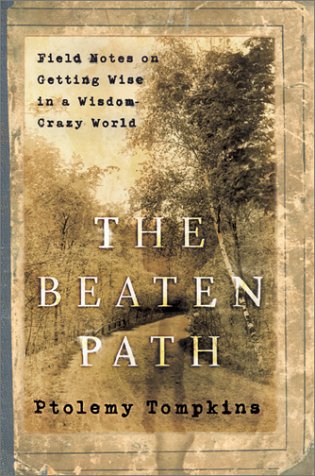
Synopsis
In an America obsessed with quickie enlightenment and wisdom-acquisition, Ptolemy Tompkins is a seeker who has been there and done that. From Black Elk to the Dalai Lama -- from Hun Tun and mescaline to motorcycle Zen and mind at large -- the acclaimed author of Paradise Fever has followed many roads in pursuit of a universal truth. And he has survived to tell the tale.
The Beaten Path
Ptolemy Tompkins came of age in the '70s -- before Americans began spending uplifting Tuesdays with Morrie or perusing Little Instruction Books. In the wake of a quintessentially New Age childhood as the son of the radical freethinker Peter Tompkins, author of the bestselling The Secret Life of Plants, Ptolemy began a personal quest for enlightenment decades before it became trendy to do so. He gained much valuable insight as he careened from Buddha to the Bhagavad-Gita, from Krishna to Carlos Castaneda. But how much actual "wisdom" he accrued is a matter the author himself admits is up for debate.
The Beaten Path is a work of great intelligence that is profound, moving, and hilariously entertaining. In his funny and touching account of a spiritual journey that went wildly off course, the author bares his soul even as he knocks down the gaudy signposts that guide eager pilgrims through today's pop-wisdom landscape. Yet he never loses sight of what is valuable and true in the literature of the spirit.
Part gripping personal memoir, part merciless-yet-affectionate critique, and part genuine prescription for the good life, The Beaten Path is a provocative gift from a man who left no page unturned, no odyssey uncompleted, in his determination to find direction and meaning in the cosmos. In exploring what it is that makes so many of his contemporaries actively seek the light of peace and transformation in its most convenient and palatable form, he offers readers a unique, idiosyncratic insight into our modern world. And he has great fun while doing so.
"synopsis" may belong to another edition of this title.
About the Author
Ptolemy Tompkins was born in Washington, D.C. He is the author of several books, including Paradise Fever, a memoir, and This Tree Grows Out of Hell, a study of Mesoamerican myth and spirituality. He has written for many publications, including Harper's, the New York Times Magazine, and the Utne Reader, and his work has appeared in The Best Spiritual Writing 1998 and 1999.
Reviews
Tompkins (Paradise Fever) offers a witty, provocative memoir about the struggle to get wise in a time and in a culture where the world's great wisdom books are as available as candy bars at the 7-11. For all their amazing abundance, according to the author, "these maps don't seem to be able to speak to us in the same way that they did back in the time when there was essentially one wisdom source per culture." With deadpan humor, the disaffected son of a once-legendary New Age author, Peter Tompkins (The Secret Life of Plants), describes dropping out of Vassar in the early '80s to emulate the "Life Manuals," pop wisdom-getting narratives like Carlos Castenada's shaman saga. Along with lectures on Taoism and Zen Buddhism by Alan Watts and the novels of Henry Miller, these manuals inspired Tompkins to revere teachers who got enlightened without the usual pitfalls and rules. Alas, slogging through the jungles of Colombia as a photographer's assistant initiates Tompkins only in the embarrassment of being a wealthy white witness to dire poverty. He encounters one drunken shaman who agrees to be photographed for money, and that proves a far happier event than the psychedelic trip that Tompkins later takes on a New Age ranch in New Mexico. He ends with the valuable insight that our wisdom-commodifying contemporary culture has lost a taste for wisdom as process. Astute readers will long for Tompkins to put his hinted-at Christian card on the table. Indeed, essays like "Mystics and Zen Masters" by Thomas Merton demonstrate how a grown man secure in his own tradition might study another tradition for the light it sheds on his own.
Copyright 2001 Cahners Business Information, Inc.
Of the various paths available to those in search of life's meaning, Tompkins (Paradise Fever) chose the path of Buddhism while also incorporating insights from Taoism and Native American spirituality. His book is a journal of the search he began when as a teenager he read what he refers to as "life manuals," such as the Tao Te Ching and the Bhagavad-Gita. The reader travels along with him on both the physical and the spiritual path, as Tompkins attempts to apply the principles of these texts and others to his life. An important trip was one he took to Colombia with his older stepbrother, a photographer and a Buddhist who eventually became a monk, during which they encountered a shaman. Tompkins's journeys took him across the United States and eventually back to college, which he had rejected a few years earlier. While not a life manual itself, it provides a good introduction to Buddhism and Taoism in an easy fashion. For religion and spirituality collections. John Moryl, Yeshiva Univ. Lib., New York
Copyright 2001 Reed Business Information, Inc.
Tompkins, the son of one of the founders of the New Age movement, continues the charmingly offhanded and refreshingly critical memoir he began in Paradise Fever (1997). This installment recounts his post-high-school floundering, during which he seeks enlightenment in the popular "wisdom" books of the time, works by Carlos Castaneda, Aldous Huxley, and Alan Watts. So enamored is he of these "Life Manuals," he finds college impossibly dull and heads out on various goofball quests financed and overseen by family and friends, including travels in Colombia and out west. He recounts these callow adventures with a winning mix of sympathy for his bumbling self and ire at the shallowness and downright phoniness of so many alleged gurus of the 1960s and 1970s. Ultimately, his breezy chronicle both explicates and eviscerates the entire self-help, wisdom-by-the-pound, smorgasbord, consumer approach to spirituality. He perfectly captures that desperation to find the meaning of life before even reaching legal drinking age that is peculiar to sensitive and skeptical teenagers. Donna Seaman
Copyright © American Library Association. All rights reserved
"About this title" may belong to another edition of this title.
Search results for The Beaten Path: Field Notes on Getting Wise in a Wisdom-Cra...

Stock Image
The Beaten Path: Field Notes on Getting Wise in a Wisdom-Crazy World
Published by
William Morrow & Company, 2001
ISBN 10: 0380978229
ISBN 13: 9780380978229
Used
Hardcover
Seller: World of Books (was SecondSale), Montgomery, IL, U.S.A.
Seller rating 5 out of 5 stars

Hardback. Condition: Fair. In an America obsessed with quickie enlightenment and wisdom-acquisition, Ptolemy Tompkins is a seeker who has been there and done that. From Black Elk to the Dalai Lama -- from Hun Tun and mescaline to motorcycle Zen and mind at large -- the acclaimed author of Paradise Fever has followed many roads in pursuit of a universal truth. And he has survived to tell the tale.The Beaten PathPtolemy Tompkins came of age in the '70s -- before Americans began spending uplifting Tuesdays with Morrie or perusing Little Instruction Books. In the wake of a quintessentially New Age childhood as the son of the radical freethinker Peter Tompkins, author of the bestselling The Secret Life of Plants, Ptolemy began a personal quest for enlightenment decades before it became trendy to do so. He gained much valuable insight as he careened from Buddha to the Bhagavad-Gita, from Krishna to Carlos Castaneda. But how much actual wisdom he accrued is a matter the author himself admits is up for debate.The Beaten Path is a work of great intelligence that is profound, moving, and hilariously entertaining. In his funny and touching account of a spiritual journey that went wildly off course, the author bares his soul even as he knocks down the gaudy signposts that guide eager pilgrims through today's pop-wisdom landscape. Yet he never loses sight of what is valuable and true in the literature of the spirit.Part gripping personal memoir, part merciless-yet-affectionate critique, and part genuine prescription for the good life, The Beaten Path is a provocative gift from a man who left no page unturned, no odyssey uncompleted, in his determination to find direction and meaning in the cosmos. In exploring what it is that makes so many of his contemporaries actively seek the light of peace and transformation in its most convenient and palatable form, he offers readers a unique, idiosyncratic insight into our modern world. And he has great fun while doing so. Seller Inventory # 00065664381
Stock Image
The Beaten Path: Field Notes on Getting Wise in a Wisdom-Crazy World
Published by
William Morrow & Company, 2001
ISBN 10: 0380978229
ISBN 13: 9780380978229
Used
Hardcover
Seller: World of Books (was SecondSale), Montgomery, IL, U.S.A.
Seller rating 5 out of 5 stars
Hardback. Condition: Good. In an America obsessed with quickie enlightenment and wisdom-acquisition, Ptolemy Tompkins is a seeker who has been there and done that. From Black Elk to the Dalai Lama -- from Hun Tun and mescaline to motorcycle Zen and mind at large -- the acclaimed author of Paradise Fever has followed many roads in pursuit of a universal truth. And he has survived to tell the tale.The Beaten PathPtolemy Tompkins came of age in the '70s -- before Americans began spending uplifting Tuesdays with Morrie or perusing Little Instruction Books. In the wake of a quintessentially New Age childhood as the son of the radical freethinker Peter Tompkins, author of the bestselling The Secret Life of Plants, Ptolemy began a personal quest for enlightenment decades before it became trendy to do so. He gained much valuable insight as he careened from Buddha to the Bhagavad-Gita, from Krishna to Carlos Castaneda. But how much actual wisdom he accrued is a matter the author himself admits is up for debate.The Beaten Path is a work of great intelligence that is profound, moving, and hilariously entertaining. In his funny and touching account of a spiritual journey that went wildly off course, the author bares his soul even as he knocks down the gaudy signposts that guide eager pilgrims through today's pop-wisdom landscape. Yet he never loses sight of what is valuable and true in the literature of the spirit.Part gripping personal memoir, part merciless-yet-affectionate critique, and part genuine prescription for the good life, The Beaten Path is a provocative gift from a man who left no page unturned, no odyssey uncompleted, in his determination to find direction and meaning in the cosmos. In exploring what it is that makes so many of his contemporaries actively seek the light of peace and transformation in its most convenient and palatable form, he offers readers a unique, idiosyncratic insight into our modern world. And he has great fun while doing so. Seller Inventory # 00094984038
Stock Image
The Beaten Path: Field Notes on Getting Wise in a Wisdom-Crazy World
Published by
William Morrow (edition 1), 2001
ISBN 10: 0380978229
ISBN 13: 9780380978229
Used
Hardcover
Seller: BooksRun, Philadelphia, PA, U.S.A.
Seller rating 5 out of 5 stars
Hardcover. Condition: Fair. 1. With dust jacket. The item might be beaten up but readable. May contain markings or highlighting, as well as stains, bent corners, or any other major defect, but the text is not obscured in any way. Seller Inventory # 0380978229-7-1-29
Seller Image
The Beaten Path: Field Notes on Getting Wise in a Wisdom-Crazy World
Seller: -OnTimeBooks-, Phoenix, AZ, U.S.A.
Seller rating 5 out of 5 stars
Condition: very_good. Gently read. May have name of previous ownership, or ex-library edition. Binding tight; spine straight and smooth, with no creasing; covers clean and crisp. Minimal signs of handling or shelving. 100% GUARANTEE! Shipped with delivery confirmation, if you're not satisfied with purchase please return item! Ships USPS Media Mail. Seller Inventory # OTV.0380978229.VG
Stock Image
The Beaten Path: Field Notes on Getting Wise in a Wisdom-Crazy World
Seller: ThriftBooks-Atlanta, AUSTELL, GA, U.S.A.
Seller rating 5 out of 5 stars
Hardcover. Condition: Very Good. No Jacket. May have limited writing in cover pages. Pages are unmarked. ~ ThriftBooks: Read More, Spend Less. Seller Inventory # G0380978229I4N00
Stock Image
The Beaten Path: Field Notes on Getting Wise in a Wisdom-Crazy World
Seller: Wonder Book, Frederick, MD, U.S.A.
Seller rating 5 out of 5 stars
Condition: As New. Like New condition. Like New dust jacket. From the collection of Tom Verlaine. Verlaine was a guitarist, singer, and songwriter who was a founding member of the seminal punk rock band Television. He was known for his innovative guitar playing and songwriting, and he is considered to be one of the most important and influential musicians of the past 50 years. Seller Inventory # Z06J-00188
Stock Image
The Beaten Path : Field Notes on Getting Wise in a Wisdom-Crazy World
Published by
HarperCollins Publishers, 2001
ISBN 10: 0380978229
ISBN 13: 9780380978229
Used
Hardcover
First Edition
Seller: Better World Books: West, Reno, NV, U.S.A.
Seller rating 5 out of 5 stars
Condition: Very Good. 1st Edition. Former library copy. Pages intact with possible writing/highlighting. Binding strong with minor wear. Dust jackets/supplements may not be included. Includes library markings. Stock photo provided. Product includes identifying sticker. Better World Books: Buy Books. Do Good. Seller Inventory # GRP102155495
Stock Image
The Beaten Path : Field Notes on Getting Wise in a Wisdom-Crazy World
Published by
HarperCollins Publishers, 2001
ISBN 10: 0380978229
ISBN 13: 9780380978229
Used
Hardcover
First Edition
Seller: Better World Books, Mishawaka, IN, U.S.A.
Seller rating 5 out of 5 stars
Condition: Good. 1st Edition. Pages intact with minimal writing/highlighting. The binding may be loose and creased. Dust jackets/supplements are not included. Stock photo provided. Product includes identifying sticker. Better World Books: Buy Books. Do Good. Seller Inventory # 5873922-6
Stock Image
The Beaten Path: Field Notes on Getting Wise in a Wisdom-Crazy World
Published by
William Morrow & Company, 2001
ISBN 10: 0380978229
ISBN 13: 9780380978229
Used
Hardcover
Seller: World of Books Inc, Montgomery, IL, U.S.A.
Seller rating 4 out of 5 stars

Hardback. Condition: Good. In an America obsessed with quickie enlightenment and wisdom-acquisition, Ptolemy Tompkins is a seeker who has been there and done that. From Black Elk to the Dalai Lama -- from Hun Tun and mescaline to motorcycle Zen and mind at large -- the acclaimed author of Paradise Fever has followed many roads in pursuit of a universal truth. And he has survived to tell the tale.The Beaten PathPtolemy Tompkins came of age in the '70s -- before Americans began spending uplifting Tuesdays with Morrie or perusing Little Instruction Books. In the wake of a quintessentially New Age childhood as the son of the radical freethinker Peter Tompkins, author of the bestselling The Secret Life of Plants, Ptolemy began a personal quest for enlightenment decades before it became trendy to do so. He gained much valuable insight as he careened from Buddha to the Bhagavad-Gita, from Krishna to Carlos Castaneda. But how much actual wisdom he accrued is a matter the author himself admits is up for debate.The Beaten Path is a work of great intelligence that is profound, moving, and hilariously entertaining. In his funny and touching account of a spiritual journey that went wildly off course, the author bares his soul even as he knocks down the gaudy signposts that guide eager pilgrims through today's pop-wisdom landscape. Yet he never loses sight of what is valuable and true in the literature of the spirit.Part gripping personal memoir, part merciless-yet-affectionate critique, and part genuine prescription for the good life, The Beaten Path is a provocative gift from a man who left no page unturned, no odyssey uncompleted, in his determination to find direction and meaning in the cosmos. In exploring what it is that makes so many of his contemporaries actively seek the light of peace and transformation in its most convenient and palatable form, he offers readers a unique, idiosyncratic insight into our modern world. And he has great fun while doing so. Seller Inventory # CIN0380978229G
Stock Image
The Beaten Path: Field Notes on Getting Wise in a Wisdom-Crazy World
Published by
William Morrow & Company, 2001
ISBN 10: 0380978229
ISBN 13: 9780380978229
Used
Hardcover
Seller: World of Books Inc, Montgomery, IL, U.S.A.
Seller rating 4 out of 5 stars
Hardback. Condition: Fair. In an America obsessed with quickie enlightenment and wisdom-acquisition, Ptolemy Tompkins is a seeker who has been there and done that. From Black Elk to the Dalai Lama -- from Hun Tun and mescaline to motorcycle Zen and mind at large -- the acclaimed author of Paradise Fever has followed many roads in pursuit of a universal truth. And he has survived to tell the tale.The Beaten PathPtolemy Tompkins came of age in the '70s -- before Americans began spending uplifting Tuesdays with Morrie or perusing Little Instruction Books. In the wake of a quintessentially New Age childhood as the son of the radical freethinker Peter Tompkins, author of the bestselling The Secret Life of Plants, Ptolemy began a personal quest for enlightenment decades before it became trendy to do so. He gained much valuable insight as he careened from Buddha to the Bhagavad-Gita, from Krishna to Carlos Castaneda. But how much actual wisdom he accrued is a matter the author himself admits is up for debate.The Beaten Path is a work of great intelligence that is profound, moving, and hilariously entertaining. In his funny and touching account of a spiritual journey that went wildly off course, the author bares his soul even as he knocks down the gaudy signposts that guide eager pilgrims through today's pop-wisdom landscape. Yet he never loses sight of what is valuable and true in the literature of the spirit.Part gripping personal memoir, part merciless-yet-affectionate critique, and part genuine prescription for the good life, The Beaten Path is a provocative gift from a man who left no page unturned, no odyssey uncompleted, in his determination to find direction and meaning in the cosmos. In exploring what it is that makes so many of his contemporaries actively seek the light of peace and transformation in its most convenient and palatable form, he offers readers a unique, idiosyncratic insight into our modern world. And he has great fun while doing so. Seller Inventory # CIN0380978229A