
Items related to The Divided Self.
Synopsis
In The Divided Self (1960), Laing contrasted the experience of the "ontologically secure" person with that of a person who "cannot take the realness, aliveness, autonomy and identity of himself and others for granted" and who consequently contrives strategies to avoid "losing his self". Laing explains how we all exist in the world as beings, defined by others who carry a model of us in their heads, just as we carry models of them in our heads. In later writings he often takes this to deeper levels, laboriously spelling out how "A knows that B knows that A knows that B knows..."! Our feelings and motivations derive very much from this condition of "being in the world" in the sense of existing for others, who exist for us. Without this we suffer "ontological insecurity", a condition often expressed in terms of "being dead" by people who are clearly still physically alive.
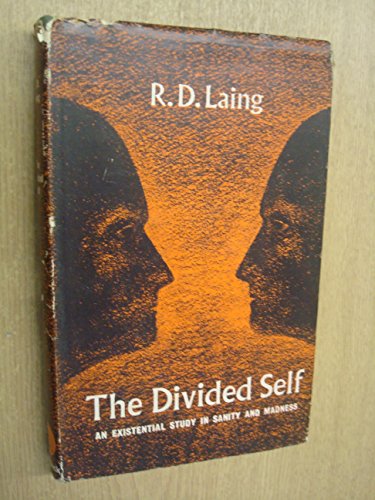
This watershed work aimed to make madness comprehensible, and in doing so revolutionized the way we perceive mental illness. Using case studies of patients he had worked with, psychiatrist R. D. Laing argued that psychosis is not a medical condition, but an outcome of the 'divided self', or the tension between the two personas within us: one our authentic, private identity, and the other the false, 'sane' self that we present to the world. Laing's radical approach to insanity offered a rich existential analysis of personal alienation and made him a cult figure in the 1960s, yet his work was most significant for its humane attitude, which put the patient back at the centre of treatment. R.D. Laing (1927-1989), one of the best-known psychiatrists of modern times, was born in Glasgow, Scotland.
This work is available on its own or as part of the 7 volume set iSelected Works of R. D. Laing
"synopsis" may belong to another edition of this title.
About the Author
R.D. Laing, one of the best-known psychiatrists of modern times, was born in Glasgow in 1927 and graduated from Glasgow University as a doctor of medicine. In the 1960's he developed the argument that there may be a benefit in allowing acute mental and emotional turmoil in depth to go on and have its way, and that the outcome of such turmoil could have a positive value. He was the first to put such a stand to the test by establishing, with others, residences where persons could live and be free to let happen what will when the acute psychosis is given free rein, or where, at the very least, they receive no treatment they do not want. This work with the Philadelphia Association since 1964, together with his focus on disturbed and disturbing types of interaction in institutions, groups and families, has been both influential and continually controversial. R.D. Laing's writings range from books on social theory to verse, as well as numerous articles and reviews in scientific journals and the popular press. His publications are: The Divided Self, Self and Others, Interpersonal Perception (with H. Phillipson and A. Robin Lee), Reason and Violence (introduced by Jean-Paul Sartre), Sanity, Madness and the Family (with A. Esterson), The Politics of Experience and The Bird of Paradise, Knots, The Politics of the Family, The Facts of Life, Do You Love Me?, Conversations with Children, Sonnets, The Voice of Experience and Wisdom, Madness and Folly. R.D. Laing died in 1989. Anthony Clare, writing in the Guardian, said of him: "His major achievement was that he dragged the isolated and neglected inner world of the severely psychotic individual out of the back ward of the large gloomy mental hospital and on to the front pages of influential newspapers, journals and literary magazines... Everyone in contemporary psychiatry owes something to R.D. Laing."
Review
"Dr. Laing is saying something very important indeed. . . . This is a truly humanist approach."
—Philip toynbee in the Observer
"It is a study that makes all other works I have read on schizophrenia seem fragmentary. . . . The author brings, through his vision and perception, that particular touch of genius which causes one to say Yes, I have always known that, why have I never thought of it before?'"
—Journal of Analytical Psychology
"About this title" may belong to another edition of this title.
Other Popular Editions of the Same Title

Search results for The Divided Self.

Stock Image
Divided Self (Studies in Existentialism & Phenomenology)
Seller: Sell Books, Elland, YORKS, United Kingdom
Seller rating 5 out of 5 stars

hardcover. Condition: Acceptable. Please see the condition note after this for details, if this is missing please consider Acceptable to mean poor quality that could include major staining, water damage, writing, missing dustjacket, etc etc. Our books are dispatched from a Yorkshire former cotton mill. We list via barcode/ISBN so please note that the images are stock images and may not be the exact copy you receive, furthermore the details about edition and year might not be accurate as many publishers reuse the same ISBN for multiple editions and as we simply scan a barcode or enter an ISBN we do not check the validity of the edition data when listing. If you're looking for an exact edition please don't order (at least not without checking with us first, although we don't always have time to check). We aim to dispatch prompty, the service used will depend on order value and book size. We can ship to most countries, see our shipping policies. Payment is via Abe only. Seller Inventory # L-BSO00243-RAG-20250902-A
Buy Used
US$ 1,231.95
US$ 16.37 shipping
Ships from United Kingdom to U.S.A.
Ships from United Kingdom to U.S.A.
Quantity: 1 available