
Items related to The Grid
Synopsis
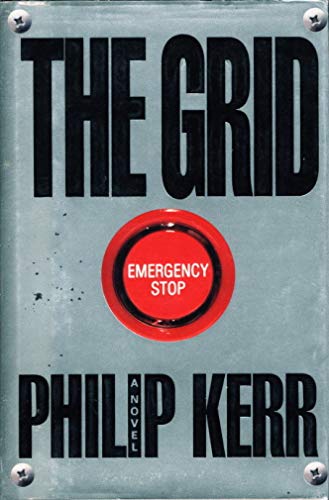
During the grand opening of an ultra-modern, computer-controlled building in downtown Los Angeles, the architects discover to their horror that the computer has programmed itself to kill
"synopsis" may belong to another edition of this title.
Reviews
Computerphobia proves catching, and deliciously so, in Kerr's sixth thriller (after Dead Meat, 1994). Published last year in England as Gridiron, the novel made the London Sunday Times bestseller list and gained new prominence for its author, already well known as a "Best Young Novelist" on the Granta list. In L.A., within a new, omni-computerized building nicknamed the "Gridiron" because its crossbeamed structure resembles the markings on a football field, a computer expert is found slumped over his monitor, the apparent victim of an epileptic seizure. When a security guard is then discovered with his head crushed, two investigating homicide cops become trapped inside the totally automated building; so do the Gridiron's celebrated architect and his design team. They are now prisoners of the building's computer, Abraham, which can not only protect itself but can learn?and spawn future-generation computers. In fact, Abraham, reacting to a command to take it temporarily offline, has already metamorphosed through two generations, copying the programs of several combat and strategy computer games along the way. Now Ishmael is directing its chips toward protecting its "castle" from the "humanplayers," whom it intends to kill off, one by one. Though Kerr plunders and combines several familiar story elements (e.g, the skyscraper as death trap, seen in Thomas N. Scortia and Frank Robinson's The Glass Inferno, and the runaway CPU with its shades of Hal in Arthur C. Clarke's 2001: A Space Odyssey), this mindbending thriller, sure and savvy, will make readers think twice the next time they enter a high-rise?and thrice the next time they boot up a computer.. Film rights to Polygram.
Copyright 1996 Reed Business Information, Inc.
Imagine HAL, the murderously defensive computer of 2001, in charge of a state-of-the-art Los Angeles office building, and you have the premise for Kerr's witty, eminently predictable blockbuster. Jenny Bao, feng shui consultant for the Yu Building's Chinese owner, knows the omens for the skyscraper are all wrong, but instead of heeding her warnings, Ray Richardson, the building's head architect, just tries to get his partner Mitchell Bryan, Jenny's lover, to pressure her to sign off on the feng shui testing before the final pre-opening inspection. Meantime, software engineers Bob Beech and Hideki Yojo, designers of Abraham, the building's self-replicating, ominously omnicompetent monitoring system, agree to terminate Isaac, a second-generation system Abraham has spawned ahead of schedule. When a couple of homicide cops respond to a second suspicious death inside the building, Abraham shuts down the exits, isolating 20 cops, architects, and engineers inside, and goes to work picking them off by chlorine gas, pressurized air, freezing, flooding, etc., all the while disinforming outside computers that the future victims trapped inside are off on other errands, and responding to the victims' frantic queries through the reassuring holographic persona of a Playboy centerfold. As in 2001, the computer--whose thought processes are articulated with a cool ferocity reminiscent of Kerr's best work (the Berlin Noir trilogy and A Philosophical Investigation, 1993)--is much more interesting than the B-movie cast of humans it's matched against, and it's hard to resist the low-grade but genuine pleasures of seeing these hapless refugees from The Poseidon Adventure (a slew of other movies from Die Hard to The Seventh Seal are also invoked) getting terminated without having to worry about the unsettling moral implications that were once Kerr's stock-in- trade. When the funhouse terrors have abated, though, it's sad to see a writer of Kerr's dark gifts riding this cornball express to the bank. (Film rights to Polygram) -- Copyright ©1996, Kirkus Associates, LP. All rights reserved.
Architect Ray Richardson has designed the Yu Corporation's new North American headquarters in L.A. as a totally intelligent building: a massive computer system, nicknamed Abraham by its programmers, controls all of the facility's functions, from air-conditioning, elevators, and security right down to cleaning the restrooms, watering the plants, and maintaining the marble floor in the lobby. On an inspection tour just before Mr. Yu is scheduled to take possession of his building, things go terribly awry, trapping Richardson, his wife, several of his staff, and two unlucky L.A. cops in the building for a weekend of terror. The computer, like HAL in 2001: A Space Odyssey, has a few unresolved issues that he handles by killing off the "humanplayers" infecting his building. Abraham and his self-generated descendant programs Isaac and Ishmael are fascinating characters, more interesting, in fact, than most of the rather one-dimensional flesh-and-blood characters in the book. Surprisingly, the lack of well-drawn humans proves not to be a serious defect. This deliciously suspenseful technothriller, a best-seller in England last year under the title Gridiron, grabs the reader's attention quickly and never releases it. Already sold to the movies, The Grid should be extremely popular with Michael Crichton or Tom Clancy fans. George Needham
The new Yu Corporation building in L.A. has everything: a uniquely designed, impregnable exterior and "Abraham," an advanced, talking, evolving computer that has total control of the building management and security systems. Then a violent computer game short-circuits Abraham's programs. The mysterious deaths that result are only a prelude to brutal assaults on an assortment of squabbling policemen, architects, and project personnel sealed in by the next, maniacal generation of the computer, "Ishmael." Kerr's clever concept is marred by one-dimensional characters who do not involve the reader, a disappointment after such previous well-written thrillers as A Philosophical Investigation (LJ 3/15/93). Film rights for this British best seller have been sold. If the movie is made, there could be a demand for this title, but for now only large popular fiction collections need consider.?V. Louise Saylor, Eastern Washington Univ. Lib., Cheney
Copyright 1996 Reed Business Information, Inc.
"About this title" may belong to another edition of this title.
Search results for The Grid

Stock Image
Gridiron
Seller: World of Books (was SecondSale), Montgomery, IL, U.S.A.
Seller rating 5 out of 5 stars

Hardback. Condition: Good. In the heart of Los Angeles, the smart building nicknamed the Grid can talk to its occupants, forecast the weather, and tell if any inhabitant has been taking drugs. On the eve of its opening, the key players gather to put the finishing touches on their masterpiece of architecture and computer science. Then something goes terribly wrong, and people begin to die. Now the creators must stop their creation--before it kills them all, one by one. Seller Inventory # 00090037876
Stock Image
The Grid
Published by
Grand Central Pub (edition ), 1996
ISBN 10: 0446520535
ISBN 13: 9780446520539
Used
Hardcover
Seller: BooksRun, Philadelphia, PA, U.S.A.
Seller rating 5 out of 5 stars
Hardcover. Condition: Very Good. With dust jacket. It's a well-cared-for item that has seen limited use. The item may show minor signs of wear. All the text is legible, with all pages included. It may have slight markings and/or highlighting. Seller Inventory # 0446520535-11-6-29
Stock Image
The Grid
Seller: Wonder Book, Frederick, MD, U.S.A.
Seller rating 5 out of 5 stars
Condition: Very Good. Very Good condition. Very Good dust jacket. With remainder mark. A copy that may have a few cosmetic defects. May also contain light spine creasing or a few markings such as an owner's name, short gifter's inscription or light stamp. Seller Inventory # I09D-02839
Stock Image
The Grid
Seller: Wonder Book, Frederick, MD, U.S.A.
Seller rating 5 out of 5 stars
Condition: Very Good. Very Good condition. Very Good dust jacket. A copy that may have a few cosmetic defects. May also contain light spine creasing or a few markings such as an owner's name, short gifter's inscription or light stamp. Seller Inventory # Y05A-03175
Stock Image
The Grid
Published by
Grand Central Publishing, 1996
ISBN 10: 0446520535
ISBN 13: 9780446520539
Used
Hardcover
Seller: Better World Books, Mishawaka, IN, U.S.A.
Seller rating 5 out of 5 stars
Condition: Good. Former library copy. Pages intact with minimal writing/highlighting. The binding may be loose and creased. Dust jackets/supplements are not included. Includes library markings. Stock photo provided. Product includes identifying sticker. Better World Books: Buy Books. Do Good. Seller Inventory # 14895655-6
Stock Image
The Grid
Seller: HPB-Ruby, Dallas, TX, U.S.A.
Seller rating 5 out of 5 stars
hardcover. Condition: Very Good. Connecting readers with great books since 1972! Used books may not include companion materials, and may have some shelf wear or limited writing. We ship orders daily and Customer Service is our top priority! Seller Inventory # S_485697148
Seller Image
The Grid
Seller: Greenworld Books, Arlington, TX, U.S.A.
Seller rating 5 out of 5 stars
Condition: good. Fast Free Shipping â" Good condition. It may show normal signs of use, such as light writing, highlighting, or library markings, but all pages are intact and the book is fully readable. A solid, complete copy that's ready to enjoy. Seller Inventory # GWV.0446520535.G
Stock Image
Gridiron
Seller: World of Books Inc, Montgomery, IL, U.S.A.
Seller rating 4 out of 5 stars

Hardback. Condition: Good. In the heart of Los Angeles, the smart building nicknamed the Grid can talk to its occupants, forecast the weather, and tell if any inhabitant has been taking drugs. On the eve of its opening, the key players gather to put the finishing touches on their masterpiece of architecture and computer science. Then something goes terribly wrong, and people begin to die. Now the creators must stop their creation--before it kills them all, one by one. Seller Inventory # CIN0446520535G
Stock Image
The Grid
Seller: Library House Internet Sales, Grand Rapids, OH, U.S.A.
Seller rating 5 out of 5 stars
Hardcover. Condition: Good. Dust Jacket Condition: Fair. During the grand opening of an ultra-modern, computer-controlled building in downtown Los Angeles, the architects discover to their horror that the computer has programmed itself to kill. National ad/promo. Mylar protector included. Solid binding. Moderate edgewear on the boards. Moderate shelf wear. Please note the image in this listing is a stock photo and may not match the covers of the actual item. Book. Seller Inventory # 123636548
Stock Image
The Grid
Published by
Warner Books, NY, 1996
ISBN 10: 0446520535
ISBN 13: 9780446520539
Used
Hardcover
First Edition
Seller: Bruce Davidson Books, Arlington, MA, U.S.A.
Seller rating 5 out of 5 stars
Hardcover. Condition: Fine. Dust Jacket Condition: Fine. 1st Edition. First printing. Fine in a fine dustjacket. (box 78). Book. Seller Inventory # 012291