
Items related to Kim (Everyman's Library)
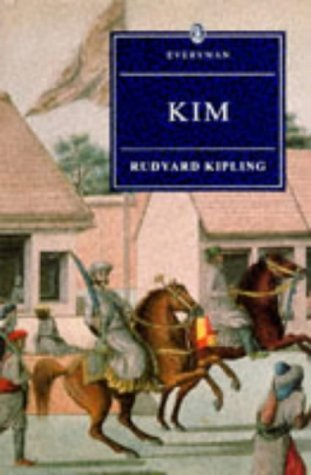
Synopsis
Set after the Second Afghan War which ended in 1881, but before the Third fought in 1919, probably in the period 1893 to 1898. The novel is notable for its detailed portrait of the people, culture, and varied religions of India. The book presents a vivid picture of India, its teeming populations, religions, and superstitions, and the life of the bazaars and the road.Two men - a boy who grows into early manhood and an old ascetic priest, the lama - are at the center of the novel. A quest faces them both. Born in India, Kim is nevertheless white, a sahib. While he wants to play the Great Game of Imperialism, he is also spiritually bound to the lama. His aim, as he moves chameleon-like through the two cultures, is to reconcile these opposing strands, while the lama searches for redemption from the Wheel of Life.A celebration of their friendship in a beautiful but often hostile environment, 'Kim' captures the opulence of India's exotic landscape, overlaid by the uneasy presence of the British Raj.
"synopsis" may belong to another edition of this title.
Review
One of the particular pleasures of reading Kim is the full range of emotion, knowledge, and experience that Rudyard Kipling gives his complex hero. Kim O'Hara, the orphaned son of an Irish soldier stationed in India, is neither innocent nor victimized. Raised by an opium-addicted half-caste woman since his equally dissolute father's death, the boy has grown up in the streets of Lahore:
Though he was burned black as any native; though he spoke the vernacular by preference, and his mother-tongue in a clipped uncertain sing-song; though he consorted on terms of perfect equality with the small boys of the bazar; Kim was white--a poor white of the very poorest.From his father and the woman who raised him, Kim has come to believe that a great destiny awaits him. The details, however, are a bit fuzzy, consisting as they do of the woman's addled prophecies of "'a great Red Bull on a green field, and the Colonel riding on his tall horse, yes, and'--dropping into English--'nine hundred devils.'"
In the meantime, Kim amuses himself with intrigues, executing "commissions by night on the crowded housetops for sleek and shiny young men of fashion." His peculiar heritage as a white child gone native, combined with his "love of the game for its own sake," makes him uniquely suited for a bigger game. And when, at last, the long-awaited colonel comes along, Kim is recruited as a spy in Britain's struggle to maintain its colonial grip on India. Kipling was, first and foremost, a man of his time; born and raised in India in the 19th century, he was a fervid supporter of the Raj. Nevertheless, his portrait of India and its people is remarkably sympathetic. Yes, there is the stereotypical Westernized Indian Babu Huree Chander with his atrocious English, but there is also Kim's friend and mentor, the Afghani horse trader Mahub Ali, and the gentle Tibetan lama with whom Kim travels along the Grand Trunk Road. The humanity of his characters consistently belies Kipling's private prejudices, and raises Kim above the mere ripping good yarn to the level of a timeless classic. --Alix Wilber
From the Publisher
Founded in 1906 by J.M. Dent, the Everyman Library has always tried to make the best books ever written available to the greatest number of people at the lowest possible price. Unique editorial features that help Everyman Paperback Classics stand out from the crowd include: a leading scholar or literary critic's introduction to the text, a biography of the author, a chronology of her or his life and times, a historical selection of criticism, and a concise plot summary. All books published since 1993 have also been completely restyled: all type has been reset, to offer a clarity and ease of reading unique among editions of the classics; a vibrant, full-color cover design now complements these great texts with beautiful contemporary works of art. But the best feature must be Everyman's uniquely low price. Each Everyman title offers these extensive materials at a price that competes with the most inexpensive editions on the market-but Everyman Paperbacks have durable binding, quality paper, and the highest editorial and scholarly standards.
"About this title" may belong to another edition of this title.
Search results for Kim (Everyman's Library)

Seller Image
Kim (Everyman)
Published by
Phoenix (an Imprint of The Orion Publishing Group Ltd ), 1994
ISBN 10: 046087408X
ISBN 13: 9780460874083
Used
paperback
Seller: WeBuyBooks, Rossendale, LANCS, United Kingdom
Seller rating 5 out of 5 stars

paperback. Condition: Good. Most items will be dispatched the same or the next working day. A copy that has been read but remains in clean condition. All of the pages are intact and the cover is intact and the spine may show signs of wear. The book may have minor markings which are not specifically mentioned. Seller Inventory # rev9610785639
Buy Used
US$ 1.69
US$ 6.88 shipping
Ships from United Kingdom to U.S.A.
Ships from United Kingdom to U.S.A.
Quantity: 1 available
Seller Image
Kim (Everyman)
Published by
Phoenix (an Imprint of The Orion Publishing Group Ltd ), 1994
ISBN 10: 046087408X
ISBN 13: 9780460874083
Used
paperback
Seller: WeBuyBooks, Rossendale, LANCS, United Kingdom
Seller rating 5 out of 5 stars
paperback. Condition: Very Good. Most items will be dispatched the same or the next working day. A copy that has been read, but is in excellent condition. Pages are intact and not marred by notes or highlighting. The spine remains undamaged. Seller Inventory # rev9324841152
Buy Used
US$ 1.69
US$ 6.88 shipping
Ships from United Kingdom to U.S.A.
Ships from United Kingdom to U.S.A.
Quantity: 1 available
Stock Image
Kim
Published by
Orion Publishing Group, Limited, 1994
ISBN 10: 046087408X
ISBN 13: 9780460874083
Used
Softcover
Seller: Better World Books Ltd, Dunfermline, United Kingdom
Seller rating 5 out of 5 stars
Condition: Very Good. Pages intact with possible writing/highlighting. Binding strong with minor wear. Dust jackets/supplements may not be included. Stock photo provided. Product includes identifying sticker. Better World Books: Buy Books. Do Good. Seller Inventory # 56971304-20
Buy Used
US$ 6.22
US$ 6.70 shipping
Ships from United Kingdom to U.S.A.
Ships from United Kingdom to U.S.A.
Quantity: 1 available
Stock Image
Kim (Everyman's Library)
Seller: HPB-Ruby, Dallas, TX, U.S.A.
Seller rating 5 out of 5 stars
paperback. Condition: Very Good. Connecting readers with great books since 1972! Used books may not include companion materials, and may have some shelf wear or limited writing. We ship orders daily and Customer Service is our top priority! Seller Inventory # S_485264197
Stock Image
Kim (Everyman's Library)
Seller: Phatpocket Limited, Waltham Abbey, HERTS, United Kingdom
Seller rating 5 out of 5 stars
Condition: Good. Your purchase helps support Sri Lankan Children's Charity 'The Rainbow Centre'. Ex-library, so some stamps and wear, but in good overall condition. Our donations to The Rainbow Centre have helped provide an education and a safe haven to hundreds of children who live in appalling conditions. Seller Inventory # Z1-Q-026-04191
Buy Used
US$ 1.38
US$ 14.26 shipping
Ships from United Kingdom to U.S.A.
Ships from United Kingdom to U.S.A.
Quantity: 1 available
Seller Image
Kim
Seller: Emile Kerssemakers ILAB, Heerlen, Netherlands
Seller rating 5 out of 5 stars
Paperback. 289 pages. Text in English. As new. 777g. Seller Inventory # 86524
Buy Used
US$ 11.56
US$ 28.56 shipping
Ships from Netherlands to U.S.A.
Ships from Netherlands to U.S.A.
Quantity: 1 available