
Items related to Organic Synthesis: The Disconnection Approach
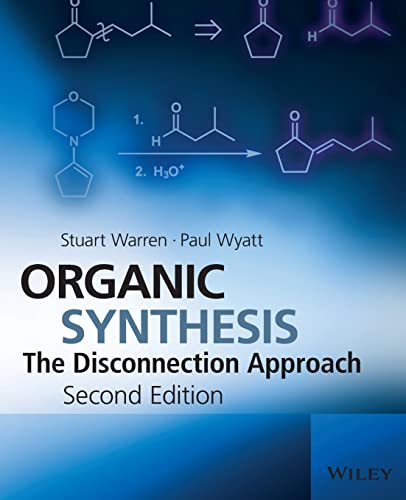
Synopsis
One approach to organic synthesis is retrosynthetic analysis. With this approach a chemist will start with the structure of their target molecule and progressively cut bonds to create simpler molecules. Reversing this process gives a synthetic route to the target molecule from simpler starting materials. This “disconnection” approach to synthesis is now a fundamental part of every organic synthesis course.
Organic Synthesis: The Disconnection Approach, 2nd Edition introduces this important technique, to help students to design their own organic syntheses. There are forty chapters: those on the synthesis of given types of molecules alternate with strategy chapters in which the methods just learnt are placed in a wider context. The synthesis chapters cover many ways of making each type of molecule starting with simple aromatic and aliphatic compounds with one functional group and progressing to molecules with many functional groups. The strategy chapters cover questions of selectivity, protection, stereochemistry, and develop more advanced thinking via reagents specifically designed for difficult problems.
Examples are drawn from pharmaceuticals, agrochemicals, natural products, pheromones, perfumery and flavouring compounds, dyestuffs, monomers, and intermediates used in more advanced synthetic work. Reasons for wishing to synthesise each compound are given.
This second edition has been fully revised and updated with a modern look. Recent examples and techniques are included and illustrated additional material has been added to take the student to the level required by the sequel, “Organic Synthesis: Strategy and Control”.
Several chapters contain extensive new material based on courses that the authors give to chemists in the pharmaceutical industry.
Organic Synthesis: The Disconnection Approach, 2nd edition provides a full course in retrosynthetic analysis for chemistry and biochemistry students and a refresher for organic chemists working in industry and academia.
"synopsis" may belong to another edition of this title.
About the Author
Dr Stuart Warren, Department of Chemistry, University of Cambridge, UK
Dr Warren is the author of the bestselling textbooks Organic Synthesis: The Disconnection Approach (Wiley), Organic Synthesis: Strategy and Control (Wiley) and Organic Chemistry (OUP).
Dr Paul Wyatt, School of Chemistry, University of Bristol, UK
Dr Wyatt is Director of Undergraduate Studies for the School of Chemistry at Bristol University and also Director of BRISTOL ChemLabS - a HEFCE Centre for Excellence in Teaching & Learning. He is co-author, with Warren, of Organic Synthesis: Strategy and Control.
"About this title" may belong to another edition of this title.
Search results for Organic Synthesis: The Disconnection Approach

Stock Image
Organic Synthesis
Seller: ThriftBooks-Dallas, Dallas, TX, U.S.A.
Seller rating 5 out of 5 stars

Paperback. Condition: As New. No Jacket. Pages are clean and are not marred by notes or folds of any kind. ~ ThriftBooks: Read More, Spend Less. Seller Inventory # G0470712368I2N00
Stock Image
Organic Synthesis: The Disconnection Approach 2nd ed.
Seller: Tim's Used Books Provincetown Mass., Provincetown, MA, U.S.A.
Seller rating 5 out of 5 stars
Soft cover. Condition: Very Good. 2nd Edition. Extra clean and tight. No marks in text. Not a library book.(Nice to know the exact description of this book, right?) Ships today in a cardboard enclosure, from Tim's Used Books; open shop since 1991 on the same spot. Shelf NC light blue. Seller Inventory # 251111005
Stock Image
Organic Synthesis: The Disconnection Approach
Seller: Anybook.com, Lincoln, United Kingdom
Seller rating 5 out of 5 stars
Condition: Good. This is an ex-library book and may have the usual library/used-book markings inside.This book has soft covers. In good all round condition. Please note the Image in this listing is a stock photo and may not match the covers of the actual item,750grams, ISBN:9780470712368. Seller Inventory # 5557643
Buy Used
US$ 28.00
US$ 17.26 shipping
Ships from United Kingdom to U.S.A.
Ships from United Kingdom to U.S.A.
Quantity: 1 available
Stock Image
Organic Synthesis: The Disconnection Approach
Seller: Anybook.com, Lincoln, United Kingdom
Seller rating 5 out of 5 stars
Condition: Good. This is an ex-library book and may have the usual library/used-book markings inside.This book has soft covers. Clean from markings. In good all round condition. Please note the Image in this listing is a stock photo and may not match the covers of the actual item,850grams, ISBN:9780470712368. Seller Inventory # 9843643
Buy Used
US$ 33.19
US$ 17.26 shipping
Ships from United Kingdom to U.S.A.
Ships from United Kingdom to U.S.A.
Quantity: 1 available
Stock Image
Organic Synthesis: The Disconnection Approach
Seller: Anybook.com, Lincoln, United Kingdom
Seller rating 5 out of 5 stars
Condition: Good. This is an ex-library book and may have the usual library/used-book markings inside.This book has soft covers. Clean from markings. In good all round condition. Please note the Image in this listing is a stock photo and may not match the covers of the actual item,850grams, ISBN:9780470712368. Seller Inventory # 9843645
Buy Used
US$ 33.19
US$ 17.26 shipping
Ships from United Kingdom to U.S.A.
Ships from United Kingdom to U.S.A.
Quantity: 1 available
Stock Image
Organic Synthesis: The Disconnection Approach, 2nd Edition
Seller: WorldofBooks, Goring-By-Sea, WS, United Kingdom
Seller rating 5 out of 5 stars
Paperback. Condition: Very Good. The book has been read, but is in excellent condition. Pages are intact and not marred by notes or highlighting. The spine remains undamaged. Seller Inventory # GOR006880012
Buy Used
US$ 43.98
US$ 7.41 shipping
Ships from United Kingdom to U.S.A.
Ships from United Kingdom to U.S.A.
Quantity: 1 available
Seller Image
Organic Synthesis : The Disconnection Approach
Seller: GreatBookPrices, Columbia, MD, U.S.A.
Seller rating 5 out of 5 stars
Condition: As New. Unread book in perfect condition. Seller Inventory # 5582176
Seller Image
Organic Synthesis : The Disconnection Approach
Seller: GreatBookPrices, Columbia, MD, U.S.A.
Seller rating 5 out of 5 stars
Condition: New. Seller Inventory # 5582176-n
Seller Image
Organic Synthesis
Published by
John Wiley and Sons Inc, US, 2009
ISBN 10: 0470712368
ISBN 13: 9780470712368
New
Paperback
Seller: Rarewaves.com USA, London, LONDO, United Kingdom
Seller rating 5 out of 5 stars
Paperback. Condition: New. One approach to organic synthesis is retrosynthetic analysis. With this approach a chemist will start with the structure of their target molecule and progressively cut bonds to create simpler molecules. Reversing this process gives a synthetic route to the target molecule from simpler starting materials. This "disconnection" approach to synthesis is now a fundamental part of every organic synthesis course. Organic Synthesis: The Disconnection Approach, 2nd Edition introduces this important technique, to help students to design their own organic syntheses. There are forty chapters: those on the synthesis of given types of molecules alternate with strategy chapters in which the methods just learnt are placed in a wider context. The synthesis chapters cover many ways of making each type of molecule starting with simple aromatic and aliphatic compounds with one functional group and progressing to molecules with many functional groups. The strategy chapters cover questions of selectivity, protection, stereochemistry, and develop more advanced thinking via reagents specifically designed for difficult problems. Examples are drawn from pharmaceuticals, agrochemicals, natural products, pheromones, perfumery and flavouring compounds, dyestuffs, monomers, and intermediates used in more advanced synthetic work. Reasons for wishing to synthesise each compound are given. This second edition has been fully revised and updated with a modern look. Recent examples and techniques are included and illustrated additional material has been added to take the student to the level required by the sequel, "Organic Synthesis: Strategy and Control". Several chapters contain extensive new material based on courses that the authors give to chemists in the pharmaceutical industry. Organic Synthesis: The Disconnection Approach, 2nd edition provides a full course in retrosynthetic analysis for chemistry and biochemistry students and a refresher for organic chemists working in industry and academia. Seller Inventory # LU-9780470712368
Buy New
US$ 55.65
Free Shipping
Ships from United Kingdom to U.S.A.
Ships from United Kingdom to U.S.A.
Quantity: Over 20 available
Stock Image
Organic Synthesis
Seller: PBShop.store UK, Fairford, GLOS, United Kingdom
Seller rating 5 out of 5 stars
PAP. Condition: New. New Book. Shipped from UK. Established seller since 2000. Seller Inventory # FW-9780470712368
Buy New
US$ 49.28
US$ 6.64 shipping
Ships from United Kingdom to U.S.A.
Ships from United Kingdom to U.S.A.
Quantity: 14 available