
Items related to The Curves of Life (Dover Books Explaining Science)
Synopsis
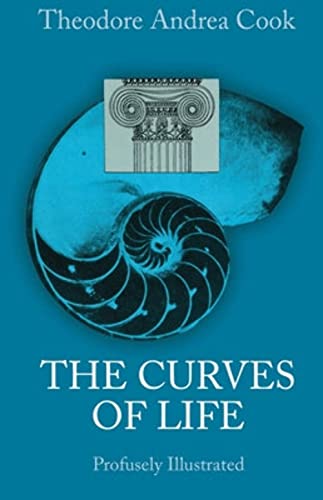
The open-ended curve of the spiral gives a sensation of continuous motion — of life, in fact. In The Curves of Life, Sir Theodore A. Cook (1867–1928), English author and editor, finds that the spiral or helix may lie at the core of life's first principle — that of growth. The spiral is fundamental to the structure of plants, shells, and the human body; to the periodicity of atomic elements and to an animal's horns; to microscopic DNA (the double helix) and to the Andromeda nebula.
The Curves of Life portrays the significance of the spiral in 426 illustrations, from a Narwhal's tusk to Dürer's plan for a cylindrical helix. From the spiral in nature, science, and art, the author suggests ideas on the essence of beauty and man's response to it. "One of the chief beauties of the spiral as an imaginative conception is that it is always growing, yet never covering the same ground, so that it is not merely an explanation of the past, but is also a prophecy of the future."
Martin Gardner, mathematician and author, said of The Curves of Life, "This is the classic reference on how the golden ratio applies to spirals and helices in nature."
"synopsis" may belong to another edition of this title.
Search results for The Curves of Life (Dover Books Explaining Science)

Stock Image
The Curves of Life
Published by
Dover Publications Inc., 2003
ISBN 10: 048623701X
ISBN 13: 9780486237015
Used
Paperback
Seller: World of Books (was SecondSale), Montgomery, IL, U.S.A.
Seller rating 5 out of 5 stars

Paperback. Condition: Good. The open-ended curve of the spiral gives a sensation of continuous motion -- of life, in fact. In The Curves of Life, Sir Theodore A. Cook (1867-1928), English author and editor, finds that the spiral or helix may lie at the core of life's first principle -- that of growth. The spiral is fundamental to the structure of plants, shells, and the human body; to the periodicity of atomic elements and to an animal's horns; to microscopic DNA (the double helix) and to the Andromeda nebula. The Curves of Life portrays the significance of the spiral in 426 illustrations, from a Narwhal's tusk to Dürer's plan for a cylindrical helix. From the spiral in nature, science, and art, the author suggests ideas on the essence of beauty and man's response to it. "One of the chief beauties of the spiral as an imaginative conception is that it is always growing, yet never covering the same ground, so that it is not merely an explanation of the past, but is also a prophecy of the future." Martin Gardner, mathematician and author, said of The Curves of Life, "This is the classic reference on how the golden ratio applies to spirals and helices in nature.". Seller Inventory # 00106817105
Stock Image
The Curves of Life (Dover Books Explaining Science)
Published by
Dover Publications (edition ), 1979
ISBN 10: 048623701X
ISBN 13: 9780486237015
Used
Paperback
Seller: BooksRun, Philadelphia, PA, U.S.A.
Seller rating 5 out of 5 stars
Paperback. Condition: Fair. The item might be beaten up but readable. May contain markings or highlighting, as well as stains, bent corners, or any other major defect, but the text is not obscured in any way. Seller Inventory # 048623701X-7-1
Stock Image
The Curves of Life
Published by
Dover Publications Inc., 2003
ISBN 10: 048623701X
ISBN 13: 9780486237015
Used
Paperback
Seller: World of Books Inc, Montgomery, IL, U.S.A.
Seller rating 4 out of 5 stars

Paperback. Condition: Good. The open-ended curve of the spiral gives a sensation of continuous motion -- of life, in fact. In The Curves of Life, Sir Theodore A. Cook (1867-1928), English author and editor, finds that the spiral or helix may lie at the core of life's first principle -- that of growth. The spiral is fundamental to the structure of plants, shells, and the human body; to the periodicity of atomic elements and to an animal's horns; to microscopic DNA (the double helix) and to the Andromeda nebula. The Curves of Life portrays the significance of the spiral in 426 illustrations, from a Narwhal's tusk to Dürer's plan for a cylindrical helix. From the spiral in nature, science, and art, the author suggests ideas on the essence of beauty and man's response to it. "One of the chief beauties of the spiral as an imaginative conception is that it is always growing, yet never covering the same ground, so that it is not merely an explanation of the past, but is also a prophecy of the future." Martin Gardner, mathematician and author, said of The Curves of Life, "This is the classic reference on how the golden ratio applies to spirals and helices in nature.". Seller Inventory # CIN048623701XG
Stock Image
The Curves of Life
Seller: ThriftBooks-Phoenix, Phoenix, AZ, U.S.A.
Seller rating 5 out of 5 stars
Paperback. Condition: Good. No Jacket. Pages can have notes/highlighting. Spine may show signs of wear. ~ ThriftBooks: Read More, Spend Less. Seller Inventory # G048623701XI3N00
Stock Image
The Curves of Life
Seller: ThriftBooks-Atlanta, AUSTELL, GA, U.S.A.
Seller rating 5 out of 5 stars
Paperback. Condition: Fair. No Jacket. Readable copy. Pages may have considerable notes/highlighting. ~ ThriftBooks: Read More, Spend Less. Seller Inventory # G048623701XI5N00
Stock Image
The Curves of Life
Seller: ThriftBooks-Dallas, Dallas, TX, U.S.A.
Seller rating 5 out of 5 stars
Paperback. Condition: Fair. No Jacket. Readable copy. Pages may have considerable notes/highlighting. ~ ThriftBooks: Read More, Spend Less. Seller Inventory # G048623701XI5N00
Stock Image
The Curves of Life
Seller: ThriftBooks-Atlanta, AUSTELL, GA, U.S.A.
Seller rating 5 out of 5 stars
Paperback. Condition: Good. No Jacket. Pages can have notes/highlighting. Spine may show signs of wear. ~ ThriftBooks: Read More, Spend Less. Seller Inventory # G048623701XI3N00
Stock Image
The Curves of Life
Seller: ThriftBooks-Dallas, Dallas, TX, U.S.A.
Seller rating 5 out of 5 stars
Paperback. Condition: Fair. No Jacket. Former library book; Readable copy. Pages may have considerable notes/highlighting. ~ ThriftBooks: Read More, Spend Less. Seller Inventory # G048623701XI5N10
Stock Image
The Curves of Life (Dover Books Explaining Science)
Seller: Half Price Books Inc., Dallas, TX, U.S.A.
Seller rating 5 out of 5 stars
Paperback. Condition: Very Good. Connecting readers with great books since 1972! Used books may not include companion materials, and may have some shelf wear or limited writing. We ship orders daily and Customer Service is our top priority! Seller Inventory # S_473882166
Stock Image
The Curves of Life
Published by
Dover Publications, Incorporated, 1979
ISBN 10: 048623701X
ISBN 13: 9780486237015
Used
Softcover
Seller: Better World Books, Mishawaka, IN, U.S.A.
Seller rating 5 out of 5 stars
Condition: Good. 1 Edition. Pages intact with minimal writing/highlighting. The binding may be loose and creased. Dust jackets/supplements are not included. Stock photo provided. Product includes identifying sticker. Better World Books: Buy Books. Do Good. Seller Inventory # GRP75641374