
Items related to Insect Migration: Tracking Resources through Space...
Synopsis
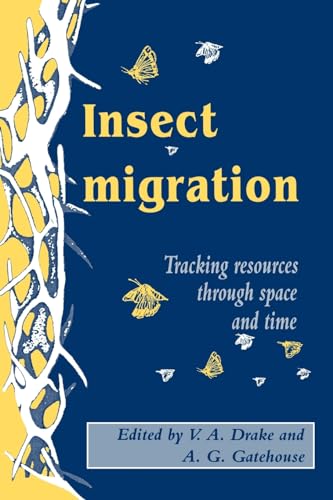
Migration is a key process in the population dynamics of many insects, including some of the most damaging pests. This book reviews current understanding of the ecological, behavioral, physiological, and genetic bases of insect migration. The first part describes migration systems in Europe, Asia, Africa, Australia, and America, with an emphasis on the role of regional weather and climate. Secondly, is a consideration of insects' adaptation to migration; it covers aerodynamics and energetics, the integration of migration in insect life cycles, environmental and genetic regulation of migratory potential, and the evolutionary implications of habitat heterogeneity and variability. The book then addresses the application of this knowledge to operational pest forecasting.
"synopsis" may belong to another edition of this title.
Book Description
The book provides a comprehensive current account of insect migration. It describes migrations, often over hundreds or thousands of kilometres, in all continents. The behaviour, physiology and genetics of insect migration are considered in their ecological and evolutionary contexts, with an emphasis on weather and climate factors. Several of the species described are among the world's most serious pests and the problems of operational forecasting, important in integrated pest management (IPM), are discussed.
From the Back Cover
Migration is a key process in the population dynamics of many insects, including some of the most damaging pests. Multidisciplinary research over the last three decades has produced a series of important new insights. This book reviews current understanding of the ecological, behavioural, physiological and genetic bases of insect migration. The first part describes migration systems in Europe, Asia, Africa, Australia and America, with an emphasis on the role of regional weather and climate. The second part considers how insects are adapted for migration; it covers aerodynamics and energetics, the integration of migration in insect life cycles, environmental and genetic regulation of migratory potential and the evolutionary implications of habitat heterogeneity and variability. The third part addresses the application of this knowledge to operational pest forecasting. The book concludes with a comprehensive overview of insect migration, written from an evolutionary perspective.
"About this title" may belong to another edition of this title.
Search results for Insect Migration: Tracking Resources through Space...

Stock Image
Insect Migration: Tracking Resources through Space and Time
Published by
Cambridge University Press 2008-08-21, 2008
ISBN 10: 0521018536
ISBN 13: 9780521018531
New
Paperback
Seller: Chiron Media, Wallingford, United Kingdom
Seller rating 5 out of 5 stars

Paperback. Condition: New. Brand new book, sourced directly from publisher. Dispatch time is 24-48 hours from our warehouse. Book will be sent in robust, secure packaging to ensure it reaches you securely. Seller Inventory # 6666-GRD-9780521018531
Buy New
US$ 75.27
US$ 8.68 shipping
Ships from United Kingdom to U.S.A.
Ships from United Kingdom to U.S.A.
Quantity: 1 available
Stock Image
Insect Migration: Tracking Resources through Space and Time
Published by
Cambridge University Press, 2005
ISBN 10: 0521018536
ISBN 13: 9780521018531
New
Softcover
Seller: California Books, Miami, FL, U.S.A.
Seller rating 5 out of 5 stars
Condition: New. Seller Inventory # I-9780521018531
Stock Image
Insect Migration
Published by
Cambridge University Press, GB, 2005
ISBN 10: 0521018536
ISBN 13: 9780521018531
New
Paperback
Seller: Rarewaves.com USA, London, LONDO, United Kingdom
Seller rating 5 out of 5 stars
Paperback. Condition: New. Migration is a key process in the population dynamics of many insects, including some of the most damaging pests. Multidisciplinary research into the importance of migration, in recent decades, has produced many new insights. This book reviews current understanding of the ecological, behavioural, physiological and genetic bases of insect migration. The first part describes migration systems in Europe, Asia, Africa, Australia, and America, with an emphasis on the role of regional weather and climate. The second part considers insects adaptation to migration; it covers: aerodynamics and energetics; the integration of migration in insect life cycles; environmental and genetic regulation of migratory potential; and the evolutionary implications of habitat heterogeneity and variability. The book then addresses the application of this knowledge to operational pest forecasting. Seller Inventory # LU-9780521018531
Buy New
US$ 90.09
Free Shipping
Ships from United Kingdom to U.S.A.
Ships from United Kingdom to U.S.A.
Quantity: 1 available
Stock Image
Insect Migration: Tracking Resources through Space and Time
Published by
Cambridge University Press, 2005
ISBN 10: 0521018536
ISBN 13: 9780521018531
New
Softcover
Seller: Kennys Bookshop and Art Galleries Ltd., Galway, GY, Ireland
Seller rating 5 out of 5 stars
Condition: New. A comprehensive account of insect migration in its ecological and evolutionary context. Editor(s): Drake, V. Alistair; Gatehouse, A. Gavin. Num Pages: 500 pages, 78 b/w illus. 26 tables. BIC Classification: PSVP; PSVT7. Category: (P) Professional & Vocational. Dimension: 228 x 152 x 26. Weight in Grams: 690. . 2008. Revised ed. Paperback. . . . . Seller Inventory # V9780521018531
Buy New
US$ 84.24
US$ 10.64 shipping
Ships from Ireland to U.S.A.
Ships from Ireland to U.S.A.
Quantity: 1 available
Stock Image
Insect Migration: Tracking Resources through Space and Time
Published by
Cambridge University Press, 2005
ISBN 10: 0521018536
ISBN 13: 9780521018531
New
Softcover
Seller: Ria Christie Collections, Uxbridge, United Kingdom
Seller rating 5 out of 5 stars
Condition: New. In English. Seller Inventory # ria9780521018531_new
Buy New
US$ 89.46
US$ 15.10 shipping
Ships from United Kingdom to U.S.A.
Ships from United Kingdom to U.S.A.
Quantity: Over 20 available
Stock Image
Insect Migration: Tracking Resources through Space and Time
Seller: Revaluation Books, Exeter, United Kingdom
Seller rating 5 out of 5 stars
Paperback. Condition: Brand New. 478 pages. 8.75x6.00x1.00 inches. In Stock. Seller Inventory # __0521018536
Buy New
US$ 93.02
US$ 16.72 shipping
Ships from United Kingdom to U.S.A.
Ships from United Kingdom to U.S.A.
Quantity: 1 available
Stock Image
Insect Migration: Tracking Resources through Space and Time
Published by
Cambridge University Press, 2005
ISBN 10: 0521018536
ISBN 13: 9780521018531
New
Paperback / softback
Seller: THE SAINT BOOKSTORE, Southport, United Kingdom
Seller rating 5 out of 5 stars
Paperback / softback. Condition: New. This item is printed on demand. New copy - Usually dispatched within 5-9 working days. Seller Inventory # C9780521018531
Buy New
US$ 85.84
US$ 24.01 shipping
Ships from United Kingdom to U.S.A.
Ships from United Kingdom to U.S.A.
Quantity: Over 20 available
Stock Image
Insect Migration: Tracking Resources through Space and Time
Published by
Cambridge University Press, 2005
ISBN 10: 0521018536
ISBN 13: 9780521018531
New
Softcover
Seller: Kennys Bookstore, Olney, MD, U.S.A.
Seller rating 5 out of 5 stars
Condition: New. A comprehensive account of insect migration in its ecological and evolutionary context. Editor(s): Drake, V. Alistair; Gatehouse, A. Gavin. Num Pages: 500 pages, 78 b/w illus. 26 tables. BIC Classification: PSVP; PSVT7. Category: (P) Professional & Vocational. Dimension: 228 x 152 x 26. Weight in Grams: 690. . 2008. Revised ed. Paperback. . . . . Books ship from the US and Ireland. Seller Inventory # V9780521018531
Stock Image
Insect Migration: Tracking Resources through Space and Time
Published by
Cambridge University Press, 2005
ISBN 10: 0521018536
ISBN 13: 9780521018531
New
Paperback / softback
Seller: THE SAINT BOOKSTORE, Southport, United Kingdom
Seller rating 5 out of 5 stars
Paperback / softback. Condition: New. New copy - Usually dispatched within 3 working days. Seller Inventory # B9780521018531
Buy New
US$ 89.30
US$ 24.01 shipping
Ships from United Kingdom to U.S.A.
Ships from United Kingdom to U.S.A.
Quantity: 1 available
Stock Image
Insect Migration
Published by
Cambridge University Press CUP, 2005
ISBN 10: 0521018536
ISBN 13: 9780521018531
New
Softcover
Seller: Books Puddle, Woodside, NY, U.S.A.
Seller rating 4 out of 5 stars

Condition: New. pp. 500. Seller Inventory # 26402111