
Items related to What Is Intelligence?: Beyond the Flynn Effect
Synopsis
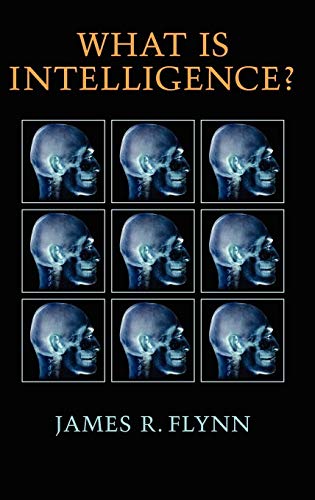
Professor James Flynn is one of the most creative and influential psychologists in the field of intelligence. The 'Flynn Effect' refers to the massive increase in IQ test scores over the course of the twentieth century and the term was coined to recognize Professor Flynn's central role in measuring and analyzing these gains. For over twenty years, psychologists have struggled to understand the implications of IQ gains. Do they mean that each generation is more intelligent than the last? Do they suggest how each of us can enhance our own intelligence? Professor Flynn is finally ready to give his own views. He asks what intelligence really is and gives a surprising and illuminating answer. This book bridges the gulf that separates our minds from those of our ancestors a century ago. It is a fascinating and unique book that makes an important contribution to our understanding of human intelligence.
"synopsis" may belong to another edition of this title.
About the Author
James R. Flynn is Professor Emeritus at the University of Otago, New Zealand, and a recipient of the University's Gold Medal for Distinguished Career Research. In 2007, the International Society for Intelligence Research named him its Distinguished Contributor of the Year. He has been Distinguished Visiting Fellow at the Hoover Institution, Stanford, Distinguished Visiting Speaker at Cornell, delivered the Stafford Little Lecture at Princeton, and been profiled in Scientific American. Professor Flynn has recently published his current views on race and IQ in Where Have All the Liberals Gone? Race, Class, and Ideals in America (Cambridge, 2008).
Reviews
The Flynn Effect refers to data the author studied indicating massive IQ gains in the developed world during the 20th century. Now Flynn speculates on the cause for these apparent gains. His answer centers on the replacement of concrete, experience-based thinking by abstract scientific thinking. Citing many scholarly works, Flynn paints a dynamic picture of what intelligence is and the role of a person's genetic background, physiology and neurology, immediate environment and broader social factors. He notes, for instance, that an individual's small genetic advantage can be multiplied greatly by environmental forces. An important chapter looks at a fatal consequence of IQ inflation: the use of outdated IQ tests and norms could lead to the execution of someone convicted of a capital crime who by today's standards is mentally disabled. Flynn's book is not always an easy read, given abstruse statistical analysis and some awkward writing (There is some evidence that members of Congress are less obtuse today at least in speeches designed for their peers). Despite these flaws, he has produced an impressively multidimensional and often wise look at the elusive topic of human intelligence. (Sept. 21)
Copyright © Reed Business Information, a division of Reed Elsevier Inc. All rights reserved.
"About this title" may belong to another edition of this title.
Search results for What Is Intelligence?: Beyond the Flynn Effect

Stock Image
What Is Intelligence?: Beyond the Flynn Effect
Published by
Cambridge University Press, 2007
ISBN 10: 0521880076
ISBN 13: 9780521880077
Used
Hardcover
Seller: AwesomeBooks, Wallingford, United Kingdom
Seller rating 5 out of 5 stars

Hardcover. Condition: Very Good. What Is Intelligence?: Beyond the Flynn Effect This book is in very good condition and will be shipped within 24 hours of ordering. The cover may have some limited signs of wear but the pages are clean, intact and the spine remains undamaged. This book has clearly been well maintained and looked after thus far. Money back guarantee if you are not satisfied. See all our books here, order more than 1 book and get discounted shipping. . Seller Inventory # 7719-9780521880077
Buy Used
US$ 4.02
US$ 2.63 shipping
Ships from United Kingdom to U.S.A.
Ships from United Kingdom to U.S.A.
Quantity: 1 available
Stock Image
What Is Intelligence?: Beyond the Flynn Effect
Published by
Cambridge University Press, 2007
ISBN 10: 0521880076
ISBN 13: 9780521880077
Used
Hardcover
Seller: World of Books (was SecondSale), Montgomery, IL, U.S.A.
Seller rating 5 out of 5 stars
Hardback. Condition: Good. The 'Flynn effect' refers to the massive increase in IQ test scores over the course of the twentieth century. Does it mean that each generation is more intelligent than the last? Does it suggest how each of us can enhance our own intelligence? Professor Flynn is finally ready to give his own views. He asks what intelligence really is and gives a surprising and illuminating answer. This expanded paperback edition includes three important new essays. The first contrasts the art of writing cognitive history with the science of measuring intelligence and reports data. The second outlines how we might get a complete theory of intelligence, and the third details Flynn's reservations about Gardner's theory of multiple intelligences. A fascinating book that bridges the gulf separating our minds from those of our ancestors a century ago, and makes an important contribution to our understanding of human intelligence. Seller Inventory # 00106859825
Stock Image
What Is Intelligence? : Beyond the Flynn Effect
Published by
Cambridge University Press, 2007
ISBN 10: 0521880076
ISBN 13: 9780521880077
Used
Hardcover
First Edition
Seller: Better World Books: West, Reno, NV, U.S.A.
Seller rating 5 out of 5 stars
Condition: Good. 1st Edition. Pages intact with minimal writing/highlighting. The binding may be loose and creased. Dust jackets/supplements are not included. Stock photo provided. Product includes identifying sticker. Better World Books: Buy Books. Do Good. Seller Inventory # GRP14271300
Stock Image
What Is Intelligence? : Beyond the Flynn Effect
Published by
Cambridge University Press, 2007
ISBN 10: 0521880076
ISBN 13: 9780521880077
Used
Hardcover
First Edition
Seller: Better World Books, Mishawaka, IN, U.S.A.
Seller rating 5 out of 5 stars
Condition: Good. 1st Edition. Former library copy. Pages intact with minimal writing/highlighting. The binding may be loose and creased. Dust jackets/supplements are not included. Includes library markings. Stock photo provided. Product includes identifying sticker. Better World Books: Buy Books. Do Good. Seller Inventory # 623595-6
Stock Image
What Is Intelligence?: Beyond the Flynn Effect
Published by
Cambridge University Press (edition 1), 2007
ISBN 10: 0521880076
ISBN 13: 9780521880077
Used
Hardcover
Seller: BooksRun, Philadelphia, PA, U.S.A.
Seller rating 5 out of 5 stars
Hardcover. Condition: Very Good. 1. With dust jacket. It's a well-cared-for item that has seen limited use. The item may show minor signs of wear. All the text is legible, with all pages included. It may have slight markings and/or highlighting. Seller Inventory # 0521880076-8-1-29
Stock Image
What Is Intelligence?: Beyond the Flynn Effect
Published by
Cambridge University Press, 2007
ISBN 10: 0521880076
ISBN 13: 9780521880077
Used
Hardcover
Seller: ThriftBooks-Atlanta, AUSTELL, GA, U.S.A.
Seller rating 5 out of 5 stars
Hardcover. Condition: Good. No Jacket. Pages can have notes/highlighting. Spine may show signs of wear. ~ ThriftBooks: Read More, Spend Less. Seller Inventory # G0521880076I3N00
Stock Image
What Is Intelligence?: Beyond the Flynn Effect
Published by
Cambridge University Press, 2007
ISBN 10: 0521880076
ISBN 13: 9780521880077
Used
Hardcover
Seller: ThriftBooks-Dallas, Dallas, TX, U.S.A.
Seller rating 5 out of 5 stars
Hardcover. Condition: Very Good. No Jacket. May have limited writing in cover pages. Pages are unmarked. ~ ThriftBooks: Read More, Spend Less. Seller Inventory # G0521880076I4N00
Stock Image
What Is Intelligence?: Beyond the Flynn Effect
Published by
Cambridge University Press, 2007
ISBN 10: 0521880076
ISBN 13: 9780521880077
Used
Hardcover
Seller: ThriftBooks-Atlanta, AUSTELL, GA, U.S.A.
Seller rating 5 out of 5 stars
Hardcover. Condition: Very Good. No Jacket. Former library book; Missing dust jacket; May have limited writing in cover pages. Pages are unmarked. ~ ThriftBooks: Read More, Spend Less. Seller Inventory # G0521880076I4N11
Stock Image
What Is Intelligence?: Beyond the Flynn Effect
Published by
Cambridge University Press, 2007
ISBN 10: 0521880076
ISBN 13: 9780521880077
Used
Hardcover
Seller: ThriftBooks-Dallas, Dallas, TX, U.S.A.
Seller rating 5 out of 5 stars
Hardcover. Condition: Very Good. No Jacket. Former library book; May have limited writing in cover pages. Pages are unmarked. ~ ThriftBooks: Read More, Spend Less. Seller Inventory # G0521880076I4N10
Stock Image
What Is Intelligence?: Beyond the Flynn Effect
Published by
Cambridge University Press, 2007
ISBN 10: 0521880076
ISBN 13: 9780521880077
Used
Hardcover
Seller: ThriftBooks-Dallas, Dallas, TX, U.S.A.
Seller rating 5 out of 5 stars
Hardcover. Condition: Good. No Jacket. Former library book; Pages can have notes/highlighting. Spine may show signs of wear. ~ ThriftBooks: Read More, Spend Less. Seller Inventory # G0521880076I3N10