
Items related to The Autistic Brain: Thinking Across the Spectrum
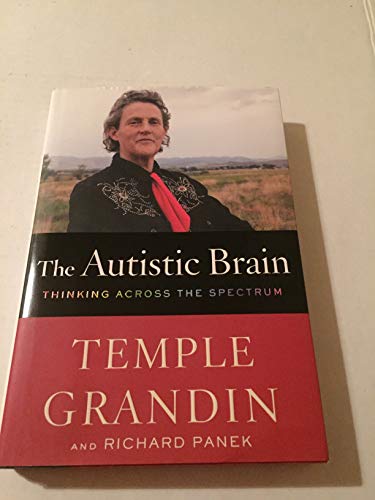
Synopsis
A cutting-edge account of the latest science of autism, from the best-selling author and advocate
When Temple Grandin was born in 1947, autism had only just been named. Today it is more prevalent than ever, with one in 88 children diagnosed on the spectrum. And our thinking about it has undergone a transformation in her lifetime: Autism studies have moved from the realm of psychology to neurology and genetics, and there is far more hope today than ever before thanks to groundbreaking new research into causes and treatments. Now Temple Grandin reports from the forefront of autism science, bringing her singular perspective to a thrilling journey into the heart of the autism revolution.
Weaving her own experience with remarkable new discoveries, Grandin introduces the neuroimaging advances and genetic research that link brain science to behavior, even sharing her own brain scan to show us which anomalies might explain common symptoms. We meet the scientists and self-advocates who are exploring innovative theories of what causes autism and how we can diagnose and best treat it. Grandin also highlights long-ignored sensory problems and the transformative effects we can have by treating autism symptom by symptom, rather than with an umbrella diagnosis. Most exciting, she argues that raising and educating kids on the spectrum isn’t just a matter of focusing on their weaknesses; in the science that reveals their long-overlooked strengths she shows us new ways to foster their unique contributions.
From the “aspies” in Silicon Valley to the five-year-old without language, Grandin understands the true meaning of the word spectrum. The Autistic Brain is essential reading from the most respected and beloved voices in the field.
When Temple Grandin was born in 1947, autism had only just been named. Today it is more prevalent than ever, with one in 88 children diagnosed on the spectrum. And our thinking about it has undergone a transformation in her lifetime: Autism studies have moved from the realm of psychology to neurology and genetics, and there is far more hope today than ever before thanks to groundbreaking new research into causes and treatments. Now Temple Grandin reports from the forefront of autism science, bringing her singular perspective to a thrilling journey into the heart of the autism revolution.
Weaving her own experience with remarkable new discoveries, Grandin introduces the neuroimaging advances and genetic research that link brain science to behavior, even sharing her own brain scan to show us which anomalies might explain common symptoms. We meet the scientists and self-advocates who are exploring innovative theories of what causes autism and how we can diagnose and best treat it. Grandin also highlights long-ignored sensory problems and the transformative effects we can have by treating autism symptom by symptom, rather than with an umbrella diagnosis. Most exciting, she argues that raising and educating kids on the spectrum isn’t just a matter of focusing on their weaknesses; in the science that reveals their long-overlooked strengths she shows us new ways to foster their unique contributions.
From the “aspies” in Silicon Valley to the five-year-old without language, Grandin understands the true meaning of the word spectrum. The Autistic Brain is essential reading from the most respected and beloved voices in the field.
"synopsis" may belong to another edition of this title.
About the Author
TEMPLE GRANDIN is one of the world’s most accomplished and well-known adults with autism. She is a professor at Colorado State University and the author of several best-selling books, which have sold more than a million copies. The HBO movie based on her life, starring Claire Danes, received seven Emmy Awards.RICHARD PANEK is the prize-winning author of The 4% Universe and the recipient of a Guggenheim Fellowship in Science Writing.
From the Inside Flap
When Temple Grandin was born in 1947, autism had only just been named. Today it is more prevalent than ever, with one in 88 children diagnosed on the spectrum. And our thinking about it has undergone a transformation in her lifetime: Autism studies have moved from the realm of psychology to neurology and genetics, and there is far more hope today than ever before thanks to groundbreaking new research into causes, treatments, and cures. Now Temple Grandin reports from the forefront of autism science, bringing her singular perspective to a thrilling journey into the heart of the autism revolution.
Weaving her own experience with remarkable new discoveries, Grandin introduces the neuroimaging advances and genetic research that link brain science to behavior, even sharing her own brain scan to show us which anomalies might explain common symptoms. We meet the scientists and self-advocates who are exploring innovative theories of what causes autism and how we can diagnose and best treat it. Grandin also highlights long-ignored sensory problems and the transformative effects we can have by treating autism symptom by symptom, rather than with an umbrella diagnosis. Most exciting, she argues that raising and educating kids on the spectrum isn t just a matter of focusing on their weaknesses; in the science that reveals their long-overlooked strengths she shows us new ways to foster their unique contributions.
From the aspies in Silicon Valley to the five-year-old without language, Grandin understands the true meaning of the word spectrum. The Autistic Brain is essential reading from the most respected and beloved voices in the field.
Reviews
Grandin is the face of autism. Because of her work, the general public is now aware of what was until fairly recently a strange, disturbing, and essentially unknowable condition. In her latest book, Grandin not only discusses her own experiences with autism but also explains the latest technological advances in the study of the disorder, including the genetics of autism. The symptoms that she displayed at a young age—destructive behavior, inability to speak, sensitivity to physical contact, fixation on spinning objects—are now considered classic indicators of the disorder, though she was diagnosed as having brain damage. Things have changed since then, of course. She discusses when autism was first diagnosed (in 1943), but she makes clear from the start that her priority here is to encourage an accurate diagnosis for the disorder and promote improved treatments for sensory problems associated with autism, since difficulty in the latter can often be debilitating. She discusses different ways of thinking and even includes lists of potential jobs for those people among us who think differently. An important and ultimately optimistic work. --June Sawyers
Excerpt. © Reprinted by permission. All rights reserved.
The Meanings of Autism
I was fortunate to have been born in 1947. If I had been born ten years later, my life as a person with autism would have been a lot different. In 1947, the diagnosis of autism was only four years old. Almost nobody knew what it meant. When Mother noticed in me the symptoms that we would now label autistic—destructive behavior, inability to speak, a sensitivity to physical contact, a fixation on spinning objects, and so on—she did what made sense to her. She took me to a neurologist.
Bronson Crothers had served as the director of the neurology service at Boston Children’s Hospital since its founding, in 1920. The first thing Dr. Crothers did in my case was administer an electroencephalogram, or EEG, to make sure I didn’t have petit mal epilepsy. Then he tested my hearing to make sure I wasn’t deaf. “Well, she certainly is an odd little girl,” he told Mother. Then when I began to verbalize a little, Dr. Crothers modified his evaluation: “She’s an odd little girl, but she’ll learn how to talk.” The diagnosis: brain damage.
He referred us to a speech therapist who ran a small school in the basement of her house. I suppose you could say the other kids there were brain damaged too; they suffered from Down syndrome and other disorders. Even though I was not deaf, I had difficulty hearing consonants, such as the c in cup. When grownups talked fast, I heard only the vowel sounds, so I thought they had their own special language. But by speaking slowly, the speech therapist helped me to hear the hard consonant sounds, and when I said cup with a c, she praised me—which is just what a behavioral therapist would do today.
"About this title" may belong to another edition of this title.
Search results for The Autistic Brain: Thinking Across the Spectrum

Stock Image
The Autistic Brain: Thinking Across the Spectrum
Seller: World of Books (was SecondSale), Montgomery, IL, U.S.A.
Seller rating 5 out of 5 stars

Hardback. Condition: Fair. [headline] Goodreads Choice Award for Best Nonfiction Book of 2013 The right brain has created the right book for right now. Pittsburgh Post-Gazette Temple Grandin may be the most famous person with autism, a condition that affects 1 in 88 children. Since her birth in 1947, our understanding of it has undergone a great transformation, leading to more hope than ever before that we may finally learn the causes of and treatments for autism. Weaving her own experience with remarkable new discoveries, Grandin introduces the advances in neuroimaging and genetic research that link brain science to behavior, even sharing her own brain scan to show which anomalies might explain common symptoms. Most excitingly, she argues that raising and educating kids on the autism spectrum must focus on their long-overlooked strengths to foster their unique contributions. The Autistic Brain brings Grandin s singular perspective into the heart of the autism revolution. [Grandin s] most insightful work to date . . . The Autistic Brain is something anyone could benefit from reading, and I recommend it to anyone with a personal or professional connection to autism or neurological difference. John Elder Robison, author of Look Me in the Eye The Autistic Brain can both enlighten readers with little exposure to autism and offer hope and compassion to those who live with the condition. Scientific American TEMPLE GRANDIN is one of the world s most accomplished and well-known adults with autism. She is a professor of animal science at Colorado State University and the author of several best-selling books, which have sold more than a million copies. The HBO movie based on her life received seven Emmy Awards. She lives in Fort Collins, Colorado. RICHARD PANEK is the prize-winning author of The 4 Percent Universe and the recipient of a Guggenheim fellowship in science writing. His books have been translated into sixteen languages. He lives in New York City. Seller Inventory # CIN0547636458A
Stock Image
The Autistic Brain: Thinking Across the Spectrum
Seller: World of Books (was SecondSale), Montgomery, IL, U.S.A.
Seller rating 5 out of 5 stars
Hardback. Condition: Good. [headline] Goodreads Choice Award for Best Nonfiction Book of 2013 The right brain has created the right book for right now. Pittsburgh Post-Gazette Temple Grandin may be the most famous person with autism, a condition that affects 1 in 88 children. Since her birth in 1947, our understanding of it has undergone a great transformation, leading to more hope than ever before that we may finally learn the causes of and treatments for autism. Weaving her own experience with remarkable new discoveries, Grandin introduces the advances in neuroimaging and genetic research that link brain science to behavior, even sharing her own brain scan to show which anomalies might explain common symptoms. Most excitingly, she argues that raising and educating kids on the autism spectrum must focus on their long-overlooked strengths to foster their unique contributions. The Autistic Brain brings Grandin s singular perspective into the heart of the autism revolution. [Grandin s] most insightful work to date . . . The Autistic Brain is something anyone could benefit from reading, and I recommend it to anyone with a personal or professional connection to autism or neurological difference. John Elder Robison, author of Look Me in the Eye The Autistic Brain can both enlighten readers with little exposure to autism and offer hope and compassion to those who live with the condition. Scientific American TEMPLE GRANDIN is one of the world s most accomplished and well-known adults with autism. She is a professor of animal science at Colorado State University and the author of several best-selling books, which have sold more than a million copies. The HBO movie based on her life received seven Emmy Awards. She lives in Fort Collins, Colorado. RICHARD PANEK is the prize-winning author of The 4 Percent Universe and the recipient of a Guggenheim fellowship in science writing. His books have been translated into sixteen languages. He lives in New York City. Seller Inventory # 00110271698
Stock Image
The Autistic Brain: Thinking Across the Spectrum
Seller: World of Books (was SecondSale), Montgomery, IL, U.S.A.
Seller rating 5 out of 5 stars
Hardback. Condition: Very Good. [headline] Goodreads Choice Award for Best Nonfiction Book of 2013 The right brain has created the right book for right now. Pittsburgh Post-Gazette Temple Grandin may be the most famous person with autism, a condition that affects 1 in 88 children. Since her birth in 1947, our understanding of it has undergone a great transformation, leading to more hope than ever before that we may finally learn the causes of and treatments for autism. Weaving her own experience with remarkable new discoveries, Grandin introduces the advances in neuroimaging and genetic research that link brain science to behavior, even sharing her own brain scan to show which anomalies might explain common symptoms. Most excitingly, she argues that raising and educating kids on the autism spectrum must focus on their long-overlooked strengths to foster their unique contributions. The Autistic Brain brings Grandin s singular perspective into the heart of the autism revolution. [Grandin s] most insightful work to date . . . The Autistic Brain is something anyone could benefit from reading, and I recommend it to anyone with a personal or professional connection to autism or neurological difference. John Elder Robison, author of Look Me in the Eye The Autistic Brain can both enlighten readers with little exposure to autism and offer hope and compassion to those who live with the condition. Scientific American TEMPLE GRANDIN is one of the world s most accomplished and well-known adults with autism. She is a professor of animal science at Colorado State University and the author of several best-selling books, which have sold more than a million copies. The HBO movie based on her life received seven Emmy Awards. She lives in Fort Collins, Colorado. RICHARD PANEK is the prize-winning author of The 4 Percent Universe and the recipient of a Guggenheim fellowship in science writing. His books have been translated into sixteen languages. He lives in New York City. Seller Inventory # 00110839085
Seller Image
The Autistic Brain: Thinking Across the Spectrum
Published by
Houghton Mifflin Harcourt, 2013
ISBN 10: 0547636458
ISBN 13: 9780547636450
Used
Hardcover
Seller: Greenworld Books, Arlington, TX, U.S.A.
Seller rating 5 out of 5 stars
Condition: very_good. Fast Free Shipping â" Very Good condition book with a firm cover and clean pages. Shows normal use and some light wear or limited notes markings. A solid, nice copy to enjoy. Seller Inventory # GWV.0547636458.VG
Stock Image
The Autistic Brain: Thinking Across the Spectrum
Published by
Houghton Mifflin Harcourt (edition 1), 2013
ISBN 10: 0547636458
ISBN 13: 9780547636450
Used
Hardcover
Seller: BooksRun, Philadelphia, PA, U.S.A.
Seller rating 5 out of 5 stars
Hardcover. Condition: Fair. 1. With dust jacket. The item might be beaten up but readable. May contain markings or highlighting, as well as stains, bent corners, or any other major defect, but the text is not obscured in any way. Seller Inventory # 0547636458-7-1-29
Stock Image
The Autistic Brain: Thinking Across the Spectrum
Published by
Houghton Mifflin Harcourt (edition 1), 2013
ISBN 10: 0547636458
ISBN 13: 9780547636450
Used
Hardcover
Seller: BooksRun, Philadelphia, PA, U.S.A.
Seller rating 5 out of 5 stars
Hardcover. Condition: Good. 1. With dust jacket. It's a preowned item in good condition and includes all the pages. It may have some general signs of wear and tear, such as markings, highlighting, slight damage to the cover, minimal wear to the binding, etc., but they will not affect the overall reading experience. Ex-Library. Seller Inventory # 0547636458-11-1-12_29
Seller Image
The Autistic Brain: Thinking Across the Spectrum
Published by
Houghton Mifflin Harcourt, 2013
ISBN 10: 0547636458
ISBN 13: 9780547636450
Used
Hardcover
Seller: Goodwill, Brooklyn Park, MN, U.S.A.
Seller rating 4 out of 5 stars

Condition: very_good. Item may have minor cosmetic defects such as marks, wears, cuts, bends, or crushes on the cover, spine, pages, or dust cover. Shrink wrap, dust covers, or boxed set case may be missing. Item may contain remainder marks on outside edges, which should be noted in listing comments. Item may be missing bundled media. Seller Inventory # MINV.0547636458.VG
Stock Image
The Autistic Brain: Thinking Across the Spectrum
Published by
Houghton Mifflin Harcourt, 2013
ISBN 10: 0547636458
ISBN 13: 9780547636450
Used
Hardcover
Seller: ThriftBooks-Reno, Reno, NV, U.S.A.
Seller rating 5 out of 5 stars
Hardcover. Condition: Good. No Jacket. Missing dust jacket; Pages can have notes/highlighting. Spine may show signs of wear. ~ ThriftBooks: Read More, Spend Less. Seller Inventory # G0547636458I3N01
Stock Image
The Autistic Brain: Thinking Across the Spectrum
Published by
Houghton Mifflin Harcourt, 2013
ISBN 10: 0547636458
ISBN 13: 9780547636450
Used
Hardcover
Seller: ThriftBooks-Phoenix, Phoenix, AZ, U.S.A.
Seller rating 5 out of 5 stars
Hardcover. Condition: Fair. No Jacket. Former library book; Missing dust jacket; Readable copy. Pages may have considerable notes/highlighting. ~ ThriftBooks: Read More, Spend Less. Seller Inventory # G0547636458I5N11
Stock Image
The Autistic Brain: Thinking Across the Spectrum
Published by
Houghton Mifflin Harcourt, 2013
ISBN 10: 0547636458
ISBN 13: 9780547636450
Used
Hardcover
Seller: ThriftBooks-Reno, Reno, NV, U.S.A.
Seller rating 5 out of 5 stars
Hardcover. Condition: Good. No Jacket. Pages can have notes/highlighting. Spine may show signs of wear. ~ ThriftBooks: Read More, Spend Less. Seller Inventory # G0547636458I3N00