
Items related to Fear Nothing
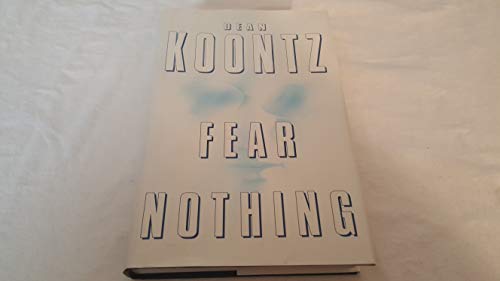
Synopsis
Fear, compassion, evil, courage, hope, wonder, the exquisite terror of not knowing what will happen on the next page to characters you care about deeply—these are the marvels that Dean Koontz weaves into the unique tapestry of every novel. His storytelling talents have earned him the devotion of fans around the world, making him one of the most popular authors of our time, with more than 200 million copies of his books sold worldwide.
If you are already a fan, prepare yourself to settle into a novel Dean Koontz considers perhaps his best work to date. If you are a brand-new Dean Koontz reader, buckle up for what will be a most breathtaking ride through the long, enthralling night of...
Christopher Snow is different from all the other residents of Moonlight Bay, different from anyone you've ever met. For Christopher Snow has made his peace with a very rare genetic disorder shared by only one thousand other Americans, a disorder that leaves him dangerously vulnerable to light. His life is filled with the fascinating rituals of one who must embrace the dark. He knows the night as no one else ever will, ever can—the mystery, the beauty, the many terrors, and the eerie, silken rhythms of the night—for it is only at night that he is free.
Until the night he witnesses a series of disturbing incidents that sweep him into a violent mystery only he can solve, a mystery that will force him to rise above all fears and confront the many-layered strangeness of Moonlight Bay and its residents.
Once again drawing daringly from several genres, Dean Koontz has created a narrative that is a thriller, a mystery, a wild adventure, a novel of friendship, a rousing story of triumph over severe physical limitations, and a haunting cautionary tale.
"synopsis" may belong to another edition of this title.
About the Author
Dean Koontz is the author of a dozen #1 New York Times bestsellers, including Sole Survivor and Intensity. He lives in southern California.Dean Koontz was born and raised in Pennsylvania. He graduated from Shippensburg State College (now Shippensberg University) and won an Atlantic Monthly fiction competition while still a senior. Dean landed his first job after graduation with the Appalachian Poverty Program, where his assignment was to counsel and tutor underprivileged children on a one-to-one basis. On the first day of work, he discovered that his predecessor had been beaten up by the very children he had been trying to help and had landed in the hospital for several weeks.
The following year was filled with challenges, but Koontz never gave up on his desire to be a writer. He wrote at night and during weekends, a practice he continued after leaving the poverty program and becoming an English teacher in a suburban school district outside of Harrisburg, Pennsylvania.
After Dean had taught for a year and a half in Harrisburg, his wife, Gerda, made him an offer he couldn't refuse: "I'll support you for five years," she said, "and if you can't make it as a writer in that time, you'll never make it." By the end of the five years, Gerda had quit her job to manage the financial side of her husband's writing career.
Dean Koontz's books are published in 38 languages. Worldwide sales total more than 175 million copies, and that figure currently increases at a rate of more than 17 million copies a year. Ten of his novels have risen to number one on The New York Times hardcover best-seller list (Lightning, Midnight, Cold Fire, Hideaway, Dragon Tears, Intensity, and The Husband). His books have also been number one bestsellers in countries as diverse as Japan and Sweden.
The New York Times has called his writing "psychologically complex, masterly and satisfying." New Orleans Times-Picayune said Koontz is, "at times lyrical without ever being naive or romantic. [He creates] a grotesque world, much like that of Flannery O'Conner or Walker Percy. . . scary, worthwhile reading." Of Cold Fire, a worldwide bestseller, the United Press International said, "An extraordinary piece of fiction. It will be a classic."
Dean has written the screenplay for the film adaptation of his novel Midnight, and he wrote and served as executive producer on The Face of Fear for Warner Brothers-CBS Television. Phantoms, based on the author's screenplay and starring Peter O'Toole and Joanna Going, is in production at Miramax. Intensity has been filmed by Peter Guber's Mandalay Entertainment as a miniseries for the Fox Network and is scheduled to air in the spring of 1997. Mandalay and Fox will team up again to develop Sole Survivor.
Dean and Gerda Koontz live in southern California.
From the Inside Flap
Fear, compassion, evil, courage, hope, wonder, the exquisite terror of not knowing what will happen on the next page to characters you care about deeply--these are the marvels that Dean Koontz weaves into the unique tapestry of every novel. His storytelling talents have earned him the devotion of fans around the world, making him one of the most popular authors of our time, with more than 200 million copies of his books sold worldwide.
If you are already a fan, prepare yourself to settle into a novel Dean Koontz considers perhaps his best work to date. If you are a brand-new Dean Koontz reader, buckle up for what will be a most breathtaking ride through the long, enthralling night of...
Christopher Snow is different from all the other residents of Moonlight Bay, different from anyone you've ever met. For Christopher Snow has made his peace with a very rare genetic disorder shared by only one thousand other Americans, a disorder that leaves him dangerously vulnerable to light. His life is filled with the fascinating rituals of one who must embrace the dark. He knows the night as no one else ever will, ever can--the mystery, the beauty, the many terrors, and the eerie, silken rhythms of the night--for it is only at night that he is free.
Until the night he witnesses a series of disturbing incidents that sweep him into a violent mystery only he can solve, a mystery that will force him to rise above all fears and confront the many-layered strangeness of Moonlight Bay and its residents.
Once again drawing daringly from several genres, Dean Koontz has created a narrative that is a thriller, a mystery, a wild adventure, a novel of friendship, a rousing story of triumph over severe physical limitations, and a haunting cautionary tale.
Reviews
YA-Christopher Snow understands the night. He, like the owl, is nocturnal, living on the mysterious darker edge of society. Snow is afflicted with xeroderma pigmentosum, a rare and often-fatal genetic disease that makes ultraviolet rays-even those from lamps and televisions-deadly. His condition makes him a pariah in the isolated small town of Moonlight Bay where the ignorant and insensitive fear what they do not know. As the action begins, Snow's father dies, leaving him with only a handful of offbeat but fiercely loyal friends to turn to for understanding. At the morgue, Snow accidentally witnesses his father's body being replaced with the mutilated corpse of a vagrant. Before he can find out what is behind this scandal, he receives a frantic summons from a friend who is brutally murdered before she can finish explaining a strange story about monkeys and a secret project at the government compound at the edge of town. What begins as a disturbing puzzle quickly becomes a sinister conspiracy as Snow uncovers evidence of uncanny intelligence in many of the local animals and inhumanely vicious tendencies in some of the human residents of the Bay. They are "becoming" he learns, but becoming what? Chilling chase scenes steadily increase the breakneck pace as Snow, assisted by his remarkable dog, is pursued through the night by unseen forces. Despite some clunky and unnecessary surfer slang, fans will go wild for this well-plotted thriller.
Robin Deffendall, Prince William Public Library System, VA
Copyright 1998 Reed Business Information, Inc.
Koontz (Sole Survivor, LJ 2/15/97) presents a masterly tale of one night in the California coastal town of Moonlight Bay as experienced by Chris Snow. Saddled with a genetic defect that makes direct sunlight toxic to him, Snow is a nocturnal creature whose father has just died. When he discovers that his father's corpse has been stolen, he begins pursuit. Koontz expertly illuminates Snow's nocturnal world and friends, and incrementally, cleverly, the crises erupting in Moonlight Bay take shape. The plot is wonderfully unpredictable, and though the surfer slang wears thin after a while, the narrative remains taut. Although the ending leaves some questions unanswered, this is still good entertainment.
-?Robert C. Moore, DuPont Merck Pharmaceuticals, Framingham, Mass.
Copyright 1998 Reed Business Information, Inc.
Excerpt. © Reprinted by permission. All rights reserved.
Chapter One
On the desk in my candlelit study, the telephone rang, and I knew that a terrible change was coming.
I am not psychic. I do not see signs and portents in the sky. To my eye, the lines in my palm reveal nothing about my future, and I don't have a Gypsy's ability to discern the patterns of fate in wet tea leaves.
My father had been dying for days, however, and after spending the previous night at his bedside, blotting the sweat from his brow and listening to his labored breathing, I knew that he couldn't hold on much longer. I dreaded losing him and being, for the first time in my twenty-eight years, alone.
I am an only son, an only child, and my mother passed away two years ago. Her death had been shock, but at least she had not been forced to endure a lingering illness.
Last night just before dawn, exhausted, I had returned home to sleep. But I had not slept much or well.
Now I leaned forward in my chair and willed the phone to fall silent, but it would not.
The dog also knew what the ringing meant. He padded out of the shadows into the candleglow, and stared sorrowfully at me.
Unlike the others of his kind, he will hold any man's or woman's gaze as long as he is interested. Animals usually stare directly at us only briefly—then look away as though unnerved by something they see in the human eyes. Perhaps Orson sees what other dogs see, and perhaps he, too, is disturbed by it, but he is not intimidated.
He is a strange dog. But he is my dog, my steadfast friend, and I love him.
On the seventh ring, I surrender to the inevitable and answer the phone.
The caller was a nurse at Mercy Hospital. I spoke to her without looking away from Orson.
My father was quickly fading. The nurse suggested I come to his bedside without delay.
As I put down the phone, Orson approached my chair and rested his burly black head in my lap. He whimpered softly and nuzzled my hand. He did not wag his tail.
For a moment I was numb, unable to think or act. The silence of the house, as deep as water in an oceanic abyss, was a crushing, immobilizing pressure. Then I phoned Sasha Goodall to ask her to drive me to the hospital.
Usually she slept from noon until eight o'clock. She spun music in the dark, from midnight until six o'clock in the morning, on KBAY, the only radio station in Moonlight Bay. At a few minutes past five on this March evening, she was most likely asleep, and I regretted the need to wake her.
Like sad-eyed Orson, however, Sasha was my friend, to whom I could always turn. And she was a far better driver than the dog.
She answered on the second ring, with no trace of sleepiness in her voice. Before I could tell her what had happened, she said, "Chris, I am so sorry," as though she had been waiting for this call and as if in the ringing of her phone she had heard the same ominous note the Orson and I had heard in mine.
I bit my lip and refused to consider what was coming. As long as Dad was alive, hope remained that his doctors were wrong. Even at the eleventh hour, the cancer might go into remission.
I believe in the possibility of miracles.
After all, in spite of my condition, I have lived more than twenty-eight years, which is a miracle of sorts - although some other people, seeing my life from outside, might think it is a curse.
I believe in the possibility of miracles, but more to the point, I believe in our need for them.
"I'll be there in five minutes," Sasha promised.
At night I could walk to the hospital, but at this hour I would be too much of a spectacle and in too great a danger if I tried to make the trip on foot.
"No," I said. "Drive carefully. I'll probably take ten minutes or more to get ready."
"Love you, Snowman."
"Love you, " I replied.
I replaced the cap on the pen with which I had been writing when the call came from the hospital, and I put it aside with the yellow legal-size tablet.
Using a long-handled brass snuffer, I extinguished the three fat candles. Thin, sinuous ghosts of smoke writhed in the shadows.
Now, an hour before twilight, the sun was low in the sky but still dangerous. It glimmered threateningly at the edges of the pleated shades that covered all the windows.
Anticipating my intentions, as usual, Orson was already out of the room, padding across the upstairs hall.
He is a ninety-pound Labrador mix, as black as a witch's cat. Through the layered shadows of our house, he roams all but invisibly, his presence betrayed only by the thump of his big paws on the area rugs and by the click of his claws on the hardwood floors.
In my bedroom, across the hall from the study, I didn't bother to switch on the dimmer-controlled, frosted-glass ceiling fixture. The indirect, sour-yellow light of the westering sun, pressing at the edges of the window shades, was sufficient for me.
My eyes are better adapted to gloom than are those of most people. Although I am, figuratively speaking, a brother to the owl, I don't have a special gift for nocturnal sight, nothing as romantic or as thrilling as a paranormal talent. Simply this: Lifelong habituation to darkness has sharpened my night vision.
Orson leaped onto the footstool and then curled on the armchair to watch me as I girded myself for the sunlit world.
From a pullman drawer in the adjoining bathroom, I withdrew a squeeze bottle of lotion that included a sunscreen with a rating of fifty. I applied it generously to my face, ears, and neck.
The lotion had a faint coconut scent, an aroma that I associate with palm trees in sunshine, tropical skies, ocean vistas spangled with noontime light, and other things that will be forever beyond my experience. This, for me, is the fragrance of desire and denial and hopeless yearning, the succulent perfume of the unattainable.
Sometimes I dream that I am walking on a Caribbean beach in a rain of sunshine, and the white sand under my feet seems to be a cushion of pure radiance. The warmth of the sun on my skin is more erotic than a lover's touch. In the dream, I am not merely bathed in light but pierced by it. When I wake, I am bereft.
Now the lotion, although smelling of the tropical sun, was cool on my face and neck. I also worked it into my hands and wrists.
The bathroom featured a single window at which the shade was currently raised, but the space remained meagerly illuminated because the glass was frosted and because the incoming sunlight was filtered through the graceful limbs of the metrosideros. The silhouettes of leaves fluttered on the pane.
In the mirror above the sink, my reflection was little more than a shadow. Even if I switched on the light, I would not have had a clear look at myself, because the single bulb in the overhead fixture was of low wattage and had a peach tint.
Only rarely have I seen my face in full light.
Sasha says that I remind her of James Dean, more as he was in East of Eden than in Rebel Without a Cause.
I myself don't perceive the resemblance. The hair is the same, yes, and the pale blue eyes. But he looked so wounded, and I do not see myself that way.
I am not James Dean. I am no one but me, Christopher Snow, and I can live with that.
Finished with the lotion, I returned to the bedroom. Orson raised his head from the armchair to savor the coconut scent.
I was already wearing athletic socks, Nikes, blue jeans, and a black t-shirt. I quickly pulled on a black denim shirt with long sleeves and buttoned it at the neck.
Orson trailed me downstairs to the foyer. Because the porch was deep with a low ceiling, and because two massive California live oaks stood in the yard, no direct sun could reach the sidelights flanking the front door; consequently, they were not covered with curtains or blinds. The leaded panes—geometric mosaics of clear, green, red, and amber glass—glowed softly like jewels.
I took a zippered, black leather jacket from the coat closet. I would be out after dark, and even following a mild March day, the central coast of California can turn chilly when the sun goes down.
From the closet shelf, I snatched a navy blue, billed cap and pulled it on, tugging it low on my head. Across the front, above the visor, in ruby-red embroidered letters, were the words Mystery Train.
One night during the previous autumn, I had found the cap in Fort Wyvern, the abandoned military base inland from Moonlight Bay. It had been the only object in a cool, dry, concrete-walled room three stories underground.
Although I had no idea to what the embroidered words might refer, I had kept the cap because it intrigued me.
As I turned toward the front door, Orson whined beseechingly.
I stooped and petted him. "I'm sure Dad would like to see you one last time, fella. I know he would. But there's no place for you in a hospital."
His direct, coal-black eyes glimmered. I could have sworn that his gaze brimmed with grief and sympathy. Maybe that was because I was looking at him through repressed tears of my own.
My friend Bobby Halloway says that I tend to anthropomorphize animals, ascribing to them human attributes and attitudes which they do not, in fact, possess.
Perhaps this is because animals, unlike some people, have always accepted me for what I am. The four-legged citizens of Moonlight Bay seem to possess a more complex understanding of life—as well as more kindness - than at least some of my neighbors.
Bobby tells me that anthropomorphizing animals, regardless of my experiences with them, is a sign of immaturity. I tell Bobby to go copulate with himself.
...
"About this title" may belong to another edition of this title.
Search results for Fear Nothing

Stock Image
Fear Nothing
Seller: World of Books (was SecondSale), Montgomery, IL, U.S.A.
Seller rating 5 out of 5 stars

Hardback. Condition: Good. If you're different enough, the night is not your enemy, the darkness is not intimidating, the shadows are not terrifying. You fear nothing. Christopher Snow is different from all the other residents of Moonlight Bay, different from anyone you've ever met. For Christopher Snow has made his peace with a very rare genetic disorder that leaves him dangerously vulnerable to light. His life is filled with the fascinating rituals of one who must embrace the dark. He knows the night as no one else can--its mystery, its beauty, its terrors, and the eerie silken rhythms that seduce one into believing anything--even freedom--is possible. Until the night Christopher Snow witnesses a series of disturbing incidents that sweep him into a violent mystery only he can solve, a mystery that will force him to rise above all fears and confront the many-layered secrets of Moonlight Bay and its strange inhabitants. A place, like all places, that looks a lot different after dark. Seller Inventory # 00103653914
Stock Image
Fear Nothing
Seller: World of Books (was SecondSale), Montgomery, IL, U.S.A.
Seller rating 5 out of 5 stars
Condition: Acceptable. Item in acceptable condition! Textbooks may not include supplemental items i.e. CDs, access codes etc. Seller Inventory # 00084737035
Seller Image
Fear Nothing
Seller: Used Book Company, Egg Harbor Township, NJ, U.S.A.
Seller rating 5 out of 5 stars
Condition: As New. Shows very minimal signs of wear and previous use. A portion of your purchase benefits nonprofits! - Note: Edition & format may differ from what is shown in stock photo & item details. May not include supplementary material (toys, access code, dvds, etc). Seller Inventory # 584ZST000HRO_ns
Seller Image
Fear Nothing
Seller: Used Book Company, Egg Harbor Township, NJ, U.S.A.
Seller rating 5 out of 5 stars
Condition: Good. Shows moderate signs of wear and previous use. Can include notes/highlighting. A portion of your purchase benefits nonprofits! - Note: Edition & format may differ from what is shown in stock photo & item details. May not include supplementary material (toys, access code, dvds, etc). Seller Inventory # 584ZSU001058_ns
Seller Image
Fear Nothing
Seller: Used Book Company, Egg Harbor Township, NJ, U.S.A.
Seller rating 5 out of 5 stars
Condition: Very Good. Shows minimal signs of wear and previous use. Can include minimal notes/highlighting. A portion of your purchase benefits nonprofits! - Note: Edition & format may differ from what is shown in stock photo & item details. May not include supplementary material (toys, access code, dvds, etc). Seller Inventory # 584UZG000MK7_ns
Seller Image
Fear Nothing
Seller: Zoom Books East, Glendale Heights, IL, U.S.A.
Seller rating 5 out of 5 stars
Condition: very_good. Book is in very good condition and may include minimal underlining highlighting. The book can also include "From the library of" labels. May not contain miscellaneous items toys, dvds, etc. . We offer 100% money back guarantee and 24 7 customer service. Seller Inventory # ZEV.0553106643.VG
Seller Image
Fear Nothing
Seller: Zoom Books East, Glendale Heights, IL, U.S.A.
Seller rating 5 out of 5 stars
Condition: good. Book is in good condition and may include underlining highlighting and minimal wear. The book can also include "From the library of" labels. May not contain miscellaneous items toys, dvds, etc. . We offer 100% money back guarantee and 24 7 customer service. Seller Inventory # ZEV.0553106643.G
Seller Image
Fear Nothing
Seller: Zoom Books Company, Lynden, WA, U.S.A.
Seller rating 5 out of 5 stars
Condition: very_good. Book is in very good condition and may include minimal underlining highlighting. The book can also include "From the library of" labels. May not contain miscellaneous items toys, dvds, etc. . We offer 100% money back guarantee and 24 7 customer service. Seller Inventory # ZBV.0553106643.VG
Stock Image
Fear Nothing
Seller: Your Online Bookstore, Houston, TX, U.S.A.
Seller rating 5 out of 5 stars
Hardcover. Condition: Good. Seller Inventory # 0553106643-3-22399674
Stock Image
Fear Nothing
Seller: Gulf Coast Books, Cypress, TX, U.S.A.
Seller rating 5 out of 5 stars
Hardcover. Condition: Good. Seller Inventory # 0553106643-3-22065019