Items related to Into the Forest
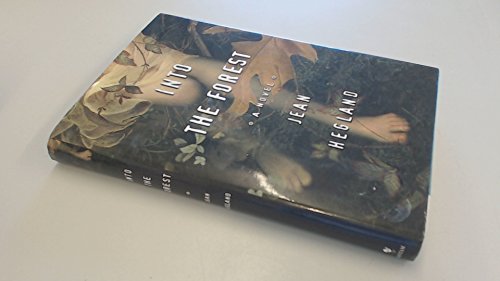

Once in a generation we open a new book to discover a voice and a vision that have the power to change the way we look at ourselves and our world. These are the novels we read, remember, and return to again and again: Margaret Atwood's The Handmaid's Tale, Doris Lessing's The Golden Notebook, and now, from Jean Hegland, an extraordinary fiction debut...Into the Forest.
Eva, eighteen, and Nell, seventeen, are sisters, adolescents on the threshold of womanhood—and for them anything should be possible. But even as Eva prepares for an audition with the San Francisco Ballet and Nell dreams of her first semester at Harvard, their lives are turned upside down and their dreams are pushed into the shadows. In a nation suddenly without electricity or communications, Eva is compelled to dance alone to the music of memory, and Nell's education consists of reading the encyclopedia, devouring knowledge as if it were her last meal. Theirs is an age of darkness and terror....
A distant war rages overseas. Resources society had depended on, such as gas and electricity, are no longer available. Riots spread through the inner cities, while deadly viral infections spread across the countryside. Isolated in their home in the northern California woods, Eva and Nell live in a world without television or phones, in a time of suspicion and superstition, of anger, hunger, and fear. Perhaps one day the lights—and their dreams—will return, but orphaned by their parents' deaths and by society, Eva and Nell have been left to forage through the forest, and through their past, for the keys to survival. As they blaze a path into the forest and into the future, they become pioneers and pilgrims--not only creatures of the new world, but the creators of it.
Into the Forest is the gripping, unforgettable story of these remarkable sisters as they struggle to redefine themselves and their life together. It is a passionate and poignant tale of stirring sensuality, chilling insight, and profound inspiration—a novel that will move you and surprise you and touch you to the core.
Eva, eighteen, and Nell, seventeen, are sisters, adolescents on the threshold of womanhood—and for them anything should be possible. But even as Eva prepares for an audition with the San Francisco Ballet and Nell dreams of her first semester at Harvard, their lives are turned upside down and their dreams are pushed into the shadows. In a nation suddenly without electricity or communications, Eva is compelled to dance alone to the music of memory, and Nell's education consists of reading the encyclopedia, devouring knowledge as if it were her last meal. Theirs is an age of darkness and terror....
A distant war rages overseas. Resources society had depended on, such as gas and electricity, are no longer available. Riots spread through the inner cities, while deadly viral infections spread across the countryside. Isolated in their home in the northern California woods, Eva and Nell live in a world without television or phones, in a time of suspicion and superstition, of anger, hunger, and fear. Perhaps one day the lights—and their dreams—will return, but orphaned by their parents' deaths and by society, Eva and Nell have been left to forage through the forest, and through their past, for the keys to survival. As they blaze a path into the forest and into the future, they become pioneers and pilgrims--not only creatures of the new world, but the creators of it.
Into the Forest is the gripping, unforgettable story of these remarkable sisters as they struggle to redefine themselves and their life together. It is a passionate and poignant tale of stirring sensuality, chilling insight, and profound inspiration—a novel that will move you and surprise you and touch you to the core.
"synopsis" may belong to another edition of this title.
Review:
Jean Hegland's prose in Into the Forest is as breathtaking as one of the musty, ancient redwoods that share the woodland with Nell and Eva, two sisters who must learn to live in harmony with the northern California forest when the electricity shuts off, the phones go out, their parents die, and all civilization beyond them seems to grind to a halt. At first, the girls rely on stores of food left in their parents' pantry, but when those supplies begin to dwindle, their only option is to turn to each other and the forest's plants and animals for friendship, courage, and sustenance. Into the Forest, an apocalyptic coming-of-age story, will fill readers (both teens and adults) with a profound sense of the human spirit's strength and beauty.
From the Publisher:
Praise for Jean Hegland's Into the Forest
"[A] beautifully written and often profoundly moving novel."
--San Francisco Chronicle
"A work of extraordinary power, insight and lyricism, Into the Forest is both an urgent warning and a passionate celebration of life and love."
--Riane Eisler, author of The Chalice and the Blade
*"From the first page, the sense of crisis and the lucid, honest voice of the...narrator pull the reader in....A truly admirable addition to a genre defined by the very high standards of George Orwell's 1984."
--Publishers Weekly,starred review
"Beautifully written."
--Kirkus Reviews
"This beautifully written story captures the essential nature of the sister bond: the fierce struggle to be true to one's own self, only to learn that true strength comes from what they are able to share together."
--Carol Saline, co-author of Sisters
"Jean Hegland's sense of character is firm, warm, and wise....[A] fine first novel."
--John Keeble, author of Yellowfish END
"[A] beautifully written and often profoundly moving novel."
--San Francisco Chronicle
"A work of extraordinary power, insight and lyricism, Into the Forest is both an urgent warning and a passionate celebration of life and love."
--Riane Eisler, author of The Chalice and the Blade
*"From the first page, the sense of crisis and the lucid, honest voice of the...narrator pull the reader in....A truly admirable addition to a genre defined by the very high standards of George Orwell's 1984."
--Publishers Weekly,starred review
"Beautifully written."
--Kirkus Reviews
"This beautifully written story captures the essential nature of the sister bond: the fierce struggle to be true to one's own self, only to learn that true strength comes from what they are able to share together."
--Carol Saline, co-author of Sisters
"Jean Hegland's sense of character is firm, warm, and wise....[A] fine first novel."
--John Keeble, author of Yellowfish END
"About this title" may belong to another edition of this title.
- PublisherBantam
- Publication date1997
- ISBN 10 0553106686
- ISBN 13 9780553106688
- BindingHardcover
- Edition number1
- Number of pages256
- Rating
Buy New
Learn more about this copy
US$ 24.00
Shipping:
FREE
Within U.S.A.
Other Popular Editions of the Same Title
Top Search Results from the AbeBooks Marketplace
Stock Image
Into the Forest
Published by
Bantam
(1997)
ISBN 10: 0553106686
ISBN 13: 9780553106688
New
Hardcover
First Edition
Quantity: 1
Seller:
Rating

Book Description Hardcover. Condition: New. Dust Jacket Condition: New. 1st Edition. Seller Inventory # ABE-1706405723438
Buy New
US$ 24.00
Convert currency
Stock Image
Into the Forest
Seller:
Rating

Book Description Hardcover. Condition: new. New. Fast Shipping and good customer service. Seller Inventory # Holz_New_0553106686
Buy New
US$ 21.16
Convert currency
Stock Image
Into the Forest
Seller:
Rating
Book Description Hardcover. Condition: new. Buy for Great customer experience. Seller Inventory # GoldenDragon0553106686
Buy New
US$ 24.32
Convert currency
Stock Image
Into the Forest
Seller:
Rating
Book Description Hardcover. Condition: new. New Copy. Customer Service Guaranteed. Seller Inventory # think0553106686
Buy New
US$ 27.92
Convert currency
Stock Image
Into the Forest
Published by
Brand: Bantam
(1997)
ISBN 10: 0553106686
ISBN 13: 9780553106688
New
Hardcover
Quantity: 1
Seller:
Rating
Book Description Condition: new. Seller Inventory # FrontCover0553106686
Buy New
US$ 29.70
Convert currency
Stock Image
Into the Forest
Seller:
Rating
Book Description Hardcover. Condition: new. New. Seller Inventory # Wizard0553106686
Buy New
US$ 55.03
Convert currency
Stock Image
Into the Forest
Seller:
Rating
Book Description Hardcover. Condition: New. Seller Inventory # Abebooks188872
Buy New
US$ 59.00
Convert currency
Stock Image
INTO THE FOREST
Seller:
Rating
Book Description Condition: New. New. In shrink wrap. Looks like an interesting title! 1.05. Seller Inventory # Q-0553106686
Buy New
US$ 58.07
Convert currency
Seller Image
Into the Forest
Published by
Bantam
(1997)
ISBN 10: 0553106686
ISBN 13: 9780553106688
New
Hardcover
First Edition
Quantity: 1
Seller:
Rating
Book Description Condition: new. First Edition. Book is in NEW condition. Satisfaction Guaranteed! Fast Customer Service!!. Seller Inventory # PSN0553106686
Buy New
US$ 49.10
Convert currency