
Items related to --if Your Name Was Changed at Ellis Island
Synopsis
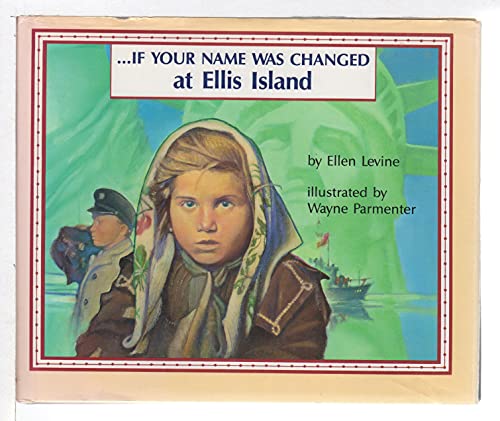
A look at the history of Ellis Island and immigration discusses why people came to America, what Ellis Island looked like then, and other issues and includes quotes from those who passed through the immigration center.
"synopsis" may belong to another edition of this title.
Reviews
Despite the book's somewhat misleading title (only two pages are devoted to the practice of changing names), Levine ( I Hate English! ; If You Lived at the Time of Martin Luther King ) offers a comprehensive, well organized discussion of the immigration procedures followed at Ellis Island between 1892 and 1914. One- or two-page chapters offer concise answers to questions ("What did people bring with them?'; "What happened if you were detained?"; "How did people learn English?"), enabling youngsters to digest easily a significant amount of information. Facts about the many rigorous routines and tests (medical, legal, literacy) that new arrivals endured are peppered with the intriguing personal reminiscences of individuals who lived through them. Sometimes sharply focused, sometimes effectively hazy, Parmenter's acrylic paintings admirably evoke the period, as well as the anguish and joy that characterized the bittersweet Ellis Island experience. Ages 7-10.
Copyright 1993 Reed Business Information, Inc.
Arranged in Q&A style, this survey of earlier immigrations asks: ``Did all immigrants come through Ellis Island?'' (no); ``Did you have to have a job waiting for you?'' (again, no; in fact, it was not allowed). It's evident that America has always been a polyglot magnet--even in 1643, 18 languages were spoken in one colonial area. It's also evident that there's been long-standing prejudice against certain immigrants (ability to read was required for entrance, and first and second class arrivals didn't have to sweat it out at Ellis Island). Perhaps most interesting here are the individual stories: the name change in the author's own family; the child who had never seen a banana and ate it whole; the ``six- second'' medical exam. Levine (If You Traveled West in a Covered Wagon, 1986) gives multiculturalism an extra boost by ending with a sampling of words and other contributions from many heritages. Nostalgically warm impressionistic paintings, suffused with sepia, simultaneously signal suffering and hope. (Nonfiction. 7-10) -- Copyright ©1993, Kirkus Associates, LP. All rights reserved.
"About this title" may belong to another edition of this title.
Search results for --if Your Name Was Changed at Ellis Island

Stock Image
--If Your Name Was Changed at Ellis Island
Seller: World of Books (was SecondSale), Montgomery, IL, U.S.A.
Seller rating 5 out of 5 stars

Hardback. Condition: Fair. Parmenter, Wayne (illustrator). Seller Inventory # CIN0590461346A
Stock Image
--If Your Name Was Changed at Ellis Island
Seller: World of Books (was SecondSale), Montgomery, IL, U.S.A.
Seller rating 5 out of 5 stars
Hardback. Condition: Good. Parmenter, Wayne (illustrator). Seller Inventory # 00110431574
Stock Image
--if Your Name Was Changed at Ellis Island
Seller: BooksRun, Philadelphia, PA, U.S.A.
Seller rating 5 out of 5 stars
Library Binding. Condition: Fair. Parmenter, Wayne (illustrator). The item might be beaten up but readable. May contain markings or highlighting, as well as stains, bent corners, or any other major defect, but the text is not obscured in any way. Ex-Library. Seller Inventory # 0590461346-7-1-12
Seller Image
--if Your Name Was Changed at Ellis Island
Seller: Greenworld Books, Arlington, TX, U.S.A.
Seller rating 5 out of 5 stars
Condition: very_good. Parmenter, Wayne (illustrator). Fast Free Shipping â" Very Good condition book with a firm cover and clean pages. Shows normal use and some light wear or limited notes markings. A solid, nice copy to enjoy. Seller Inventory # GWV.0590461346.VG
Stock Image
If Your Name Was Changed at Ellis Island
Seller: Better World Books, Mishawaka, IN, U.S.A.
Seller rating 5 out of 5 stars
Condition: Good. Parmenter, Wayne (illustrator). Former library copy. Pages intact with minimal writing/highlighting. The binding may be loose and creased. Dust jackets/supplements are not included. Includes library markings. Stock photo provided. Product includes identifying sticker. Better World Books: Buy Books. Do Good. Seller Inventory # 2389215-75
Stock Image
--If Your Name Was Changed at Ellis Island
Seller: World of Books Inc, Montgomery, IL, U.S.A.
Seller rating 4 out of 5 stars

Hardback. Condition: Good. Parmenter, Wayne (illustrator). Seller Inventory # CIN0590461346G
Stock Image
--If Your Name Was Changed at Ellis Island
Seller: World of Books Inc, Montgomery, IL, U.S.A.
Seller rating 4 out of 5 stars
Hardback. Condition: Fair. Parmenter, Wayne (illustrator). Seller Inventory # CIN0590461346A
Stock Image
--if Your Name Was Changed at Ellis Island
Seller: ThriftBooks-Atlanta, AUSTELL, GA, U.S.A.
Seller rating 5 out of 5 stars
Unknown. Condition: Good. No Jacket. Parmenter, Wayne (illustrator). Pages can have notes/highlighting. Spine may show signs of wear. ~ ThriftBooks: Read More, Spend Less. Seller Inventory # G0590461346I3N00
Stock Image
--if Your Name Was Changed at Ellis Island
Seller: ThriftBooks-Dallas, Dallas, TX, U.S.A.
Seller rating 5 out of 5 stars
Unknown. Condition: Very Good. No Jacket. Parmenter, Wayne (illustrator). May have limited writing in cover pages. Pages are unmarked. ~ ThriftBooks: Read More, Spend Less. Seller Inventory # G0590461346I4N00
Stock Image
--if Your Name Was Changed at Ellis Island
Seller: ThriftBooks-Atlanta, AUSTELL, GA, U.S.A.
Seller rating 5 out of 5 stars
Unknown. Condition: As New. No Jacket. Parmenter, Wayne (illustrator). Pages are clean and are not marred by notes or folds of any kind. ~ ThriftBooks: Read More, Spend Less. Seller Inventory # G0590461346I2N00