
Items related to The Magic of Spider Woman
Synopsis
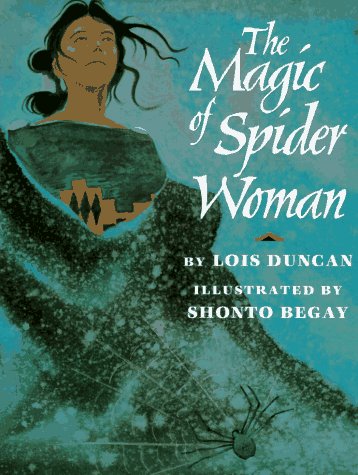
A Navajo fable follows the story of a young girl who, through the magic of Spider Woman, learns one of the most vital lessons of Navajo culture about the importance of leading a balanced life.
"synopsis" may belong to another edition of this title.
Reviews
Grade 3-6?Much more than a pourquoi tale, this story also concerns the rejection of obsession, even in the service of beauty, and recalls the Greek myth of Arachne. When Wandering Girl learns from Spider Woman how to make blankets from her sheep's wool, she is renamed Weaving Woman. She marries and spends a winter at her loom. In the spring, she discovers how to make dyes and is inspired to "create the most beautiful blanket in all of the world." As this goal consumes her, she forgets the Navajo Middle Way; her life loses its balance and her spirit becomes trapped in the blanket. Through a shaman's intervention, Spider Woman returns to pull a loose strand from the border, spoiling its perfection and freeing the weaver's spirit. Since then, the text adds, "every Navajo blanket has been woven with a pathway, so the spirit of the weaver will not be imprisoned by its beauty." The details Duncan adds from the Dineh creation story, as well as the happy ending, make it distinctively Navajo, as do Begay's light-spangled paintings. Significantly, in almost every one, the perfect rectangle of the illustration is broken by an element of the design extending beyond it: a visual reminder of the story's moral. The impact of the heroine's decision to use dyes is somewhat lessened by the brightly patterned clothing she wears throughout. Nevertheless, Begay's dramatic shifts of perspective, his innate sensitivity to the land and people depicted, and the text's powerful message about pride's deadly effects combine in an appealing and meaningful way.?Patricia (Dooley) Lothrop Green, St. George's School, Newport, RI
Copyright 1996 Reed Business Information, Inc.
Duncan blends several versions of a Navajo myth for this relatively abstract moral tale. When the Fourth World is created, the girl who will be Weaving Woman misses the lessons in leading a balanced life the rest of the People receive. Spider Woman later teaches her how to weave, and warns her not to spend too much time at it. But she becomes obsessed with weaving a beautiful blanket-and her spirit gets trapped in it. Spider Woman herself has to pull a strand of wool loose to free her. To this day, Navajo weavers leave a "spirit pathway" in their blankets, "so the spirit of the weaver will not be imprisoned by its beauty." As in Begay's Ma'ii and Cousin Horned Toad, the graceful figures of the characters appear on dappled backgrounds, brightly colored against pastoral Western landscapes during happy times, darker and often spooky as Weaving Woman traps herself. Duncan's tale carries a thoughtful message, grounded in well-chosen details and adeptly relayed through her personable storytelling. Ages 6-9.
Copyright 1996 Reed Business Information, Inc.
A picture-book version of a Navajo legend. The art of weaving is passed from the great spirit Spider Woman to Wandering Girl, renamed Weaving Woman, when she is in danger of freezing. There are conditions: Weaving Woman must lead a balanced life and never do anything in excess. When Weaving Woman sets out to make the most beautiful blanket in the world, she finds her spirit bound in the threads of her creation, all but dead to her loving husband. Spider Woman releases her, and that's why every such blanket has an escape route--a ``flaw''--to allow the weaver's spirit to remain free. After a start too dense with background, irregularities further spoil this tale: Spirit Being, who fills ``the earth, the sky, and the mountaintops,'' teaches all the people his ways, but somehow skips Wandering Girl; enthusiasm and artistic passion somehow become pridefulness; there may be a connection between perfection and entrapment, but children are unlikely to comprehend it. Begay's vibrant paintings are replete with the dreaminess that cradles the story, far outstripping it in their beauty. (Picture book. 6-9) -- Copyright ©1996, Kirkus Associates, LP. All rights reserved.
Ages 5^-8. This Navajo legend tells of a young shepherdess who shivers from the cold until the mythic Spider Woman teaches her how to shear sheep, card and spin wool, and weave blankets. Spider Woman warns the newly named Weaving Woman to "walk the Middle Way," keeping her life in balance and avoiding weaving for too long at any one time. Although Weaving Woman promises to follow the Middle Way, she becomes so involved in her craft that she begins to weave from sunup to sundown. Soon she is trapped in a blanket of her own weaving, her spirit woven into its cloth. Loosening a thread makes the blanket imperfect and creates a path for her spirit to escape. Although the message may have more resonance for adults than for kids, the tale appears here in a colorful, picture book edition that should hold the interest of primary-grade children. Carolyn Phelan
"About this title" may belong to another edition of this title.
Search results for The Magic of Spider Woman

Stock Image
The Magic of Spider Woman
Seller: ThriftBooks-Atlanta, AUSTELL, GA, U.S.A.
Seller rating 5 out of 5 stars

Unknown. Condition: Very Good. No Jacket. Begay, Shonto (illustrator). May have limited writing in cover pages. Pages are unmarked. ~ ThriftBooks: Read More, Spend Less. Seller Inventory # G0590461559I4N00
Stock Image
The Magic of Spider Woman
Seller: ThriftBooks-Dallas, Dallas, TX, U.S.A.
Seller rating 5 out of 5 stars
Unknown. Condition: Good. No Jacket. Begay, Shonto (illustrator). Pages can have notes/highlighting. Spine may show signs of wear. ~ ThriftBooks: Read More, Spend Less. Seller Inventory # G0590461559I3N00
Stock Image
The Magic of Spider Woman
Seller: ThriftBooks-Dallas, Dallas, TX, U.S.A.
Seller rating 5 out of 5 stars
Unknown. Condition: Good. No Jacket. Begay, Shonto (illustrator). Former library book; Pages can have notes/highlighting. Spine may show signs of wear. ~ ThriftBooks: Read More, Spend Less. Seller Inventory # G0590461559I3N10
Seller Image
The Magic of Spider Woman
Seller: Blue Vase Books, Interlochen, MI, U.S.A.
Seller rating 5 out of 5 stars
Condition: good. Begay, Shonto (illustrator). Former library book with the usual stamps, stickers and labels. The item shows wear from consistent use, but it remains in good condition and works perfectly. All pages and cover are intact including the dust cover, if applicable . Spine may show signs of wear. Pages may include limited notes and highlighting. May NOT include discs, access code or other supplemental materials. Seller Inventory # BVV.0590461559.G
Stock Image
The Magic of Spider Woman
Seller: St Vincent de Paul of Lane County, Eugene, OR, U.S.A.
Seller rating 5 out of 5 stars
Condition: Good. Begay, Shonto (illustrator). THESE ARE SPECIAL EX--LIBRARY BOOKS THAT REMAIN IN GREAT CONDITION THIER COMPLETE AND EASILY READ ALLSO MAY HAVE AN IDENTIFYING STICKER. Former Library book. library 100% of proceeds go to charity! Good condition with all pages in tact. Item shows signs of use and may have cosmetic defects. Seller Inventory # Q-07-3410
Stock Image
The Magic of Spider Woman
Seller: Better World Books: West, Reno, NV, U.S.A.
Seller rating 5 out of 5 stars
Condition: Good. Begay, Shonto (illustrator). Former library copy. Pages intact with minimal writing/highlighting. The binding may be loose and creased. Dust jackets/supplements are not included. Includes library markings. Stock photo provided. Product includes identifying sticker. Better World Books: Buy Books. Do Good. Seller Inventory # 673308-75
Stock Image
The Magic of Spider Woman
Seller: Better World Books, Mishawaka, IN, U.S.A.
Seller rating 5 out of 5 stars
Condition: Good. Begay, Shonto (illustrator). Former library copy. Pages intact with minimal writing/highlighting. The binding may be loose and creased. Dust jackets/supplements are not included. Includes library markings. Stock photo provided. Product includes identifying sticker. Better World Books: Buy Books. Do Good. Seller Inventory # 673308-75
Stock Image
The Magic of Spider Woman
Seller: HPB-Movies, Dallas, TX, U.S.A.
Seller rating 4 out of 5 stars

library. Condition: Very Good. Begay, Shonto (illustrator). Connecting readers with great books since 1972! Used books may not include companion materials, and may have some shelf wear or limited writing. We ship orders daily and Customer Service is our top priority! Seller Inventory # S_483052630
Seller Image
The Magic of Spider Woman
Published by
Scholastic, New York, NY, 1996
ISBN 10: 0590461559
ISBN 13: 9780590461559
Used
Hardcover
Seller: Betty Mittendorf /Tiffany Power BKSLINEN, Ralston, NE, U.S.A.
Seller rating 5 out of 5 stars
Hardcover. Condition: Good. Dust Jacket Condition: Good. Shonto Begay (illustrator). Color illustration on cover and dj. Dj in mylar wrap. Int. good. Color illustrations. Usual library markings and flaws. Seller Inventory # 147597B
Stock Image
The Magic of Spider Woman
Seller: Library House Internet Sales, Grand Rapids, OH, U.S.A.
Seller rating 5 out of 5 stars
Hardcover. Condition: Good. Dust Jacket Condition: Very Good. Begay, Shonto (illustrator). Retells the Navajo tale of how a stubborn girl learns from the Spider Woman how to keep life in balance by respecting its boundaries. Piece(s) of the spine missing. Due to age and/or environmental conditions, the pages of this book have darkened. Former library book. Mylar protector included. Please note the image in this listing is a stock photo and may not match the covers of the actual item. Ex-Library. Seller Inventory # 123804088