
Items related to California Blue
Synopsis
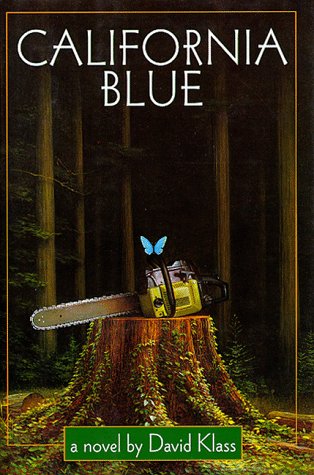
When John Rodgers discovers a new species of butterfly, the government shuts down his town's primary employer, its lumber mill, and John must decide between his town and his disappointed dying father and the splendid, rare creature called Rodgers California Blue.
"synopsis" may belong to another edition of this title.
Reviews
Grade 8-12-John Rodgers, 17, feels alienated from his hard-nosed father and from much of his small, northern California community. Few people in Kiowa, which is totally dependent on the timber industry, share his love of nature, and his father, a former high school football star, preaches winning at all costs and cannot understand John's mediocrity in sports. A series of events-including the diagnosis of his father's cancer and John's discovery of a new species of butterfly-dramatically changes the young man's life. Eventually it is revealed to the community that John found the insect and alerted environmentalists. This makes him the target of the townspeople's fears and fury, forcing him to run away to San Francisco. At the novel's end, he returns to Kiowa. In a touching final scene, he has a quiet talk with his dying father. John knows, however, that he will have to leave again. This is the story of a young man caught up in some large and passionate issues before he is ready to cope with them. His anger, awkwardness, intelligence, and confusion are captured effectively through the first-person narrative. But this novel's strength does not lie simply in its willingness to tackle big issues. Small scenes, such as accounts of John's middle-distance races on the track team, are well done and add to the novel's texture and depth. A thoughtful and fair book that will strike a chord with many YAs.
Todd Morning, Schaumburg Township Public Library, IL
Copyright 1994 Reed Business Information, Inc.
In this beautifully rendered novel, Klass ( Wrestling with Honor ; A Different Season ) transforms an abstract environmental issue into a compelling story of a boy in transition from adolescence to adulthood. The book owes some of its success to how the author sidesteps dogmatism while still making clear his environmentalist point of view. The protagonist, John Rodgers, has to face three troubling facts. First, his father, with whom John has never really gotten along, has been diagnosed with leukemia and is likely to die soon. Second, John has discovered a new species of butterfly and wants to preserve it, but the butterfly lives on land owned by the local mill, and any governmental protection of the area will be bitterly resisted by the entire town, including John's parents. And finally, John has fallen in love with his high school biology teacher, who does not entirely rebuff his attentions. Klass handles these complex situations with grace and subtlety; an unusual and credible inclusion is Miss Merrill's honest acknowledgement to her student that she has strong feelings for him. The absorbing first-person narration rings true, projecting the credible voice of a teenager just beginning to break free from his emotional ties to home, family and friends. The fears, excitement, anger and energy of this awkward psychological time are movingly captured here. Ages 12-up.
Copyright 1994 Reed Business Information, Inc.
Klass writes a sort of enriched sports fiction, combining vividly told stories of athletic competition with perceptive explorations of character and social themes. This is his best yet. For most of his 17 years, John Rodgers has been at defiant odds with his powerful, hard-nosed father, Henry, who can't understand how a son of his could prefer track and intellectual pursuits over contact sports and the social life of a jock. Now that Henry is dying of leukemia, John is assaulted by a guilt that's compounded when he discovers a new species of butterfly in the local lumber mill's redwood forest, portending not only a hard future for his small hometown but--since he's already been beaten up just for subscribing to an ecology magazine--a bleak personal future as well. Realistically and evenhandedly, the author presents the arguments and confrontations between townsfolk and conservationists through the eyes of a teenager whose courage, intelligence, heart, body--and, not least, his sense of humor--are severely tested but prove equal to the occasion. Klass simplifies neither characters nor issues; and whether describing a cloud of butterflies or Bob Beamon's record-shattering broad jump in the `68 Olympics, he writes with skill and authentic feeling. A rich story, capped by a brilliantly crafted, multilayered reconciliation between father and son. (Fiction. 11+) -- Copyright ©1994, Kirkus Associates, LP. All rights reserved.
Gr. 7-10. John Rodgers lives in a northern California logging town, but the redwoods he runs through mean more to him than a livelihood. At 17, he cares about track and butterflies, although neither pursuit is understood by his family. His father's recently diagnosed cancer occupies the family, and John, a loner who is shy around girls, dreams about his biology teacher, Miss Merrill. When the unusual chrysalis John finds turns out to be an unknown species, everything is called into question, from his father's job to his relationship to Miss Merrill. The "inner game" of running and the fear John's strong father has of dying are both handled well, and Klass' exploration of the human cost of environmental action suggests that there are alternatives to the simplistic "butterfly vs. logging jobs" model. Mary Harris Veeder
"About this title" may belong to another edition of this title.
Search results for California Blue

Stock Image
California Blue
Seller: World of Books (was SecondSale), Montgomery, IL, U.S.A.
Seller rating 5 out of 5 stars

Hardback. Condition: Good. Seller Inventory # 00109689931
Stock Image
California Blue
Seller: World of Books (was SecondSale), Montgomery, IL, U.S.A.
Seller rating 5 out of 5 stars
Condition: Acceptable. Item in acceptable condition! Textbooks may not include supplemental items i.e. CDs, access codes etc. Seller Inventory # 00098006320
Seller Image
California Blue
Seller: Aspen Book Co., Denver, CO, U.S.A.
Seller rating 5 out of 5 stars
Condition: good. A well-loved companion. Corners and cover might show a little wear, and you could find some notes or highlights. The dust jacket might be MIA, it might have been a library book and extras aren't guaranteedâ"but the story's all there! Seller Inventory # PKV.0590466887.G
Stock Image
California Blue
Published by
Scholastic (edition First Edition), 1994
ISBN 10: 0590466887
ISBN 13: 9780590466882
Used
First Edition
Seller: BooksRun, Philadelphia, PA, U.S.A.
Seller rating 5 out of 5 stars
Library Binding. Condition: Very Good. First Edition. With dust jacket. It's a well-cared-for item that has seen limited use. The item may show minor signs of wear. All the text is legible, with all pages included. It may have slight markings and/or highlighting. Seller Inventory # 0590466887-11-22-29
Stock Image
California Blue
Seller: ThriftBooks-Dallas, Dallas, TX, U.S.A.
Seller rating 5 out of 5 stars
Unknown. Condition: Very Good. No Jacket. Former library book; May have limited writing in cover pages. Pages are unmarked. ~ ThriftBooks: Read More, Spend Less. Seller Inventory # G0590466887I4N10
Stock Image
California Blue
Seller: ThriftBooks-Dallas, Dallas, TX, U.S.A.
Seller rating 5 out of 5 stars
Unknown. Condition: Fair. No Jacket. Former library book; Readable copy. Pages may have considerable notes/highlighting. ~ ThriftBooks: Read More, Spend Less. Seller Inventory # G0590466887I5N10
Stock Image
California Blue
Seller: ThriftBooks-Atlanta, AUSTELL, GA, U.S.A.
Seller rating 5 out of 5 stars
Unknown. Condition: Good. No Jacket. Pages can have notes/highlighting. Spine may show signs of wear. ~ ThriftBooks: Read More, Spend Less. Seller Inventory # G0590466887I3N00
Stock Image
California Blue
Seller: ThriftBooks-Reno, Reno, NV, U.S.A.
Seller rating 5 out of 5 stars
Unknown. Condition: Good. No Jacket. Former library book; Pages can have notes/highlighting. Spine may show signs of wear. ~ ThriftBooks: Read More, Spend Less. Seller Inventory # G0590466887I3N10
Stock Image
California Blue
Seller: ThriftBooks-Atlanta, AUSTELL, GA, U.S.A.
Seller rating 5 out of 5 stars
Unknown. Condition: Fair. No Jacket. Former library book; Readable copy. Pages may have considerable notes/highlighting. ~ ThriftBooks: Read More, Spend Less. Seller Inventory # G0590466887I5N10
Stock Image
California Blue
Seller: ThriftBooks-Reno, Reno, NV, U.S.A.
Seller rating 5 out of 5 stars
Unknown. Condition: Very Good. No Jacket. May have limited writing in cover pages. Pages are unmarked. ~ ThriftBooks: Read More, Spend Less. Seller Inventory # G0590466887I4N00