
Items related to Fiery Vision: The Life and Death of John Brown
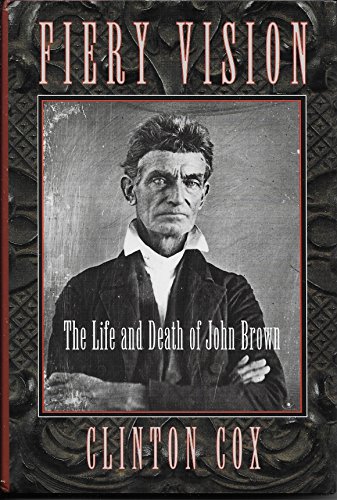
Synopsis
A biography of the controversial abolitionist who led the raid on the United States arsenal at Harpers Ferry.
"synopsis" may belong to another edition of this title.
Reviews
Grade 7-10. In many U.S. History courses, John Brown is quickly glossed over in the buildup to the Civil War. Although his raid of Harpers Ferry is much discussed, the man himself is often summed up as a martyr, a madman, or a mystery. Cox has done away with some of that mystery in this thorough and clearly written biography. Tracing his subject's abolitionism (and fanaticism) back to its earliest roots, the author gives readers a picture of Brown as a loving family man and a not-too-successful businessman. Some of the key events of the era are incorporated into the narrative, as are the personal stories of many slaves and fugitives. Within such a context, Brown's embracing of the cause of abolition seems quite reasonable and his devotion quite sane. Although the information leading up to the raid is lengthy, the coverage of the raid itself and Brown's well-publicized trial is relatively brief, which might disappoint some readers. The bibliography is excellent and the black-and-white reproductions greatly enhance the text. Like his book on Twain, Cox's enjoyable biography provides a good introduction for young adults.?Elizabeth M. Reardon, McCallie School, Chattanooga, TN
Copyright 1997 Reed Business Information, Inc.
Gr. 7^-10. This long biography of the famous abolitionist who was hanged for the raid on the arsenal at Harper's Ferry is filled with quotes from eyewitnesses and scrupulously detailed accounts of events. In fact, there's almost too much chronological detail here, and the drama is sometimes overwhelmed with particulars. Most YA readers would prefer a more general discussion of the issues, more analysis of the historical importance of the man and his cause, rather than the minutiae of almost every journey he ever took. Where the particulars are powerful, however, is in the accounts of slavery (especially the horror of enforced family separation); in the arguments for and against violent resistance; and in the planning, execution, failure, and lasting importance of the raid. "They could kill him, but they could not answer him," Frederick Douglass said, and Cox shows how Brown's action brought an end to compromise on slavery and helped bring about the Civil War. Bibliography. Hazel Rochman
"About this title" may belong to another edition of this title.
Search results for Fiery Vision: The Life and Death of John Brown

Stock Image
Fiery Vision: The Life and Death of John Brown
Seller: World of Books (was SecondSale), Montgomery, IL, U.S.A.
Seller rating 5 out of 5 stars

Hardback. Condition: Good. Seller Inventory # 00106248098
Stock Image
Fiery Vision: The Life and Death of John Brown
Seller: Bookmonger.Ltd, HILLSIDE, NJ, U.S.A.
Seller rating 5 out of 5 stars
hardcover. Condition: Very Good. Crease on cover*. Seller Inventory # mon0000727189
Stock Image
Fiery Vision: The Life and Death of John Brown
Seller: World of Books Inc, Montgomery, IL, U.S.A.
Seller rating 4 out of 5 stars

Hardback. Condition: Good. Seller Inventory # CIN0590475746G
Stock Image
Fiery Vision: The Life and Death of John Brown
Published by
Scholastic (edition First Edition), 1997
ISBN 10: 0590475746
ISBN 13: 9780590475747
Used
Hardcover
First Edition
Seller: BooksRun, Philadelphia, PA, U.S.A.
Seller rating 5 out of 5 stars
Hardcover. Condition: Very Good. First Edition. With dust jacket. It's a well-cared-for item that has seen limited use. The item may show minor signs of wear. All the text is legible, with all pages included. It may have slight markings and/or highlighting. Seller Inventory # 0590475746-11-1-29
Stock Image
Fiery Vision: The Life and Death of John Brown
Seller: ThriftBooks-Dallas, Dallas, TX, U.S.A.
Seller rating 5 out of 5 stars
Hardcover. Condition: Fair. No Jacket. Former library book; Readable copy. Pages may have considerable notes/highlighting. ~ ThriftBooks: Read More, Spend Less. Seller Inventory # G0590475746I5N10
Stock Image
Fiery Vision: The Life and Death of John Brown
Seller: ThriftBooks-Reno, Reno, NV, U.S.A.
Seller rating 5 out of 5 stars
Hardcover. Condition: Very Good. No Jacket. May have limited writing in cover pages. Pages are unmarked. ~ ThriftBooks: Read More, Spend Less. Seller Inventory # G0590475746I4N00
Stock Image
Fiery Vision: The Life and Death of John Brown
Seller: ThriftBooks-Atlanta, AUSTELL, GA, U.S.A.
Seller rating 5 out of 5 stars
Hardcover. Condition: Good. No Jacket. Former library book; Pages can have notes/highlighting. Spine may show signs of wear. ~ ThriftBooks: Read More, Spend Less. Seller Inventory # G0590475746I3N10
Stock Image
Fiery Vision: The Life and Death of John Brown
Seller: ThriftBooks-Reno, Reno, NV, U.S.A.
Seller rating 5 out of 5 stars
Hardcover. Condition: Good. No Jacket. Former library book; Pages can have notes/highlighting. Spine may show signs of wear. ~ ThriftBooks: Read More, Spend Less. Seller Inventory # G0590475746I3N10
Stock Image
Fiery Vision: The Life and Death of John Brown
Seller: ThriftBooks-Dallas, Dallas, TX, U.S.A.
Seller rating 5 out of 5 stars
Hardcover. Condition: Good. No Jacket. Former library book; Pages can have notes/highlighting. Spine may show signs of wear. ~ ThriftBooks: Read More, Spend Less. Seller Inventory # G0590475746I3N10
Stock Image
Fiery Vision: The Life and Death of John Brown
Seller: ThriftBooks-Phoenix, Phoenix, AZ, U.S.A.
Seller rating 5 out of 5 stars
Hardcover. Condition: Very Good. No Jacket. May have limited writing in cover pages. Pages are unmarked. ~ ThriftBooks: Read More, Spend Less. Seller Inventory # G0590475746I4N00