
Items related to The Second Bend in the River
Synopsis
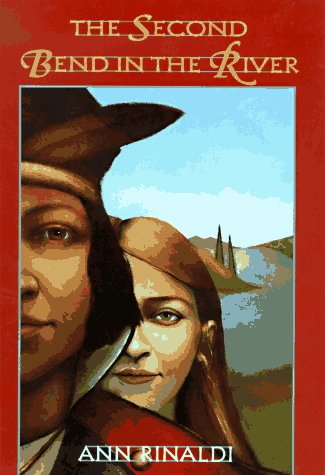
The daughter of settlers carving out a new life in the American wilderness of 1798, Rebecca Galloway befriends the great Shawnee chief Tecumseh and is torn between cultures when their friendship deepens into love.
"synopsis" may belong to another edition of this title.
Reviews
Grade 5-9. Set around the turn of the 18th century, this book mixes fact, fiction, and conjecture to tell the story of Rebecca Galloway, a young girl living in the wilds of pioneer Ohio, and the visionary Shawnee leader Tecumseh. Rinaldi skillfully imagines seven-year-old Rebecca's initial meeting with Tecumseh and relates intermittent visits up through her teenage years, leading to his asking for her hand in marriage, an offer she refuses because their worlds are too different. Along the way readers are shown the difficulties and rewards of pioneer life, and introduced to the excitement felt by settlers who took part in the process of building a nation. The Galloways are drawn as a family with high principles: Rebecca's father fought in the Revolutionary War, moved his family away from Kentucky where slavery was permitted, and championed the cause of the displaced Indians among the not always sympathetic whites. Rebecca is a strong-minded character with a believable and authentic voice. Anyone who enjoys historical fiction will find much to like about this well-written and carefully researched novel. It succeeds in presenting both the plight and frustrations of Native Americans and the exuberance of the early pioneers in a sympathetic way, although the author falls clearly on the side of those who mourn the loss of a culture destroyed by white settlers. A rewarding and satisfying read.?Carrie Schadle, New York Public Library
Copyright 1997 Reed Business Information, Inc.
A disappointing historical offering from Rinaldi, especially in the wake of her strong novel about Phillis Wheatley, Hang A Thousand Trees with Ribbons (1996). In reconstructing the romance between Rebecca Galloway, a teenage settler, and the great Shawnee chief Tecumseh, Rinaldi follows the historical record closely--perhaps too closely, for amidst Rebecca's tale of comings and goings, marriages, gossip, and details of daily life, there is little room left for plot and characters. Only six in 1798, when she first meets Tecumseh, Rebecca is smitten, a feeling that intensifies and becomes mutual over the next ten years as she tutors him in English during his rare visits. In between she reports--but seldom witnesses, dramatizes, or analyzes--his efforts both to build a tribal confederacy and to preserve the uneasy peace; she includes other events, of course, from the death of her brother's young wife to Ohio's emergence into statehood. In the end, Rebecca turns down his proposal, deciding (without ever having seen his village) that she cannot live as a Shawnee; a few years later, married to a farmer, she learns of Tecumseh's death in battle. Although only the dialogue and a handful of minor characters and incidents are fictional, Rinaldi never creates a clear picture of pioneer life or of Tecumseh's career, and his relationship with Rebecca is too sketchy to hold the foreground. (bibliography) (Fiction. 11-13) -- Copyright ©1997, Kirkus Associates, LP. All rights reserved.
Gr. 5^-9. In 1798, seven-year-old Ohio pioneer Rebecca Galloway first meets the great Shawnee chief Tecumseh when he visits the site of his boyhood home, now the Galloway farm. Although she is initially frightened by the tall stranger, he is quite taken by "little straw-hair" and presents her with a silver bracelet. When the Galloways realize Tecumseh's agenda is peace between the whites and Indians, a family friendship ensues, one that will last more than a decade. With each of the chief's return trips to the farm, the bond between Rebecca and him deepens and matures, until he finally asks for her hand in marriage. She is torn, almost overwhelmed by the intensity of their feelings (the kind of love that "pulls each other's souls out"), but realizes her own need to stay in the white world. As she did in The Wolf by the Ears (1991), Rinaldi weaves a powerfully romantic tale of two Americans from the colonial era. Her attention to period details (ranging from frontier wedding customs to garden plantings) and careful separation of fact from fiction strengthen the credibility of the story without diminishing any of its appeal. Kay Weisman
"About this title" may belong to another edition of this title.
Search results for The Second Bend in the River

Stock Image
The Second Bend in the River
Seller: World of Books (was SecondSale), Montgomery, IL, U.S.A.
Seller rating 5 out of 5 stars

Condition: Very Good. Item in very good condition! Textbooks may not include supplemental items i.e. CDs, access codes etc. Seller Inventory # 00095897998
Stock Image
The Second Bend in the River
Seller: World of Books (was SecondSale), Montgomery, IL, U.S.A.
Seller rating 5 out of 5 stars
Condition: Good. Item in good condition. Textbooks may not include supplemental items i.e. CDs, access codes etc. Seller Inventory # 00094418988
Stock Image
The Second Bend in the River
Published by
Scholastic (edition Complete Numbers Starting with 1, 1st Ed), 1997
ISBN 10: 0590742582
ISBN 13: 9780590742580
Used
Seller: BooksRun, Philadelphia, PA, U.S.A.
Seller rating 5 out of 5 stars
Library Binding. Condition: Very Good. With dust jacket. It's a well-cared-for item that has seen limited use. The item may show minor signs of wear. All the text is legible, with all pages included. It may have slight markings and/or highlighting. Complete Numbers Starting with 1, 1st Ed. Seller Inventory # 0590742582-11-1-29
Stock Image
The Second Bend in the River
Seller: ThriftBooks-Dallas, Dallas, TX, U.S.A.
Seller rating 5 out of 5 stars
Unknown. Condition: Very Good. No Jacket. Former library book; May have limited writing in cover pages. Pages are unmarked. ~ ThriftBooks: Read More, Spend Less. Seller Inventory # G0590742582I4N10
Stock Image
The Second Bend in the River
Seller: ThriftBooks-Atlanta, AUSTELL, GA, U.S.A.
Seller rating 5 out of 5 stars
Unknown. Condition: Very Good. No Jacket. Former library book; May have limited writing in cover pages. Pages are unmarked. ~ ThriftBooks: Read More, Spend Less. Seller Inventory # G0590742582I4N10
Stock Image
The Second Bend in the River
Seller: Better World Books, Mishawaka, IN, U.S.A.
Seller rating 5 out of 5 stars
Condition: Good. Pages intact with minimal writing/highlighting. The binding may be loose and creased. Dust jackets/supplements are not included. Stock photo provided. Product includes identifying sticker. Better World Books: Buy Books. Do Good. Seller Inventory # 18399413-6
Stock Image
The Second Bend in the River
Seller: Better World Books: West, Reno, NV, U.S.A.
Seller rating 5 out of 5 stars
Condition: Good. Former library copy. Pages intact with minimal writing/highlighting. The binding may be loose and creased. Dust jackets/supplements are not included. Includes library markings. Stock photo provided. Product includes identifying sticker. Better World Books: Buy Books. Do Good. Seller Inventory # 18916319-75
Stock Image
The Second Bend in the River
Seller: HPB-Ruby, Dallas, TX, U.S.A.
Seller rating 5 out of 5 stars
library. Condition: Very Good. Connecting readers with great books since 1972! Used books may not include companion materials, and may have some shelf wear or limited writing. We ship orders daily and Customer Service is our top priority! Seller Inventory # S_482061908
Stock Image
The Second Bend in the River
Seller: Wonder Book, Frederick, MD, U.S.A.
Seller rating 5 out of 5 stars
Condition: Good. Good condition. Very Good dust jacket. A copy that has been read but remains intact. May contain markings such as bookplates, stamps, limited notes and highlighting, or a few light stains. Seller Inventory # N02N-00756
Stock Image
The Second Bend in the River
Seller: Wonder Book, Frederick, MD, U.S.A.
Seller rating 5 out of 5 stars
Condition: Good. Good condition. Acceptable dust jacket. A copy that has been read but remains intact. May contain markings such as bookplates, stamps, limited notes and highlighting, or a few light stains. Seller Inventory # M14B-01200