
Items related to Good Gut EXPORT
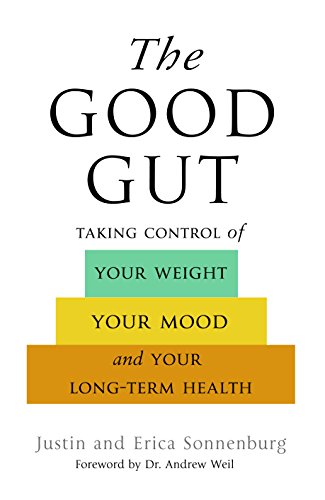
Synopsis
Genetics and lifestyle are thought to be the two most important determinants of good health. But that's not the whole story.
In The Good Gut, Justin and Erica Sonnenburg, who are doing cutting-edge research on the trillions of microbes living in our gastrointestinal tract, reveal how our gut affects everything, from our immune response to our weight, allergic reactions, aging and emotions; how they are under threat from the Western diet, our antibiotics, and our sterilized environment; and how we can nurture our individual microbiota.
This is important news. Our intestinal microbiota plays an important role in the prevalence of predominantly Western afflictions, such as cancer, diabetes, allergies, asthma, autism, and inflammatory bowel diseases. These gut bacteria are facing a mass extinction, and the health consequences are dire. The average person in the Western world has around 1,200 different types of bacteria residing in his or her gut. That may seem like a lot until you consider that the average Amerindian living in the Amazon has approximately 1,600 species and is much less likely to develop Western illnesses.
How can we keep our microbiota off the endangered species list? How can we strengthen the community that inhabits our gut and thereby improve our own health?
Your prescription for gut health is unique to you, and it changes as you age. The Good Gut offers a new plan for health that focuses on how to nourish your microbiota, including recipes and a menu plan. Drs. Sonnenburg look at safe alternatives to antibiotics; dietary and lifestyle choices to encourage microbial health; the management of the aging microbiota; and the nourishment of your own individual microbiome.
"synopsis" may belong to another edition of this title.
About the Author
JUSTIN SONNENBURG, PhD, is currently an assistant professor in the Department of Microbiology and Immunology at the Stanford University School of Medicine. In 2009, he was the recipient of an NIH Director’s New Innovator Award.
ERICA SONNENBURG, PhD, is currently a senior research scientist at the Stanford University School of Medicine in the Department of Microbiology and Immunology, where she studies the role of diet on the human intestinal microbiota.
Excerpt. © Reprinted by permission. All rights reserved.
We all know that much of our health is predetermined by our genes. We also know that we can generally improve our health if we eat right, exercise, and manage our stress. But how to do those things is a matter of great debate. Many well-meaning health programs are focused solely on weight loss or heart health, but what if there was a second genome, one that held the key to much of our overall health, but one that we could influence by very specific (and often surprising) lifestyle choices? Well, this second genome exists. It belongs to the bacteria that inhabit our gut and is vital to our overall well-being, in countless ways. The details of how these intestinal bacteria, known as the microbiota, are hard-wired into health and disease are starting to come to light and they are reshaping what it means to be human.
As scientists try to unravel the causes behind the prevalence of predominantly Western afflictions such as cancer, diabetes, allergies, asthma, autism, and inflammatory bowel diseases, it is becoming increasingly clear that the microbiota plays an important role in the development of each of these conditions and potentially many others. Our bacterial inhabitants touch all aspects of our biology in some way, directly or indirectly. But the modern world has changed the way we eat and how we live, and as a result, our intestinal microbiota is facing challenges that it has not experienced in the entirety of human evolution.
Our digestive system is much more than a collection of human cells that surround our last few meals—it also contains a dense colony of bacteria and other microorganisms. In fact, for every one human cell in our body, we house an additional ten bacterial cells that amount to a filibusterproof majority that legislates much of our biology. But before you start thinking of yourself as a human being with bacterial cells inside, it may be more accurate to consider yourself as a bacterial being with a human cell coating.
More than we ever expected, the gut microbiota sets the dial on our immune system. If the gut bacteria are healthy, it’s likely that the immune system is running well. Much is being learned about how the microbiota impacts our brains. The brain-gut axis impacts our well-being profoundly, far more than just letting us know when it’s time to eat. Gut bacteria can affect moods and behavior and may influence the progression of some neurological conditions.
"About this title" may belong to another edition of this title.
Other Popular Editions of the Same Title

Search results for Good Gut EXPORT

Stock Image
Good Gut EXPORT
Seller: ThriftBooks-Atlanta, AUSTELL, GA, U.S.A.
Seller rating 5 out of 5 stars

Paperback. Condition: Good. No Jacket. Pages can have notes/highlighting. Spine may show signs of wear. ~ ThriftBooks: Read More, Spend Less. Seller Inventory # G0593074300I3N00