
Items related to And We Rise: The Civil Rights Movement in Poems
Synopsis
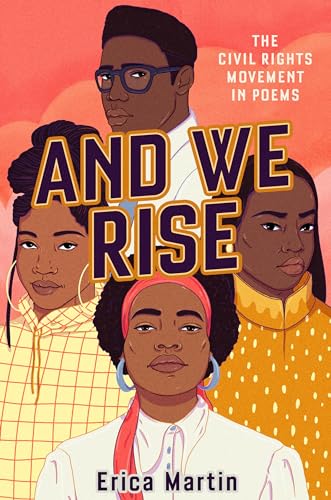
A powerful and eye-opening collection of poetry that chronologically captures the Civil Rights Movement in 1950s-1960s America.
“Poems that leap off the pages, bringing history, pain, dignity, and fierce determination to life.”—Booklist
“Serves not only as a history lesson but also a conversation starter about the civil rights movement.”—School Library Connection, starred review
In spare and evocative verse, Erica Martin's debut poetry collection walks readers through the Civil Rights Movement—the well-documented events that shaped the nation’s treatment of Black people, beginning with the “Separate but Equal” ruling—and introduces lesser-known figures and moments that were just as crucial to the Movement and our nation’s centuries-long fight for justice and equality.
And We Rise is a poignant, powerful, all-too-timely collection that is both a vital history lesson and much-needed conversation starter in our modern world, complete with historical photographs, author's note, chronology of events, research, and sources.
"synopsis" may belong to another edition of this title.
About the Author
Erica Martin is a freelance editor, specializing in copyediting and developmental editing, and a poet. She has always been fascinated by English, writing, and US History. And We Rise is her first book. She lives with her family in Tennessee.
Reviews
Gr 7 Up-Short poems use negative space and concrete poetry elements to tell the history of the civil rights movement in the United States. The prelude focuses on the "Separate, but Equal" ruling, and then the narrative is broken into three sections: "One Step Forward, Two Steps Back," "Power to the People," and "The Beginning of the End." Tragedies, events, and people who were ignored by history are discussed, along with those who made the history books. The use of negative space and the occasional implementation of different fonts or concrete poetry impacts the narrative, like the visuals in a picture book. For instance, the poem "1959 March 5th" recalls the fire at the Negro Boys Industrial School in Wrightsville, AR. The word "bodies" is printed 21 times (in three columns and seven rows), referencing the number of victims "piled…one top of another." The refrain "and on and on the Blacks Marched," followed by the word "marched" repeated on the page, occurs several times within the book. Black-and-white photographs, surveys, signs, and even arrest records are included. Extensive back matter includes a time line for the poems, sources cited, a bibliography, and Martin Luther King Jr.'s "Letter from Birmingham Jail." VERDICT The impact of the poems in this powerful, necessary book is strengthened by the layout of the text and drives home the struggle for civil rights. A strong first purchase.-Tamara Saarinen α(c) Copyright 2011. Library Journals LLC, a wholly owned subsidiary of Media Source, Inc. No redistribution permitted.
Excerpt. © Reprinted by permission. All rights reserved.
It’s 1877 when
Jim Crow laws say it’s
acceptable
legal
lawful
to segregate Blacks
&
whites
based on the color of
their skin.
In
schools
hospitals
churches
cemeteries
prisons
public transit
restaurants—-
if you were not
white
you were lesser
less than
human.
For years
&
years
&
years
&
years
nothing changed,
until 1954
when the Supreme Court reversed its decision
& ruled segregation unconstitutional.
Yet still,
nothing changed.
Because a ruling is only as effective
as its real--world execution.
the Supreme Court rules
in 1896
Blacks are
“Separate but Equal”
yet
outside
in the middle of July
in Birmingham, Alabama,
sweat drips
d
o
w
n
your forehead
your neck
your back
drenching
your shirt
your shorts
your socks
s e p a r a t e
but equal
you find a water fountain
your water fountain
and press the small rusty button
water arches
up
and out
waiting
for your
puck ered
lips
s e p a r a t e
but equal
only
it’s hot
brown
tastes like dirt
you glance around
checking for them
then
sneak a sip
from their fountain
s e p a r a t e
but equal
it’s cold
ice--cold
and refreshing
you sigh
s e p a r a t e
but equal
you are
not.
the Civil Rights Movement
was more than just
Dr. King
marching,
Rosa Parks
sitting,
Malcolm X
fighting.
it was
your mom
your grandma
your best friend’s great--aunt.
it was
everyday people
like you and me.
1954
May 17
Brown v. Board of Education
+
inherently unequal, an unconstitutional violation of the fourteenth amendment
=
white schools
+
Black schools
=
a great day for America and its court.
= segregation in public schools now illegal
in theory.
SIGNS, EVERYWHERE YOU GO . . . whites only whites only whites only whites only whites only whites only whites only whites only whites only whites only whites only whites only whites only whites only whites only whites only whites only whites only whites only whites only whites only whites only whites only whites only whites only whites only whites only whites only whites only whites only whites only whites only whites only whites only whites only whites only whites only whites only whites only whites only whites only whites only whites only whites only whites only whites only whites only whites only whites only whites only whites only whites only whites only whites only whites only whites only whites only whites only whites only whites only whites only whites only whites only whites only whites only whites only whites only whites only whites only whites only whites only whites only whites only whites only whites only whites only whites only whites only whites only whites only whites only whites only whites only whites only whites only whites only whites only whites only whites only whites only whites only whites only whites only whites only whites only whites only whites only whites only whites only whites only whites only whites only whites only whites only whites only whites only whites only whites only whites only whites only whites only whites only whites only whites only whites only whites only whites only whites only whites only whites only whites only whites only whites only whites only whites only whites only whites only whites only whites only whites only whites only whites only whites only whites only whites only whites only whites only whites only whites only whites only WHITES ONLY
for colored
their (other) signs read
funny thing is
white is still a color
"About this title" may belong to another edition of this title.
Search results for And We Rise: The Civil Rights Movement in Poems

Stock Image
And We Rise: The Civil Rights Movement in Poems
Seller: World of Books (was SecondSale), Montgomery, IL, U.S.A.
Seller rating 5 out of 5 stars

Hardback. Condition: Good. A powerful and eye-opening collection of poetry that chronologically captures the Civil Rights Movement in 1950s-1960s America. "Poems that leap off the pages, bringing history, pain, dignity, and fierce determination to life."-Booklist "Serves not only as a history lesson but also a conversation starter about the civil rights movement."-School Library Connection, starred review In spare and evocative verse, Erica Martin's debut poetry collection walks readers through the Civil Rights Movement-the well-documented events that shaped the nation's treatment of Black people, beginning with the "Separate but Equal" ruling-and introduces lesser-known figures and moments that were just as crucial to the Movement and our nation's centuries-long fight for justice and equality. And We Rise is a poignant, powerful, all-too-timely collection that is both a vital history lesson and much-needed conversation starter in our modern world, complete with historical photographs, author's note, chronology of events, research, and sources. Seller Inventory # 00068707523
Stock Image
And We Rise: The Civil Rights Movement in Poems
Seller: World of Books (was SecondSale), Montgomery, IL, U.S.A.
Seller rating 5 out of 5 stars
Hardback. Condition: Fair. A powerful and eye-opening collection of poetry that chronologically captures the Civil Rights Movement in 1950s-1960s America. "Poems that leap off the pages, bringing history, pain, dignity, and fierce determination to life."-Booklist "Serves not only as a history lesson but also a conversation starter about the civil rights movement."-School Library Connection, starred review In spare and evocative verse, Erica Martin's debut poetry collection walks readers through the Civil Rights Movement-the well-documented events that shaped the nation's treatment of Black people, beginning with the "Separate but Equal" ruling-and introduces lesser-known figures and moments that were just as crucial to the Movement and our nation's centuries-long fight for justice and equality. And We Rise is a poignant, powerful, all-too-timely collection that is both a vital history lesson and much-needed conversation starter in our modern world, complete with historical photographs, author's note, chronology of events, research, and sources. Seller Inventory # 00104178911
Stock Image
And We Rise: The Civil Rights Movement in Poems
Published by
Viking Books for Young Readers, 2022
ISBN 10: 0593352521
ISBN 13: 9780593352526
Used
Hardcover
Seller: Orion Tech, Kingwood, TX, U.S.A.
Seller rating 5 out of 5 stars
hardcover. Condition: Good. Seller Inventory # 0593352521-3-37289018
Seller Image
And We Rise: The Civil Rights Movement in Poems
Published by
Viking Books for Young Readers, 2022
ISBN 10: 0593352521
ISBN 13: 9780593352526
Used
Hardcover
Seller: 3Brothers Bookstore, Egg harbor township, NJ, U.S.A.
Seller rating 5 out of 5 stars
Condition: very_good. Cover may have light wear, pages in very good condition and binding is sturdy; may have other light shelf wear or creases. May have notes or highlighting. Seller Inventory # EVV.0593352521.VG
Stock Image
And We Rise : The Civil Rights Movement in Poems
Published by
Penguin Young Readers Group, 2022
ISBN 10: 0593352521
ISBN 13: 9780593352526
Used
Hardcover
Seller: Better World Books, Mishawaka, IN, U.S.A.
Seller rating 5 out of 5 stars
Condition: Very Good. Former library copy. Pages intact with possible writing/highlighting. Binding strong with minor wear. Dust jackets/supplements may not be included. Includes library markings. Stock photo provided. Product includes identifying sticker. Better World Books: Buy Books. Do Good. Seller Inventory # 40610908-75
Stock Image
And We Rise : The Civil Rights Movement in Poems
Published by
Penguin Young Readers Group, 2022
ISBN 10: 0593352521
ISBN 13: 9780593352526
Used
Hardcover
Seller: Better World Books, Mishawaka, IN, U.S.A.
Seller rating 5 out of 5 stars
Condition: Good. Former library copy. Pages intact with minimal writing/highlighting. The binding may be loose and creased. Dust jackets/supplements are not included. Includes library markings. Stock photo provided. Product includes identifying sticker. Better World Books: Buy Books. Do Good. Seller Inventory # 42319527-6
Stock Image
And We Rise: The Civil Rights Movement in Poems
Seller: World of Books Inc, Montgomery, IL, U.S.A.
Seller rating 4 out of 5 stars

Hardback. Condition: Good. A powerful and eye-opening collection of poetry that chronologically captures the Civil Rights Movement in 1950s-1960s America. "Poems that leap off the pages, bringing history, pain, dignity, and fierce determination to life."-Booklist "Serves not only as a history lesson but also a conversation starter about the civil rights movement."-School Library Connection, starred review In spare and evocative verse, Erica Martin's debut poetry collection walks readers through the Civil Rights Movement-the well-documented events that shaped the nation's treatment of Black people, beginning with the "Separate but Equal" ruling-and introduces lesser-known figures and moments that were just as crucial to the Movement and our nation's centuries-long fight for justice and equality. And We Rise is a poignant, powerful, all-too-timely collection that is both a vital history lesson and much-needed conversation starter in our modern world, complete with historical photographs, author's note, chronology of events, research, and sources. Seller Inventory # CIN0593352521G
Stock Image
And We Rise: The Civil Rights Movement in Poems
Seller: World of Books Inc, Montgomery, IL, U.S.A.
Seller rating 4 out of 5 stars
Hardback. Condition: Fair. A powerful and eye-opening collection of poetry that chronologically captures the Civil Rights Movement in 1950s-1960s America. "Poems that leap off the pages, bringing history, pain, dignity, and fierce determination to life."-Booklist "Serves not only as a history lesson but also a conversation starter about the civil rights movement."-School Library Connection, starred review In spare and evocative verse, Erica Martin's debut poetry collection walks readers through the Civil Rights Movement-the well-documented events that shaped the nation's treatment of Black people, beginning with the "Separate but Equal" ruling-and introduces lesser-known figures and moments that were just as crucial to the Movement and our nation's centuries-long fight for justice and equality. And We Rise is a poignant, powerful, all-too-timely collection that is both a vital history lesson and much-needed conversation starter in our modern world, complete with historical photographs, author's note, chronology of events, research, and sources. Seller Inventory # CIN0593352521A
Stock Image
And We Rise: The Civil Rights Movement in Poems
Published by
Viking Books for Young Readers, 2022
ISBN 10: 0593352521
ISBN 13: 9780593352526
Used
Hardcover
Seller: ThriftBooks-Phoenix, Phoenix, AZ, U.S.A.
Seller rating 5 out of 5 stars
Hardcover. Condition: Very Good. No Jacket. Former library book; May have limited writing in cover pages. Pages are unmarked. ~ ThriftBooks: Read More, Spend Less. Seller Inventory # G0593352521I4N10
Stock Image
And We Rise: The Civil Rights Movement in Poems
Published by
Viking Books for Young Readers, 2022
ISBN 10: 0593352521
ISBN 13: 9780593352526
Used
Hardcover
Seller: ThriftBooks-Reno, Reno, NV, U.S.A.
Seller rating 5 out of 5 stars
Hardcover. Condition: Very Good. No Jacket. Former library book; May have limited writing in cover pages. Pages are unmarked. ~ ThriftBooks: Read More, Spend Less. Seller Inventory # G0593352521I4N10