
Items related to Peterson Field Guide to Feeder Birds of Eastern North...
Synopsis
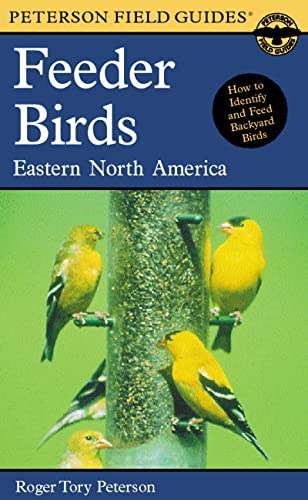
Perfect for backyard birdwatchers: This easy-to-use, at-a-glance guide simplifies identification by including only the birds that frequent bird feeders.
Featuring Roger Tory Peterson's classic art in a larger format, this guide has the most commonly seen birds first, followed by those that are harder to identify or that rarely visit feeders. Range maps, descriptions of birds and foods that attract them, and illustrations are on facing pages, so identification is fast and easy. The introduction covers important bird-feeding topics, including types of feeders and where to place them, birdbaths, kinds of food and when to feed, plantings that attract birds, and solutions to problems with squirrels and cats. A handy quick-reference list tells what kind of food each species prefers, and a feeder checklist provides a record of birds as they are seen.
For more than 85 years, Peterson Field Guides have set the standard by which other field guides are measured. Comprehensive and authoritative, they are essential additions to any naturalist's bookshelf or backpack.
"synopsis" may belong to another edition of this title.
About the Author
ROGER TORY PETERSON, one of the world’s greatest naturalists, received every major award for ornithology, natural science, and conservation as well as numerous honorary degrees, medals, and citations, including the Presidential Medal of Freedom. The Peterson Identification System has been called the greatest invention since binoculars.
Excerpt. © Reprinted by permission. All rights reserved.
When to Feed Birds
Perhaps the most frequently asked questions about feeding
birds concern when to feed them. When should I start feeding? When
should I stop so I don"t affect migration? Can I feed in the summer?
Several issues must be considered.
People feed birds in order to enjoy them, so why not
feed them all year long? As long as you"re willing to put in the time
to maintain the feeding area — supply food and water and keep the
area clean — you will be rewarded by birds using the site. You may
not get the variety in the summer that you"ll see during migration or
in the winter when there is more of a dependency on the feeder, but
you may be rewarded with the antics of young birds being introduced
to the site.
Birds can become dependent on feeders for
supplemental food. It has been shown, however, that they do not rely
on feeders for all of their food and perhaps not even a quarter of
what they eat. That said, though, the feeder can be an important
resource during times of duress. When severe snowstorms blanket wild
food supplies, the birds will turn to the feeder they have come to
know as a food resource. It is during these times of stress that the
feeder plays its most vital role. Do not let them down at this point!
If it is a storm of long duration, the feeding station may mean the
difference of life for some of the more physiologically unprepared
birds. The feeder helps many a bird through the hard times, so it is
important to be faithful to your feeding once you start.
As for the question of affecting migration by holding
the birds at the feeder so that they will not go north to breed or
south for the winter, the answer is that birds are not controlled by
food. Once the hormones for breeding begin to flow, they head north,
and once the drive for migrating south takes hold, off they go, no
matter how much food is available. If a species that normally does
not stay for the summer or winter remains at the feeder, it is more
than likely a young bird that does not have the proper hormonal
impulse to migrate or an older bird that simply can no longer make
extensive journeys. You are not affecting the breeding or migrant
population of the birds of the United States by feeding.
"About this title" may belong to another edition of this title.
Search results for Peterson Field Guide to Feeder Birds of Eastern North...

Stock Image
Peterson Field Guide to Feeder Birds of Eastern North America
Published by
Houghton Mifflin Harcourt, 2000
ISBN 10: 061805944X
ISBN 13: 9780618059447
Used
paperback
Seller: Orion Tech, Kingwood, TX, U.S.A.
Seller rating 5 out of 5 stars

paperback. Condition: Fair. Peterson, Roger Tory (illustrator). Seller Inventory # 061805944X-4-38047055
Stock Image
Peterson Field Guide To Feeder Birds, A
Seller: World of Books (was SecondSale), Montgomery, IL, U.S.A.
Seller rating 5 out of 5 stars
Paperback. Condition: Very Good. Peterson, Roger Tory (illustrator). Perfect for backyard birdwatchers: This easy-to-use, at-a-glance guide simplifies identification by including only the birds that frequent bird feeders. Featuring Roger Tory Peterson's classic art in a larger format, this guide has the most commonly seen birds first, followed by those that are harder to identify or that rarely visit feeders. Range maps, descriptions of birds and foods that attract them, and illustrations are on facing pages, so identification is fast and easy. The introduction covers important bird-feeding topics, including types of feeders and where to place them, birdbaths, kinds of food and when to feed, plantings that attract birds, and solutions to problems with squirrels and cats. A handy quick-reference list tells what kind of food each species prefers, and a feeder checklist provides a record of birds as they are seen. For more than 85 years, Peterson Field Guides have set the standard by which other field guides are measured. Comprehensive and authoritative, they are essential additions to any naturalist's bookshelf or backpack. Seller Inventory # 00103791235
Stock Image
Peterson Field Guide To Feeder Birds, A
Seller: World of Books (was SecondSale), Montgomery, IL, U.S.A.
Seller rating 5 out of 5 stars
Paperback. Condition: Good. Peterson, Roger Tory (illustrator). Perfect for backyard birdwatchers: This easy-to-use, at-a-glance guide simplifies identification by including only the birds that frequent bird feeders. Featuring Roger Tory Peterson's classic art in a larger format, this guide has the most commonly seen birds first, followed by those that are harder to identify or that rarely visit feeders. Range maps, descriptions of birds and foods that attract them, and illustrations are on facing pages, so identification is fast and easy. The introduction covers important bird-feeding topics, including types of feeders and where to place them, birdbaths, kinds of food and when to feed, plantings that attract birds, and solutions to problems with squirrels and cats. A handy quick-reference list tells what kind of food each species prefers, and a feeder checklist provides a record of birds as they are seen. For more than 85 years, Peterson Field Guides have set the standard by which other field guides are measured. Comprehensive and authoritative, they are essential additions to any naturalist's bookshelf or backpack. Seller Inventory # 00102641829
Stock Image
Peterson Field Guide To Feeder Birds, A
Seller: World of Books (was SecondSale), Montgomery, IL, U.S.A.
Seller rating 5 out of 5 stars
Paperback. Condition: Fair. Peterson, Roger Tory (illustrator). Perfect for backyard birdwatchers: This easy-to-use, at-a-glance guide simplifies identification by including only the birds that frequent bird feeders. Featuring Roger Tory Peterson's classic art in a larger format, this guide has the most commonly seen birds first, followed by those that are harder to identify or that rarely visit feeders. Range maps, descriptions of birds and foods that attract them, and illustrations are on facing pages, so identification is fast and easy. The introduction covers important bird-feeding topics, including types of feeders and where to place them, birdbaths, kinds of food and when to feed, plantings that attract birds, and solutions to problems with squirrels and cats. A handy quick-reference list tells what kind of food each species prefers, and a feeder checklist provides a record of birds as they are seen. For more than 85 years, Peterson Field Guides have set the standard by which other field guides are measured. Comprehensive and authoritative, they are essential additions to any naturalist's bookshelf or backpack. Seller Inventory # 00095399960
Seller Image
Peterson Field Guide to Feeder Birds of Eastern North America
Published by
Houghton Mifflin Harcourt, 2000
ISBN 10: 061805944X
ISBN 13: 9780618059447
Used
Softcover
Seller: 3Brothers Bookstore, Egg harbor township, NJ, U.S.A.
Seller rating 5 out of 5 stars
Condition: good. Peterson, Roger Tory (illustrator). Books may contain some notes and highlighting. Supplements such as Access Codes, Cd's Dust Jackets, etc. are not guaranteed with used book purchases. Seller Inventory # EVV.061805944X.G
Seller Image
Peterson Field Guide to Feeder Birds of Eastern North America
Published by
Houghton Mifflin Harcourt, 2000
ISBN 10: 061805944X
ISBN 13: 9780618059447
Used
Softcover
Seller: Zoom Books East, Glendale Heights, IL, U.S.A.
Seller rating 5 out of 5 stars
Condition: good. Peterson, Roger Tory (illustrator). Book is in good condition and may include underlining highlighting and minimal wear. The book can also include "From the library of" labels. May not contain miscellaneous items toys, dvds, etc. . We offer 100% money back guarantee and 24 7 customer service. Seller Inventory # ZEV.061805944X.G
Stock Image
Peterson Field Guide to Feeder Birds of Eastern North America
Published by
Houghton Mifflin Harcourt (edition Illustrated), 2000
ISBN 10: 061805944X
ISBN 13: 9780618059447
Used
Paperback
Seller: BooksRun, Philadelphia, PA, U.S.A.
Seller rating 5 out of 5 stars
Paperback. Condition: Very Good. Peterson, Roger Tory (illustrator). Illustrated. It's a well-cared-for item that has seen limited use. The item may show minor signs of wear. All the text is legible, with all pages included. It may have slight markings and/or highlighting. Seller Inventory # 061805944X-11-1
Seller Image
Peterson Field Guide to Feeder Birds of Eastern North America
Published by
Houghton Mifflin Harcourt, 2000
ISBN 10: 061805944X
ISBN 13: 9780618059447
Used
Softcover
Seller: Greenworld Books, Arlington, TX, U.S.A.
Seller rating 5 out of 5 stars
Condition: very_good. Peterson, Roger Tory (illustrator). Fast Free Shipping â" Very Good condition book with a firm cover and clean pages. Shows normal use and some light wear or limited notes markings. A solid, nice copy to enjoy. Seller Inventory # GWV.061805944X.VG
Seller Image
Peterson Field Guide to Feeder Birds of Eastern North America
Published by
Houghton Mifflin Harcourt, 2000
ISBN 10: 061805944X
ISBN 13: 9780618059447
Used
Softcover
Seller: Greenworld Books, Arlington, TX, U.S.A.
Seller rating 5 out of 5 stars
Condition: like_new. Peterson, Roger Tory (illustrator). Fast Free Shipping â" Excellent condition book with clean cover and pages. Barely handled, with minimal wear. An outstanding copy, close to enjoy! Seller Inventory # GWV.061805944X.LN
Seller Image
Peterson Field Guide to Feeder Birds of Eastern North America
Published by
Houghton Mifflin Harcourt, 2000
ISBN 10: 061805944X
ISBN 13: 9780618059447
Used
Softcover
Seller: Greenworld Books, Arlington, TX, U.S.A.
Seller rating 5 out of 5 stars
Condition: acceptable. Peterson, Roger Tory (illustrator). Fast Free Shipping â" A well-loved copy with text fully readable and cover pages intact. May display wear such as writing, highlighting, bends, folds or library marks. Still a complete and usable book. Seller Inventory # GWV.061805944X.A