
Items related to The Fetch: A Novel
Synopsis
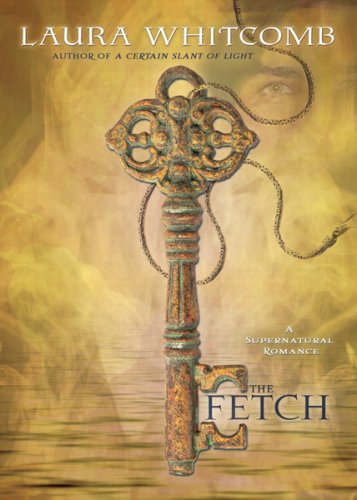
Calder is a Fetch, a death escort, the first of his kind to step from Heaven back to Earth.The first to fall in love with a mortal girl. But when he climbs backwards out of that Death Scene, into the chaos of the Russian Revolution, he tears a wound in the ghost realm, where the spirits begin a revolution of their own.
"synopsis" may belong to another edition of this title.
About the Author
Laura Whitcomb grew up in Pasadena, California where she lived in a mildly haunted house for 12 years. She has taught English in California and Hawaii. The winner of three Kay Snow Writing Awards, she was once runner up in the Bulwer-Lytton Fiction contest for the best first sentence of the worst science fiction novel never written. She lives in Portland, Oregon, with her dog Maximus.
Reviews
Grade 6–10—Calder is a Fetch, a ghost who escorts souls from their "earthly shells" through the Death Door toward a waiting boat to Heaven. While each soul sees him differently, Calder knows himself to be a young man of 19 who died more than 300 years ago. Obsessed with a beautiful woman who tends a dying child, he breaks his sacred vows and enters the earthly world at a pivotal time and place: Russia, on the eve of revolution. Occupying the body of Rasputin, he enters into an intimate relationship with the imperial family, before and after their executions. As the action-filled plot, bound by the complex and sometimes confusing rules surrounding "Fetching," makes its twists and turns, Calder finds himself on a round-the-world journey with the embodied ghosts of Anastasia and Alexi, the hemophiliac tsarevich, in search of a key that will enable them to reunite with their family in Heaven. Meanwhile, the spirit of Rasputin and a host of malicious lost souls follow in hot pursuit. Only Ana, as the book calls her, sees Calder's true self. This fantasy, based on Christian themes of Heaven and Resurrection, is at its heart a tender love story. The author's romantic vision of the hereafter could be fodder for thoughtful discussion, as well as a satisfying escape for those who thrill to disembodied lovers.—Margaret A. Chang, Massachusetts College of Liberal Arts, North Adams
Copyright © Reed Business Information, a division of Reed Elsevier Inc. All rights reserved.
Whitcomb (A Certain Slant of Light) revisits the hereafter with this ambitious fantasy that dips into Russian history to explain why Princess Anastasia and Prince Alex's remains were not found alongside the rest of the slain Romanov family: they were spirited away by Calder, a Fetch, who attends the dying and escorts souls to heaven. Calder is a hugely empathetic figure, abandoned as a baby and killed at age 19, but he errs, first by falling in love with a Romanov, and then in taking the dying mystic Rasputin's body as his own in order to pursue her, causing a major rupture in the spirit world. To heal the wound, he, Anastasia and Alexei (here called Alexis) travel the globe in search of a lost key. The story, riveting until this point, loses its focus as they begin their trek. Whitcomb's inventive vision of the afterlife almost makes up for the plodding pace of the narrative—it's an ultimately comforting place where souls see their deepest regrets woven into tapestries and their contributions displayed in the form of a garden only they can interpret. Ages 12–up. (Feb.)
Copyright © Reed Business Information, a division of Reed Elsevier Inc. All rights reserved.
*Starred Review* Whitcomb’s unique new book is a fascinating, intricately structured vision of the afterlife. Part historical fiction, part romance, part spiritual journey, the story draws extensively on The Pilgrim’s Progress, examining the nature of sin and forgiveness. A clever subplot involving Grigori Rasputin heightens interest. Since his death at 19, Calder has been a Fetch, an escort of souls to heaven. Intensely lonely, Calder falls in love at a death scene with a beautiful woman he calls Glory and breaks all his vows not to interfere with a soul’s choice. His actions throw worlds out of balance. Exiled to Earth, Calder struggles, both literally and metaphorically, to find the key to set things right. Accompanied by the stranded souls of Alexi and Anastasia Romanov, Calder embarks on a lengthy journey in which he gradually acquires the humility and self-knowledge that will help restore universal equilibrium. Written in dense prose, this is not a book to hurry through. The pace slows in the middle, and the author’s hand in the plot occasionally seems too evident. The rich descriptions, particularly of the exquisitely imagined afterlife, are exceptionally drawn, as are the sympathetic characters and the unusual premise. A challenging book with an intriguing conclusion, this will lead thoughtful readers to spirited discussions. Grades 9-12. --Lynn Rutan
Excerpt. © Reprinted by permission. All rights reserved.
Part I The Aisle of Unearthing
One Calder was a Fetch, a death escort, and had been since his own death at the age of nineteen. He had been a Fetch for three hundred and thirty years, and so had seen many women in the Death Scenes to which he had been sent. He’d watched women drowning, one with seaweed twisting her gown into a mermaid tail, another in a pond surrounded by lilies that glowed like funeral offerings about her floating hair. He’d seen women lost and broken in ivy- choked woods and in open fields where they lay fallen in the snow, half covered like gravestones. Some died safe in their downy beds, some forgotten in alleys.
He had also seen many women who tended to the dying—this one washing her sister’s face with lilac water, that one praying and weeping with her father. Some had been nursing soldiers, others dreaming beside husbands they did not realize had ceased breathing. For the last three hundred and thirty years Calder had seen thousands upon thousands of mortal women, so he did not understand why, on this day, the sight of this particular woman afflicted him.
On earth it was the winter of 1904. The Death Door had opened onto a nursery, and the dying body was that of a baby boy whose swollen belly was bleeding from the inside. The sight of a dying infant did not shake Calder, for he’d escorted hundreds of them through the Aisle of Unearthing. He had seen babes die alone in their cradles at night, or surrounded by doctors and priests, in dirty huts, in palaces, from cold or from fever, and he had often seen their mothers trying to breathe life back into their small mouths. Calder, like all Fetches, felt sympathy for this pain, but when a human soul—even an infant’s—reaches for its Fetch and slips out of its earthly shell, the cries and shudderings of those left behind are closed on the other side of the Death Door. No mortal terror, sorrow, or anger could ever rattle that portal open again. The Fetch holds the only Key.
So though it was not the first time Calder had seen a beautiful woman, when he first beheld this woman’s halo of reddish-gold hair, he was stung with recognition. And although he had seen many women devoted to their children, when he saw the way this woman held her baby in the nest of her white dress and whispered to him words that were not words but tiny prayers and magic charms, he was mesmerized. She sat, gently rocking in the lamplight, like a ghost singing in a forbidden language. She pulled at Calder’s heart, almost unfurling the stiff pages of his memory--so familiar, but he knew he had never set eyes on her before. Calder tried to remember if this woman looked like anyone he had seen during his nineteen years on earth, but just as the sorrow of the earthbound is shut on the other side of the Death Door, the memories of earth are drawn away from the dying soul. When Calder died and became a Fetch, his old life was eclipsed by his new one—he could remember being human in a distant way, like viewing a painting on a wall through an open door one room removed. Whether the picture of a Fetch’s past life was heavenly or hellish, it appeared serene and remained motionless. Calder’s own painting of his human life was a rich and shadowed thing, deep with color and detail but as still as any canvas mounted on a wall. Before a theatrical arch, under the warm glow of a paper lantern, with his audience of gentlefolk standing or reclining about him, Calder played an ornate drum and sang so sweetly that everyone stopped to listen. At his feet lay a fur cloak, perhaps a gift from his noble patron. What songs he sang and the name of his benefactor were distant to him now in both time and interest. But sometimes as he traversed the Aisle and heard the pulse of music in the Theatre or Feast of the soul in his charge, he would almost recall some snippet of tune or line of poetry that had been known to him on earth. A note that leapt up and hovered, a simple lyric of love unrequited. The memory would flare, then fade before he could repeat it. When this happened, Calder wondered if under this perfect picture of his human life there might not be another painting hiding in pentimento, its darker and forgotten shapes waiting to be drawn to the surface.
Calder tried now to recall women he had known on earth, but he could not remember any sisters or his mother. He imagined what the women might have looked like, those that listened to him sing. Graceful ladies in satin and pearls, nodding with admiration. But none of the feminine visions he could conjure brought him joy like this woman in white. Calder stood still so as not to disturb her, though he couldn’t be seen or heard by most mortals. She must have been the nurseery maid or governess, for she was wearing a simple cotton dress with the sleeves rolled to the elbows, in contrast to the room, which was riiiiichly dressed with brocade curtains, cushioned chairs, and a brass crib filled with lace bedding. Perhaps the baby was only her charge, but it was clear that she loved him as though he was the only child on earth. Calder studied her delicate fingers as she cupped the baby’s head and lifted him to her lips. He watched her heartbeat tap an almost invisible rhythm at her throat. He felt despair pulsing through her, but only the slightest trembling was visible in her shoulders. She was calling all her strength to the task; Calder could feel it as distinctly as he felt his own tremors; she was trying to still her nerves and calm her breathing so that the dying child would sense no fear. Calder watched with a confounding sense of loss. And this was when he did something he had never done before in all his years as a Fetch.
He hoped the child would live. Calder, like all Fetches, was supposed to be indifferent to the outcomes of Death Scenes, and usually that came naturally. Some souls chose to cross over; others chose to stay. And it was not always the sickest who chose death or the one with the slightest wound who chose life. A Fetch was to respect this choice without question and without judgment. Calder had never wished to stop a Death, but when a Death Scene held a single mourner, one human left alone with no relative or friend as comfort, Calder felt an instinct to stay with him, though, of course, he could not.
As Calder gazed down on these two mortals, he could hear men’s voices coming from the corridor—hushed, apprehensive whispers—perhaps doctors, perhaps holy men. This family could afford the best physicians, but some hurts cannot be healed. A gentleman, with dark whiskers and fine clothes, came to stand in the nursery doorway. A woman peered over his shoulder. These were the baby’s parents, perhaps. Calder paid little attention to them, for he was reluctant to turn away from the governess since he would have so little time with her. He knew a good Fetch would not stare this way at a human, but he could not help himself.
Moments later the father and mother had gone, but a child appeared in their place—a girl of no more than four, peeking around the door frame. Calder had no intention of looking at the girl, but she had a strong presence, like a bit of mirror-reflected light flashing in the corner of his vision. Her hair was as reddish-blond as that of the governess, but her face was not angelic—she was like a storybook elf, with pointed chin, a short, round nose, and curious eyes beneath brows arched in a kind of challenge. Calder suspected she was lonely since her governess needed to spend so much time with her baby brother. The girl watched the governess for a moment, then turned to Calder and set her tiny fists on her hips. He regarded her, unruffled. Though Fetches were invisible to most adult humans, very young children could often see them—some animals could, as well. But since the children able to see Fetches were usually too young to describe their visions with any clarity, and since they would forget the incident within a few months, the Order of the Fetch remained a secret. As the elfish child glowered at him, Calder felt a familiar movement in the spectral air, the spirit wind that accompanied a soul’s indecision. The wind circled the nursery, rippling Calder’s hair but leaving everything tangible in the room undisturbed. This was the turning point in a Death Scene, the secret discussion between the body and the spirit. Next a stillness fell over everything, the sign that the decision had been made: The baby would stay. He had chosen life. Calder felt almost sick from the pleasure. He wanted to stay until the governess realized the baby would live, but he knew he could not. She wouldn’t feel the relief of it for hours, but the little girl in the doorway knew something had changed. She dropped her hands to her sides as if any threat Calder had brought with him was now past, then slipped out of sight, the flip of her petticoats flashing like a white rabbit through the dark hole of the doorway. Calder felt the Death Door appear again in the air behind him. Though he longed to, he did not linger. He took his Key from a chain about his neck and unlocked the Door, opening it without another glance back. He couldn’t stay with the governess, but neither could he leave her behind. He set the memory of her in a secret drawer of his mind, like a tiny locket he could open at will, though he did not know her name.
"About this title" may belong to another edition of this title.
Search results for The Fetch: A Novel

Stock Image
The Fetch: A Novel
Published by
Houghton Mifflin Harcourt, 2009
ISBN 10: 0618891315
ISBN 13: 9780618891313
Used
Hardcover
Seller: World of Books (was SecondSale), Montgomery, IL, U.S.A.
Seller rating 5 out of 5 stars

Condition: Good. Item in very good condition! Textbooks may not include supplemental items i.e. CDs, access codes etc. Seller Inventory # 00072154135
Stock Image
The Fetch: A Novel
Published by
Houghton Mifflin Harcourt, 2009
ISBN 10: 0618891315
ISBN 13: 9780618891313
Used
Hardcover
Seller: World of Books (was SecondSale), Montgomery, IL, U.S.A.
Seller rating 5 out of 5 stars
Condition: Very Good. Item in very good condition! Textbooks may not include supplemental items i.e. CDs, access codes etc. Seller Inventory # 00083970200
Seller Image
The Fetch: A Novel
Published by
Houghton Mifflin Harcourt, 2009
ISBN 10: 0618891315
ISBN 13: 9780618891313
Used
Hardcover
Seller: Reliant Bookstore, El Dorado, KS, U.S.A.
Seller rating 5 out of 5 stars
Condition: good. This book is in good condition with very minimal damage. Integrity of the book is in good condition with no missing pages. Pages can have minimal notes or highlighting. This is an ex-library book with stickers and markings. Cover image on the book may vary. Ships out quickly in a secure plastic mailer! Seller Inventory # 56JPSA000CZS_ns
Stock Image
The Fetch: A Novel
Published by
Houghton Mifflin Harcourt (edition First Edition), 2009
ISBN 10: 0618891315
ISBN 13: 9780618891313
Used
Hardcover
First Edition
Seller: BooksRun, Philadelphia, PA, U.S.A.
Seller rating 5 out of 5 stars
Hardcover. Condition: Good. First Edition. With dust jacket. It's a preowned item in good condition and includes all the pages. It may have some general signs of wear and tear, such as markings, highlighting, slight damage to the cover, minimal wear to the binding, etc., but they will not affect the overall reading experience. Ex-Library. Seller Inventory # 0618891315-11-18-12_29
Stock Image
The Fetch: A Novel
Published by
Houghton Mifflin Harcourt, 2009
ISBN 10: 0618891315
ISBN 13: 9780618891313
Used
Hardcover
Seller: Once Upon A Time Books, Siloam Springs, AR, U.S.A.
Seller rating 4 out of 5 stars

Hardcover. Condition: Good. This is a used book in good condition and may show some signs of use or wear . This is a used book in good condition and may show some signs of use or wear . Seller Inventory # mon0001470466
Stock Image
The Fetch
Seller: World of Books Inc, Montgomery, IL, U.S.A.
Seller rating 4 out of 5 stars
Hardback. Condition: Very Good. The book, aimed at practitioners, professionals and academics, involves an impressive and wide-ranging array of contributors from both the UK and the US. The book includes learning objectives and exercises, encouraging the reader to actively engage with the material. There is also an insightful preface from Daphne Wallace, a retired psychiatrist now experiencing early dementia. It's an admirably comprehensive and user-friendly resource for anyone with a professional or personal interest in excellent dementia care. Community Care Written by leading theorists from a range of countries, this comprehensive text is a unique achievement. It is divided into four parts: principles and perspectives; knowledge and skills for supporting people with dementia; journeys through dementia care; and embedding experience in dementia care. Despite there being 46 contributors, there is a consistent voice addressing current thinking in dementia care, with good cross referencing. Expertise of researchers, practitioners and academic tutors is brought together in a stimulating, informative and sometimes provocative read. Nursing Standard Dementia care has come of age with this book. It is an impeccably crafted collection of papers from eminent experts on both sides of the Atlantic. The book demonstrates confidence, based on both research evidence and well-grounded good practice, and a solid set of shared values both explicit and implicit. The contributors are refreshingly candid about debates and controversies. This book is authoritative and readable which makes it useful to a wide audience. It will provide knowledge, encouragement and motivation to a hard pressed workforce. Mary Marshall OBE, Emeritus Professor, University of Stirling, Scotland Thanks to the variety of questions treated, illustrated by both discussions and exercises, this book is a clear and comprehensive pedagogic tool for any professional involved in the care of people (with dementia). Fondation Nationale de Gerontologie, Paris, France Given its pedigree, much would be expected of a comprehensive textbook on dementia care that combines the talents of these two editors and utilises their extensive academic/practice/policy/community networks. I am pleased to say that the book more than lives up to its billing. essential and required reading for anyone interested in dementia care, ranging from first-year health and social care students (of any discipline) right through to experienced academics. John Keady, Greater Manchester West Mental Health NHS Foundation Trust and University of Manchester, UK This book is to be recommended for anybody who is interested in a multi-, inter- or even cross-disciplinarian approach to care for dementia. It might also be useful for a non-professional audience also because it is extremely didactic and accessible. International Journal of Integrated Care This landmark textbook draws on the extensive knowledge of researchers, practitioners, and professionals in the care of people with Alzheimer's disease and other dementias. It is informed both by a profound respect for people with dementia and a commitment to including them in decisions about their care and lives. While focusing on care for people with dementia, this core text also addresses the most pressing concerns of families by promoting practices and services that recognise the full humanity of their relative with dementia. In addressing the many complex issues related to offering support to people with dementia and those who care for them, this timely textbook is unique in emphasising strategies for creating sustainable change in practice. The book includes examples from a range of countries, drawn from research, practice wisdom and, most importantly, from the experience of people with dementia and their families. This key text offers valuable insights about how to: Provide competent and compassionate care for people with Alzheimer's Disease and other dementias Build systems to provide effective ca. Seller Inventory # CIN0618891315VG
Stock Image
The Fetch
Seller: World of Books Inc, Montgomery, IL, U.S.A.
Seller rating 4 out of 5 stars
Hardback. Condition: Good. The book, aimed at practitioners, professionals and academics, involves an impressive and wide-ranging array of contributors from both the UK and the US. The book includes learning objectives and exercises, encouraging the reader to actively engage with the material. There is also an insightful preface from Daphne Wallace, a retired psychiatrist now experiencing early dementia. It's an admirably comprehensive and user-friendly resource for anyone with a professional or personal interest in excellent dementia care. Community Care Written by leading theorists from a range of countries, this comprehensive text is a unique achievement. It is divided into four parts: principles and perspectives; knowledge and skills for supporting people with dementia; journeys through dementia care; and embedding experience in dementia care. Despite there being 46 contributors, there is a consistent voice addressing current thinking in dementia care, with good cross referencing. Expertise of researchers, practitioners and academic tutors is brought together in a stimulating, informative and sometimes provocative read. Nursing Standard Dementia care has come of age with this book. It is an impeccably crafted collection of papers from eminent experts on both sides of the Atlantic. The book demonstrates confidence, based on both research evidence and well-grounded good practice, and a solid set of shared values both explicit and implicit. The contributors are refreshingly candid about debates and controversies. This book is authoritative and readable which makes it useful to a wide audience. It will provide knowledge, encouragement and motivation to a hard pressed workforce. Mary Marshall OBE, Emeritus Professor, University of Stirling, Scotland Thanks to the variety of questions treated, illustrated by both discussions and exercises, this book is a clear and comprehensive pedagogic tool for any professional involved in the care of people (with dementia). Fondation Nationale de Gerontologie, Paris, France Given its pedigree, much would be expected of a comprehensive textbook on dementia care that combines the talents of these two editors and utilises their extensive academic/practice/policy/community networks. I am pleased to say that the book more than lives up to its billing. essential and required reading for anyone interested in dementia care, ranging from first-year health and social care students (of any discipline) right through to experienced academics. John Keady, Greater Manchester West Mental Health NHS Foundation Trust and University of Manchester, UK This book is to be recommended for anybody who is interested in a multi-, inter- or even cross-disciplinarian approach to care for dementia. It might also be useful for a non-professional audience also because it is extremely didactic and accessible. International Journal of Integrated Care This landmark textbook draws on the extensive knowledge of researchers, practitioners, and professionals in the care of people with Alzheimer's disease and other dementias. It is informed both by a profound respect for people with dementia and a commitment to including them in decisions about their care and lives. While focusing on care for people with dementia, this core text also addresses the most pressing concerns of families by promoting practices and services that recognise the full humanity of their relative with dementia. In addressing the many complex issues related to offering support to people with dementia and those who care for them, this timely textbook is unique in emphasising strategies for creating sustainable change in practice. The book includes examples from a range of countries, drawn from research, practice wisdom and, most importantly, from the experience of people with dementia and their families. This key text offers valuable insights about how to: Provide competent and compassionate care for people with Alzheimer's Disease and other dementias Build systems to provide effective ca. Seller Inventory # CIN0618891315G
Stock Image
The Fetch
Published by
Houghton Mifflin Harcourt Publishing Company, 2009
ISBN 10: 0618891315
ISBN 13: 9780618891313
Used
Hardcover
Seller: Better World Books, Mishawaka, IN, U.S.A.
Seller rating 5 out of 5 stars
Condition: Good. 0th Edition. Former library copy. Pages intact with minimal writing/highlighting. The binding may be loose and creased. Dust jackets/supplements are not included. Includes library markings. Stock photo provided. Product includes identifying sticker. Better World Books: Buy Books. Do Good. Seller Inventory # GRP66404272
Stock Image
The Fetch
Published by
Houghton Mifflin Harcourt, 2009
ISBN 10: 0618891315
ISBN 13: 9780618891313
Used
Hardcover
Seller: Wonder Book, Frederick, MD, U.S.A.
Seller rating 5 out of 5 stars
Condition: Very Good. Very Good condition. Very Good dust jacket. A copy that may have a few cosmetic defects. May also contain light spine creasing or a few markings such as an owner's name, short gifter's inscription or light stamp. Seller Inventory # K14S-01096
Stock Image
The Fetch: A Novel
Published by
Houghton Mifflin Harcourt, 2009
ISBN 10: 0618891315
ISBN 13: 9780618891313
Used
Hardcover
Seller: Too Little Time Used Books, Marysville, MI, U.S.A.
Seller rating 1 out of 5 stars

Hardcover. Condition: Very Good. Dust Jacket Condition: Very Good. Very clean, crisp copy. DJ not cut. Remainder mark on top block. Seller Inventory # 000607