
Synopsis
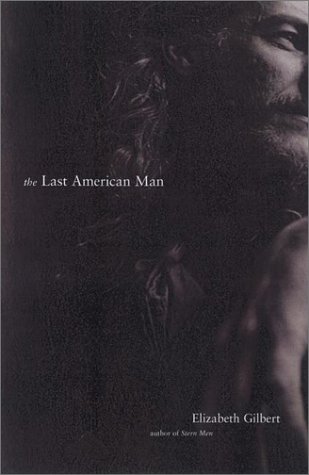
The author of Pilgrims moves from short fiction to nonfiction, offering a cultural examination of the modern American male, exploring the meaning of manhood in all of its contradictions, meaning, and challenges. 35,000 first printing.
"synopsis" may belong to another edition of this title.
About the Author
Elizabeth Gilbert is the #1 New York Times bestselling author of Eat, Pray, Love, and several other internationally bestselling books of fiction and nonfiction. Gilbert began her career writing for Harper's Bazaar, Spin, The New York Times Magazine and GQ, and was a three-time finalist for the National Magazine Award. Her story collection Pilgrims was a finalist for the PEN/Hemingway award; The Last American Man was a finalist for both the National Book Award and the National Book Critics Circle Award. The follow-up memoir Committed became an instant #1 New York Times bestseller. Her latest novel, The Signature of All Things, was named a Best Book of 2013 by The New York Times, O Magazine, The Washington Post, The Chicago Tribune, and The New Yorker. Gilbert���s short fiction has appeared in Esquire, Story, One Story, and the Paris Review.
Reviews
"By the time Eustace Conway was seven years old he could throw a knife accurately enough to nail a chipmunk to a tree." Such behavior might qualify Eustace as a potential Columbine-style triggerman, but in Gilbert's startling and fascinating account of his life, he becomes a great American countercultural hero. At 17, Conway "headed into the mountains... and dressed in the skins of animals he had hunted and eaten." By his late 30s, Eustace owned "a thousand acres of pristine wilderness" and lived in a teepee in the woods full-time. He is, as Gilbert (Stern Men) implies with her literary and historical references, a cross between Davy Crockett and Henry David Thoreau. Gilbert, who is friends with Conway and interviewed his family, evidences enormous enthusiasm for her subject, whether discussing Conway's need for alcohol to calm down; his relationship with a physically and emotionally abusive father; or his horrific hand-to-antler fight with a deer buck he was trying to kill yet she always keeps her reporter's distance. At times, Conway's story can be wonderfully moving (as when he buries kindergartners in a shallow trench with their faces turned skyward to help them understand that the forest floor is "alive") or disconcerting (as when, in 1995, he's uncertain about Bill Clinton's identity). Gilbert has a jaunty, breathless style, and she paints a complicated portrait of American maleness that is as original as it is surprising.
Copyright 2002 Cahners Business Information, Inc.
*Starred Review* Eustace Conway discovered nature's wonders as a boy growing up in South Carolina during the 1960s. Miserable at home, a born perfectionist and fanatic, he took to the woods and developed wilderness skills unknown to most modern Americans. By the time he finished high school and moved into a teepee (his abode for 17 years), he was convinced that only encounters with "the high art and godliness of nature" could help save American society from its catastrophically wasteful habits and soul-deadening trivial pursuits. Conway is not alone in his beliefs, but he is unique in his maniacal drive to proselytize, and, ironically enough, he's taken his teaching mission to such extremes by attempting to create an Appalachian wilderness utopia that it's impossible for him to live the very life he champions. Tough, shrewd, gifted, vigorous, and contradictory, Conway, who set a world record crossing the continent on horseback in 103 days, both enlightens and confounds all who know him. Gilbert, a top-notch journalist and fiction writer, braids keen and provocative observations about the American frontier, the myth of the mountain man, and the peculiar state of contemporary America with its "profound alienation" from nature into her spirited and canny portrait, ultimately concluding that Conway's magnetism is due in part to his embodying society's most urgent conundrums. Donna Seaman
Copyright © American Library Association. All rights reserved
"About this title" may belong to another edition of this title.
Search results for The Last American Man

Stock Image
The Last American Man
Seller: World of Books (was SecondSale), Montgomery, IL, U.S.A.
Seller rating 5 out of 5 stars

Condition: Acceptable. Item in acceptable condition! Textbooks may not include supplemental items i.e. CDs, access codes etc. Seller Inventory # 00094260087
Seller Image
The Last American Man
Seller: Reliant Bookstore, El Dorado, KS, U.S.A.
Seller rating 5 out of 5 stars
Condition: good. This book is in good condition with very minimal damage. Pages may have minimal notes or highlighting. Cover image on the book may vary from photo. Ships out quickly in a secure plastic mailer. Seller Inventory # 56JR8Z001VX0_ns
Seller Image
The Last American Man
Seller: Greenworld Books, Arlington, TX, U.S.A.
Seller rating 5 out of 5 stars
Condition: good. Fast Free Shipping â" Good condition. It may show normal signs of use, such as light writing, highlighting, or library markings, but all pages are intact and the book is fully readable. A solid, complete copy that's ready to enjoy. Seller Inventory # GWV.0670030864.G
Stock Image
The Last American Man
Seller: ThriftBooks-Reno, Reno, NV, U.S.A.
Seller rating 5 out of 5 stars
Hardcover. Condition: Good. No Jacket. Missing dust jacket; Pages can have notes/highlighting. Spine may show signs of wear. ~ ThriftBooks: Read More, Spend Less. Seller Inventory # G0670030864I3N01
Stock Image
The Last American Man
Seller: ThriftBooks-Atlanta, AUSTELL, GA, U.S.A.
Seller rating 5 out of 5 stars
Hardcover. Condition: Good. No Jacket. Pages can have notes/highlighting. Spine may show signs of wear. ~ ThriftBooks: Read More, Spend Less. Seller Inventory # G0670030864I3N00
Stock Image
The Last American Man
Seller: ThriftBooks-Dallas, Dallas, TX, U.S.A.
Seller rating 5 out of 5 stars
Hardcover. Condition: Very Good. No Jacket. May have limited writing in cover pages. Pages are unmarked. ~ ThriftBooks: Read More, Spend Less. Seller Inventory # G0670030864I4N00
Stock Image
The Last American Man
Seller: World of Books (was SecondSale), Montgomery, IL, U.S.A.
Seller rating 5 out of 5 stars
Condition: Good. Item in good condition and has highlighting/writing on text. Used texts may not contain supplemental items such as CDs, info-trac etc. Seller Inventory # 00081045961
Stock Image
The Last American Man
Seller: ThriftBooks-Dallas, Dallas, TX, U.S.A.
Seller rating 5 out of 5 stars
Hardcover. Condition: Good. No Jacket. Missing dust jacket; Pages can have notes/highlighting. Spine may show signs of wear. ~ ThriftBooks: Read More, Spend Less. Seller Inventory # G0670030864I3N01
Stock Image
The Last American Man
Seller: World of Books (was SecondSale), Montgomery, IL, U.S.A.
Seller rating 5 out of 5 stars
Condition: Very Good. Item in very good condition! Textbooks may not include supplemental items i.e. CDs, access codes etc. Seller Inventory # 00081042371
Stock Image
The Last American Man
Seller: ThriftBooks-Atlanta, AUSTELL, GA, U.S.A.
Seller rating 5 out of 5 stars
Hardcover. Condition: Good. No Jacket. Missing dust jacket; Pages can have notes/highlighting. Spine may show signs of wear. ~ ThriftBooks: Read More, Spend Less. Seller Inventory # G0670030864I3N01