Items related to Rosa Parks (Penguin Lives)
Synopsis
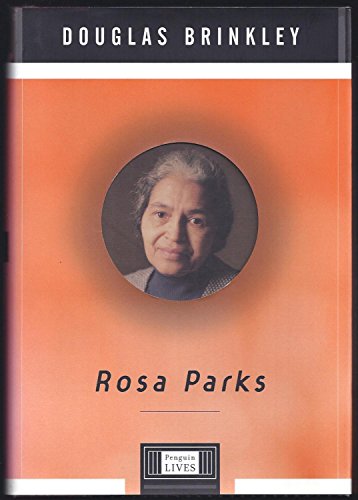
A portrait of the African-American woman who is immortalized for refusing to surrender her bus seat to a white passenger examines who Rosa Parks was before, during, and after her historic act and how her action contributed to the end of the Jim Crow laws. 27,500 first printing.
"synopsis" may belong to another edition of this title.
Review
Most Americans know her only as the 42-year-old seamstress who refused to give up her seat to a white man on a Montgomery, Alabama, bus. Her quiet act of defiance is often considered the beginning of the modern civil rights movement, but historian Douglas Brinkley reminds us that it was neither the beginning nor the end of Rosa Parks's quest for justice. On that fateful day in 1955 she was already a veteran civil rights activist, married to a charter member of the NAACP's Montgomery chapter, and a devout member of the African Methodist Episcopal Church, one of the many black churches whose congregants organized and fought to desegregate the South. Brinkley gives a thorough account of Parks's political life in the South and in Detroit (where she moved in 1957 to escape death threats), capturing her majestic personal dignity. Yet he also places her activism within a vivid historical context, anchored by extensive interviews with her peers and Parks herself as well as scholarly research. His subject is now a frail octogenarian, but Brinkley conveys the power of her legacy in a moving final scene when Nelson Mandela, just four months out of a South African jail in 1990, embraces Parks as a comrade and a beloved mentor. --Wendy Smith
From the Publisher
5 1.5-hour cassettes
"About this title" may belong to another edition of this title.
- PublisherViking Pr
- Publication date2000
- ISBN 10 0670891606
- ISBN 13 9780670891603
- BindingHardcover
- LanguageEnglish
- Edition number1
- Number of pages246
- Rating
Other Popular Editions of the Same Title

Search results for Rosa Parks (Penguin Lives)

Stock Image
Rosa Parks (Penguin Lives)
Seller: SecondSale, Montgomery, IL, U.S.A.
Seller rating 5 out of 5 stars

Condition: Good. Item in good condition. Textbooks may not include supplemental items i.e. CDs, access codes etc. Seller Inventory # 00036960527
Quantity: 4 available
Stock Image
Rosa Parks (Penguin Lives)
Published by
Viking Pr (edition First Edition), 2000
ISBN 10: 0670891606
ISBN 13: 9780670891603
Used
Hardcover
First Edition
Seller: BooksRun, Philadelphia, PA, U.S.A.
Seller rating 5 out of 5 stars
Hardcover. Condition: Fair. First Edition. Ship within 24hrs. Satisfaction 100% guaranteed. APO/FPO addresses supported. Seller Inventory # 0670891606-7-1
Quantity: 1 available
Stock Image
Rosa Parks (Penguin Lives)
Seller: Wonder Book, Frederick, MD, U.S.A.
Seller rating 5 out of 5 stars
Condition: Very Good. Very Good condition. Good dust jacket. A copy that may have a few cosmetic defects. May also contain light spine creasing or a few markings such as an owner's name, short gifter's inscription or light stamp. Bundled media such as CDs, DVDs, floppy disks or access codes may not be included. Seller Inventory # D12M-01389
Quantity: 1 available
Stock Image
Rosa Parks (Penguin Lives)
Seller: Wonder Book, Frederick, MD, U.S.A.
Seller rating 5 out of 5 stars
Condition: Good. Good condition. Good dust jacket. A copy that has been read but remains intact. May contain markings such as bookplates, stamps, limited notes and highlighting, or a few light stains. Bundled media such as CDs, DVDs, floppy disks or access codes may not be included. Seller Inventory # R08T-00851
Quantity: 1 available
Stock Image
Rosa Parks
Published by
Penguin Publishing Group, 2000
ISBN 10: 0670891606
ISBN 13: 9780670891603
Used
Hardcover
Seller: Better World Books: West, Reno, NV, U.S.A.
Seller rating 5 out of 5 stars
Condition: Good. Used book that is in clean, average condition without any missing pages. Seller Inventory # 3371933-6
Quantity: 1 available
Stock Image
Rosa Parks
Published by
Penguin Publishing Group, 2000
ISBN 10: 0670891606
ISBN 13: 9780670891603
Used
Hardcover
Seller: Better World Books: West, Reno, NV, U.S.A.
Seller rating 5 out of 5 stars
Condition: Very Good. Used book that is in excellent condition. May show signs of wear or have minor defects. Seller Inventory # 12958638-6
Quantity: 1 available
Stock Image
Rosa Parks
Published by
Penguin Publishing Group, 2000
ISBN 10: 0670891606
ISBN 13: 9780670891603
Used
Hardcover
Seller: Better World Books, Mishawaka, IN, U.S.A.
Seller rating 5 out of 5 stars
Condition: Good. Former library book; may include library markings. Used book that is in clean, average condition without any missing pages. Seller Inventory # GRP83980994
Quantity: 2 available
Stock Image
Rosa Parks (Penguin Lives)
Seller: Half Price Books Inc., Dallas, TX, U.S.A.
Seller rating 5 out of 5 stars
hardcover. Condition: Very Good. Connecting readers with great books since 1972! Used books may not include companion materials, and may have some shelf wear or limited writing. We ship orders daily and Customer Service is our top priority!. Seller Inventory # S_418550553
Quantity: 1 available
Stock Image
Rosa Parks (Penguin Lives)
Seller: HPB-Movies, Dallas, TX, U.S.A.
Seller rating 4 out of 5 stars

Hardcover. Condition: Very Good. Connecting readers with great books since 1972! Used books may not include companion materials, and may have some shelf wear or limited writing. We ship orders daily and Customer Service is our top priority!. Seller Inventory # S_382492837
Quantity: 1 available
Stock Image
Rosa Parks (Penguin Lives)
Seller: HPB-Diamond, Dallas, TX, U.S.A.
Seller rating 5 out of 5 stars
Hardcover. Condition: Very Good. Connecting readers with great books since 1972! Used books may not include companion materials, and may have some shelf wear or limited writing. We ship orders daily and Customer Service is our top priority!. Seller Inventory # S_410821044
Quantity: 1 available