
Items related to Time Detectives: How Archaeologists Use Technology...
Synopsis
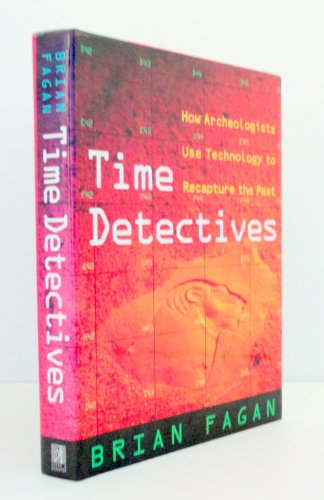
Revealing the work of modern archaeologists, who use technology and scientific methods more than shovels, this survey of recent findings includes the earliest Bronze Age shipwreck, ancient Incan farming systems that are superior to current methods, and a newly discovered Mayan city. 20,000 first printing.
"synopsis" may belong to another edition of this title.
About the Author
Brian Fagan is currently professor of anthropology at the University of California, Santa Barbara.
Reviews
This exhilarating mix of high adventure and serious scholarship explores how modern archeologists are using techniques like computer imaging, infrared photography and pollen analysis to reconstruct ancient cultures. Fagan (The Rape of the Nile), an archaeologist, describes Tiwanaku, a vanished city on Lake Titicaca's Bolivian shore (A.D. 5th-11th centuries), where Andean farmers used crop cultivation methods that are now being copied by modern villagers to increase yields. He visits enigmatic Flag Fen in eastern England, where an enormous Bronze Age timber platform rose amid uninhabited wetlands, the site of sacrificial offerings. He combs Wadi Kubbaniya, an obscure Egyptian valley, home to hunter-gatherers 10,000 years before the pharaohs-possible ancestors of ancient Egyptian civilization. He explains how excavations of the mansions and gardens of 18th-century colonial Annapolis, Md., are revealing class divisions between a white elite and African Americans who comprised as much as one-third of the population. Fagan also explores multistory New Mexican pueblos of the Anasazi, a Sumerian temple complex, Blackfoot bison hunt sites on Canadian cliffs and remnants of the Natufian culture-some of the world's earliest farmers-discovered in the 1930s in what is now Israel. Illustrated.
Copyright 1994 Reed Business Information, Inc.
In his latest book since Kingdoms of Gold, Kingdoms of Jade: The Americas Before Columbus (LJ 8/91), the author applauds post-World War II developments that have made archaeology a "high-technology science." He describes work done at a wide range of sites, from Stone Age Wadi Kubbaniya in southern Egypt to Colonial Annapolis, Maryland, and gives modern archaeologists the recognition they deserve for their interdisciplinary approach and meticulous methods of retrieving information. Unfortunately, Fagan diminishes 19th-century archaeology to a backdrop and makes it the object of negative comparisons. He refers to archaeologists of that period as "treasure hunters" and omits mention of the 19-century founder of scientific fieldwork, Sir William Flinders Petrie. To supplement his presentation, readers are advised to read C.W. Cerams's classic Gods, Graves, and Scholars (1967) before reading this book. For popular archaeology collections.
Joan Gartland, Detroit P.L.
Copyright 1995 Reed Business Information, Inc.
Recounting the story of a dozen-plus sites around the world, Fagan avers that expert specialties have superseded the romance and mysterious wonder that used to animate the archaeologist's work--and inspired the classic book in this field, C. W. Ceram's Gods, Graves, and Scholars (Knopf, rev. ed. 1967). After acknowledging his debt to Ceram, Fagan ventures to places as varied as Hadrian's Wall, a bison kill site called Head-Smashed-In (Alberta), habitations along the Nile and Euphrates Rivers, and, thence, to Annapolis, Maryland. The commonality with digs in these diverse environments is the involvement of teams of experts using sophisticated dating and interpretive techniques--a far cry from the days of the soil sifter and pick ax swung by the solitary adventurer. The revolution began with carbon 14 dating of organic materials, which has continued with carbon-isotopic analysis that indicates from their bones what people ate. (At one dig site exploring the Anasazi culture of the Southwest, it was each other.) In each case, Fagan ably works the theme of the revelatory capability of high-tech methods, and how they (and logic) can assemble the picture of a society from its rubbish or building foundations. An engaging book sure to impell library patrons far into the particular sites Fagan describes--if not on out to the dig sites themselves. Gilbert Taylor
"About this title" may belong to another edition of this title.
Search results for Time Detectives: How Archaeologists Use Technology...

Stock Image
Time Detectives: How Archeologists Use Technology to Recapture the Past
Seller: World of Books (was SecondSale), Montgomery, IL, U.S.A.
Seller rating 5 out of 5 stars

Hardback. Condition: Very Good. From Simon & Schuster, Time Detectives is Brian Fagan's exploration of how archeologists use technology to recapture the past. University of California Professor of Anthropology Brian Fagan offers a fascinating look at how the key archaeological discoveries of the past 50 years were made-and how new techniques and devices have led to new insights into ancient civilizations. Seller Inventory # 00091811626
Stock Image
Time Detectives: How Archeologists Use Technology to Recapture the Past
Seller: World of Books (was SecondSale), Montgomery, IL, U.S.A.
Seller rating 5 out of 5 stars
Hardback. Condition: Good. From Simon & Schuster, Time Detectives is Brian Fagan's exploration of how archeologists use technology to recapture the past. University of California Professor of Anthropology Brian Fagan offers a fascinating look at how the key archaeological discoveries of the past 50 years were made-and how new techniques and devices have led to new insights into ancient civilizations. Seller Inventory # 00097608601
Seller Image
Time Detectives: How Archaeologists Use Technology to Recapture the Past
Seller: Greenworld Books, Arlington, TX, U.S.A.
Seller rating 5 out of 5 stars
Condition: like_new. Fast Free Shipping â" Excellent condition book with clean cover and pages. Barely handled, with minimal wear. An outstanding copy, close to enjoy! Seller Inventory # GWV.0671793853.LN
Stock Image
Time Detectives: How Archaeologists Use Technology to Recapture the Past
Seller: BookHolders, Towson, MD, U.S.A.
Seller rating 5 out of 5 stars
Condition: Good. [ No Hassle 30 Day Returns ][ Ships Daily ] [ Underlining/Highlighting: SOME ] [ Writing: NONE ] [ Edition: first ] Publisher: Simon & Schuster Pub Date: 2/8/1995 Binding: Hardcover Pages: 288 first edition. Seller Inventory # 1517094
Stock Image
Time Detectives: How Archaeologists Use Technology to Recapture the Past
Seller: Once Upon A Time Books, Siloam Springs, AR, U.S.A.
Seller rating 4 out of 5 stars

Hardcover. Condition: Good. This is a used book in good condition and may show some signs of use or wear . This is a used book in good condition and may show some signs of use or wear . Seller Inventory # mon0001034614
Stock Image
Time Detectives: How Archaeologists Use Technology to Recapture the Past
Seller: HPB-Diamond, Dallas, TX, U.S.A.
Seller rating 5 out of 5 stars
hardcover. Condition: Very Good. Connecting readers with great books since 1972! Used books may not include companion materials, and may have some shelf wear or limited writing. We ship orders daily and Customer Service is our top priority! Seller Inventory # S_467829456
Stock Image
Time Detectives: How Archaeologists Use Technology to Recapture the Past
Seller: Wonder Book, Frederick, MD, U.S.A.
Seller rating 5 out of 5 stars
Condition: Very Good. Very Good condition. Very Good dust jacket. A copy that may have a few cosmetic defects. May also contain light spine creasing or a few markings such as an owner's name, short gifter's inscription or light stamp. Seller Inventory # W01O-01487
Stock Image
Time Detectives: How Archaeologists Use Technology to Recapture the Past
Seller: The Maryland Book Bank, Baltimore, MD, U.S.A.
Seller rating 5 out of 5 stars
hardcover. Condition: Very Good. Used - Very Good. Seller Inventory # 13-R-4-0160
Stock Image
Time Detectives: How Archaeologists Use Technology to Recapture the Past
Seller: ThriftBooks-Atlanta, AUSTELL, GA, U.S.A.
Seller rating 5 out of 5 stars
Hardcover. Condition: Very Good. No Jacket. May have limited writing in cover pages. Pages are unmarked. ~ ThriftBooks: Read More, Spend Less. Seller Inventory # G0671793853I4N00
Stock Image
Time Detectives: How Archaeologists Use Technology to Recapture the Past
Published by
Simon & Schuster (edition ), 1995
ISBN 10: 0671793853
ISBN 13: 9780671793852
Used
Hardcover
Seller: BooksRun, Philadelphia, PA, U.S.A.
Seller rating 5 out of 5 stars
Hardcover. Condition: Very Good. With dust jacket. It's a well-cared-for item that has seen limited use. The item may show minor signs of wear. All the text is legible, with all pages included. It may have slight markings and/or highlighting. Seller Inventory # 0671793853-8-1-29