
Items related to Modular Brain
Synopsis
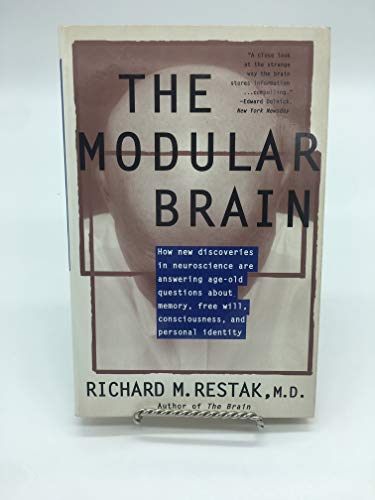
Predicts what research may reveal in the next ten years in the field of neuroscience and explains the current modular concept of the brain's organization
"synopsis" may belong to another edition of this title.
From Kirkus Reviews
Neuropsychiatrist Restak (The Brain Has a Mind of Its Own, 1991, etc.) tackles age-old questions about the nature of free will, thought, emotion, and creativity in the process of explicating the theory of the modular brain. In essence, this theory assumes both a horizontal and vertical organization to the brain; it posits that information about the world is extracted and stored in many different places and processed in parallel to produce a unified construction. What the theory does away with is the idea of some central soul that reads the data. Some areas of the brain, like the prefrontal lobes, figure in planning and motivation (free will); others are concerned with emotions. Myriad interconnections make the brain a federation and not an empire dominated by one part. Restak describes case studies that have led researchers to this notion of the brain: To people with ``word deafness,'' for example, spoken language sounds like noise or wind, but there is no loss of reading, writing, or speaking abilities; and some people with right hemisphere strokes deny that their left arm or leg belongs to them. Much of this is old news. What is really new is Restak's chapter on emotions and the use of the brain-damage defense to excuse crimes of violence. He glibly suggests that lower socioeconomic class and a ``culture'' of violence are the root causes of violence; however, he is on solid ground in discounting the brain-damage defense (except in rare cases) not only because we are subject to other constraints, but also because there is so much variation that we can hardly define what a ``normal'' brain looks like. There is a certain comfort in that. An informative tour of the current conventional wisdom in neurology. Some new wine, but mostly old brew in old bottles. -- Copyright ©1994, Kirkus Associates, LP. All rights reserved.
From Publishers Weekly
Restak, a neurologist and author of The Brain and The Mind , examines recent discoveries in neuroscience that radically alter traditional views of how the brain operates and, at the same time, cast light on free will and identity and other matters central to the human condition. Since the early 1800s, science has understood that different locations in the brain are responsible for different functions, with later research suggesting a hierarchical organization in which the cerebral hemispheres control the deeper, more primitive areas that are not so recently evolved. But a new, more dynamic model of the brain posits a parallel rather than a hierarchical structure, in which many processes, including perception and comprehension, occur simultaneously. Citing research and case studies, Restak describes the modular theory as it relates to such acts as vision and speech, also describing its impact on such issues as consciousness, memory and morality. More interesting for the questions raised than answers offered, this is an accessible, provocative look at the relationship between science and philosophy.
Copyright 1994 Reed Business Information, Inc.
"About this title" may belong to another edition of this title.
Search results for Modular Brain

Stock Image
Modular Brain
Seller: World of Books (was SecondSale), Montgomery, IL, U.S.A.
Seller rating 5 out of 5 stars

Condition: Good. Item in good condition. Textbooks may not include supplemental items i.e. CDs, access codes etc. Seller Inventory # 00097596468
Seller Image
Modular Brain
Seller: Zoom Books East, Glendale Heights, IL, U.S.A.
Seller rating 5 out of 5 stars
Condition: good. Book is in good condition and may include underlining highlighting and minimal wear. The book can also include "From the library of" labels. May not contain miscellaneous items toys, dvds, etc. . We offer 100% money back guarantee and 24 7 customer service. Seller Inventory # ZEV.0684801264.G
Stock Image
Modular Brain
Published by
Touchstone (edition Reprint), 1995
ISBN 10: 0684801264
ISBN 13: 9780684801261
Used
Paperback
Seller: BooksRun, Philadelphia, PA, U.S.A.
Seller rating 5 out of 5 stars
Paperback. Condition: Fair. Reprint. The item might be beaten up but readable. May contain markings or highlighting, as well as stains, bent corners, or any other major defect, but the text is not obscured in any way. Seller Inventory # 0684801264-7-1-13
Stock Image
Modular Brain
Seller: The Maryland Book Bank, Baltimore, MD, U.S.A.
Seller rating 5 out of 5 stars
paperback. Condition: Very Good. Reprint. Used - Very Good. Seller Inventory # 10-O-1-0278
Stock Image
Modular Brain
Seller: ThriftBooks-Dallas, Dallas, TX, U.S.A.
Seller rating 5 out of 5 stars
Paperback. Condition: Good. No Jacket. Pages can have notes/highlighting. Spine may show signs of wear. ~ ThriftBooks: Read More, Spend Less. Seller Inventory # G0684801264I3N00
Stock Image
Modular Brain
Seller: Wonder Book, Frederick, MD, U.S.A.
Seller rating 5 out of 5 stars
Condition: Good. Good condition. A copy that has been read but remains intact. May contain markings such as bookplates, stamps, limited notes and highlighting, or a few light stains. Seller Inventory # L13C-03666
Stock Image
The Modular Brain : How New Discoveries in Neuroscience Are Answering Age-Old Questions about Memory, Free Will, Consciousness, and Personal Identity
Seller: Better World Books: West, Reno, NV, U.S.A.
Seller rating 5 out of 5 stars
Condition: Very Good. Reprint. Pages intact with possible writing/highlighting. Binding strong with minor wear. Dust jackets/supplements may not be included. Stock photo provided. Product includes identifying sticker. Better World Books: Buy Books. Do Good. Seller Inventory # 15412899-6
Stock Image
The Modular Brain : How New Discoveries in Neuroscience Are Answering Age-Old Questions about Memory, Free Will, Consciousness, and Personal Identity
Seller: Better World Books, Mishawaka, IN, U.S.A.
Seller rating 5 out of 5 stars
Condition: Good. Reprint. Former library copy. Pages intact with minimal writing/highlighting. The binding may be loose and creased. Dust jackets/supplements are not included. Includes library markings. Stock photo provided. Product includes identifying sticker. Better World Books: Buy Books. Do Good. Seller Inventory # 45859170-6
Seller Image
The Modular Brain
Seller: Hamelyn, Madrid, M, Spain
Seller rating 5 out of 5 stars
Condition: Good. : En esta obra fundamental, el Dr. Richard Restak explora cómo los nuevos descubrimientos en neurociencia están transformando nuestra comprensión de la mente humana. El autor examina la teoría de que el cerebro no es una entidad centralizada, sino un sistema modular, desafiando las distinciones tradicionales entre mente y cerebro, y ofreciendo nuevas perspectivas sobre cuestiones fundamentales como la memoria, el libre albedrío, la conciencia y la identidad personal.Combinando casos clínicos con una narrativa accesible, Restak analiza cómo la organización cerebral influye en nuestra percepción de la realidad y en la naturaleza de nuestros pensamientos y emociones. Es una lectura esencial para quienes buscan comprender los avances científicos que están redefiniendo lo que significa ser humano en el campo de la neuropsicología. EAN: 9780684801261 Tipo: Libros Categoría: Ciencias Título: The Modular Brain Autor: Richard Restak Editorial: Touchstone Idioma: en Páginas: 199 Formato: tapa blanda. Seller Inventory # Happ-2026-07-15-a90d271a
Buy Used
US$ 13.62
US$ 13.48 shipping
Ships from Spain to U.S.A.
Ships from Spain to U.S.A.
Quantity: 1 available
Seller Image
The modular brain. How new discoveries in neuroscience are answering age-old questions about memory, free will, consciousness, and personal identity.
Published by
New York, Touchstone Book, 1995
ISBN 10: 0684801264
ISBN 13: 9780684801261
Used
Softcover
Seller: Antiquariat Bookfarm, Löbnitz, Germany
Seller rating 5 out of 5 stars
Softcover. Condition: Gut. 1st Touchstone ed. xviii, 199 S. Gebrauchtes Buch aus ehem. Privatbesitz. GUTER Zustand, wenige Gebrauchsspuren. Used book, few traces of use. C08226 9780684801261 Sprache: Englisch Gewicht in Gramm: 550. Seller Inventory # 2494553
Buy Used
US$ 5.79
US$ 44.95 shipping
Ships from Germany to U.S.A.
Ships from Germany to U.S.A.
Quantity: 1 available