
Items related to Our Patchwork Planet
Synopsis
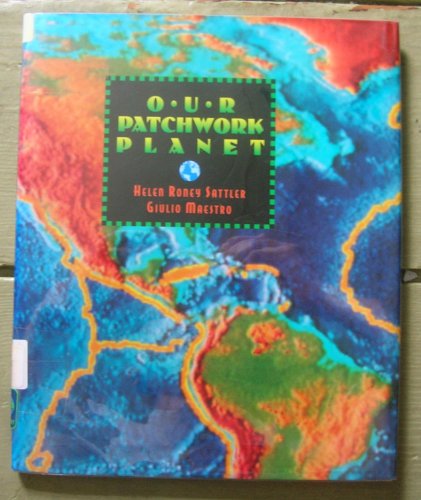
"A comprehensive introduction to plate tectonics, written in a beautifully balanced style. Neither too complicated, nor too simple, Sattler formulates information in a way that is lucid without being dull. The topics covered include the appearance of the inside of the earth, the formation and movements of tectonic plates, of continents and mountain, and the various ways of dealing with earthquakes.....A model of writing about science for children."--Kirkus Reviews. Bibliography, diagrams, index, maps.
"synopsis" may belong to another edition of this title.
About the Author
Giulio Maestro is the illustrator of over 100 children’s books. He has also written his own books of word play and has co-authored two I Can Read Books with his son, Marco: What Do You Hear When Cows Sing, and Other Silly Riddles and Geese Find the Missing Piece: School Time Riddle Rhymes. The Maestros live in Old Lyme, CT.
From the Back Cover
"A comprehensive introduction to plate tectonics, written in a beautifully balanced style. Neither too complicated, nor too simple, Sattler formulates information in a way that is lucid without being dull. The topics covered include the appearance of the inside of the earth, the formation and movements of tectonic plates, of continents and mountain, and the various ways of dealing with earthquakes.....A model of writing about science for children."--Kirkus Reviews. Bibliography, diagrams, index, maps.
Reviews
Grade 5-8-Sattler discusses the formation of the Earth's plates, their locations, and how their movements affect what happens on our planet's surface. She explains how earthquakes and volcanoes occur, and gives detailed descriptions of "hot spots" in the world. Clear, full-color illustrations, including excellent-quality computer-enhanced photo-maps, help clarify concepts that are difficult to visualize. While all of this is informative, the presentation is dry. Another problem is the syncing of illustrations to text. In one instance, the author talks about Mount Saint Helens, but what readers see is New Zealand's volcano Ngauruhoe. Another example shows Mexico City, but the text talks about the Pacific plate. One last gripe. Sattler's occasional use of analogy works when the science in the analogy is good. But sometimes, it isn't. For example, in describing islands, she says "they collided and stuck, freezing together like ice cubes in a pitcher of Kool-Aid." Ice in a pitcher doesn't freeze up that way. These slight flaws make the book less readable, but overall, the presentation is still a cut above the norm. John McPhee's Assembling California (Farrar, 1993) covers similar territory and includes riveting tales of earthquakes, the formation of gold veins, and the dynamics of the plates.
Cathryn A. Camper, Minneapolis Public Library
Copyright 1995 Reed Business Information, Inc.
Gr. 4-8. The best nonfiction takes a topic that could be dull and makes it fascinating. Here, as appropriate for a book on plate tectonics, readers will almost be able to feel the ground move under their feet. After a slightly slow beginning, the book takes off, with a combination of illustrations and text making it possible for readers to see the planet in an entirely new way--by the motion that is constantly going on. Photographs taken by satellite and enhanced by computer technology help make the global perspective visible. Instead of fixing on particular volcanoes, mountains, or earthquakes, Sattler conveys the movement of the whole, showing plates that resemble "vanilla wafers on top of chocolate pudding." A list of further readings is appended. Mary Harris Veeder
"About this title" may belong to another edition of this title.
Search results for Our Patchwork Planet

Stock Image
Our Patchwork Planet
Seller: World of Books (was SecondSale), Montgomery, IL, U.S.A.
Seller rating 5 out of 5 stars

Hardback. Condition: Good. Maestro, Giulio (illustrator). "A comprehensive introduction to plate tectonics, written in a beautifully balanced style. Neither too complicated, nor too simple, Sattler formulates information in a way that is lucid without being dull. The topics covered include the appearance of the inside of the earth, the formation and movements of tectonic plates, of continents and mountain, and the various ways of dealing with earthquakes.A model of writing about science for children."--Kirkus Reviews. Bibliography, diagrams, index, maps. Seller Inventory # 00094995028
Stock Image
Our Patchwork Planet
Seller: More Than Words, Waltham, MA, U.S.A.
Seller rating 5 out of 5 stars
Condition: Good. Maestro, Giulio (illustrator). . . All orders guaranteed and ship within 24 hours. Before placing your order for please contact us for confirmation on the book's binding. Check out our other listings to add to your order for discounted shipping. Seller Inventory # WAL-P-2a-02582
Stock Image
Our Patchwork Planet
Seller: Once Upon A Time Books, Siloam Springs, AR, U.S.A.
Seller rating 4 out of 5 stars

hardcover. Condition: Acceptable. Maestro, Giulio (illustrator). This is a used book. It may contain highlighting/underlining and/or the book may show heavier signs of wear . It may also be ex-library or without dustjacket. This is a used book. It may contain highlighting/underlining and/or the book may show heavier signs of wear . It may also be ex-library or without dustjacket. Seller Inventory # mon0001050797
Stock Image
Our Patchwork Planet
Seller: World of Books Inc, Montgomery, IL, U.S.A.
Seller rating 4 out of 5 stars
Hardback. Condition: Good. Maestro, Giulio (illustrator). "A comprehensive introduction to plate tectonics, written in a beautifully balanced style. Neither too complicated, nor too simple, Sattler formulates information in a way that is lucid without being dull. The topics covered include the appearance of the inside of the earth, the formation and movements of tectonic plates, of continents and mountain, and the various ways of dealing with earthquakes.A model of writing about science for children."--Kirkus Reviews. Bibliography, diagrams, index, maps. Seller Inventory # CIN0688093124G
Stock Image
Our Patchwork Planet
Published by
HarperCollins Canada, Limited, 1995
ISBN 10: 0688093124
ISBN 13: 9780688093129
Used
Hardcover
First Edition
Seller: Better World Books, Mishawaka, IN, U.S.A.
Seller rating 5 out of 5 stars
Condition: Good. Maestro, Giulio (illustrator). 1st. Former library copy. Pages intact with minimal writing/highlighting. The binding may be loose and creased. Dust jackets/supplements are not included. Includes library markings. Stock photo provided. Product includes identifying sticker. Better World Books: Buy Books. Do Good. Seller Inventory # GRP70035879
Stock Image
Our Patchwork Planet
Published by
HarperCollins Canada, Limited, 1995
ISBN 10: 0688093124
ISBN 13: 9780688093129
Used
Hardcover
First Edition
Seller: Better World Books: West, Reno, NV, U.S.A.
Seller rating 5 out of 5 stars
Condition: Good. Maestro, Giulio (illustrator). 1st. Former library copy. Pages intact with minimal writing/highlighting. The binding may be loose and creased. Dust jackets/supplements are not included. Includes library markings. Stock photo provided. Product includes identifying sticker. Better World Books: Buy Books. Do Good. Seller Inventory # GRP70035879
Stock Image
Our Patchwork Planet
Seller: ThriftBooks-Dallas, Dallas, TX, U.S.A.
Seller rating 5 out of 5 stars
Hardcover. Condition: Very Good. No Jacket. Maestro, Giulio (illustrator). Former library book; May have limited writing in cover pages. Pages are unmarked. ~ ThriftBooks: Read More, Spend Less. Seller Inventory # G0688093124I4N10
Stock Image
Our Patchwork Planet
Seller: ThriftBooks-Atlanta, AUSTELL, GA, U.S.A.
Seller rating 5 out of 5 stars
Hardcover. Condition: Very Good. No Jacket. Maestro, Giulio (illustrator). Former library book; May have limited writing in cover pages. Pages are unmarked. ~ ThriftBooks: Read More, Spend Less. Seller Inventory # G0688093124I4N10
Stock Image
Our Patchwork Planet
Seller: SHIMEDIA, Brooklyn, NY, U.S.A.
Seller rating 4 out of 5 stars
Condition: New. Maestro, Giulio (illustrator). Satisfaction Guaranteed or your money back. Seller Inventory # 0688093124