
Items related to Science as Social Knowledge
Synopsis
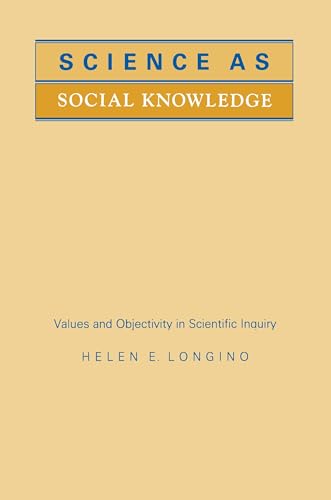
Conventional wisdom has it that the sciences, properly pursued, constitute a pure, value-free method of obtaining knowledge about the natural world. In light of the social and normative dimensions of many scientific debates, Helen Longino finds that general accounts of scientific methodology cannot support this common belief. Focusing on the notion of evidence, the author argues that a methodology powerful enough to account for theories of any scope and depth is incapable of ruling out the influence of social and cultural values in the very structuring of knowledge. The objectivity of scientific inquiry can nevertheless be maintained, she proposes, by understanding scientific inquiry as a social rather than an individual process. Seeking to open a dialogue between methodologists and social critics of the sciences, Longino develops this concept of "contextual empiricism" in an analysis of research programs that have drawn criticism from feminists. Examining theories of human evolution and of prenatal hormonal determination of "gender-role" behavior, of sex differences in cognition, and of sexual orientation, the author shows how assumptions laden with social values affect the description, presentation, and interpretation of data. In particular, Longino argues that research on the hormonal basis of "sex-differentiated behavior" involves assumptions not only about gender relations but also about human action and agency. She concludes with a discussion of the relation between science, values, and ideology, based on the work of Habermas, Foucault, Keller, and Haraway.
"synopsis" may belong to another edition of this title.
From the Back Cover
"Helen Longino has written a timely book that fills a critical gap in the existing literature between philosophy of science and the social studies of science. Her exposition of scientific inquiry as a context-laden process provides the conceptual tools we need to understand how social expectations shape the development of science while at the same time recognizing the dependence of scientific inquiry on its interactions with natural phenomena. This is an important book precisely because there is none other quite like it."--Evelyn Fox Keller, author of Reflections on Gender and Science
"About this title" may belong to another edition of this title.
Search results for Science as Social Knowledge

Seller Image
Science as Social Knowledge
Published by
Princeton University Press, 1990
ISBN 10: 0691020515
ISBN 13: 9780691020518
Used
Softcover
Seller: Dream Books Co., Denver, CO, U.S.A.
Seller rating 5 out of 5 stars

Condition: acceptable. This copy has clearly been enjoyedâ"expect noticeable shelf wear and some minor creases to the cover. Binding is strong, and all pages are legible. May contain previous library markings or stamps. Seller Inventory # DBV.0691020515.A
Stock Image
Science as Social Knowledge: Values and Objectivity in Scientific Inquiry
Published by
Princeton University Press, 1990
ISBN 10: 0691020515
ISBN 13: 9780691020518
Used
Paperback
Seller: World of Books (was SecondSale), Montgomery, IL, U.S.A.
Seller rating 5 out of 5 stars
Paperback. Condition: Good. Conventional wisdom has it that the sciences, properly pursued, constitute a pure, value-free method of obtaining knowledge about the natural world. In light of the social and normative dimensions of many scientific debates, Helen Longino finds that general accounts of scientific methodology cannot support this common belief. Focusing on the notion of evidence, the author argues that a methodology powerful enough to account for theories of any scope and depth is incapable of ruling out the influence of social and cultural values in the very structuring of knowledge. The objectivity of scientific inquiry can nevertheless be maintained, she proposes, by understanding scientific inquiry as a social rather than an individual process. Seeking to open a dialogue between methodologists and social critics of the sciences, Longino develops this concept of "contextual empiricism" in an analysis of research programs that have drawn criticism from feminists. Examining theories of human evolution and of prenatal hormonal determination of "gender-role" behavior, of sex differences in cognition, and of sexual orientation, the author shows how assumptions laden with social values affect the description, presentation, and interpretation of data. In particular, Longino argues that research on the hormonal basis of "sex-differentiated behavior" involves assumptions not only about gender relations but also about human action and agency. She concludes with a discussion of the relation between science, values, and ideology, based on the work of Habermas, Foucault, Keller, and Haraway. Seller Inventory # CIN0691020515G
Stock Image
Science as Social Knowledge: Values and Objectivity in Scientific Inquiry
Published by
Princeton University Press, 1990
ISBN 10: 0691020515
ISBN 13: 9780691020518
Used
Paperback
Seller: HPB-Ruby, Dallas, TX, U.S.A.
Seller rating 5 out of 5 stars
Paperback. Condition: Very Good. Connecting readers with great books since 1972! Used books may not include companion materials, and may have some shelf wear or limited writing. We ship orders daily and Customer Service is our top priority! Seller Inventory # S_487906155
Stock Image
Science as Social Knowledge: Values and Objectivity in Scientific Inquiry
Published by
Princeton University Press, 1990
ISBN 10: 0691020515
ISBN 13: 9780691020518
Used
Paperback
Seller: World of Books Inc, Montgomery, IL, U.S.A.
Seller rating 4 out of 5 stars

Paperback. Condition: Good. Conventional wisdom has it that the sciences, properly pursued, constitute a pure, value-free method of obtaining knowledge about the natural world. In light of the social and normative dimensions of many scientific debates, Helen Longino finds that general accounts of scientific methodology cannot support this common belief. Focusing on the notion of evidence, the author argues that a methodology powerful enough to account for theories of any scope and depth is incapable of ruling out the influence of social and cultural values in the very structuring of knowledge. The objectivity of scientific inquiry can nevertheless be maintained, she proposes, by understanding scientific inquiry as a social rather than an individual process. Seeking to open a dialogue between methodologists and social critics of the sciences, Longino develops this concept of "contextual empiricism" in an analysis of research programs that have drawn criticism from feminists. Examining theories of human evolution and of prenatal hormonal determination of "gender-role" behavior, of sex differences in cognition, and of sexual orientation, the author shows how assumptions laden with social values affect the description, presentation, and interpretation of data. In particular, Longino argues that research on the hormonal basis of "sex-differentiated behavior" involves assumptions not only about gender relations but also about human action and agency. She concludes with a discussion of the relation between science, values, and ideology, based on the work of Habermas, Foucault, Keller, and Haraway. Seller Inventory # CIN0691020515G
Seller Image
Science as Social Knowledge
Published by
Princeton University Press, 1990
ISBN 10: 0691020515
ISBN 13: 9780691020518
Used
Softcover
Seller: Goodwill of Greater Milwaukee and Chicago, Racine, WI, U.S.A.
Seller rating 5 out of 5 stars
Condition: acceptable. Book is considered to be in acceptable condition. The actual cover image may not match the stock photo. Book may have one or more of the following defects: noticeable wear on the cover dust jacket or spine; curved, dog eared or creased page s ; writing or highlighting inside or on the edges; sticker s or other adhesive on cover; CD DVD may not be included; and book may be a former library copy. Seller Inventory # SEWV.0691020515.A
Stock Image
Science as Social Knowledge: Values and Objectivity in Scientific Inquiry
Published by
Princeton University Press, 1990
ISBN 10: 0691020515
ISBN 13: 9780691020518
Used
Soft cover
Seller: Charles Berry, Bookseller, Lakeport, CA, U.S.A.
Seller rating 5 out of 5 stars
Soft cover. Condition: Fine. Softcover in glossy, excellent, unmarked, near-pristine condition (slightest handling, slightest corner tip wear). 262 pages. [1.1 lbs] 280 p. Book. Seller Inventory # 080822
Stock Image
Science as Social Knowledge: Values and Objectivity in Scientific Inquiry
Published by
Princeton University Press, 1990
ISBN 10: 0691020515
ISBN 13: 9780691020518
Used
Soft cover
Seller: The Bookseller, Edmonton, AB, Canada
Seller rating 5 out of 5 stars
Soft cover. Condition: Very Good+. Minor shelf wear. Otherwise a square, tight, unmarked book. Index. xi, 262 pp. Seller Inventory # 068923
Buy Used
US$ 22.09
US$ 18.99 shipping
Ships from Canada to U.S.A.
Ships from Canada to U.S.A.
Quantity: 1 available
Seller Image
Science As Social Knowledge : Values and Objectivity in Scientific Inquiry
Published by
Princeton University Press, 1990
ISBN 10: 0691020515
ISBN 13: 9780691020518
Used
Softcover
Seller: GreatBookPrices, Columbia, MD, U.S.A.
Seller rating 5 out of 5 stars
Condition: As New. Unread book in perfect condition. Seller Inventory # 402009
Stock Image
Science as Social Knowledge
Published by
Princeton University Press, 1990
ISBN 10: 0691020515
ISBN 13: 9780691020518
Used
paperback
Seller: Lady BookHouse, Belmont, MA, U.S.A.
Seller rating 5 out of 5 stars
paperback. Condition: As New. This book is in near-perfect condition, showing minimal signs of use. It has clean, crisp pages with no markings or highlighting, and the spine and cover are intact without any creases or wear. This book appears as if it has been barely touched and is virtually indistinguishable from a brand new book. Textbooks may not include supplemental items i.e. CDs, access codes etc. Seller Inventory # PHL03881
Stock Image
Science as Social Knowledge: Values and Objectivity in Scientific Inquiry
Published by
Princeton University Press, 1990
ISBN 10: 0691020515
ISBN 13: 9780691020518
Used
Softcover
Seller: Sell Books, Elland, YORKS, United Kingdom
Seller rating 5 out of 5 stars
Condition: Good. Our good condition books are generally good for reading but not for gifting or collecting. They could have imperfections such as creasing, fanning, inscriptions, margin notes, yellowing, staining on edge or cover or pages, bumps, scuffs, etc etc (sometimes multiple of these). It's a wide category that encompasses anything that isn't almost-new down to anything that is slightly better than poor. We would NOT recommend gifting Good books - these should be considered reading copies. Our books are dispatched from a Yorkshire former cotton mill. We list via barcode/ISBN so please note that the images are stock images and may not be the exact copy you receive, furthermore the details about edition and year might not be accurate as many publishers reuse the same ISBN for multiple editions and as we simply scan a barcode or enter an ISBN we do not check the validity of the edition data when listing. If you're looking for an exact edition please don't order (at least not without checking with us first, although we don't always have time to check). We aim to dispatch prompty, the service used will depend on order value and book size. We can ship to most countries, see our shipping policies. Payment is via Abe only. Seller Inventory # SBAB-SBL-011287
Buy Used
US$ 34.98
US$ 10.34 shipping
Ships from United Kingdom to U.S.A.
Ships from United Kingdom to U.S.A.
Quantity: 1 available