
Items related to Exploring the Invisible: Art, Science, and the Spiritual...
Synopsis
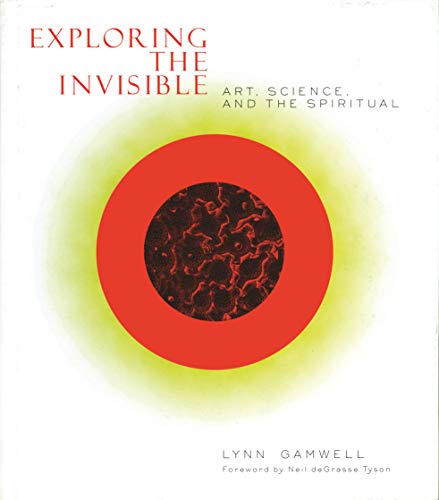
This sumptuous and stunningly illustrated book shows through words and images how directly, profoundly, and indisputably modern science has transformed modern art.
Beginning in the mid-nineteenth century, a strange and exciting new world came into focus--a world of microorganisms in myriad shapes and colors, prehistoric fossils, bizarre undersea creatures, spectrums of light and sound, molecules of water, and atomic particles. Exploring the Invisible reveals that the world beyond the naked eye--made visible by advances in science--has been a major inspiration for artists ever since, influencing the subjects they choose as well as their techniques and modes of representation.
Lynn Gamwell traces the evolution of abstract art through several waves, beginning with Romanticism. She shows how new windows into telescopic and microscopic realms--combined with the growing explanatory importance of mathematics and new definitions of beauty derived from science--broadly and profoundly influenced Western art. Art increasingly reflected our more complex understanding of reality through increasing abstraction. For example, a German physiologist's famous demonstration that color is not in the world but in the mind influenced Monet's revolutionary painting with light. As the first wave of enthusiasm for science crested, abstract art emerged in Brussels and Munich. By 1914, it could be found from Moscow to Paris.
Throughout the book are beautiful images from both science and art--some well known, others rare--that reveal the scientific sources mined by Impressionist and Symbolist painters, Art Nouveau sculptors and architects, Cubists, and other nineteenth- and twentieth-century artists.
With a foreword by astronomer Neil deGrasse Tyson, Exploring the Invisible appears in an age when both artists and scientists are exploring the deepest meanings of life, consciousness, and the universe.
"synopsis" may belong to another edition of this title.
About the Author
Lynn Gamwell is Director of the Art Museum at Binghamton University; Curator of the Gallery of Art and Science at the New York Academy of Sciences; and Adjunct Professor of Science at the School of Visual Arts, New York. She is the coauthor of Dreams 1900-2000: Art, Science, and the Unconscious Mind and Madness in America: Cultural and Medical Perceptions of Mental Illness Before 1914. Neil deGrasse Tyson is Director of the Hayden Planetarium at the American Museum of Natural History. His books include The Sky Is Not the Limit and One Universe.
From the Inside Flap
"Modern science since Darwin and Einstein has revolutionized our understanding of mind and cosmos, presenting a world as strange and paradoxical as it is wonderful, and challenging deeply held beliefs and values. That visual artists would be influenced by this still-continuing transformation is not surprising. Lynn Gamwell traces this response through the twists and turns of modern and postmodern art and aesthetics, providing fresh and interesting interpretations, and a treasury of visual images, to stimulate the thinking of both scientist and artist."--Torsten N. Wiesel, neuroscientist and Nobel Laureate
"This pathbreaking study is daring, innovative, and above all, clearly written. I suspect it will be the one book students will be able to consult in order to correlate what are usually considered the almost antagonistic fields of science and art; and I suspect, too, that thanks to its amazingly readable, lucid style, it will find its way into the libraries of post-collegiate readers. Nobody before has dared to tackle this huge topic. Art historians don't know enough about science; scientists don't know enough about art. Miraculously, probably uniquely, Lynn Gamwell seems equally at home in both areas."--Robert Rosenblum, New York University
"Exploring the Invisible is very stimulating and accessible to the nonexpert (in science or art). As a scientist, I found it enjoyable and highly informative. It provides many new and exciting insights. Dr. Gamwell receives my admiration for this fine connection between art and science."--Arthur Greenberg, University of New Hampshire
Reviews
This beautifully illustrated volume is a surprising synthesis of two seemingly disparate cultures: a revealing look at more than a century of science and the art it has influenced. Gamwell, curator of the Gallery of Art and Science at the New York Academy of Sciences, brings her rare and expansive view of creativity to bear on the impulses common to both pursuits. Opening with a consideration of Romanticism, illustrated by Caspar David Friedrich's lonely "Wanderer above a Sea of Fog," and J.M.W Turner's paintings of light and darkness, Gamwell gently tugs readers along on a tour of the Western mind. She sees Darwinism as the beginning of a "pursuit of the absolute" destined to obsess both scientists and artists. From there, Gamwell tracks the explosive rise of the scientific worldview with hundreds of artworks from the major movements, pieces that reflect a fascination with exploration and discovery, as well as mixed feelings about technological advancement. While the influence of science is easier to see in Wassily Kandinsky's amoeba-like forms or Alexander Calder's constellation mobiles than it is in Jackson Pollock's energetic splashes, the author draws careful lines from science to painting and sculpture, allowing even art (or science) novices to appreciate her argument. Ultimately, Gamwell argues for the direct relationship between scientific knowledge and abstract art, and after such an eloquent and visually exciting journey, the link is perfectly clear. 156 color and 208 b&w illustrations.
Copyright 2002 Reed Business Information, Inc.
Scientific advances in the past two centuries have made many formerly invisible aspects of nature visible and have led most educated people in the West to a scientific worldview--a radical shift, Gamwell says. "This radical shift has long been recognized for its impact on science and culture; the purpose of this book is to demonstrate its infiltration into the visual arts and the resulting emergence of abstract art as part of the first wave of modern art in the late nineteenth century." Gamwell--director of the Art Museum at the State University of New York at Binghamton, curator of the Gallery of Art and Science at the New York Academy of Sciences, and adjunct professor of science at the School of Visual Arts in New York City--deals deftly with both the art and the science. With 364 illustrations and an unusual linkage of art and science, her book stimulates both the eye and the mind.
Editors of Scientific American
The director of the art museum at SUNY at Binghampton and adjunct science professor at the School of Visual Arts, Gamwell attempts to enumerate what we've suspected all along: art, science, and religion are entwined in a dance, each affecting the others. Text and images flow nicely from epoch to epoch, as Gamwell illustrates the zeitgeists that created some of the world's great ideas. One of the first images in the book is a painting by Caspar David Friedrich, Wanderer Above a Sea of Fog, which perfectly illustrates the essence of life on the brink of the modern scientific era. From there, the reader moves through various art movements and scientific discoveries, culminating in (of course) an image of a cone nebula from the Hubble Space Telescope. Following the text are notes, a chronology of events, a broad list of suggestions for further reading, and a functional index. Small problems of perception occur, such as listing the diagnosis of anorexia nervosa in the "spiritual" realm, and there is a lack of spiritual emphasis in general; however, these issues do not detract from the book as a whole. Recommended for academic and larger public libraries.
Nadine Dalton Speidel, Cuyahoga Cty. P.L., Parma, OH
Copyright 2002 Reed Business Information, Inc.
"About this title" may belong to another edition of this title.
Search results for Exploring the Invisible: Art, Science, and the Spiritual...

Seller Image
Exploring the Invisible: Art, Science, and the Spiritual - Second Edition
Published by
Princeton University Press, 2002
ISBN 10: 0691089728
ISBN 13: 9780691089720
Used
Hardcover
Seller: -OnTimeBooks-, Phoenix, AZ, U.S.A.
Seller rating 5 out of 5 stars

Condition: good. A copy that has been read, remains in good condition. All pages are intact, and the cover is intact. The spine and cover show signs of wear. Pages can include notes and highlighting and show signs of wear, and the copy can include "From the library of" labels or previous owner inscriptions. 100% GUARANTEE! Shipped with delivery confirmation, if you're not satisfied with purchase please return item! Ships via media mail. Seller Inventory # OTV.0691089728.G
Stock Image
Exploring the Invisible : Art, Science, and the Spiritual - Second Edition
Published by
Princeton University Press, 2002
ISBN 10: 0691089728
ISBN 13: 9780691089720
Used
Hardcover
Seller: Better World Books, Mishawaka, IN, U.S.A.
Seller rating 5 out of 5 stars
Condition: Very Good. Pages intact with possible writing/highlighting. Binding strong with minor wear. Dust jackets/supplements may not be included. Stock photo provided. Product includes identifying sticker. Better World Books: Buy Books. Do Good. Seller Inventory # 6105506-75
Stock Image
Exploring the Invisible: Art, Science, and the Spiritual - Second Edition
Published by
Princeton University Press, Princeton, 2002
ISBN 10: 0691089728
ISBN 13: 9780691089720
Used
Hardcover
Seller: Magers and Quinn Booksellers, Minneapolis, MN, U.S.A.
Seller rating 5 out of 5 stars
hardcover. Condition: Acceptable. May have underlining, highlighting, margin notes, remainder marks, inscriptions, book plates, tears, significant wear, and/or a missing dust jacket, box, or discs. Damaged item. Seller Inventory # 1526146
Stock Image
Exploring the Invisible: Art, Science, and the Spiritual - Second Edition Gamwell, Lynn and Tyson, Neil deGrasse
Published by
Princeton University Press, 2002
ISBN 10: 0691089728
ISBN 13: 9780691089720
Used
Hardcover
Seller: Bibliomonster Books, Rancho Cucamonga, CA, U.S.A.
Seller rating 4 out of 5 stars

hardcover. Condition: As New. Used, hardcover like new with original dust jacket. Sharp, square, clean, fresh & serviceable copy. No highlighting, marginalia or tears. Seller Inventory # PG-O5QG-HOZV
Stock Image
Exploring the Invisible: Art, Science, and the Spiritual - Second Edition
Published by
Princeton University Press, 2002
ISBN 10: 0691089728
ISBN 13: 9780691089720
Used
Hardcover
Seller: G.J. Askins Bookseller, New Lebanon, NY, U.S.A.
Seller rating 5 out of 5 stars
Hardcover. Condition: Very Good. Dust Jacket Condition: Very Good. 344 page hardcover with many illustrations (156 color, 208 b/w). Foreword by Neil deGrasse Tyson. Text with illustrations, Chronology, Suggestions for Further Reading, Index. Book and dust jacket in very good condition - unmarked, tight and clean. Seller Inventory # 542891
Stock Image
Exploring the Invisible: Art, Science, and the Spiritual - Second Edition
Published by
Princeton University Press, United States, New Jersey, 2002
ISBN 10: 0691089728
ISBN 13: 9780691089720
Used
Paperback
Seller: WorldofBooks, Goring-By-Sea, WS, United Kingdom
Seller rating 5 out of 5 stars
Paperback. Condition: Very Good. This sumptuous and stunningly illustrated book shows through words and images how directly, profoundly, and indisputably modern science has transformed modern art. Beginning in the mid-nineteenth century, a strange and exciting new world came into focus - a world of microorganisms in myriad shapes and colors, prehistoric fossils, bizarre undersea creatures, spectrums of light and sound, molecules of water; and atomic particles. Exploring the Invisible reveals that the world beyond the naked eye - made visible by advances in science - has been a major inspiration for artists ever since, influencing the subjects they choose as well as their techniques and modes of representation. Lynn Gamwell traces the evolution of abstract art through several waves, beginning with Romanticism. She shows how new windows into telescopic and microscopic realms - combined with the growing explanatory importance of mathematics and new definitions of beauty derived from science - broadly and profoundly influenced Western art. Art increasingly reflected our more complex understanding of reality through increasing abstraction. For example, a German physiologist's famous demonstration that color is not in the world but in the mind influenced Monet's revolutionary painting with light. As the first wave of enthusiasm for science crested, abstract art emerged in Brussels and Munich. By 1914, it could be found from Moscow to Paris. Throughout the book are beautiful images from both science and art - some well known, others rare - that reveal the scientific sources mined by Impressionist and Symbolist painters, Art Nouveau sculptors and architects, Cubists, and other nineteenth- and twentieth-century artists. With a foreword by astronomer Neil deGrasse Tyson, Exploring the invisible appears in an age when both artists and scientists are exploring the deepest meanings of life, consciousness, and the universe. The book has been read, but is in excellent condition. Pages are intact and not marred by notes or highlighting. The spine remains undamaged. Seller Inventory # GOR001936227
Buy Used
US$ 33.55
US$ 7.41 shipping
Ships from United Kingdom to U.S.A.
Ships from United Kingdom to U.S.A.
Quantity: 2 available
Stock Image
Exploring the Invisible: Art, Science, and the Spiritual
Published by
Princeton University Press, 2002
ISBN 10: 0691089728
ISBN 13: 9780691089720
Used
Hardcover
Seller: Artless Missals, DENVER, CO, U.S.A.
Seller rating 5 out of 5 stars
HARDCOVER. Condition: Good. No dust jacket. Binding solid, pages crisp and clean, no markings found. Maroon and black illustrated covers bright and shiny with very light scuffs and dents. Extremities lightly bumped with minimal tip wear. No expedited or international shipping, oversize. Seller Inventory # SKU1014528
Stock Image
Exploring the Invisible : Art, Science, & the Spiritual : Art, Science, and the Spiritual
Published by
Princeton University Press, Princeton & Oxford, 2002
ISBN 10: 0691089728
ISBN 13: 9780691089720
Used
Hardcover
Seller: Barnaby, Oxford, United Kingdom
Seller rating 4 out of 5 stars
Hardcover. Condition: Good. Dust jacket is complete but rubbed and worn at edges and corners. Contents mostly clean and unmarked, with uncreased pages. A good used copy with no significant flaws. Publisher's note: This sumptuous and stunningly illustrated book reveals that the world beyond the naked eye-made visible by advances in science-has been a major inspiration for artists ever since, influencing the subjects they choose as well as their techniques and modes of representation. 135 color illustrations. 217 halftones. "Modern science since Darwin and Einstein has revolutionized our understanding of mind and cosmos, presenting a world as strange and paradoxical as it is wonderful, and challenging deeply held beliefs and values. That visual artists would be influenced by this still-continuing transformation is not surprising. Lynn Gamwell traces this response through the twists and turns of modern and postmodern art and aesthetics, providing fresh and interesting interpretations, and a treasury of visual images, to stimulate the thinking of both scientist and artist."--Torsten N. Wiesel, neuroscientist and Nobel Laureate. "This pathbreaking study is daring, innovative, and above all, clearly written. I suspect it will be the one book students will be able to consult in order to correlate what are usually considered the almost antagonistic fields of science and art; and I suspect, too, that thanks to its amazingly readable, lucid style, it will find its way into the libraries of post-collegiate readers. Nobody before has dared to tackle this huge topic. Art historians don't know enough about science; scientists don't know enough about art. Miraculously, probably uniquely, Lynn Gamwell seems equally at home in both areas."-Robert Rosenblum, New York University. "Exploring the Invisible is very stimulating and accessible to the nonexpert (in science or art). As a scientist, I found it enjoyable and highly informative. It provides many new and exciting insights. Dr. Gamwell receives my admiration for this fine connection between art and science."-Arthur Greenberg, University of New Hampshire. This sumptuous and stunningly illustrated book shows through words and images how directly, profoundly, and indisputably modern science has transformed modern art. Beginning in the mid-nineteenth century, a strange and exciting new world came into focus-a world of microorganisms in myriad shapes and colors, prehistoric fossils, bizarre undersea creatures, spectrums of light and sound, molecules of water, and atomic particles. Exploring the Invisible reveals that the world beyond the naked eye-made visible by advances in science-has been a major inspiration for artists ever since, influencing the subjects they choose as well as their techniques and modes of representation. Lynn Gamwell traces the evolution of abstract art through several waves, beginning with Romanticism. She shows how new windows into telescopic and microscopic realms-combined with the growing explanatory importance of mathematics and new definitions of beauty derived from science-broadly and profoundly influenced Western art. Art increasingly reflected our more complex understanding of reality through increasing abstraction. For example, a German physiologist's famous demonstration that color is not in the world but in the mind influenced Monet's revolutionary painting with light. As the first wave of enthusiasm for science crested, abstract art emerged in Brussels and Munich. By 1914, it could be found from Moscow to Paris. Throughout the book are beautiful images from both science and art-some well known, others rare-that reveal the scientific sources mined by Impressionist and Symbolist painters, Art Nouveau sculptors and architects, Cubists, and other nineteenth-and twentieth-century artists. With a foreword by astronomer Neil deGrasse Tyson, Exploring the Invisible appears in an age when both artists and scientists are exploring the deepest meanings of life, consciousness, and the universe. Size. Seller Inventory # 260215GTH012460
Buy Used
US$ 37.35
US$ 39.69 shipping
Ships from United Kingdom to U.S.A.
Ships from United Kingdom to U.S.A.
Quantity: 1 available
Stock Image
Exploring the Invisible: Art, Science, and the Spiritual - Second Edition
Published by
Princeton University Press, 2002
ISBN 10: 0691089728
ISBN 13: 9780691089720
New
Hardcover
Seller: SHIMEDIA, Brooklyn, NY, U.S.A.
Seller rating 4 out of 5 stars
Condition: New. Satisfaction Guaranteed or your money back. Seller Inventory # 0691089728