Items related to Swindled: The Dark History of Food Fraud, from Poisoned...
Synopsis
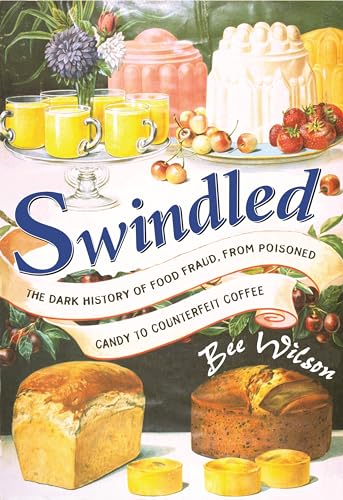
Bad food has a history. Swindled tells it. Through a fascinating mixture of cultural and scientific history, food politics, and culinary detective work, Bee Wilson uncovers the many ways swindlers have cheapened, falsified, and even poisoned our food throughout history. In the hands of people and corporations who have prized profits above the health of consumers, food and drink have been tampered with in often horrifying ways--padded, diluted, contaminated, substituted, mislabeled, misnamed, or otherwise faked. Swindled gives a panoramic view of this history, from the leaded wine of the ancient Romans to today's food frauds--such as fake organics and the scandal of Chinese babies being fed bogus milk powder.
Wilson pays special attention to nineteenth- and twentieth-century America and England and their roles in developing both industrial-scale food adulteration and the scientific ability to combat it. As Swindled reveals, modern science has both helped and hindered food fraudsters--increasing the sophistication of scams but also the means to detect them. The big breakthrough came in Victorian England when a scientist first put food under the microscope and found that much of what was sold as "genuine coffee" was anything but--and that you couldn't buy pure mustard in all of London.
Arguing that industrialization, laissez-faire politics, and globalization have all hurt the quality of food, but also that food swindlers have always been helped by consumer ignorance, Swindled ultimately calls for both governments and individuals to be more vigilant. In fact, Wilson suggests, one of our best protections is simply to reeducate ourselves about the joys of food and cooking.
"synopsis" may belong to another edition of this title.
From the Back Cover
"Bee Wilson is a terrific writer who tells great stories, and her book could not be more timely given what's going on in the Chinese food industry today."--Marion Nestle, author of Food Politics and What to Eat
"No other book tells the history of food adulteration in this way. Swindled is ambitious in its coverage and extremely well written."--Andrew F. Smith, editor of the Oxford Companion to American Food and Drink
About the Author
Bee Wilson is the author of The Hive: The Story of the Honeybee and Us. She writes a weekly food column for London's Sunday Telegraph and is a former food critic for the New Statesman. She has been named Food Journalist of the Year by the Guild of Food Writers and Food Writer of the Year by BBC Radio 4.
"About this title" may belong to another edition of this title.
- PublisherPrinceton University Press
- Publication date2008
- ISBN 10 0691138206
- ISBN 13 9780691138206
- BindingHardcover
- LanguageEnglish
- Edition number1
- Number of pages400
- Rating

Search results for Swindled: The Dark History of Food Fraud, from Poisoned...

Seller Image
Swindled: The Dark History of Food Fraud, from Poisoned Candy to Counterfeit Coffee
Published by
Princeton University Press, 2008
ISBN 10: 0691138206
ISBN 13: 9780691138206
Used
Hardcover
Seller: Dream Books Co., Denver, CO, U.S.A.
Seller rating 5 out of 5 stars

Condition: acceptable. This copy has clearly been enjoyedâ"expect noticeable shelf wear and some minor creases to the cover. Binding is strong, and all pages are legible. May contain previous library markings or stamps. Seller Inventory # DBV.0691138206.A
Quantity: 1 available
Stock Image
Swindled : The Dark History of Food Fraud, from Poisoned Candy to Counterfeit Coffee
Published by
Princeton University Press, 2008
ISBN 10: 0691138206
ISBN 13: 9780691138206
Used
Hardcover
Seller: Better World Books: West, Reno, NV, U.S.A.
Seller rating 5 out of 5 stars
Condition: Good. Former library book; may include library markings. Used book that is in clean, average condition without any missing pages. Seller Inventory # 5008904-20
Quantity: 1 available
Stock Image
Swindled : The Dark History of Food Fraud, from Poisoned Candy to Counterfeit Coffee
Published by
Princeton University Press, 2008
ISBN 10: 0691138206
ISBN 13: 9780691138206
Used
Hardcover
Seller: Better World Books, Mishawaka, IN, U.S.A.
Seller rating 5 out of 5 stars
Condition: Good. Former library book; may include library markings. Used book that is in clean, average condition without any missing pages. Seller Inventory # 5008904-20
Quantity: 1 available
Stock Image
Swindled : The Dark History of Food Fraud, from Poisoned Candy to Counterfeit Coffee
Published by
Princeton University Press, 2008
ISBN 10: 0691138206
ISBN 13: 9780691138206
Used
Hardcover
Seller: Better World Books, Mishawaka, IN, U.S.A.
Seller rating 5 out of 5 stars
Condition: Very Good. Former library book; may include library markings. Used book that is in excellent condition. May show signs of wear or have minor defects. Seller Inventory # 5003937-6
Quantity: 3 available
Stock Image
Swindled: The Dark History of Food Fraud, from Poisoned Candy to Counterfeit Coffee
Published by
Princeton University Press, 2008
ISBN 10: 0691138206
ISBN 13: 9780691138206
Used
Hardcover
Seller: SecondSale, Montgomery, IL, U.S.A.
Seller rating 5 out of 5 stars
Condition: Good. Item in good condition. Textbooks may not include supplemental items i.e. CDs, access codes etc. Seller Inventory # 00080327503
Quantity: 1 available
Stock Image
Swindled: The Dark History of Food Fraud, from Poisoned Candy to Counterfeit Coffee
Published by
Princeton University Press, 2008
ISBN 10: 0691138206
ISBN 13: 9780691138206
Used
Paperback
Seller: WorldofBooks, Goring-By-Sea, WS, United Kingdom
Seller rating 4 out of 5 stars

Paperback. Condition: Very Good. The book has been read, but is in excellent condition. Pages are intact and not marred by notes or highlighting. The spine remains undamaged. Seller Inventory # GOR009862854
Quantity: 1 available
Stock Image
Swindled: The Dark History of Food Fraud, from Poisoned Candy to Counterfeit Coffee
Published by
Princeton University Press, 2008
ISBN 10: 0691138206
ISBN 13: 9780691138206
Used
Hardcover
Seller: GF Books, Inc., Hawthorne, CA, U.S.A.
Seller rating 5 out of 5 stars
Condition: Good. Book is in Used-Good condition. Pages and cover are clean and intact. Used items may not include supplementary materials such as CDs or access codes. May show signs of minor shelf wear and contain limited notes and highlighting. 1.55. Seller Inventory # 0691138206-2-4
Quantity: 1 available
Stock Image
Swindled: The Dark History of Food Fraud, from Poisoned Candy to Counterfeit Coffee
Published by
Princeton University Press, 2008
ISBN 10: 0691138206
ISBN 13: 9780691138206
Used
Hardcover
Seller: Weird Books, Petaluma, CA, U.S.A.
Seller rating 5 out of 5 stars
hardcover. Condition: Good. Previously read with typical light wear. Good text with minor/ minimal marking, reading wear to edges and dustjacket. US orders shipped via US Mail. International orders shipped via DHL. Additional postage may be required on oversize books and sets. Seller Inventory # 2412190082
Quantity: 1 available
Stock Image
Swindled: The Dark History of Food Fraud, from Poisoned Candy to Counterfeit Coffee
Published by
Princeton University Press, 2008
ISBN 10: 0691138206
ISBN 13: 9780691138206
Used
Hardcover
Seller: Sharehousegoods, Colgate, WI, U.S.A.
Seller rating 5 out of 5 stars
Condition: Good. This is an ex-library book with library stickers and customary markings.hardcoverUsed - Good. Seller Inventory # MO-23-04-00022
Quantity: 1 available
Stock Image
Swindled: The Dark History of Food Fraud, from Poisoned Candy to Counterfeit Coffee
Published by
Princeton University Press, 2008
ISBN 10: 0691138206
ISBN 13: 9780691138206
Used
Hardcover
First Edition
Seller: Dalton Books, Eureka, CA, U.S.A.
Seller rating 5 out of 5 stars
Hardcover. Condition: Good. Dust Jacket Condition: Good. 1st Edition. Found a couple of page corner creases. Minor wear to extremities. No markings. Seller Inventory # 012242
Quantity: 1 available