
Items related to Democratic Delusions: The Initiative Process in America
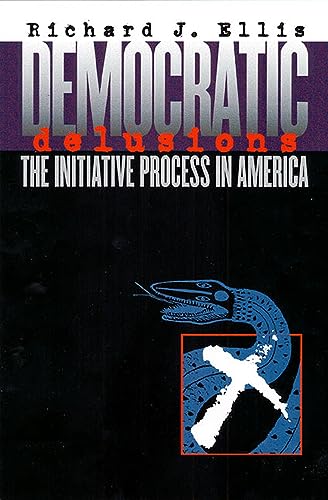
Synopsis
It is becoming common in many states: the opportunity to reclaim government from politicians by simply signing a petition to put an initiative on the ballot and then voting for it. Isn't this what America ought to be about? Proposition 13 in California's 1978 election paved the way; the past decade saw more than 450 such actions; now in many states direct legislation dominates the political agenda and defines political—and public-opinion.
While this may appear to be democracy in action, Richard Ellis warns us that the initiative process may be putting democracy at risk. In Democratic Delusions he offers a critical analysis of the statewide initiative process in the United States, challenging readers to look beyond populist rhetoric and face political reality.
Through engaging prose and illuminating (and often amusing) anecdotes, Ellis shows readers the "dark side" of direct democracy—specifically the undemocratic consequences that result from relying too heavily on the initiative process. He provides historic context to the development of initiatives-from their Populist and Progress roots to their accelerated use in recent decades-and shows the differences between initiative processes in the states that use them. Most important, while acknowledging the positive contribution of initiatives, Ellis shows that there are reasons to use them carefully and sparingly: ill-considered initiatives can subvert normal legislative checks and balances, undermine the deliberative process, and even threaten the rights of minority groups through state-sanctioned measures.
Today's initiative process, Ellis warns, is dominated not by ordinary citizens but by politicians, perennial activists, wealthy interests, and well-oiled machines. Deliberately misleading language on the ballot confuses voters and influences election results. And because many initiatives are challenged in the courts, these ostensibly democratic procedures have now put legislation in the hands of the judiciary. Throughout his book he cites examples drawn from states in which initiatives are used intensively—Oregon, California, Colorado, Washington, and Arizona-as well as others in which their use has increased in recent years.
Undoing mistakes enacted by initiative can be more difficult than correcting errors of legislatures. As voters prepare to consider the host of initiatives that will be offered in the 2002 elections, this book can help put those efforts in a clearer light. Democratic Delusions urges moderation, attempting to teach citizens to be at least as skeptical of the initiative process as they are of the legislative process—and to appreciate the enduring value of the representative institutions they seek to circumvent.
"synopsis" may belong to another edition of this title.
About the Author
Richard J. Ellis is Mark O. Hatfield Professor of Politics at Willamette University. His other books include The Dark Side of the Left: Illiberal Egalitarianism in America and Presidential Lightning Rods: The Politics of Blame Avoidance, both from Kansas, and, most recently, Founding the American Presidency.
From the Back Cover
"Offers the sharp wit, strong writing, great stories, and attention to detail that we've come to expect from Ellis's impressive body of work."-- Edward L. Lascher, author of The Politics of Automobile Insurance Reform
"Democratic Delusions is a rare accomplishment: first class civic education that is a pleasure to read. Ellis has a lot to offer American voters everywhere-- especially those who wonder exactly what the initiatives on their ballots will actually accomplish."--Nelson W. Polsby, author of Political Innovation in America: The Politics of Policy Initiation
"Highly readable and often provocative, Democratic Delusions boldly challenges the belief that the initiative process gives 'power to the people.'"--Daniel A. Smith, author of Tax Crusaders and the Politics of Direct Democracy
Reviews
Is the ballot initiative the truest form of democracy, as its supporters claim? No, according to political scientist Ellis (Founding the American Presidency) in this devastating analysis of how the initiative game is played. Only rarely and accidentally, he contends, is the public interest served by the initiative process. In the 1990s, for instance, initiative activists in Oregon, Washington and Colorado gained tremendous visibility and power without any accountability to "the people" they claimed to represent. On one hand, such initiatives are still political, with money and well-organized special interests enjoying powerful advantages; on the other hand, "the people" themselves usually have conflicting interests that legislatures try to balance, but initiatives can ignore. The ballot initiative's first, Populist era American backers saw it as a panacea for confronting entrenched corporate power. Progressive era backers 100 years ago saw it more modestly, as a "gun behind the door," seldom used but always handy to force legislative action. Both groups were misguided, however, says Ellis. Most Progressive reforms passed without the initiative, while at other times, initiatives clogged the ballot (in Oregon in 1912 there were 28 initiatives). Indeed, Ellis shows, the initiative can be counterproductive: the vote for women was significantly delayed by it, he argues politicians were far more supportive of woman suffrage than were voters. Historically revealing, and distressingly up-to-date (he includes examples from the 2000 elections), Ellis masterfully uses vivid cases to illustrate broad underlying problems. This is a book to crystallize simmering discontent.
Copyright 2002 Cahners Business Information, Inc.
"About this title" may belong to another edition of this title.
Search results for Democratic Delusions: The Initiative Process in America

Stock Image
Democratic Delusions: The Initiative Process in America
Published by
University Press of Kansas, 2002
ISBN 10: 0700611568
ISBN 13: 9780700611560
Used
Paperback
Seller: World of Books (was SecondSale), Montgomery, IL, U.S.A.
Seller rating 5 out of 5 stars

Paperback. Condition: Very Good. A critical analysis of the statewide initiative process in the United States, challenging readers to look beyond populist rhetoric and face political reality. Through prose, anecdotes and historical context, Richard Ellis seeks to reveal the dark side of direct democracy. Seller Inventory # 00109796759
Stock Image
Democratic Delusions: The Initiative Process in America
Published by
University Press of Kansas, 2002
ISBN 10: 0700611568
ISBN 13: 9780700611560
Used
Paperback
Seller: World of Books (was SecondSale), Montgomery, IL, U.S.A.
Seller rating 5 out of 5 stars
Paperback. Condition: Good. A critical analysis of the statewide initiative process in the United States, challenging readers to look beyond populist rhetoric and face political reality. Through prose, anecdotes and historical context, Richard Ellis seeks to reveal the dark side of direct democracy. Seller Inventory # 00109333632
Stock Image
Democratic Delusions: The Initiative Process in America
Published by
University Press of Kansas, 2002
ISBN 10: 0700611568
ISBN 13: 9780700611560
Used
paperback
Seller: Evergreen Goodwill, Seattle, WA, U.S.A.
Seller rating 5 out of 5 stars
paperback. Condition: Good. Seller Inventory # mon0000705490
Stock Image
Democratic Delusions: The Initiative Process in America
Published by
University Press of Kansas, 2002
ISBN 10: 0700611568
ISBN 13: 9780700611560
Used
Paperback
Seller: World of Books Inc, Montgomery, IL, U.S.A.
Seller rating 4 out of 5 stars

Paperback. Condition: Very Good. A critical analysis of the statewide initiative process in the United States, challenging readers to look beyond populist rhetoric and face political reality. Through prose, anecdotes and historical context, Richard Ellis seeks to reveal the dark side of direct democracy. Seller Inventory # CIN0700611568VG
Stock Image
Democratic Delusions: The Initiative Process in America
Published by
University Press of Kansas, 2002
ISBN 10: 0700611568
ISBN 13: 9780700611560
Used
Paperback
Seller: World of Books Inc, Montgomery, IL, U.S.A.
Seller rating 4 out of 5 stars
Paperback. Condition: Good. A critical analysis of the statewide initiative process in the United States, challenging readers to look beyond populist rhetoric and face political reality. Through prose, anecdotes and historical context, Richard Ellis seeks to reveal the dark side of direct democracy. Seller Inventory # CIN0700611568G
Stock Image
Democratic Delusions : The Initiative Process in America
Published by
University Press of Kansas, 2002
ISBN 10: 0700611568
ISBN 13: 9780700611560
Used
Softcover
Seller: Better World Books: West, Reno, NV, U.S.A.
Seller rating 5 out of 5 stars
Condition: Very Good. 1 Edition. Pages intact with possible writing/highlighting. Binding strong with minor wear. Dust jackets/supplements may not be included. Stock photo provided. Product includes identifying sticker. Better World Books: Buy Books. Do Good. Seller Inventory # 11933058-6
Stock Image
Democratic Delusions : The Initiative Process in America
Published by
University Press of Kansas, 2002
ISBN 10: 0700611568
ISBN 13: 9780700611560
Used
Softcover
Seller: Better World Books, Mishawaka, IN, U.S.A.
Seller rating 5 out of 5 stars
Condition: Good. 1 Edition. Former library copy. Pages intact with minimal writing/highlighting. The binding may be loose and creased. Dust jackets/supplements are not included. Includes library markings. Stock photo provided. Product includes identifying sticker. Better World Books: Buy Books. Do Good. Seller Inventory # GRP104675118
Seller Image
Democratic Delusions: The Initiative Process in America
Published by
University Press of Kansas, 2002
ISBN 10: 0700611568
ISBN 13: 9780700611560
Used
Softcover
Seller: Goodwill Books, Hillsboro, OR, U.S.A.
Seller rating 5 out of 5 stars
Condition: good. Signs of wear and consistent use. Seller Inventory # GICWV.0700611568.G
Stock Image
Democratic Delusions: The Initiative Process in America
Published by
University Press of Kansas, 2002
ISBN 10: 0700611568
ISBN 13: 9780700611560
Used
paperback
Seller: Midtown Scholar Bookstore, Harrisburg, PA, U.S.A.
Seller rating 5 out of 5 stars
paperback. Condition: Very Good. Very Good - Crisp, clean, unread book with some shelfwear/edgewear, may have a remainder mark - NICE PAPERBACK Standard-sized. Seller Inventory # M0700611568Z2
Stock Image
Democratic Delusions: The Initiative Process in America
Published by
University Press of Kansas, 2002
ISBN 10: 0700611568
ISBN 13: 9780700611560
Used
paperback
Seller: Textbooks_Source, Columbia, MO, U.S.A.
Seller rating 5 out of 5 stars
paperback. Condition: Good. Ships in a BOX from Central Missouri! May not include working access code. Will not include dust jacket. Has used sticker(s) and some writing or highlighting. UPS shipping for most packages, (Priority Mail for AK/HI/APO/PO Boxes). Seller Inventory # 000629906U