
Items related to How to Read the Bible: A Guide to Scripture, Then and...
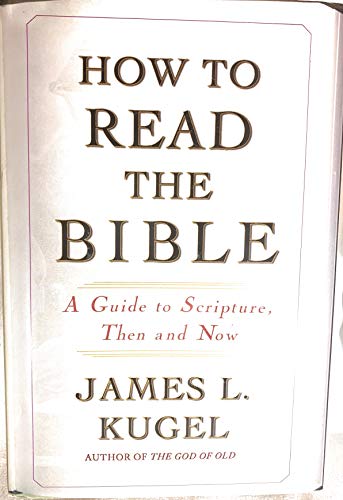
Synopsis
A reader's companion to the Bible draws on classic interpretations as well as modern scholarship to explain how the Bible may also be a metaphorical reflection of anthropological history, in a guide that covers such topics as the fates of Israelites who remained behind in Canaan and the correlation between the commandments and the Code of Hammurabi. 30,000 first printing.
"synopsis" may belong to another edition of this title.
About the Author
James L. Kugel, Starr Professor of Hebrew at Harvard from 1982 to 2003, now lives in Jerusalem. A specialist in the Hebrew Bible and its interpretation, he is the author of The God of Old and The Great Poems of the Bible. His course on the Bible was regularly one of the two most popular at Harvard, enrolling more than nine hundred students.
Reviews
Kugel's tour de force of biblical scholarship juxtaposes two different ways of reading the Bible: the ancient biblical interpretations, ranging from the Book of Jubilees to Augustine, that he explored in The Bible as It Was, and the modern historical approach that challenges the historical veracity of scripture and seeks instead to find its writers' original sources and purposes. It can be a jarring journey for those schooled in traditional views, but what emerges is a fresh, even strange, and very rich view of everything from the Garden of Eden to Isaiah's dream vision of God. Refreshingly undogmatic and often witty, Kugel brings an intimate knowledge of the Hebrew Bible to illuminate small points as well as large. He discusses who the ancient Israelites were; the resemblances between YHWH and Canaanite gods; the unique role of the prophet in Ancient Near Eastern religions; the nature of ancient wisdom literature; and what the Bible means when it calls Solomon the wisest of men. The result is a stunning narrative of the evolution of ancient Israel, of its God and of the entire Hebrew Bible, contrasted with ancient interpretations that aimed to uncover hidden meanings and moral lessons. So, for example, for the ancients, the story of Cain and Abel is a tale of good versus evil. For the moderns, it was originally a story of origin, about the relation between ancient Israelites and the fierce Kenites to their south. While Kugel is a traditional Jew, he sees the modern approach as compelling, so the dilemma is whether a person of faith can read scripture in both the old way and the new. Drawing on Judaism's nonfundamentalist approach, Kugel's proposed answer is that the original purpose of the texts and their lack of historical accuracy matters less than their underlying message: to serve God. (Sept.)
Copyright © Reed Business Information, a division of Reed Elsevier Inc. All rights reserved.
Kugel intends his book as a tour through the Hebrew Bible based on an introductory course he taught at Harvard University for more than 20 years. His first aim is to acquaint readers with the contents of the Bible itself, and he points out that by the end of his introductory course, readers will have met all the major biblical figures: Abraham and Sarah, Moses, Miriam, Aaron, and Solomon, to name just a few. The book also covers all the major events, from the story of Adam and Eve to the Exodus from Egypt, the Babylonian exile, and Israel's eventual return to its homeland. The book not only focuses on what the text says but on the larger question of what a modern reader is to make of it. Geared to both the specialist and the general reader, this is an indispensable guide to a complex subject. Cohen, George
"About this title" may belong to another edition of this title.
Search results for How to Read the Bible: A Guide to Scripture, Then and...

Stock Image
How to Read the Bible: A Guide to Scripture, Then and Now
Seller: ThriftBooks-Reno, Reno, NV, U.S.A.
Seller rating 5 out of 5 stars

Hardcover. Condition: Good. No Jacket. Former library book; Pages can have notes/highlighting. Spine may show signs of wear. ~ ThriftBooks: Read More, Spend Less. Seller Inventory # G074323586XI3N10
Stock Image
How to Read the Bible: A Guide to Scripture, Then and Now
Seller: ThriftBooks-Dallas, Dallas, TX, U.S.A.
Seller rating 5 out of 5 stars
Hardcover. Condition: Good. No Jacket. Missing dust jacket; Pages can have notes/highlighting. Spine may show signs of wear. ~ ThriftBooks: Read More, Spend Less. Seller Inventory # G074323586XI3N01
Stock Image
How to Read the Bible: A Guide to Scripture, Then and Now
Seller: ThriftBooks-Atlanta, AUSTELL, GA, U.S.A.
Seller rating 5 out of 5 stars
Hardcover. Condition: Good. No Jacket. Former library book; Pages can have notes/highlighting. Spine may show signs of wear. ~ ThriftBooks: Read More, Spend Less. Seller Inventory # G074323586XI3N10
Stock Image
How to Read the Bible: A Guide to Scripture, Then and Now
Seller: ThriftBooks-Dallas, Dallas, TX, U.S.A.
Seller rating 5 out of 5 stars
Hardcover. Condition: Good. No Jacket. Pages can have notes/highlighting. Spine may show signs of wear. ~ ThriftBooks: Read More, Spend Less. Seller Inventory # G074323586XI3N00
Stock Image
How to Read the Bible: A Guide to Scripture, Then and Now
Seller: ThriftBooks-Atlanta, AUSTELL, GA, U.S.A.
Seller rating 5 out of 5 stars
Hardcover. Condition: Fair. No Jacket. Readable copy. Pages may have considerable notes/highlighting. ~ ThriftBooks: Read More, Spend Less. Seller Inventory # G074323586XI5N00
Stock Image
How to Read the Bible: A Guide to Scripture, Then and Now
Seller: ThriftBooks-Atlanta, AUSTELL, GA, U.S.A.
Seller rating 5 out of 5 stars
Hardcover. Condition: Good. No Jacket. Pages can have notes/highlighting. Spine may show signs of wear. ~ ThriftBooks: Read More, Spend Less. Seller Inventory # G074323586XI3N00
Stock Image
How to Read the Bible: A Guide to Scripture, Then and Now
Seller: ThriftBooks-Dallas, Dallas, TX, U.S.A.
Seller rating 5 out of 5 stars
Hardcover. Condition: Good. No Jacket. Former library book; Pages can have notes/highlighting. Spine may show signs of wear. ~ ThriftBooks: Read More, Spend Less. Seller Inventory # G074323586XI3N10
Stock Image
How to Read the Bible: A Guide to Scripture Then and Now
Seller: World of Books (was SecondSale), Montgomery, IL, U.S.A.
Seller rating 5 out of 5 stars
Hardback. Condition: Very Good. In How to Read the Bible, Harvard professor James Kugel leads the listener through the quiet revolution of recent biblical scholarship, showing how radically the interpretations of today's researchers differ from what people have always thought. The story of Adam and Eve, it turns out, was not originally about the Fall of Man, but about the move from a primitive, hunter-gatherer society to a settled, agricultural one. As for the stories of Cain and Abel, Abraham and Sarah, and Jacob and Esau, they were not about individual people at all but, rather, explanations of Israelite society as it existed centuries after these figures were said to have lived. In the earliest version of the Exodus story, Moses probably did not divide the Red Sea in half; instead, the Egyptians perished in a storm at sea. Whatever the original Ten Commandments might have been, scholars are quite sure they were different from the ones we have today. What's more, the people long supposed to have written various books of the Bible were not their real authors: David did not write the Psalms, Solomon did not write Proverbs.Such findings pose a problem for adherents of traditional, Bible-based faiths. Hiding from the discoveries of modern scholars seems dishonest, but accepting them means undermining much of the Bible's reliability and authority as the word of God. What to do? In his search for a solution, Kugel leads the listener back to ancient biblical interpreters who flourished at the end of the biblical period. Far from na ve, these interpreters consciously set out to depart from the original meaning of the Bible's various stories and prophecies--and they, Kugel argues, hold the key to solving the dilemma of reading the Bible today.How to Read the Bible is, quite simply, the best, most original audiobook about the Bible in decades. Clear, often funny, but deeply serious in its purpose, this is an audiobook for Christians and Jews, believers and secularists alike. Seller Inventory # CIN074323586XVG
Stock Image
How to Read the Bible: A Guide to Scripture Then and Now
Seller: World of Books (was SecondSale), Montgomery, IL, U.S.A.
Seller rating 5 out of 5 stars
Hardback. Condition: Good. In How to Read the Bible, Harvard professor James Kugel leads the listener through the quiet revolution of recent biblical scholarship, showing how radically the interpretations of today's researchers differ from what people have always thought. The story of Adam and Eve, it turns out, was not originally about the Fall of Man, but about the move from a primitive, hunter-gatherer society to a settled, agricultural one. As for the stories of Cain and Abel, Abraham and Sarah, and Jacob and Esau, they were not about individual people at all but, rather, explanations of Israelite society as it existed centuries after these figures were said to have lived. In the earliest version of the Exodus story, Moses probably did not divide the Red Sea in half; instead, the Egyptians perished in a storm at sea. Whatever the original Ten Commandments might have been, scholars are quite sure they were different from the ones we have today. What's more, the people long supposed to have written various books of the Bible were not their real authors: David did not write the Psalms, Solomon did not write Proverbs.Such findings pose a problem for adherents of traditional, Bible-based faiths. Hiding from the discoveries of modern scholars seems dishonest, but accepting them means undermining much of the Bible's reliability and authority as the word of God. What to do? In his search for a solution, Kugel leads the listener back to ancient biblical interpreters who flourished at the end of the biblical period. Far from na ve, these interpreters consciously set out to depart from the original meaning of the Bible's various stories and prophecies--and they, Kugel argues, hold the key to solving the dilemma of reading the Bible today.How to Read the Bible is, quite simply, the best, most original audiobook about the Bible in decades. Clear, often funny, but deeply serious in its purpose, this is an audiobook for Christians and Jews, believers and secularists alike. Seller Inventory # 00104859351
Stock Image
How to Read the Bible: A Guide to Scripture Then and Now
Seller: World of Books (was SecondSale), Montgomery, IL, U.S.A.
Seller rating 5 out of 5 stars
Hardback. Condition: Fair. In How to Read the Bible, Harvard professor James Kugel leads the listener through the quiet revolution of recent biblical scholarship, showing how radically the interpretations of today's researchers differ from what people have always thought. The story of Adam and Eve, it turns out, was not originally about the Fall of Man, but about the move from a primitive, hunter-gatherer society to a settled, agricultural one. As for the stories of Cain and Abel, Abraham and Sarah, and Jacob and Esau, they were not about individual people at all but, rather, explanations of Israelite society as it existed centuries after these figures were said to have lived. In the earliest version of the Exodus story, Moses probably did not divide the Red Sea in half; instead, the Egyptians perished in a storm at sea. Whatever the original Ten Commandments might have been, scholars are quite sure they were different from the ones we have today. What's more, the people long supposed to have written various books of the Bible were not their real authors: David did not write the Psalms, Solomon did not write Proverbs.Such findings pose a problem for adherents of traditional, Bible-based faiths. Hiding from the discoveries of modern scholars seems dishonest, but accepting them means undermining much of the Bible's reliability and authority as the word of God. What to do? In his search for a solution, Kugel leads the listener back to ancient biblical interpreters who flourished at the end of the biblical period. Far from na ve, these interpreters consciously set out to depart from the original meaning of the Bible's various stories and prophecies--and they, Kugel argues, hold the key to solving the dilemma of reading the Bible today.How to Read the Bible is, quite simply, the best, most original audiobook about the Bible in decades. Clear, often funny, but deeply serious in its purpose, this is an audiobook for Christians and Jews, believers and secularists alike. Seller Inventory # 00109969370