
Items related to To Read or Not to Read: Answers to All Your Questions...
Synopsis
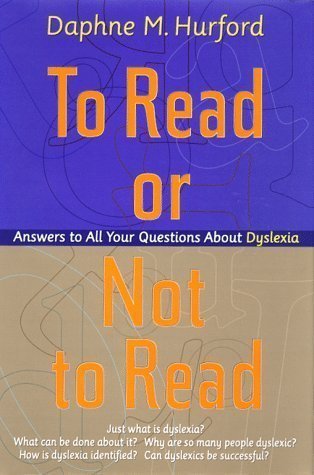
Dyslexia is a disorder that affects over 15% of the Amer. pop'n. & knows no age, gender, or class boundaries. Broadly defined as some kind of difficulty with the written word, learning to read, &/or learning to write, dyslexia is still widely misunderstood. This is the first comprehensive book for a general audience about this disorder. It covers all ages & stages of diagnosis & gives several examples of remediation. Explains what it's like to live with dyslexia through anecdotes about well-known dyslexics. Shows how individually focused programs work with students. Explores what can be done to help dyslexics by evaluating the different educational programs & teaching methods available. Lists reliable institutions that have helped dyslexics & their families.
"synopsis" may belong to another edition of this title.
From Publishers Weekly
Former Life magazine journalist Hurford has written the best comprehensive book about dyslexia intended for a general audience. Told with consummate respect for the intelligence and perseverance of dyslexics, Hurford's work could and should change lives. She begins with the comforting reality that many successful, important people share this condition, among them Einstein, Churchill, Yeats and Nelson Rockefeller. Her careful definition accurately reflects the term's vague etymology (dys, difficult, and lexis, word): "difficulty reading words, writing words, remembering words, and sometimes even pronouncing words." Hurford helps explain how this often misunderstood condition that affects 15% of Americans can show itself in widely varying ways in dyslexics' reading, writing and day-to-day life. "According to the Dyslexia Association," Hurford reports, "dyslexia is 'neurologically based'" and "the brain... needs to be trained" in order for the dyslexic to effectively function in the realm of the printed word. Now a learning specialist with a private practice in New York City, the author delineates the school's role in helping dyslexics. Her explanations about diagnosis, remediation and available services will be of enormous help to parents, students, and dyslexics of all ages as they work with this condition. Hurford draws on both clear interpretations of current research and on dozens of case studies that prove that the frustration of dyslexia can be greatly reduced. This is concise, comprehensive and informative reading.
Copyright 1998 Reed Business Information, Inc.
Review
Harold S. Koplewicz, M.D. professor and vice chairman of Psychiatry, and director of the Child Study Center, New York University School of Medicine; and author of "It's Nobody's Fault" Finally, an easy-to-read and scientifically based book on dyslexia. Daphne M. Hurford has written a comprehensive guide for the evaluation and treatment of dyslexia. For the millions of Americans suffering from dyslexia, this volume is a necessary addition to their family library.
"About this title" may belong to another edition of this title.