
Items related to Witch Child
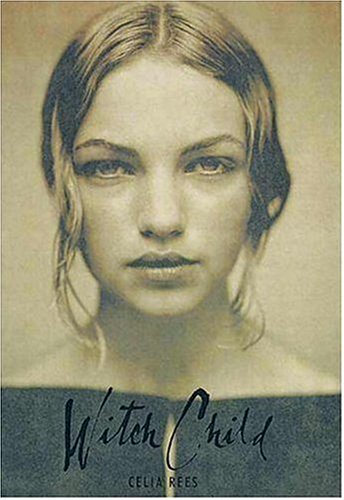
Synopsis
This spellbinding story will transport readers to a time long ago, but one that might not be so different from the world today. (ages 12 and up)
"First they 'walked ' her, marching her up and down, up and down between them for a day and a night until she could no longer hobble, her feet all bloody and swollen. She would not confess. So they set about to prove she was a witch. . . ."
Enter the world of young Mary Newbury, a world where simply being different can cost a person her life. Hidden until now in the pages of her diary, Mary's startling story begins in 1659, the year her beloved grandmother is hanged in the public square as a witch. Mary narrowly escapes a similar fate, only to face intolerance and new danger among the Puritans in the New World. How long can she hide her true identity? Will she ever find a place where her healing powers will not be feared?
Though Mary's story takes place 350 years ago, she is a credible and engaging feminist character for modern times. WITCH CHILD will compel readers to ask themselves: how much have things really changed?
"synopsis" may belong to another edition of this title.
About the Author
Celia Rees is the author of many novels for teens. WITCH CHILD is her first with Candlewick Press. After reading about seventeenth-century witch persecutions and Native American shamanism, she says, "It occurred to me that the beliefs and skills that would have condemned a woman to death in one society would have been revered in another. That got me thinking, what if there was a girl who could move between these two worlds?... Mary came into my head and WITCH CHILD began."
Reviews
Gr 5-9-Journal entries, found and pieced together from pages stitched inside a 17th-century quilt, are said to be the basis of this captivating tale. As her grandmother is executed as a witch by English village folk, Mary Newbury is abducted by a wealthy woman and shipped off to America. During the long, difficult journey, she makes friends with some of the other Puritan emigrants, finding an older woman to draw her into the community. They join other followers of the Reverend Elias Cornwall to travel to a newly established village deep in the Massachusetts wilderness where their very survival is threatened, not only by the harsh physical conditions, but also, the villagers believe, by savage Native Americans and the presence of the devil among them. The healing skills Mary learned from her grandmother make her useful, but also a target for suspicion. She is befriended by a Native American boy who accepts without question the supernatural talents she must hide from her community. When, inevitably, the village turns against her, she escapes to the woods. There is no more to the story in this volume, but eager readers who visit the accompanying Web site will learn that a sequel is forthcoming. While the quilt premise is an obvious ploy, the historical setting is sound and well developed, and Mary is an entirely believable character. Readers already captivated by stories such as Ann Rinaldi's Break with Charity (Harcourt, 1992) or Elizabeth George Speare's The Witch of Blackbird Pond (Houghton, 1958) will not want to miss this one.
Kathleen Isaacs, Edmund Burke School, Washington, DC
Copyright 2001 Cahners Business Information, Inc.
Though much of Rees's debut novel moves at a lackadaisical pace, its opening scenes are riveting: Mary, 14, watches as her grandmother the only family she has ever known is tortured, tried and finally hung as a witch. Afterward, a mysterious protector sends Mary away from England with a group of Puritans bound for a remote Massachusetts settlement an odd haven indeed for a girl reputed to be a witch. The book unfolds through Mary's diary entries. She tries to be "the perfect little Puritan maid" during the voyage and, upon reaching America, travels with her fellow passengers to a new settlement. But there Mary is drawn to the forest and a Native American boy, Jaybird (grandson of an elder who is, of course, a wise healer), raising the suspicions of her neighbors. Crisis looms when Mary becomes the scapegoat of a witch trial centering on the hysterical behavior of a gaggle of privileged Puritan girls (shades of The Crucible). Though the story is filled with authentic-seeming historic detail, Mary behaves more like a 21st-century teenager with a penchant for things New Age than a product of her own era: she is, for example, one of the only settlers enlightened enough to appreciate the local Native Americans ("The Indians go lightly in the world, that is all"). An afterword provides links to a Web site, as well as a request for "information regarding any of the individuals and families mentioned." A sequel is forthcoming. Hampered by wandering story lines and some stereotyped supporting cast members, this seductive material never quite comes together. Nevertheless, it will likely attract teen horror fans who flocked to The Blair Witch Project (a "foreword" hints at similar trappings, claiming that the story has been pieced together from a collection of papers found sewn into a colonial-era quilt). Ages 12-up.
Copyright 2001 Cahners Business Information, Inc.
Gr. 8-12. "I am Mary. I am a witch." Thus begins the journal of Mary Newbury, writing in the spring of 1659 as she watches her beloved grandmother being tortured and hung as a witch in her English village. Before the crowd can turn on Mary, she is whisked away and placed on a ship headed for America. Although Mary finds a new "family" and friends who understand and believe in her, her new surroundings are not a safe harbor. Witches are blamed for every death, every poor harvest, every strange phenomenon, and the lovely, aloof young Mary who finds solace in the forest and her few friends is immediately suspect. The terrifying, insidious climate of fear and blame is palpable in this work of historical fiction. The journal format is so convincing that teens may believe that Mary actually existed, and the story opens the way to ponder such issues as the destructive nature of fear and the power of a mob. Frances Bradburn
Copyright © American Library Association. All rights reserved
Excerpt. © Reprinted by permission. All rights reserved.
The following manuscript comes from a remarkable collection of documents termed "the Mary papers." Found hidden inside a newly discovered and extremely rare quilt from the colonial period, the papers seem to take the form of an irregularly kept journal or diary. All dates are guesswork, based on references within the text. The first entries are tentatively dated from March 1659. I have altered the original as little as possible, but punctuation, paragraphing, and spellings have been standardized for the modern reader.
Alison Ellman
Boston, MA
1. Early March 1659
I am Mary. I am a witch. Or so some would call me. "Spawn of the Devil," "Witch child," they hiss in the street, although I know neither father nor mother. I know only my grandmother, Eliza Nuttall; Mother Nuttall to her neighbors. She brought me up from a baby. If she knew who my parents are, she never told me.
"Daughter of the Erl King and the Elfen Queen, that's who you are."
We live in a small cottage on the very edge of the forest; Grandmother, me, and her cat and my rabbit.
Lived. Live there no more.
Men came and dragged her away. Men in black coats and hats as tall as steeples. They skewered the cat on a pike; they smashed the rabbit's skull by hitting him against the wall. They said that these were not God's creatures but familiars, the Devil himself in disguise. They threw the mess of fur and flesh on to the midden and threatened to do the same to me, to her, if she did not confess her sins to them.
They took her away then.
She was locked in the keep for more than a week. First they "walked" her, marching her up and down, up and down between them for a day and a night until she could no longer hobble, her feet all bloody and swollen. She would not confess. So they set about to prove she was a witch. They called in a woman, a Witch Pricker, who stabbed my grandmother all over with long pins, probing for the spot that was numb, where no blood ran, the place where the familiars fed. The men watched as the woman did this, and my grandmother was forced to stand before their gloating eyes, a naked old lady, deprived of modesty and dignity, the blood streaming down her withered body, and still she would not confess.
They decided to "float" her. They had plenty of evidence against her, you see. Plenty. All week folk had been coming to them with accusations. How she had overlooked them, bringing sickness to their livestock and families; how she had used magic, sticking pins in wax figures to bring on affliction; how she had transformed herself and roamed the country for miles around as a great hare and how she did this by the use of ointment made from melted corpse fat. They questioned me, demanding, "Is this so?"
She slept in the bed next to me every night, but how do I know where she went when sleep took her?
It was all lies. Nonsense and lies.
These people accusing her, they were our friends, our neighbors. They had gone to her, pleading with her for help with beasts and children, sick or injured, a wife nearing her time. Birth or death, my grandmother was asked to be there to assist in the passage from one world to the next, for she had the skill—in herbs, potions, in her hands—but the power came from inside her, not from the Devil. The people trusted her, or they had until now; they had wanted her presence.
They were all there for the swimming, standing both sides of the river, lining the bridge, staring down at the place, a wide pool where the water showed black and deep. The men in tall hats dragged my grandmother from the stinking hole where they had been keeping her. They cross-bound her, tying her right toe to her left thumb and vice versa, making sure the cords were thin and taut. Then they threw her in. The crowd watched in silence, the only sound the shuffle of many feet edging forward to see what she would do.
"She floats!"
The chant started with just one person remarking, in a quiet voice almost of wonder, then it spread from one to another until all were shouting, like some monstrous howling thing. To float was a sure proof of guilt. They hooked her, pulling her back to shore like a bundle of old washing. They did not want her drowning, because that would deprive them of a hanging.
Witch Child. Copyright (c) 2000 Celia Rees. Candlewick Press, Inc., Cambridge, MA. Published by arrangement with Bloomsbury Publishing plc.
"About this title" may belong to another edition of this title.
Search results for Witch Child

Stock Image
Witch Child
Seller: World of Books (was SecondSale), Montgomery, IL, U.S.A.
Seller rating 5 out of 5 stars

Condition: Good. Item in very good condition! Textbooks may not include supplemental items i.e. CDs, access codes etc. Seller Inventory # 00074812109
Stock Image
Witch Child
Published by
Candlewick (edition 1st Candlewick Press ed), 2001
ISBN 10: 0763614211
ISBN 13: 9780763614218
Used
Seller: BooksRun, Philadelphia, PA, U.S.A.
Seller rating 5 out of 5 stars
Library Binding. Condition: Fair. 1st Candlewick Press ed. With dust jacket. The item might be beaten up but readable. May contain markings or highlighting, as well as stains, bent corners, or any other major defect, but the text is not obscured in any way. Seller Inventory # 0763614211-7-1-13_29
Stock Image
Witch Child
Published by
Candlewick (edition 1st Candlewick Press ed), 2001
ISBN 10: 0763614211
ISBN 13: 9780763614218
Used
Seller: BooksRun, Philadelphia, PA, U.S.A.
Seller rating 5 out of 5 stars
Library Binding. Condition: Very Good. 1st Candlewick Press ed. With dust jacket. It's a well-cared-for item that has seen limited use. The item may show minor signs of wear. All the text is legible, with all pages included. It may have slight markings and/or highlighting. Seller Inventory # 0763614211-11-18-29
Stock Image
Witch Child
Seller: Better World Books, Mishawaka, IN, U.S.A.
Seller rating 5 out of 5 stars
Condition: Good. 1st Candlewick Press ed. Former library copy. Pages intact with minimal writing/highlighting. The binding may be loose and creased. Dust jackets/supplements are not included. Includes library markings. Stock photo provided. Product includes identifying sticker. Better World Books: Buy Books. Do Good. Seller Inventory # GRP65987828
Stock Image
Witch Child
Seller: ThriftBooks-Dallas, Dallas, TX, U.S.A.
Seller rating 5 out of 5 stars
Hardcover. Condition: Very Good. No Jacket. Former library book; May have limited writing in cover pages. Pages are unmarked. ~ ThriftBooks: Read More, Spend Less. Seller Inventory # G0763614211I4N10
Stock Image
Witch Child
Seller: ThriftBooks-Atlanta, AUSTELL, GA, U.S.A.
Seller rating 5 out of 5 stars
Hardcover. Condition: Very Good. No Jacket. May have limited writing in cover pages. Pages are unmarked. ~ ThriftBooks: Read More, Spend Less. Seller Inventory # G0763614211I4N00
Stock Image
Witch Child
Seller: ThriftBooks-Dallas, Dallas, TX, U.S.A.
Seller rating 5 out of 5 stars
Hardcover. Condition: Very Good. No Jacket. May have limited writing in cover pages. Pages are unmarked. ~ ThriftBooks: Read More, Spend Less. Seller Inventory # G0763614211I4N00
Stock Image
Witch Child
Seller: ThriftBooks-Reno, Reno, NV, U.S.A.
Seller rating 5 out of 5 stars
Hardcover. Condition: Very Good. No Jacket. May have limited writing in cover pages. Pages are unmarked. ~ ThriftBooks: Read More, Spend Less. Seller Inventory # G0763614211I4N00
Stock Image
Witch Child
Seller: HPB-Emerald, Dallas, TX, U.S.A.
Seller rating 5 out of 5 stars
hardcover. Condition: Very Good. Connecting readers with great books since 1972! Used books may not include companion materials, and may have some shelf wear or limited writing. We ship orders daily and Customer Service is our top priority! Seller Inventory # S_464496719
Stock Image
Witch Child
Seller: HPB Inc., Dallas, TX, U.S.A.
Seller rating 5 out of 5 stars
hardcover. Condition: Very Good. Connecting readers with great books since 1972! Used books may not include companion materials, and may have some shelf wear or limited writing. We ship orders daily and Customer Service is our top priority! Seller Inventory # S_484686697