
Items related to Fair Ball: A Fan's Case for Baseball
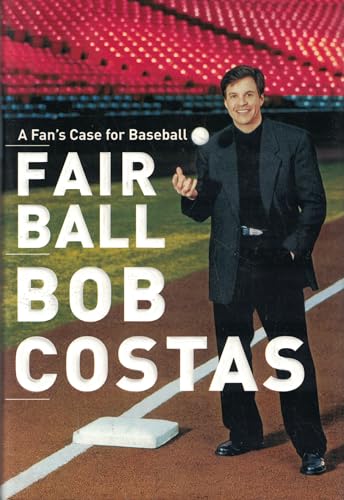
Synopsis
From his perspective as a journalist and a true fan, Bob Costas, NBC's award-winning broadcaster, shares his views on the forces that are diminishing the appeal of Major League Baseball and proposes realistic changes that can be made to protect and promote the game's best interests.
In this cogent--and provocative--book, Costas examines the growing financial disparities that have resulted in nearly two-thirds of the teams in Major League Baseball having virtually no chance of contending for the World Series. He argues that those who run baseball have missed the crucial difference between mere change and real progress. And he presents a withering critique of the positions of both the owners and players while providing insights on the wild-card system, the designated-hitter rule, and interleague play. Costas answers each problem he cites with an achievable strategy for restoring genuine competition and rescuing fans from the forces that have diluted the sheer joy of the game.
Balanced by Costas's unbridled appreciation for what he calls the "moments of authenticity" that can still make baseball inspiring, Fair Ball offers a vision of our national pastime as it can be, a game that retains its traditional appeal while initiating meaningful changes that will allow it to thrive into the next century.
"synopsis" may belong to another edition of this title.
About the Author
Bob Costas has won the Emmy Award as Outstanding Sports Broadcaster eight times and has been named National Sportscaster of the Year by his peers seven times. He has also received Emmy Awards for his writing, interviewing, and reporting. His coverage of major sports events includes the World Series, the Super Bowl, the NBA Finals, and the Olympics. In addition to his sports broadcasting, Costas hosted the Emmy Award-winning interview show Later...with Bob Costas on NBC. He will be hosting a new sports journalism program on HBO beginning in February 2001. A native New Yorker, Costas now lives in St. Louis.
From the Back Cover
"Costas is that rare hybrid in sportscasting with converging wit, erudition and superb communication skills."
--Los Angeles Times
"Costas comes out of a tradition of gentle baseball eloquence."
--New York Times
"He is as good a pure broadcaster as I've ever seen."
--Charlie Rose
"Intelligent, witty, good-natured, he is the very antithesis of the shills who dominate most sports programming."
--People
"With his unique ability to weave intellect into a typically anti-intellectual medium, he's the best in the business."
--P.O.V.
From the Inside Flap
spective as a journalist and a true fan, Bob Costas, NBC's award-winning broadcaster, shares his views on the forces that are diminishing the appeal of Major League Baseball and proposes realistic changes that can be made to protect and promote the game's best interests.
In this cogent--and provocative--book, Costas examines the growing financial disparities that have resulted in nearly two-thirds of the teams in Major League Baseball having virtually no chance of contending for the World Series. He argues that those who run baseball have missed the crucial difference between mere change and real progress. And he presents a withering critique of the positions of both the owners and players while providing insights on the wild-card system, the designated-hitter rule, and interleague play. Costas answers each problem he cites with an achievable strategy for restoring genuine competition and rescuing fans from the forces that have diluted the sheer joy of the game.
Balanced
Reviews
Costas isn't the first announcer to write a manifesto on what's wrong with baseball, nor is he the only person to think the game's soul has been debased by hyper-escalating salaries, bonehead revisions to the league and shortsighted owners toeing the bottom line. But he is one of the more persuasive and eloquent. Costas firmly grasps the game's economics, and he marshals mounds of evidence and countless wise insights to show why the sport needs revenue sharing, a salary cap and a salary minimum to restore competitive balance. Next, he dissects other gimmicks of 1990s baseball, such as interleague play, the wild card, the oft-proposed radical realignment. Thankfully, Costas never sits back and says, "It was better when...." Instead, he carefully shows that these gimmicks have been implemented poorly, that they've achieved nothing they were supposed to and that they've instead made pennant races obsolete. In the last frame, Costas briefly pushes a few more hot buttons--umpire oversight, Pete Rose, the DH--and offers what may prove his most controversial opinion: he advocates using instant replay during the playoffs. Throughout, Costas remains evenhanded. If he blames most of the game's problems on the owners, he's no less critical of the superstars and their union lackeys, who, he argues, care more for a few huge paychecks than all the guys making minimum. Author tour. (Apr.)
Copyright 2000 Reed Business Information, Inc.
Costas, NBC sports analyst, is nationally known for his insightful commentary and has long made no secret that of all the sports he has covered, baseball is his favorite. Here he offers nostrums to the deep-seated problems affecting baseball in a book with thoughtful but easy-to-read chapters. He explains that only big-market teams can compete anymore and that revenues and resources of baseball can and should be more evenly spread so as to increase competition. An equitable distribution of profits would certainly give fans of small-market teams reason for hope in the spring. Costas does not like the so-called innovations of the past several decades, including the use of the designated hitter in the American League. He provides an eloquent voice for the everyday fan who is becoming more obsolete owing to the increased costs of visiting a ballpark. This quality volume will circulate well in all public libraries. Highly recommended. [Originally scheduled for release in 1998, this book was covered in the Baseball Roundup, LJ 2/1/98.--Ed.]--Paul Kaplan, Lake Villa Dist. Lib., I.
---Paul Kaplan, Lake Villa Dist. Lib., IL
Copyright 2000 Reed Business Information, Inc.
Think of it this way: your incredibly cute drinking partner opens his mouth and metamorphoses into a baseball wonk. He pushes aside your brew and delivers--in the cadenced tones of a very famous sportscaster--an extended diatribe, carefully thought out and logically developed, about the current and future state of the game. You are enchanted. That's what it's like reading Costas' passionately argued screed. He has a Plan. Balance the revenue, he pleads, laying it out in charts that show how major-league baseball could practice revenue sharing and make it work, saving the lesser franchises from being permanent also-rans. Cap and bottom salaries, he exhorts, laying that out with incentives and a reworking of free agency. He realigns baseball with only one team shifting leagues: the Houston Astros, and makes so strong a case against the wild card that any objections are swept aside with the beer. In the end, he talks about the designated hitter, the All-Star game, umpires, and Pete Rose, too. He makes it all seem right without once letting go of his toe-curling delight in the game itself. Costas says he's a Bull Durham guy, not a Field of Dreams guy, but if we read it, maybe they'll all come to their senses. GraceAnne A. DeCandido
Excerpt. © Reprinted by permission. All rights reserved.
INTRODUCTION
Let's say it's late October, and you're in what should be baseball heaven, sitting on the couch watching the fourth game of the World Series, Yanks vs. Braves.
Suppose for a moment that you're a Minnesota Twins fan. You've been a baseball fan all your life, grew up playing the game, once got Rod Carew's autograph at a Little League clinic, spent your eighth birthday at Metropolitan Stadium in Bloomington, and your fifteenth at the Humpdome in downtown Minneapolis. You played baseball in high school, took a summer vacation in college to Cooperstown, and once joked that you wouldn't leave the country between September 1 and the end of October, because you couldn't stand to miss the end of a pennant race or the playoffs.
But tonight you find yourself watching the Series not because you're passionately rooting for either the Atlanta Braves or the New York Yankees. Instead you're watching mostly because, well, watching the Series is what you've done every October for as long as you can remember (save for that lost fall of 1994).
So you sit there and contemplate the Atlanta Braves, a team the Twins vanquished eight years earlier in perhaps the greatest Series ever. And you wonder about the fortunes and forces that, since then, have sent your club into a decade-long financial and competitive tailspin, while the Braves have been in the playoffs every full season since. The two cities are roughly the same size, and, competitive factors being equal, Minnesota has supported the Twins at least as well as Atlanta has supported its team. Yet in the weird logic of late-'9Os baseball, Atlanta is a big market and Minneapolis-St. Paul is a small one. While your team still plays in the depressing dome, Atlanta has a new state-of-the-art facility with natural grass, good sight lines, a cozy retro feel, and all the modern amenities.
When you look across the field at the New York Yankees, you just shake your head. It's hard to work up the old "Damn Yankees" antipathy these days. Partly because of Joe Torre, and partly because baseball's proudest franchise seems to be playing in a league, if not a sport, entirely different from your own. They got your best player two years ago, even though the Twins' owners would have paid him a team-record contract to stay in Minnesota, near where he grew up. He wanted to go to another club, Chuck Knoblauch said, because he wanted to play for a title. You recall that as a rookie Knoblauch had won a World Series ring. He was a Twin, and it was your team's second world championship in five seasons. You were sure then that Knoblauch would be a Minnesota fixture.
But these days, you know better. No player of consistent All-Star quality is going to remain in Minnesota throughout his career. And yet just this summer, you watched George Brett--who played as recently as 1993--inducted into the Hall of Fame. Brett played his whole career with Kansas City, passing up bigger offers elsewhere. Not that he wasn't well-compensated, both financially and competitively. His Royals were perennial contenders, and won the AL West six times. He was happy to stay. Yet if he came up today, his competitive nature would make a move not just probable, but mandatory--not because of greed or disloyalty, but because teams like Kansas City and Minnesota can no longer even hope to compete.
Now back to the Yankees. After winning their second Series in three years, with a payroll that was already four times that of the Twins, they began the 1999 season by trading for the Cy Young Award winner, Roger Clemens. He's a pitcher you've long respected, but one who has bewildered you in recent years: Hadn't the Texan Clemens said he wanted to be closer to home after leaving the Boston Red Sox in '97? So didn't his decision to sign with the Toronto Blue Jays betray either a disingenuous streak or a staggeringly bad grasp of geography? But Clemens can pitch, so he proceeded to win two straight Cy Young Awards for the Blue Jays. Then Clemens demanded a trade in '99, because, he said, he wanted to play with a contender. And you wondered, "If a team like Toronto--which won back-to-back World Series in '92 and '93, and only recently drew 4 million fans for a season to a new ballpark--can't qualify as a contender, what does that tell you?" And all through the '99 season, as the pitching-shy Blue Jays were fighting toward the brink of contention on the bats of talented young sluggers like Carlos Delgado and Shawn Green, you couldn't help wondering how good they might be if they still had Clemens pitching for them.
After Clemens closes out the Series in Game 4, with a vintage, overpowering performance, you wonder if all this means the same thing to him as it would have if he'd stayed with the Red Sox and they'd somehow won it all. Or if it means anything like what it meant to Kirby Puckett, who took less money to stay in Minnesota, where he won world championships in 1987 and 1991.
In the weeks ahead, instead of the normal shake-up of hot-stove action, the rich get richer, and the ranks of those who can no longer compete grows to include what once were considered "middle-market" clubs. Seattle has a brand-new stadium and a string of sellouts, but they're convinced they'll have to trade Ken Griffey Jr. and/or Alex Rodriguez. Toronto is working on deals to ship away Green and Delgado before they bolt for free agency.
You still call yourself a baseball fan, and you still get out to the Metrodome a few times a season. But the game seems more distant today than it did only a few years ago. You can't follow pennant races anymore--because there aren't any--and the wild card seems hard to get excited about. The media characterizes the game as "on the way back," thanks largely to Mark McGwire and Sammy Sosa. But even at its most epic, the '98 home-run race seemed somewhat disconnected from the season it was part of--less a highlight of the season itself than a thing unto itself (through no fault of the particulars), or a substitute for the plain fact that when the last several baseball seasons began, you knew that your team had no living chance to contend for a pennant.
No, the rising tide has not lifted all boats. And as you watch the games from your living room now, you realize that something essential has changed. You're not nostalgic for the "old days" as much as you are for the more recent ones, when the fact that you had one of the best managers and farm systems in baseball was a crucial advantage. When star players wanted to be with the Twins. When the Twins' owners weren't eyeing other cities. And when you could greet April with the hope that your team had a prayer.
But as you sit and watch the Yankees celebrate, those days seem far removed. You might wonder if anyone on the other side of the screen is feeling the same way.
"About this title" may belong to another edition of this title.
Search results for Fair Ball: A Fan's Case for Baseball

Stock Image
Fair Ball: a Fan's Case for Baseball
Published by
Broadway Books (A Division of Bantam Doubleday Dell Publishing Group Inc), 2000
ISBN 10: 0767904656
ISBN 13: 9780767904650
Used
Hardcover
Seller: World of Books (was SecondSale), Montgomery, IL, U.S.A.
Seller rating 5 out of 5 stars

Hardback. Condition: Very Good. From his perspective as a journalist and a true fan, Bob Costas, NBC's award-winning broadcaster, shares his unflinching views on the forces that are diminishing the appeal of major league baseball and proposes realistic changes that can be made to protect and promote the game's best interests. In this cogent--and provocative--book, Costas examines the growing financial disparities that have resulted in nearly two-thirds of the teams in major league baseball having virtually no chance of contending for the World Series. He argues that those who run baseball have missed the crucial difference between mere change and real progress. And he presents a withering critique of the positions of both the owners and players while providing insights on the wild-card system, the designated-hitter rule, and interleague play. Costas answers each problem he cites with an often innovative, always achievable strategy for restoring genuine competition and rescuing fans from the forces that have diluted the sheer joy of the game. Balanced by Costas's unbridled appreciation for what he calls the moments of authenticity that can still make baseball inspiring, Fair Ball offers a vision of our national pastime as it can be, a game that retains its traditional appeal while initiating thoughtful changes that will allow it to thrive into the next century. Seller Inventory # 00081090327
Stock Image
Fair Ball: a Fan's Case for Baseball
Published by
Broadway Books (A Division of Bantam Doubleday Dell Publishing Group Inc), 2000
ISBN 10: 0767904656
ISBN 13: 9780767904650
Used
Hardcover
Seller: World of Books (was SecondSale), Montgomery, IL, U.S.A.
Seller rating 5 out of 5 stars
Hardback. Condition: Good. From his perspective as a journalist and a true fan, Bob Costas, NBC's award-winning broadcaster, shares his unflinching views on the forces that are diminishing the appeal of major league baseball and proposes realistic changes that can be made to protect and promote the game's best interests. In this cogent--and provocative--book, Costas examines the growing financial disparities that have resulted in nearly two-thirds of the teams in major league baseball having virtually no chance of contending for the World Series. He argues that those who run baseball have missed the crucial difference between mere change and real progress. And he presents a withering critique of the positions of both the owners and players while providing insights on the wild-card system, the designated-hitter rule, and interleague play. Costas answers each problem he cites with an often innovative, always achievable strategy for restoring genuine competition and rescuing fans from the forces that have diluted the sheer joy of the game. Balanced by Costas's unbridled appreciation for what he calls the moments of authenticity that can still make baseball inspiring, Fair Ball offers a vision of our national pastime as it can be, a game that retains its traditional appeal while initiating thoughtful changes that will allow it to thrive into the next century. Seller Inventory # 00053875891
Stock Image
Fair Ball: A Fan's Case for Baseball
Seller: Your Online Bookstore, Houston, TX, U.S.A.
Seller rating 5 out of 5 stars
Hardcover. Condition: Fair. Seller Inventory # 0767904656-4-26434902
Seller Image
Fair Ball: A Fan's Case for Baseball
Seller: 3Brothers Bookstore, Egg harbor township, NJ, U.S.A.
Seller rating 5 out of 5 stars
Condition: good. Books may contain some notes and highlighting. Supplements such as Access Codes, Cd's Dust Jackets, etc. are not guaranteed with used book purchases. Seller Inventory # EVV.0767904656.G
Seller Image
Fair Ball: A Fan's Case for Baseball
Seller: 3Brothers Bookstore, Egg harbor township, NJ, U.S.A.
Seller rating 5 out of 5 stars
Condition: like_new. Book is in like new condition with only potential shelf wear. No marking or highlighting. Seller Inventory # EVV.0767904656.LN
Stock Image
Fair Ball: A Fan's Case for Baseball
Seller: Wonder Book, Frederick, MD, U.S.A.
Seller rating 5 out of 5 stars
Condition: As New. Very Good dust jacket. Seller Inventory # J06G-00321
Stock Image
Fair Ball: A Fan's Case for Baseball
Seller: BooksRun, Philadelphia, PA, U.S.A.
Seller rating 5 out of 5 stars
Hardcover. Condition: Very Good. 1. It's a well-cared-for item that has seen limited use. The item may show minor signs of wear. All the text is legible, with all pages included. It may have slight markings and/or highlighting. Seller Inventory # 0767904656-8-18
Seller Image
Fair Ball: A Fan's Case for Baseball
Seller: Greenworld Books, Arlington, TX, U.S.A.
Seller rating 5 out of 5 stars
Condition: very_good. Fast Free Shipping â" Very Good condition book with a firm cover and clean pages. Shows normal use and some light wear or limited notes markings. A solid, nice copy to enjoy. Seller Inventory # GWV.0767904656.VG
Stock Image
Fair Ball: a Fan's Case for Baseball
Published by
Broadway Books (A Division of Bantam Doubleday Dell Publishing Group Inc), 2000
ISBN 10: 0767904656
ISBN 13: 9780767904650
Used
Hardcover
Seller: World of Books Inc, Montgomery, IL, U.S.A.
Seller rating 4 out of 5 stars

Hardback. Condition: Good. From his perspective as a journalist and a true fan, Bob Costas, NBC's award-winning broadcaster, shares his unflinching views on the forces that are diminishing the appeal of major league baseball and proposes realistic changes that can be made to protect and promote the game's best interests. In this cogent--and provocative--book, Costas examines the growing financial disparities that have resulted in nearly two-thirds of the teams in major league baseball having virtually no chance of contending for the World Series. He argues that those who run baseball have missed the crucial difference between mere change and real progress. And he presents a withering critique of the positions of both the owners and players while providing insights on the wild-card system, the designated-hitter rule, and interleague play. Costas answers each problem he cites with an often innovative, always achievable strategy for restoring genuine competition and rescuing fans from the forces that have diluted the sheer joy of the game. Balanced by Costas's unbridled appreciation for what he calls the moments of authenticity that can still make baseball inspiring, Fair Ball offers a vision of our national pastime as it can be, a game that retains its traditional appeal while initiating thoughtful changes that will allow it to thrive into the next century. Seller Inventory # CIN0767904656G
Stock Image
Fair Ball: a Fan's Case for Baseball
Published by
Broadway Books (A Division of Bantam Doubleday Dell Publishing Group Inc), 2000
ISBN 10: 0767904656
ISBN 13: 9780767904650
Used
Hardcover
Seller: World of Books Inc, Montgomery, IL, U.S.A.
Seller rating 4 out of 5 stars
Hardback. Condition: Very Good. From his perspective as a journalist and a true fan, Bob Costas, NBC's award-winning broadcaster, shares his unflinching views on the forces that are diminishing the appeal of major league baseball and proposes realistic changes that can be made to protect and promote the game's best interests. In this cogent--and provocative--book, Costas examines the growing financial disparities that have resulted in nearly two-thirds of the teams in major league baseball having virtually no chance of contending for the World Series. He argues that those who run baseball have missed the crucial difference between mere change and real progress. And he presents a withering critique of the positions of both the owners and players while providing insights on the wild-card system, the designated-hitter rule, and interleague play. Costas answers each problem he cites with an often innovative, always achievable strategy for restoring genuine competition and rescuing fans from the forces that have diluted the sheer joy of the game. Balanced by Costas's unbridled appreciation for what he calls the moments of authenticity that can still make baseball inspiring, Fair Ball offers a vision of our national pastime as it can be, a game that retains its traditional appeal while initiating thoughtful changes that will allow it to thrive into the next century. Seller Inventory # CIN0767904656VG