
Items related to Deliberative Democracy in Practice
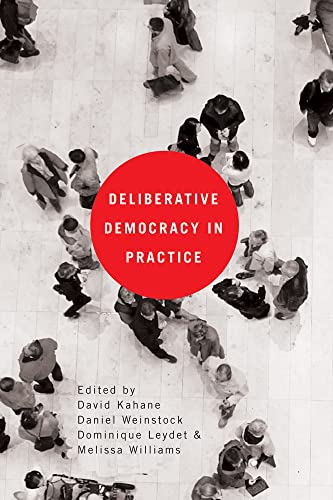
Synopsis
Deliberative democracy is a dominant paradigm in normative political philosophy. Deliberative democrats want politics to be more than a clash of contending interests, and they believe political decisions should emerge from reasoned dialogue among citizens. But can these ideals be realized in complex and unjust societies? This book brings together leading scholars who explore debates in deliberative democratic theory in four areas of practice: education, constitutions and state boundaries, indigenous-settler relations, and citizen participation and public consultation. This dynamic volume casts new light on the strengths and limitations of deliberative democratic theory, offering guidance to policy makers and to students and scholars interested in democratic justice.
"synopsis" may belong to another edition of this title.
About the Author
David Kahane is an associate professor and Vargo Distinguished Teaching Chair in the Department of Political Science at the University of Alberta. Daniel Weinstock is a professor of philosophy and Canada Research Chair in Ethics and Political Philosophy at Universite de Montreal. Dominique Leydet is a professor of philosophy at Université de Québec à Montréal. Melissa Williams is a professor of political science at the University of Toronto.
From the Back Cover
This dynamic volume casts new light on the strengths and limitations of deliberative democratic theory, offering guidance to policy makers and to students and scholars interested in democratic justice.
From the Inside Flap
This dynamic volume casts new light on the strengths and limitations of deliberative democratic theory, offering guidance to policy makers and to students and scholars interested in democratic justice.
"About this title" may belong to another edition of this title.