Synopsis
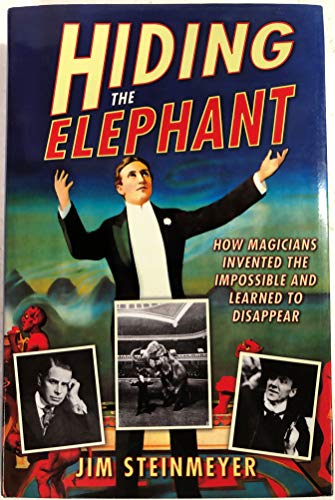
Harry Houdini was the greatest escape artist in history, yet known to his contemporaries as a terrible stage magician. Nevertheless, in 1917 he performed a single illusion that has been hotly debated ever since: Under the bright spotlights of New York’s Theatre Hippodrome, he made a live elephant disappear. Where did he learn this amazing trick and how did it work? The answers lie in magic expert Jim Steinmeyer’s chronicle of illusionary innovation, backstage chicanery and espionage, elevated showmanship, and keen competition within the world of magicians. Steinmeyer has captured the cultural history of magic during its “Golden Age” in America and abroad. Readers will learn the secrets and life stories of the fascinating personalities behind optical marvels such as floating ghosts appearing onstage and interacting with live actors, disembodied heads, and vanishing ladies. The people and events surrounding each step toward “The Vanishing Elephant” reveal how simple principles, mixed with ingenious psychology, can entertain and deceive. Houdini’s great feat of invisibility was based on a secret passed onto him by Charles Morritt, and the trick remained their secret for more than eighty years. In this book, Steinmeyer reveals Houdini’s mystery and more.
"synopsis" may belong to another edition of this title.
About the Author
JIM STEINMEYER has designed illusions for all of today’s leading magicians including Ricky Jay, for his Broadway show On the Stem, David Copperfield, and Siegfried and Roy, Las Vegas revues, and television specials, and the late Doug Henning. He is the writer and producer of A&E’s four-hour history of magic, The Story of Magic, and author of many books and articles on the history of magic and theatrical effects. He lives in Los Angeles.
Reviews
The success of a magician "lies in making a human connection to the magic." Create an illusion in the audience's mind, and they're hooked. But to understand magicians, we need to understand the art of that creation. Steinmeyer, who has designed illusions for Siegfried and Roy and David Copperfield, presents a cultural history of magic's golden age (from the 1890s to the 1930s), some legendary tricks (including the Levitation of Princess Karnak and Harry Houdini's Disappearing Elephant) and the fierce rivalries that dominated the craft. Steinmeyer reveals certain secrets, which rely on engineering, artistry and sheer chutzpah, but he hasn't betrayed anyone; most of his information has been published elsewhere. What he adds is context. Magicians advertise deceit, then perform it. Unlike political chicanery, which Steinmeyer dubs dishonest trickery, magic is a kind of pure trickery. Audiences pay for a ruse, not a lecture on fraud. Do we believe movie special effects are real? Of course not, but it doesn't detract from our enjoyment. Similarly, while many 19th-century spiritualists were rightfully debunked as frauds and charlatans, audiences loved the antics. Some, such as the Davenport brothers, were a magnet of controversy and a wild hit, successfully mixing "religion, agnosticism, science, superstition, and fraud." Steinmeyer diagrams famous tricks, celebrating their science and ingenuity. Readers meet characters as colorful as their acts. Buyer beware: If you want to keep your illusions, go to Las Vegas. But for magic lovers who revel in learning the magician's art, this book part research study, part salute is a find. 8 pages of b&w photos and diagrams.
Copyright 2003 Reed Business Information, Inc.
Writing a history of stage magic, Steinmeyer reveals the secrets of such famous feats as hiding an elephant, one of Houdini's big tricks, as he details notable stage magicians' careers. He shows that this venerable entertainment genre is indubitably more illusion, performed by monumentally clever practitioners, than magic. Brother-and-sister mind-reading act Charles and Lilian Morritt perfected a silent code based on synchronized counting that defied cagey observers' abilities to detect, let alone understand. Charles went on to realize the sleight central to Houdini's disappearing elephant bit, and that is just one of the delicious connections Steinmeyer points out among performers who seem to constitute a fellowship. Complementing Steinmeyer's profiles are excellent portraits of his subjects by underground-comix stalwart William Stout. Delightful and informative. Mike Tribby
Copyright © American Library Association. All rights reserved
"About this title" may belong to another edition of this title.
Other Popular Editions of the Same Title

Search results for Hiding the Elephant: How Magicians Invented the Impossible...

Stock Image
Hiding the Elephant : How Magicians Invented the Impossible and Learned to Disappear
Seller: Better World Books, Mishawaka, IN, U.S.A.
Seller rating 5 out of 5 stars

Condition: Good. Used book that is in clean, average condition without any missing pages. Seller Inventory # 5224799-6
Stock Image
Hiding the Elephant : How Magicians Invented the Impossible and Learned to Disappear
Seller: Better World Books, Mishawaka, IN, U.S.A.
Seller rating 5 out of 5 stars
Condition: Very Good. Former library book; may include library markings. Used book that is in excellent condition. May show signs of wear or have minor defects. Seller Inventory # GRP82950511
Stock Image
Hiding the Elephant : How Magicians Invented the Impossible and Learned to Disappear
Seller: Better World Books: West, Reno, NV, U.S.A.
Seller rating 5 out of 5 stars
Condition: Very Good. Former library book; may include library markings. Used book that is in excellent condition. May show signs of wear or have minor defects. Seller Inventory # GRP82950511
Stock Image
Hiding the Elephant: How Magicians Invented the Impossible and Learned to Disappear
Seller: GoldBooks, Denver, CO, U.S.A.
Seller rating 5 out of 5 stars
Hardcover. Condition: very good. Very Good Copy. Customer Service Guaranteed. Seller Inventory # 14F22_6_0786712260
Stock Image
Hiding the Elephant: How Magicians Invented the Impossible and Learned to Disappear
Seller: HPB-Ruby, Dallas, TX, U.S.A.
Seller rating 5 out of 5 stars
Hardcover. Condition: Very Good. Connecting readers with great books since 1972! Used books may not include companion materials, and may have some shelf wear or limited writing. We ship orders daily and Customer Service is our top priority! Seller Inventory # S_430231548
Stock Image
Hiding the Elephant: How Magicians Invented the Impossible and Learned to Disappear
Seller: Wonder Book, Frederick, MD, U.S.A.
Seller rating 5 out of 5 stars
Condition: Good. Good condition. Good dust jacket. A copy that has been read but remains intact. May contain markings such as bookplates, stamps, limited notes and highlighting, or a few light stains. Seller Inventory # C09A-04855
Seller Image
Hiding the Elephant: How Magicians Invented the Impossible and Learned to Disappear
Seller: Blue Vase Books, Interlochen, MI, U.S.A.
Seller rating 5 out of 5 stars
Condition: good. Missing dust cover, otherwise book is in good condition with some wear from normal use. Seller Inventory # 31URM800GJWO_ns
Stock Image
Hiding the Elephant: How Magicians Invented the Impossible and Learned to Disappear
Published by
Da Capo Press October 2003, 2003
ISBN 10: 0786712260
ISBN 13: 9780786712267
Used
Hardcover
Seller: Hennessey + Ingalls, Los Angeles, CA, U.S.A.
Seller rating 4 out of 5 stars

Hardcover. Condition: Used - Very Good. BEAUTIFUL COPY!!! Seller Inventory # 323425
Stock Image
Hiding the elephant
Published by
New York : Carroll & Graf Publishers, 2003., 2003
ISBN 10: 0786712260
ISBN 13: 9780786712267
Used
Hardcover
Seller: Tacoma Book Center, Tacoma, WA, U.S.A.
Seller rating 4 out of 5 stars
Hardcover. Condition: Very Good. Dust Jacket Condition: Dustjacket included. Later Edition. ISBN 0786712260. Hardcover copy in very good condition with very good condition dustwrapper. Later printing. Tight clean copy. C 1-8 11. No Signature. Seller Inventory # 2004912
Stock Image
Hiding The Elephant. How Magicians Invented the Impossible and Learned to Disappear
Seller: Tacoma Book Center, Tacoma, WA, U.S.A.
Seller rating 4 out of 5 stars
Hardcover. Condition: Very Good. Dust Jacket Included. ISBN 0786712260. Hardback. Later Printing. Very Good condition book with dust smudges to edges,in a Very Good condition dustjacket with minor rubs and creases around its edges. Tight, sound, unmarked copy. Copy One. Seller Inventory # 99095123