
Items related to The Floating Brothel: The Extraordinary True Story...
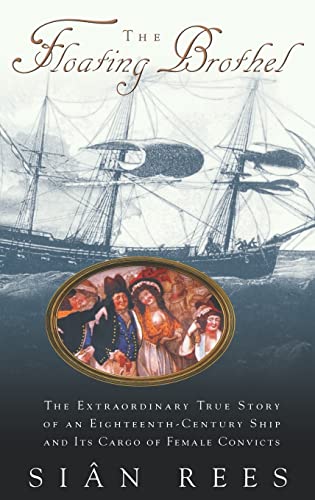
The Floating Brothel: The Extraordinary True Story of an Eighteenth-Century Ship and Its Cargo of Female Convicts - Hardcover
Synopsis
A seafaring story with a twist -- the incredible voyage of a shipload of "disorderly girls" and the men who transported them, fell for them, and sold them.
This riveting work of rediscovered history tells for the first time the plight of the female convicts aboard the Lady Julian, which set sail from England in 1789 and arrived in Australia's Botany Bay a year later. The women, most of them petty criminals, were destined for New South Wales to provide its hordes of lonely men with sexual favors as well as progeny. But the story of their voyage is even more incredible, and here it is expertly told by a historian with roots in the boat-building business and a true love of the sea.
Siv¢n Rees delved into court documents and firsthand accounts to extract the stories of these women's experiences on board a ship that both held them prisoner and offered them refuge from their oppressive existence in London. At the heart of the story is the passionate relationship between Sarah Whitelam, a convict, and the ship's steward, John Nicol, whose personal journals provided much of the material for this book. Along the way, Rees brings the vibrant, bawdy world of London -- and the sights, smells, and sounds of an eighteenth-century ship -- vividly to life. In the tradition of Nathaniel Philbrick's In the Heart of the Sea, this is a winning combination of dramatic high seas adventure and untold history.
"synopsis" may belong to another edition of this title.
About the Author
Siân Rees was born and brought up in Cornwall, England, in a family of boatbuilders and designers. After receiving her degree in history, she spent several years abroad, and it was while living in Melbourne, Australia, that she first became interested in the Lady Julian. This is her first book.
Reviews
In July 1789, the Lady Julian set sail from England, bound for the penal colony at Sydney Bay, New South Wales, and bearing some 240 women sentenced, mostly for petty crimes, to "transportation to parts beyond the seas." The intention of this voyage was twofold: to relieve overcrowding in British jails and t0 provide sexual comfort and eventually children to the male prisoners, from whom nothing had been heard in more than a year. One year later, the ship arrived, its cargo augmented by a number of infants born along the route to the "wives" of her officers and crew. But when it finally dropped anchor, the Lady Julian proved something of a disappointment to the half-starved colonists, who had been hoping more for food than for recreation. The colony was eventually resupplied with food, and these women, salvaged from jails and saved from the gallows, survived and occasionally prospered. Rees descends from a Cornish shipbuilding family and, in her first book, marvelously evokes the sounds and sights of a ship under sail. She is just as good ashore, where her meticulous scholarship vividly re-creates the social conditions of late-18th-century England that produced both the criminal activities of her subjects and the terms of their punishment. Despite the title, relatively little space is given to sexual hi-jinks on the high seas. Instead, Rees uses every scrap of information she can muster to produce a lively, vibrant sense of these women as they must have lived their lives. 17 illus. (Mar.)Forecast: This outstanding debut sheds light on a fascinating, dark corner of history and will appeal to readers of women's studies; good reviews should also help it reach a wider audience.
Copyright 2001 Cahners Business Information, Inc.
A Cornish Oxford graduate from a boat designer/builder family, Rees grants us a witty, learned, fun read. This work of nautical history recounts the 1789-90 voyage from England to Australia of a ship full of female convicts. The book covers the women's crimes, trials, and appalling jails back home, which for many put a more favorable cast on the prison ship and the near-starving colony receiving them in Sydney Cove. Using primary sources (including court, colonial, and ships records; the ship's cooper's memoirs; and other convict transport accounts), Rees weaves her spell. Following custom, officers and sailors took shipboard "wives," leading to enforced separations of lovers and of parents and infants. Given the alternatives, these unions were apparently not coerced. In exchange, the select gained comforts, privileges, and protection from convict gangs. The Lady Julian was the first Second Fleet vessel to reach the despairing, fledgling colony. Rees fills gaps with judicious speculation and corrects modern assumptions by providing historical context. Aimed at a wide audience, this history is highly recommended for public and academic libraries. Nigel Tappin, Huntsville, Ont.
Copyright 2002 Cahners Business Information, Inc.
"About this title" may belong to another edition of this title.
Search results for The Floating Brothel: The Extraordinary True Story...

Stock Image
The Floating Brothel: The Extraordinary True Story of an Eighteenth-Century Ship and Its Cargo of Female Convicts
Seller: World of Books (was SecondSale), Montgomery, IL, U.S.A.
Seller rating 5 out of 5 stars

Hardback. Condition: Good. A seafaring story with a twist -- the incredible voyage of a shipload of disorderly girls and the men who transported them, fell for them, and sold them. This riveting work of rediscovered history tells for the first time the plight of the female convicts aboard the Lady Julian, which set sail from England in 1789 and arrived in Australia's Botany Bay a year later. The women, most of them petty criminals, were destined for New South Wales to provide its hordes of lonely men with sexual favors as well as progeny. But the story of their voyage is even more incredible, and here it is expertly told by a historian with roots in the boat-building business and a true love of the sea. Siv n Rees delved into court documents and firsthand accounts to extract the stories of these women's experiences on board a ship that both held them prisoner and offered them refuge from their oppressive existence in London. At the heart of the story is the passionate relationship between Sarah Whitelam, a convict, and the ship's steward, John Nicol, whose personal journals provided much of the material for this book. Along the way, Rees brings the vibrant, bawdy world of London -- and the sights, smells, and sounds of an eighteenth-century ship -- vividly to life. In the tradition of Nathaniel Philbrick's In the Heart of the Sea, this is a winning combination of dramatic high seas adventure and untold history. Seller Inventory # 00109286078
Stock Image
The Floating Brothel: The Extraordinary True Story of an Eighteenth-Century Ship and Its Cargo of Female Convicts
Published by
Grand Central Publishing, 2002
ISBN 10: 0786867876
ISBN 13: 9780786867875
Used
Hardcover
Seller: Orion Tech, Kingwood, TX, U.S.A.
Seller rating 5 out of 5 stars
hardcover. Condition: Good. Seller Inventory # 0786867876-3-34053957
Seller Image
The Floating Brothel: The Extraordinary True Story of an Eighteenth-Century Ship and Its Cargo of Female Convicts
Published by
Grand Central Publishing, 2002
ISBN 10: 0786867876
ISBN 13: 9780786867875
Used
Hardcover
Seller: Zoom Books Company, Lynden, WA, U.S.A.
Seller rating 5 out of 5 stars
Condition: very_good. Book is in very good condition and may include minimal underlining highlighting. The book can also include "From the library of" labels. May not contain miscellaneous items toys, dvds, etc. . We offer 100% money back guarantee and 24 7 customer service. Seller Inventory # ZBV.0786867876.VG
Seller Image
The Floating Brothel: The Extraordinary True Story of an Eighteenth-Century Ship and Its Cargo of Female Convicts
Published by
Grand Central Publishing, 2002
ISBN 10: 0786867876
ISBN 13: 9780786867875
Used
Hardcover
Seller: Greenworld Books, Arlington, TX, U.S.A.
Seller rating 5 out of 5 stars
Condition: good. Fast Free Shipping â" Good condition. It may show normal signs of use, such as light writing, highlighting, or library markings, but all pages are intact and the book is fully readable. A solid, complete copy that's ready to enjoy. Seller Inventory # GWV.0786867876.G
Seller Image
The Floating Brothel: The Extraordinary True Story of an Eighteenth-Century Ship and Its Cargo of Female Convicts
Published by
Grand Central Publishing, 2002
ISBN 10: 0786867876
ISBN 13: 9780786867875
Used
Hardcover
Seller: Greenworld Books, Arlington, TX, U.S.A.
Seller rating 5 out of 5 stars
Condition: very_good. Fast Free Shipping â" Very Good condition book with a firm cover and clean pages. Shows normal use and some light wear or limited notes markings. A solid, nice copy to enjoy. Seller Inventory # GWV.0786867876.VG
Stock Image
The Floating Brothel: The Extraordinary True Story of an Eighteenth-Century Ship and Its Cargo of Female Convicts
Published by
Grand Central Publishing (edition First Edition), 2002
ISBN 10: 0786867876
ISBN 13: 9780786867875
Used
Hardcover
First Edition
Seller: BooksRun, Philadelphia, PA, U.S.A.
Seller rating 5 out of 5 stars
Hardcover. Condition: Very Good. First Edition. With dust jacket. It's a well-cared-for item that has seen limited use. The item may show minor signs of wear. All the text is legible, with all pages included. It may have slight markings and/or highlighting. Seller Inventory # 0786867876-11-1-29
Stock Image
The Floating Brothel
Published by
Hyperion Books, New York, NY, 2002
ISBN 10: 0786867876
ISBN 13: 9780786867875
Used
Soft cover
Seller: Foxtrot Books, Yankton, SD, U.S.A.
Seller rating 5 out of 5 stars
Soft cover. Condition: Good. Good Condition hard cover 236 pages former library book. Seller Inventory # 035005
Stock Image
The Floating Brothel: The Extraordinary True Story of an Eighteenth-Century Ship and Its Cargo of Female Convicts
Published by
Grand Central Publishing, 2002
ISBN 10: 0786867876
ISBN 13: 9780786867875
Used
Hardcover
Seller: Half Price Books Inc., Dallas, TX, U.S.A.
Seller rating 5 out of 5 stars
hardcover. Condition: Very Good. Connecting readers with great books since 1972! Used books may not include companion materials, and may have some shelf wear or limited writing. We ship orders daily and Customer Service is our top priority! Seller Inventory # S_466263055
Stock Image
The Floating Brothel: The Extraordinary True Story of an Eighteenth-Century Ship and Its Cargo of Female Convicts
Published by
Grand Central Publishing, 2002
ISBN 10: 0786867876
ISBN 13: 9780786867875
Used
Hardcover
Seller: HPB Inc., Dallas, TX, U.S.A.
Seller rating 5 out of 5 stars
hardcover. Condition: Very Good. Connecting readers with great books since 1972! Used books may not include companion materials, and may have some shelf wear or limited writing. We ship orders daily and Customer Service is our top priority! Seller Inventory # S_441793127
Stock Image
The Floating Brothel: The Extraordinary True Story of an Eighteenth-Century Ship and Its Cargo of Female Convicts
Published by
Grand Central Publishing, 2002
ISBN 10: 0786867876
ISBN 13: 9780786867875
Used
Hardcover
Seller: HPB-Emerald, Dallas, TX, U.S.A.
Seller rating 5 out of 5 stars
hardcover. Condition: Very Good. Connecting readers with great books since 1972! Used books may not include companion materials, and may have some shelf wear or limited writing. We ship orders daily and Customer Service is our top priority! Seller Inventory # S_453110262